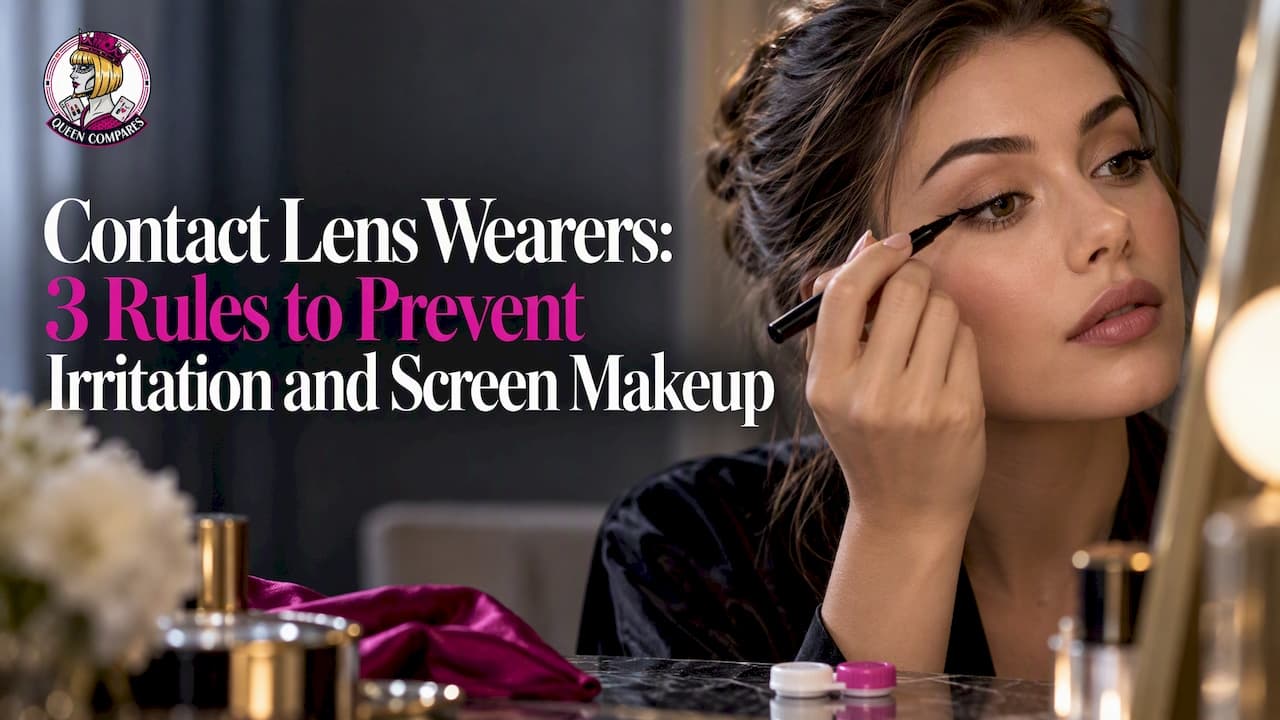
Yes, you can wear makeup with contact lenses if you follow three simple rules: insert your lenses before you apply your face makeup, choose water-based and hypoallergenic eye products, and skip waterproof mascaras and inner-eyelid liner. Stick to those three and most lens wearers can enjoy a full makeup routine without irritation. If your eyes feel gritty, red, or sore, stop and get it checked.
TL;DR:
Water-based, oil-free, and hypoallergenic makeup products are essential, especially for mascara, to prevent residue build-up on contact lenses.
Applying soft lenses first and doing eye makeup last reduces the risk of makeup particles transferring onto lenses and causing irritation.
Waterproof mascara, lash fibers, and inner eyelid liner are high-risk items because they deposit persistent residues that are hard to remove and can affect lens moisture.
Non-prescription decorative contact lenses increase the risk of microbial buildup due to improper fit and materials that interfere with lens breathability.
Quickly removing lenses with clean hands and cleaning them thoroughly with prescribed solution mitigates damage if makeup accidentally contaminates lenses.
Table of Contents
-
What to avoid and why: science-backed risks from specific cosmetics
-
Screen your makeup with ingredient checks and product comparisons
Quick safe product choices and shopping checklist
Shopping for lens-friendly makeup gets a lot easier once you know what to look for on the label. Water-based, oil-free, and hypoallergenic formulas are your best friends here, especially for mascara, eyeliner, and eye makeup remover. These products are less likely to leave a filmy residue on your lenses or trigger a reaction in already sensitive eyes.
Mascara deserves special attention. Skip waterproof formulas and anything with lash-lengthening fibers, since both tend to flake and leave persistent deposits on your lenses. The FDA recommends discarding mascara about every three months, which keeps bacteria from building up in the tube over time.
Here mascara recommendations for contact lens wearers:
ILIA BEAUTY Limitless Lash Mascara - LIA BEAUTY’s Limitless Lash Mascara is an award-winning, clean beauty staple designed to lift, lengthen, and separate lashes with precision. Formulated with a blend of organic waxes and conditioning butters, this mascara goes beyond simple makeup to actively nourish your lashes throughout the day.


Kosas Soulgazer Lengthening + Lifting Peptide Mascara - Enter the Kosas Soulgazer Mascara. This formula is a masterclass in clean beauty engineering, marrying high-performance pigment with a genuine lash-treatment serum. Instead of relying on harsh, drying synthetic polymers, Kosas has crafted a plush, velvety formula that wraps every single lash in deep, inky blackness while working behind the scenes to promote structural integrity.


A few more habits worth building into your routine:
-
Choose pressed eyeshadow powders over loose glitter or shimmer, since loose particles can drift into your eyes and under your lenses.
-
Avoid products with added fragrance, which is a common trigger for eye irritation in contact lens wearers.
-
Steer clear of unfamiliar or unlisted pigments, particularly in cheaper glitter and shimmer shadows.
-
Only buy cosmetic or colored contact lenses with a valid prescription and proper fitting, never as a novelty item.
That last point matters more than it sounds. Non-prescription decorative lenses skip the professional fitting that keeps a lens sitting correctly and breathing properly on your eye, which raises your risk of complications.
Step-by-step application order and hygiene routine
The order you do things in matters almost as much as the products themselves. Getting this sequence right keeps makeup particles away from your lenses in the first place.
-
Wash your hands thoroughly and dry them on a lint-free towel before touching your face or your lenses.
-
If you wear soft lenses, insert them first, then move on to foundation, concealer, and the rest of your face makeup.
-
If you wear rigid gas permeable (RGP) lenses, apply your makeup first and insert your lenses last.
-
Do your eye makeup last of all, applying eyeliner along your outer lash line rather than your waterline.
-
Sweep mascara from the base of your lashes outward, keeping the wand tip away from your eye’s surface.
The American Optometric Association’s guidance on contact lens care backs this soft-lens-first, RGP-last sequence, along with keeping eyeliner off the inner lid entirely.
Clean your makeup brushes weekly with a gentle cleanser, and never wet an applicator with saliva to revive dried-out product. Sharing eye makeup with friends or family also passes along whatever bacteria is already living in that tube or compact. Be mindful of hairspray, dry shampoo, and body lotion too, since aerosol mist and lotion residue on your fingers can transfer to your lenses just as easily as makeup can.

Pro Tip: Apply eye makeup with your chin tilted slightly down and your eyes looking in a mirror rather than closed, so you can see exactly where the product is landing.
What to avoid and why: science-backed risks from specific cosmetics
Some common habits carry more risk than they seem to, and the reasons come down to how makeup interacts with lens material at a microscopic level.
-
Waterproof mascaras and lash fibers often leave deposits that are tough to clean off. A peer-reviewed study published in Eye & Contact Lens found that certain waterproof mascara formulas raised visible surface deposits on silicone hydrogel lenses and reduced how well the lens surface held moisture, and peroxide cleaning did not fully remove some of that residue.
-
Tightlining, or applying eyeliner to the inner eyelid, pushes pigment directly into your tear film, where it can migrate onto the lens surface. This single habit is behind a large share of makeup-related lens contamination.
-
Oil-based creams, loose glitter, and aerosol sprays can all leave a film or stray particles sitting on the lens surface, clouding vision and inviting irritation.
-
Cosmetic contact lenses bought without a professional fitting carry a documented higher risk of microbial buildup, since surface pigments and coatings can interfere with how the lens sits and breathes on the eye.
Johns Hopkins Medicine’s guidance for lens wearers echoes several of these points directly, warning against frosted or glitter eyeshadow and recommending frequent brush washing, along with keeping false-lash glue and nail products well away from your lenses.
If makeup contaminates your lenses
Makeup on your lens doesn’t have to mean a trip to the emergency room, but it does mean acting quickly and correctly.
-
Remove the lens with clean, dry hands right away and rinse it only with your prescribed contact lens solution, never tap water or saliva.
-
If you wear daily disposables, throw the contaminated lens away and put in a fresh one.
-
If you wear planned-replacement lenses, clean and disinfect according to your eye care professional’s instructions, keeping in mind that peroxide-based systems may not fully remove waterproof mascara residue.
-
Watch for redness, pain, light sensitivity, or blurred vision in the hours after contamination, and get evaluated promptly if any of these show up.
The safest habit of all is prevention: always remove your lenses before you take off your eye makeup, not after. Removing makeup while lenses are still in place traps remover residue against the lens surface and against your eye.
Screen your makeup with ingredient checks and product comparisons
You don’t need a chemistry degree to figure out whether a product is likely to play nicely with your lenses. A quick label scan tells you most of what you need to know: look for oils high on the ingredient list, heavy film-forming agents, gritty or abrasive particles, and added fragrance, then favor anything labeled water-based or hypoallergenic.
User reviews fill in the rest. Comments mentioning flaking, smudging, or a filmy feeling by midday are a reliable signal that a product deposits more than it should.
-
Ask three yes or no questions when comparing two products: is it water-based, is it oil-free, and is it fragrance-free?
-
Check reviews specifically for mentions of flaking or a gritty, filmy feeling during wear.
-
Keep a short list of two or three approved products rather than testing everything at once.
Pro Tip: Try one new product at a time and keep a spare daily disposable lens on hand, so a bad reaction only costs you one lens instead of derailing your whole week.
A realistic take on trade-offs and small habit changes
Full waterproof glam and contact lens comfort rarely coexist, so the smartest move is picking your battles. A non-waterproof mascara paired with liner sealed along your outer lash line preserves most of a look without the deposit risk. Set a phone reminder to replace your mascara every three months and keep a spare daily disposable in your bag for makeup mishaps. If irritation keeps coming back no matter what you swap, that’s a conversation for your eye doctor, not another product change.
— Magdalena Kapuscinska
Compare your options before you commit to a product
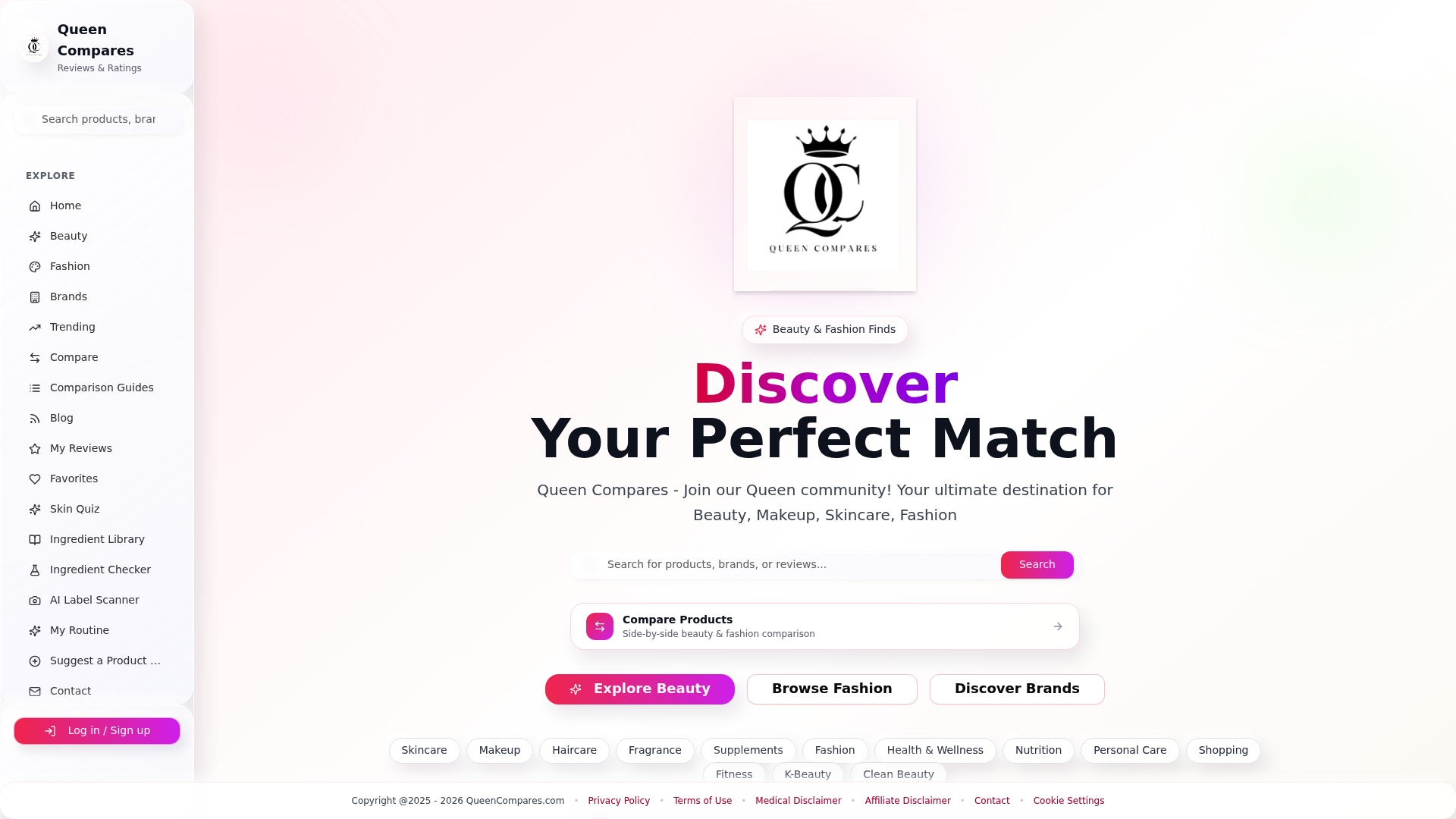
Reading ingredient lists in the aisle is one thing, comparing them side by side before you buy is another. There are tools available that let you look up a product’s formula and flag oils, fragrance, and other ingredients worth watching before it ever reaches your basket.
-
Search for water-based, oil-free, and hypoallergenic matches instead of guessing from a shelf display.
-
Compare two mascaras or eyeliners side by side to see which one fits the checklist from this article.
-
Browse real reviews from other users to spot patterns around flaking or irritation before you buy.
Head over to our Beauty page to start comparing eye makeup that’s built to work with your contacts, not against them.
Sources
FAQ
Is it safe to wear makeup with contacts?
Yes, wearing makeup with contact lenses is generally safe when you insert soft lenses before applying face makeup and choose water-based, hypoallergenic formulas. Skip waterproof mascara and inner eyelid liner, and always remove your lenses before removing your makeup.
What is the 3:1:1 rule for contacts?
There is no single, widely recognized “3:1:1 rule” from major eye health authorities, so definitions of this phrase vary. The safest guidance comes from the AOA, which recommends inserting soft lenses first, applying eyeliner only along the outer lash line, and discarding mascara roughly every three months.
How do I avoid getting makeup on my contact lenses?
Wash your hands before applying anything, insert soft lenses before your face makeup, and apply eyeliner and mascara along your outer lash line and lashes rather than your waterline. Keep brushes clean and avoid loose glitter, oil-based creams, and aerosol sprays near your eyes.
What eye makeup do ophthalmologists recommend for contact lens wearers?
Eye care professionals generally point contact lens wearers toward water-based, oil-free, hypoallergenic mascaras and eyeliners, along with pressed rather than loose eyeshadow. Johns Hopkins Medicine also advises against frosted or glitter shadows and recommends washing brushes often.
General Entertainment & Information Purposes Only At QueenCompares.com we share content for general entertainment and information. It’s not medical, dermatological, nutritional, or fitness advice and shouldn’t replace guidance from a licensed professional. If you’re making health-related decisions, please check with a qualified expert — and know that using this site and its information is at your own discretion.