Formaldehyde releasers show up in plenty of everyday cosmetics, often under names you would never connect to formaldehyde, like DMDM hydantoin, diazolidinyl urea, or quaternium-15. The main things to watch for are allergic contact dermatitis, which is fairly common in sensitized people, and inhalation risk, which becomes serious during heated hair-smoothing treatments. Your best move: scan labels for the aliases below, and patch test anything new if your skin tends to react.
TL;DR:
FRPs are most commonly found in shampoos, conditioners, body lotions, nail polishes, and styling gels, with about a quarter of surveyed products containing them.
Recognizing chemical aliases like DMDM hydantoin and quaternium-15 is crucial since formaldehyde rarely appears by name on ingredient labels.
Sensitized individuals reacting to formaldehyde should avoid products with FRPs and ask salons about formaldehyde content in hair treatments.
Lowering labeling thresholds to 10 ppm will make it easier for consumers to identify products that may cause reactions, especially for sensitive skin.
Laboratory tests show formaldehyde levels can vary widely, with some samples exceeding 30 ppm, which may trigger reactions in sensitive people.
Table of Contents
-
What formaldehyde releasers are and why they end up in your products
-
Health risks and exposure pathways: allergy, inhalation, and cancer evidence
-
Regulation, labeling thresholds, and what recent policy changes mean for you
-
How to spot formaldehyde releasers on labels and avoid them in practice
What formaldehyde releasers are and why they end up in your products
Formaldehyde-releasing preservatives, often shortened to FRPs, are added to water-based cosmetics to stop bacteria and mold from growing in the bottle. They work by slowly releasing small amounts of free formaldehyde over time, which keeps your shampoo, lotion, or cream stable for months on the shelf. It is a preservation strategy, not an accident, and it is exactly why so many formulas rely on it.
The tricky part for shoppers is that formaldehyde itself rarely appears by that name on an ingredient list. Instead, you will see one of several chemical aliases doing the job. Here is the lineup to memorize:
-
DMDM hydantoin, one of the most widely used releasers in shampoos and conditioners.
-
Diazolidinyl urea, common in lotions and body washes.
-
Imidazolidinyl urea, a close chemical cousin found in similar products.
-
Quaternium-15, frequently used in mascaras and foundations.
-
Bronopol, also written as 2-bromo-2-nitropropane-1,3-diol.
-
Sodium hydroxymethylglycinate, common in “gentler” formulations.
-
Polyoxymethylene urea, less common but still active.
-
Tosylamide/formaldehyde resin, mostly found in nail polish.
If a full ingredient list is not printed on the packaging, the Safety Data Sheet, usually available from the manufacturer or retailer, will spell out the preservative system in more detail.
Where FRPs turn up most and how common they really are
Some product categories carry a much higher chance of containing an FRP than others, so it makes sense to focus your label-reading energy where it counts. Rinse-off products and anything packaged in a jar or bottle with a long shelf life tend to lean on these preservatives most.
-
Shampoos and conditioners, where DMDM hydantoin is a frequent pick.
-
Body lotions and creams, especially budget and mass-market lines.
-
Nail polishes and hardeners, often via tosylamide/formaldehyde resin.
-
Some eyelash glues and styling products, particularly gel formulas.
Peer-reviewed surveillance backs up how widespread this is. A study published on PMC found FRPs present in a substantial share of personal care products, with about a quarter of thousands of surveyed items in the United States containing one, and other product categories showing similar moderate percentages. Community-based research has also flagged that some product lines marketed specifically to Black women and Latinas contained FRPs, with DMDM hydantoin showing up as the most common one, a pattern worth knowing if you shop those product lines regularly.
Health risks and exposure pathways: allergy, inhalation, and cancer evidence
The health conversation around FRPs really splits into two very different risk pictures, and mixing them up leads to a lot of unnecessary panic or, worse, unnecessary complacency. Formaldehyde itself is classified as a known human carcinogen, and the strongest cancer evidence comes from high, sustained occupational inhalation exposure, not from the trace amounts released slowly by a preservative in your body lotion.

A significant share of the population reacts to formaldehyde on contact. Contact allergy to formaldehyde and its releasers is estimated to affect around 8 to 9% of the U.S. population, according to reporting on DMDM hydantoin, which is why dermatologists take patch testing seriously for anyone with a history of skin reactions.
Repeated open application testing, known as ROAT, has been used in clinical settings to figure out the exact concentrations that trigger a reaction in already-sensitized skin, and that data is part of what pushed regulators to reconsider labeling thresholds.
Inhalation during heated hair-smoothing treatments is a distinct and higher-risk exposure pathway compared with the slow, low-level release from preservatives in leave-on or rinse-off products.
The FDA has warned that hair-smoothing treatments can release formaldehyde gas when heated with a flat iron, causing acute eye, nose, and throat irritation, a very different scenario from everyday product use.
Regulation, labeling thresholds, and what recent policy changes mean for you
Regulators on both sides of the Atlantic have been rethinking how much free formaldehyde should trigger a warning label, and the direction is consistently toward more transparency, not less.
-
The EU currently requires a “contains formaldehyde” warning above 0.05% (500 ppm), a threshold set decades ago.
-
The SCCS scientific opinion recommends cutting that threshold down to 0.001% (10 ppm), a fifty-fold reduction meant to protect people who are already sensitized.
-
U.S. states have started moving on their own timelines: Washington State has published rulemaking that lists specific FRPs and sets implementation dates, and California has bans on certain formaldehyde-related substances taking effect in 2025.
-
The FDA continues to issue consumer guidance specifically around hair-smoothing treatments rather than a blanket cosmetics ban.
What lowering the threshold actually means for you is simple: more products that currently skip the warning label because they sit just under 500 ppm would need to disclose formaldehyde content once the 10 ppm line takes hold, giving sensitized shoppers a much clearer signal before they buy.
How to spot formaldehyde releasers on labels and avoid them in practice
Reading a cosmetics label for FRPs takes about thirty extra seconds once you know the names to look for, and it is worth building into your regular shopping habit.
-
Scan the ingredient list for any of the aliases: DMDM hydantoin, diazolidinyl urea, imidazolidinyl urea, quaternium-15, bronopol, sodium hydroxymethylglycinate, polyoxymethylene urea, or tosylamide/formaldehyde resin.
-
Request the Safety Data Sheet from the brand or retailer if the packaging list is incomplete or hard to read.
-
Choose products with third-party verification or clean-beauty certification when you want an extra layer of confidence.
-
Ask your salon directly whether a smoothing treatment contains formaldehyde or an FRP, and request good ventilation or a non-heat alternative if you are sensitized.
Pro Tip: If you have ever reacted to a lotion or shampoo before, ask your dermatologist about a formal patch test rather than guessing which product was the culprit.
For anyone already diagnosed with a formaldehyde allergy, avoidance is simply the safer path, and reading labels before you buy beats returning a product after a reaction.
What formaldehyde test results actually tell you
Laboratories typically measure free formaldehyde using a modified version of high-performance liquid chromatography, or HPLC, reporting results in parts per million, milligrams per kilogram, or as a percentage of the total formula.
Measurement studies using this method have found free formaldehyde levels ranging widely, with some samples exceeding 30 ppm and others topping 250 ppm, levels that clinical ROAT data associate with triggering reactions in sensitized skin.
A single test result is really just a snapshot. Formaldehyde release from these preservatives can vary across a product’s shelf life as the releaser slowly breaks down, which is part of why regulators lean on conservative labeling thresholds rather than asking consumers to interpret lab numbers themselves.
Why this issue deserves a level head, not a panic
FRPs exist because water-based cosmetics genuinely need protection from bacteria and mold. Pulling them out entirely is not as simple as it sounds. That is why regulators are leaning toward better labeling and lower thresholds instead of outright bans in most places. For most shoppers without a known sensitivity, the risk from everyday lotion or shampoo is low. For anyone with diagnosed contact allergy, avoidance matters a lot more, and heated hair treatments deserve real caution regardless of your skin history. The most useful shift you can make is treating chemical aliases as normal vocabulary rather than a mystery, since that is really what turns label reading from guesswork into a quick, confident check.
Find formaldehyde-free picks faster with Queen Compares
Manually cross-checking eight different chemical names against every product in your cart gets old fast, which is exactly the gap ingredient checker and label scanner tools are built to close. Snap a photo of a label or search a product by name, and tools can flag FRP aliases like DMDM hydantoin or quaternium-15 automatically, so you are not relying on memory in the aisle.
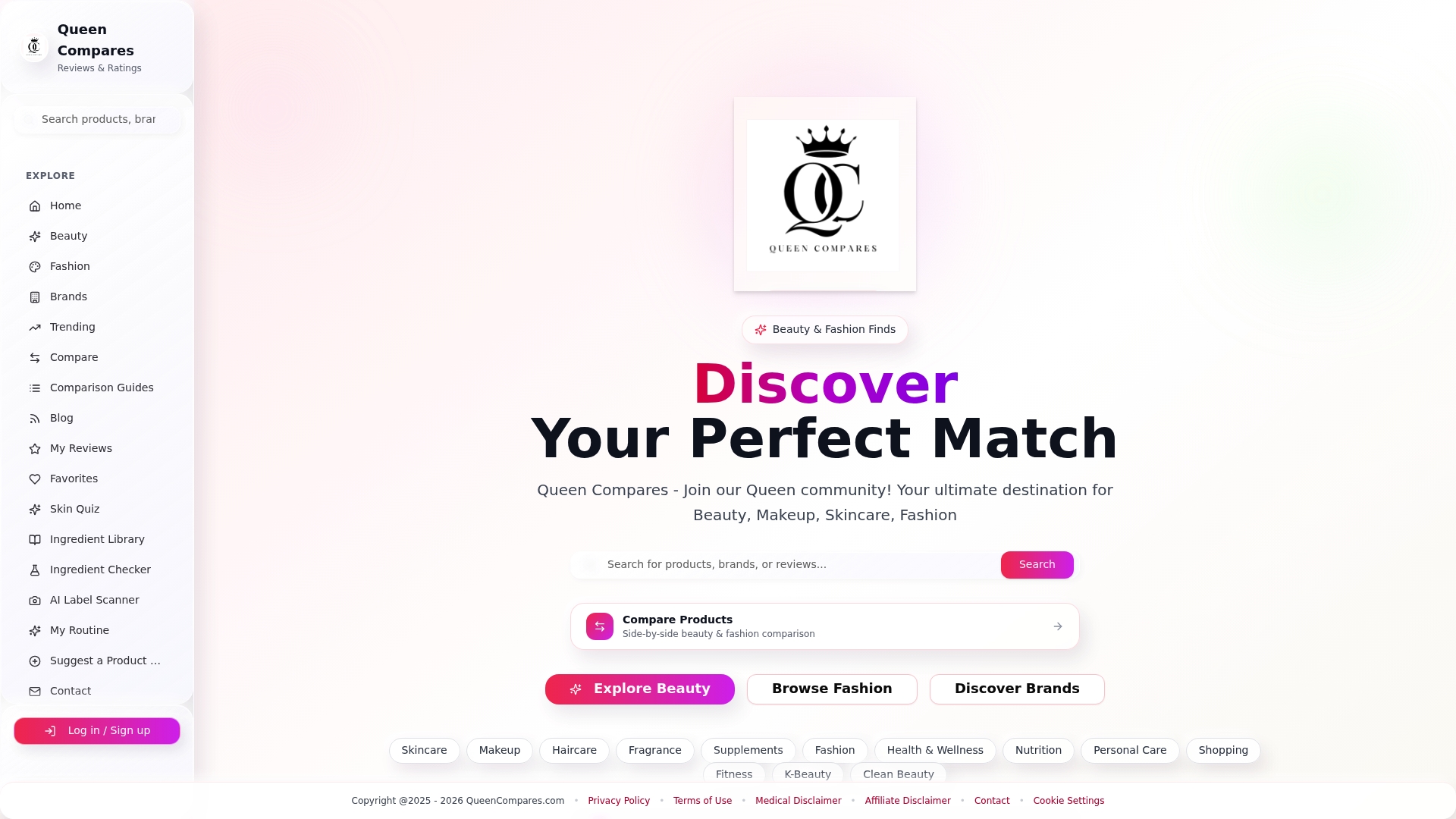
You can also use side-by-side comparisons to filter for FRP-free alternatives within the same product category, whether you are hunting for a new shampoo or a gentler lotion. Browse Beauty Products and Clean Beauty Page on Queen Compares to start comparing formulas and find one that fits your routine without the guesswork.
Where to go for the primary research and regulations
For anyone who wants to dig into the original documents behind these claims, a few are worth bookmarking. The SCCS scientific opinion lays out the case for a 10 ppm labeling threshold. The FDA’s consumer update covers hair-smoothing risks directly. The PMC prevalence study documents how often FRPs show up in real products on store shelves.

This article is general information, not a substitute for advice from a qualified doctor. Consult a qualified healthcare professional about your own circumstances before acting on anything here.
Sources
-
Formaldehyde in Hair Smoothing Products: What You Should Know | FDA
-
Scientific Advice on the threshold for the warning ‘contains formaldehyde’ in Annex V (SCCS)
-
Formaldehyde may be found in cosmetic products even when … (PMC)
FAQ
What cosmetics have formaldehyde in them?
Formaldehyde releasers most commonly appear in shampoos, conditioners, body lotions, nail polishes, and some eyelash glues or styling gels. A peer-reviewed survey found FRPs in about 23.8% of thousands of surveyed U.S. personal care products.
What are some examples of formaldehyde releasers?
Common examples include DMDM hydantoin, diazolidinyl urea, imidazolidinyl urea, quaternium-15, and bronopol. These names appear on ingredient lists instead of the word “formaldehyde” itself, which is why recognizing the aliases matters.
What cancels out formaldehyde exposure from cosmetics?
There is no single ingredient or product that neutralizes formaldehyde exposure once it has occurred. The practical approach is avoidance for sensitized individuals, choosing FRP-free formulas, and improving ventilation during heated hair treatments, as recommended in FDA guidance.
What cancers is formaldehyde linked to?
Formaldehyde is classified as a known human carcinogen, with the strongest evidence tied to high, sustained occupational inhalation exposure rather than everyday cosmetic use. Consumer-level exposure from preservatives in lotions or shampoos is considered a much lower-level risk by comparison.
General Entertainment & Information Purposes Only At QueenCompares.com we share content for general entertainment and information. It’s not medical, dermatological, nutritional, or fitness advice and shouldn’t replace guidance from a licensed professional. If you’re making health-related decisions, please check with a qualified expert — and know that using this site and its information is at your own discretion.