
TL;DR:
A safe skincare routine involves consistent use of gentle, non-irritating products that protect and repair the skin barrier.
Building a minimalist routine with cleanser, moisturizer, and SPF 30+ is cost-effective and promotes skin stability.
A safe skincare routine is defined as a consistent, evidence-based practice using gentle, non-irritating products that protect and repair your skin barrier. The goal is not a 12-step shelf display. It is a focused set of products you can trust, chosen by reading labels and understanding what goes on your skin. Brands like CeraVe, La Roche-Posay, and Vanicream have built their reputations on exactly this kind of formulation philosophy. Tools like the Clearya app and the Environmental Working Group database make ingredient evaluation accessible to everyone. When you build a safe skincare routine, you are making a deliberate choice to prioritize skin health over marketing trends.
What ingredients and product features ensure skincare safety?
Safe skincare starts with knowing what to avoid. Fragrance, essential oils, and alcohol denat. are leading causes of contact dermatitis and should be avoided for sensitive or reactive skin. These ingredients appear in a surprising number of products labeled “natural” or “gentle,” which is why reading the full ingredient list matters more than trusting front-label claims.
Ingredients to avoid
The following ingredients are the most common culprits behind skin irritation and long-term barrier damage:
-
Fragrance (parfum): A catch-all term that can hide dozens of undisclosed chemicals, many of them sensitizers.
-
Essential oils: Lavender, tea tree, and citrus oils are popular in natural products but are documented irritants for sensitive skin.
-
Alcohol denat.: Used as a texture agent, it strips the skin barrier with repeated use.
-
Parabens and phthalates: Preservatives and plasticizers flagged for potential endocrine disruption.
-
AHAs and BHAs: Effective exfoliants, but too aggressive for compromised or sensitive skin in early routine stages.
Short ingredient lists are a reliable signal of a cleaner formula. A product with 8 ingredients is easier to evaluate than one with 30. Third-party certifications like EWG Verified provide an additional layer of confidence because they require full ingredient disclosure and safety screening. Apps like Clearya and the Environmental Working Group database let you scan a product before you buy it, flagging flagged compounds in seconds.
Ingredients that support barrier repair
On the positive side, ceramides, cholesterol, fatty acids, and niacinamide are the workhorses of barrier repair. Ceramides make up roughly 50% of the skin’s outer layer and are depleted by harsh cleansers and over-exfoliation. Products from CeraVe and La Roche-Posay are formulated around these lipids specifically because they restore what daily life strips away. Niacinamide is a standout ingredient: it reduces redness, supports the barrier, and works well alongside most other actives without causing irritation.
Marketing buzzwords like “clean,” “natural,” “dermatologist-tested,” and “hypoallergenic” carry no regulated definition in the United States. They are advertising language, not safety guarantees. Learning to read ingredient labels directly is the only reliable method for evaluating what you are actually applying to your skin.
Pro Tip: When evaluating a new product, search its name in the EWG Skin Deep database before purchasing. A score of 1–2 indicates low hazard, which is the range you want for daily use products.
How do you build a minimalist skincare routine step by step?
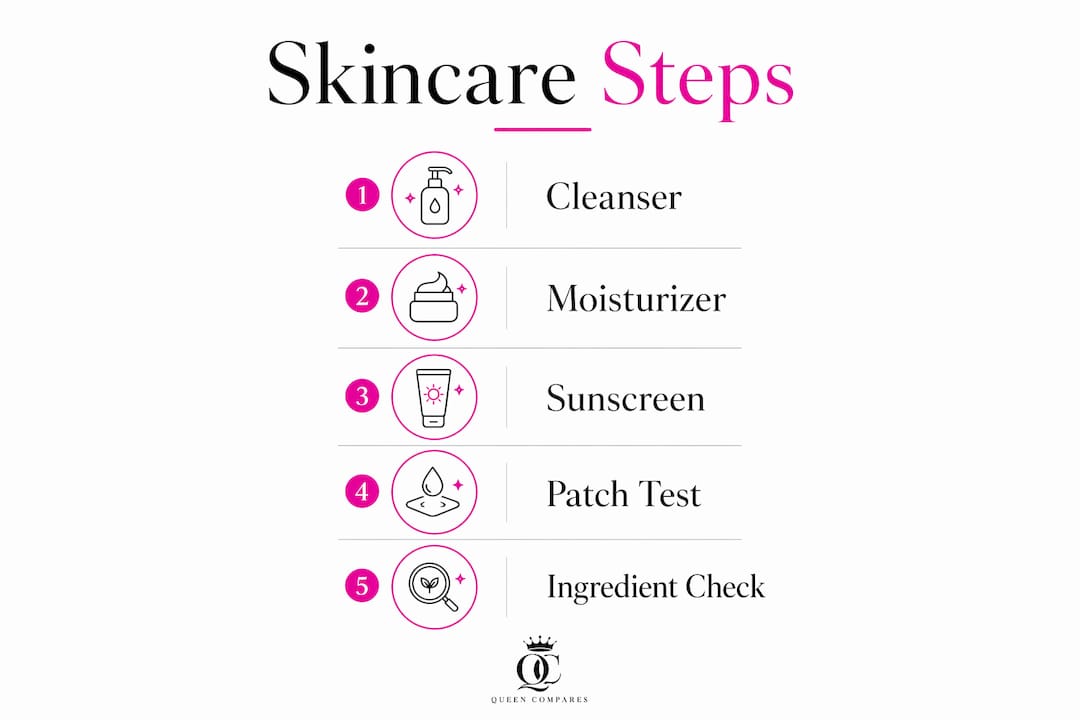
A 3-step skincare routine of cleanser, moisturizer, and SPF typically costs under $45 and lasts 2–3 months. That cost efficiency matters because it removes the financial pressure to justify a complex routine. Fewer products also mean fewer variables when something goes wrong. Here is how to structure each step.
-
Choose a gentle, non-foaming cleanser. Foaming cleansers often contain sulfates that strip the skin barrier. Opt for a cream or gel cleanser with a short ingredient list. Wash with lukewarm water, not hot. CeraVe Hydrating Cleanser and Vanicream Gentle Facial Cleanser are both fragrance-free, barrier-friendly options. Avoid physical scrubs entirely in the early stages of building your routine.
-
Apply a barrier-repair moisturizer. The best moisturizers for a safe routine contain ceramides, cholesterol, and fatty acids in combination. These three lipids work together to mimic the skin’s natural structure. CeraVe Moisturizing Cream and La Roche-Posay Toleriane Double Repair Face Moisturizer are widely recommended by dermatologists for this reason. Apply while skin is slightly damp to lock in hydration.
-
Use broad-spectrum SPF 30 or higher every morning. Daily SPF 30 or higher is non-negotiable for preventing barrier stress and premature aging. Reapply every 2 hours during outdoor exposure. Mineral sunscreens with zinc oxide or titanium dioxide are the gentlest options for sensitive skin. EltaMD UV Clear and La Roche-Posay Anthelios are two well-formulated choices.
-
Add one gentle active after 4–6 weeks of stability. Niacinamide is the safest first active for sensitive or barrier-compromised skin. Retinol and vitamin C should wait until your barrier is consistently stable. Introduce one product at a time and observe your skin for at least two weeks before adding anything else.
Pro Tip: Patch test every new product on the inside of your forearm or behind your ear for 2–3 days before applying it to your face. Patch testing new products for this window significantly reduces the risk of a full-face reaction.
The foundation of safe skincare is gentle cleansing, consistent moisturization, and daily sunscreen. Everything else is optional until your skin is stable.

How to evaluate and swap skincare products safely over time
Replacing your current products with safer alternatives does not have to happen all at once. In fact, swapping everything simultaneously makes it nearly impossible to identify what caused a reaction if one occurs. Gradual replacement, one product at a time, is the most effective strategy for maintaining skin stability while improving your routine.
Start with the product you use most frequently. Your daily moisturizer or cleanser has the highest cumulative exposure, so replacing a problematic formula there delivers the most benefit. Once your skin has adjusted to the new product over two to three weeks, move to the next swap.
Here is a practical framework for evaluating what to replace first:
-
Frequency of use: Daily products take priority over weekly treatments.
-
Ingredient concern level: Products containing fragrance, alcohol denat., or parabens move to the top of the swap list.
-
Skin contact time: Leave-on products like moisturizers and serums matter more than rinse-off products like cleansers.
-
Reaction history: If a product has caused redness, stinging, or breakouts before, replace it regardless of its position in the routine.
Use the QueenCompares Ingredient Checker to evaluate your current products before deciding what to swap. The tool flags concerning compounds and helps you compare formulas side by side. Avoid the common mistake of trying three or four new products in the same week. Your skin cannot give you clear feedback when multiple variables change at once.
A note on “natural” alternatives: natural does not automatically mean safer. Essential oils, botanical extracts, and plant-based preservatives can all trigger reactions. Evaluate every replacement product on its ingredient list, not its marketing positioning. Resources like the non-toxic skincare guide from Selfwise offer practical frameworks for distinguishing genuinely clean formulas from greenwashed ones.
What are the most common challenges when building a safe routine?
Even a well-planned routine runs into obstacles. Knowing what to expect makes it easier to stay consistent and interpret what your skin is telling you.
| Challenge | Likely Cause | Solution |
|---|---|---|
| Redness or stinging | New product irritant or compromised barrier | Stop new product, return to basics for 1–2 weeks |
| Breakouts after switching | Purging or comedogenic ingredient | Check for pore-clogging ingredients; give 4 weeks before judging |
| Dryness despite moisturizing | Barrier not yet repaired | Add a ceramide-rich product; avoid all actives temporarily |
| Confusion about ingredients | Label complexity | Use Clearya or EWG Skin Deep to scan products |
| Routine fatigue | Too many steps | Simplify to 3 core steps using a simplification checklist |
Excessive exfoliation and early use of harsh actives delay barrier recovery and increase irritation risk. This is one of the most common mistakes people make when trying to fix problem skin. The instinct is to do more. The correct response is almost always to do less.
“When your skin is reacting, the answer is almost never to add more products. Strip back to cleanser, moisturizer, and SPF. Give your barrier two weeks to recover before reintroducing anything.”
Sun protection consistency is the step most people drop when their routine feels overwhelming. Skipping SPF is the single highest-impact mistake in a daily routine. UV exposure is the primary driver of barrier stress, collagen breakdown, and hyperpigmentation. No serum or treatment corrects what daily sun exposure causes.
Pro Tip: Keep a simple skin journal for the first 60 days of a new routine. Note what you applied, any reactions, and how your skin looked in the morning. Patterns become obvious within a few weeks, and you will have clear data instead of guesswork.
Key takeaways
A safe skincare routine built on gentle cleansing, barrier-repair moisturizing, and daily SPF 30 delivers the most reliable results with the lowest risk of irritation or long-term damage.
| Point | Details |
|---|---|
| Start with three core steps | Cleanser, moisturizer, and SPF 30 form the complete foundation of a safe daily routine. |
| Avoid fragrance and alcohol denat. | These are the top two causes of contact dermatitis and should be removed from daily products first. |
| Swap products one at a time | Replacing one product every two to three weeks lets you identify triggers and maintain skin stability. |
| Add actives only after stability | Niacinamide is the safest first active; retinol and vitamin C should wait until your barrier is consistently healthy. |
| Use ingredient tools before buying | Apps like Clearya and platforms like QueenCompares help you verify safety before a product touches your skin. |
Why simplicity wins every time in skincare
I have reviewed hundreds of skincare routines over the years, and the pattern is consistent: the people with the healthiest skin are almost never using the most products. They are using the right ones, consistently, without drama.
The beauty industry profits from complexity. New launches, trending actives, and multi-step systems create the impression that more is better. My honest experience says the opposite. A three-product routine with CeraVe, La Roche-Posay, or Vanicream outperforms a ten-step routine built around trending ingredients in nearly every case I have seen. The skin does not need novelty. It needs stability.
The financial argument for simplicity is also real. A focused routine costs a fraction of a product-heavy shelf, and you actually use everything before it expires. That matters more than people admit.
What I tell anyone starting fresh: resist the urge to fix everything at once. Pick your cleanser, your moisturizer, and your SPF. Use them every day for six weeks. Your skin will tell you what it needs next. That feedback is more reliable than any influencer recommendation or trending ingredient.
The emotional payoff of a simple, safe routine is underrated too. When you stop second-guessing every product and chasing every new launch, skincare becomes something you do, not something you stress about. That shift alone improves consistency, and consistency is what actually moves the needle.
— Magdalena Kapuscinska
How QueenCompares makes safe skincare easier
Building a routine you can trust starts with knowing what is actually in your products. QueenCompares gives you the tools to do exactly that.

The QueenCompares Label Scanner lets you photograph any product and instantly flag concerning ingredients. The Ingredient Library explains what each compound does and whether it belongs in a safe routine. You can browse safety-rated products from trusted brands, compare formulas side by side, and read community reviews from people with similar skin concerns. Whether you are starting from scratch or refining what you already use, QueenCompares puts the information you need in one place. Join our Queen community and shop smarter, not harder.
FAQ
What is the safest basic skincare routine?
The safest basic routine is a gentle cleanser, a ceramide-rich moisturizer, and a broad-spectrum SPF 30 or higher applied every morning. Gentle cleansing and consistent sunscreen form the non-negotiable foundation recommended by dermatologists.
How do i know if a skincare ingredient is safe?
Check the ingredient against the EWG Skin Deep database or use an app like Clearya to scan the full formula. Scores of 1–2 on EWG indicate low hazard and are the range to prioritize for daily use products.
How long should i use a new product before judging it?
Give any new product at least two to four weeks before deciding if it works or causes problems. Patch testing for 2–3 days before full-face use reduces the risk of a significant reaction.
Can i build a natural skincare routine on a budget?
Yes. A minimal 3-step routine typically costs under $45 and lasts 2–3 months. Brands like CeraVe and Vanicream offer dermatologist-recommended formulas at drugstore prices without compromising on ingredient quality.
When should i add active ingredients to my routine?
Add actives only after your skin has been stable for 4–6 weeks on your core routine. Niacinamide is the safest starting point. Retinol and vitamin C should wait until your barrier is consistently healthy and non-reactive.