TL;DR:
- Reading skincare ingredient labels requires understanding INCI names and the concentration order, with ingredients above 1% listed first. The order reveals ingredient dominance and potential effectiveness, but low-dose actives can still be impactful. Using trusted databases like CosIng and QueenCompares helps verify safety, allergens, and personal sensitivities before purchasing.
Reading skincare ingredient labels means identifying which components dominate a formula and understanding their roles in both performance and skin safety. Every product sold in the US must follow FDA labeling rules that require ingredients to be listed by descending concentration using standardized INCI names. The International Nomenclature of Cosmetic Ingredients (INCI) system gives every ingredient a universal scientific name, so “Aqua” always means water and “Tocopherol” always means vitamin E, regardless of the brand. Tools like the EU’s CosIng database, the FDA’s own ingredient guidance, and platforms like QueenCompares make it possible to cross-check any ingredient in seconds. Once you understand the system, the label stops being a wall of confusing text and starts being a clear map of what you’re actually putting on your skin.
How to read skincare ingredient labels: order and naming rules
The single most useful thing to know about any ingredient list is that position equals concentration. Under 21 CFR 701.3, every cosmetic sold in the US must list ingredients in descending order by predominance, with color additives placed at the very end. The EU follows the same logic under Regulation (EC) No 1223/2009, making this a near-universal standard for reading beauty product labels.
Here is what that structure looks like in practice:
-
Top of the list (above ~1%): These are the base ingredients. Water (Aqua), glycerin, and emulsifiers like Cetearyl Alcohol appear here because they make up the bulk of the formula. Their position confirms they are the dominant components.
-
The ~1% threshold zone: Ingredients at or below roughly 1% can be listed in any order after the higher-concentration ingredients. This is where active ingredients, preservatives, and fragrance components often sit.
-
Color additives: These are always listed last, regardless of concentration, as required by US and EU regulations.
-
INCI vs. trade names: Brands sometimes use marketing names like “Hyaluronic Acid Booster Complex” on the front of the pack, but the ingredient list must use the INCI name, which is Sodium Hyaluronate or Hyaluronic Acid. Always read the INCI list, not the front label claims.
Pro Tip: If you see “Fragrance” or “Parfum” on a US label, it is a single entry that can legally cover dozens of undisclosed compounds. EU labels are required to disclose specific allergens from the standard list of 26 regulated fragrance allergens when present above threshold concentrations.
Understanding INCI naming also helps you shop across borders. A serum bought in Seoul and one bought in Paris may use different brand language, but the INCI list lets you compare them directly. This is exactly why the INCI naming system matters for any consumer who shops internationally or switches between product lines.

What ingredient order tells you about a formula’s effectiveness
The first five ingredients in any product typically account for 80 to 95 percent of the total formula weight. Water (Aqua) appears first in most water-based serums, toners, and moisturizers, followed by humectants like Glycerin and emulsifiers that hold the formula together. Recognizing these base ingredients tells you the product’s fundamental texture and delivery system before you ever open the bottle.
Here is a practical four-step framework for decoding any ingredient list:
-
Identify the base. The first three to five ingredients define whether a product is water-based, oil-based, or a blend. Aqua at position one means water-based. Dimethicone or Cyclopentasiloxane near the top signals a silicone-heavy formula.
-
Locate the actives. Retinol, Niacinamide, Ascorbic Acid, and Salicylic Acid are actives that work at low concentrations. Finding them in the lower half of the list does not mean they are ineffective. Potent ingredients at low concentrations can still significantly affect skin compatibility and safety.
-
Spot the preservatives. Phenoxyethanol, Ethylhexylglycerin, and Sodium Benzoate are common preservatives. They appear near the bottom because they are used at concentrations of 0.5 to 1 percent. Their presence is a sign of a properly stabilized formula, not a red flag.
-
Flag the marketing additives. Exotic plant extracts and peptides listed at the very end of a long formula are often present at trace levels. They may contribute to the product story more than the formula itself.
| Ingredient zone | Typical examples | What it signals |
|---|---|---|
| Top 1 to 5 | Aqua, Glycerin, Cetearyl Alcohol | Base and texture |
| Middle section | Niacinamide, Hyaluronic Acid | Core actives |
| Lower section | Retinol, Vitamin C derivatives | Potent actives at low dose |
| Near the end | Phenoxyethanol, Fragrance | Preservatives and scent |
| Very last | CI 77891, CI 42090 | Color additives |
Pro Tip: An ingredient list is a regulatory inventory, not a performance guarantee. Labels do not disclose manufacturing quality, raw material grade, or stability data. Two products with identical ingredient lists can perform very differently depending on how they were made.
How to spot potentially irritating or allergenic ingredients
Identifying irritants on a label requires knowing both the names to look for and the positions that matter most. Ingredients near the top of the list are present in higher concentrations, which generally increases their potential to cause a reaction. Ingredients near the bottom are present in smaller amounts, but some sensitizers are potent even at trace levels.
Watch for these categories when scanning any label:
-
Fragrance and Parfum: These single entries can contain hundreds of undisclosed compounds. If you have sensitive skin, products listing Fragrance or Parfum in the top half of the ingredient list carry a higher irritation risk.
-
Preservatives: Methylisothiazolinone (MI) and Methylchloroisothiazolinone (MCI) are among the most common contact allergens in rinse-off and leave-on products. Phenoxyethanol is generally better tolerated but can still cause reactions in some individuals.
-
Alcohol: Ethanol (SD Alcohol, Alcohol Denat.) near the top of a list can be drying and disruptive to the skin barrier. Fatty alcohols like Cetyl Alcohol or Stearyl Alcohol are not irritating and actually function as emollients.
-
Essential oils: Limonene, Linalool, Eugenol, and Geraniol are fragrance allergens that must be disclosed individually on EU labels when above threshold concentrations. On US labels, they may be hidden under “Fragrance.”
-
Exfoliating acids: Glycolic Acid, Lactic Acid, and Salicylic Acid are effective actives but can cause irritation when combined with other actives or used on compromised skin.
Building a personal blacklist and whitelist based on precise INCI names is one of the most practical habits any skincare consumer can develop. Rather than avoiding entire product categories based on brand claims, you track the specific ingredient names that your skin responds to. The QueenCompares Ingredient Library lets you search by INCI name and see safety ratings, common functions, and known sensitivities in one place.
Regulatory compliance checks at the ingredient level also explain why two products with similar marketing claims can have very different safety profiles in different markets. A formula approved for sale in the EU has passed safety assessment requirements under Regulation 1223/2009 that do not have a direct equivalent in the US system.
Practical steps to verify skincare ingredients safely
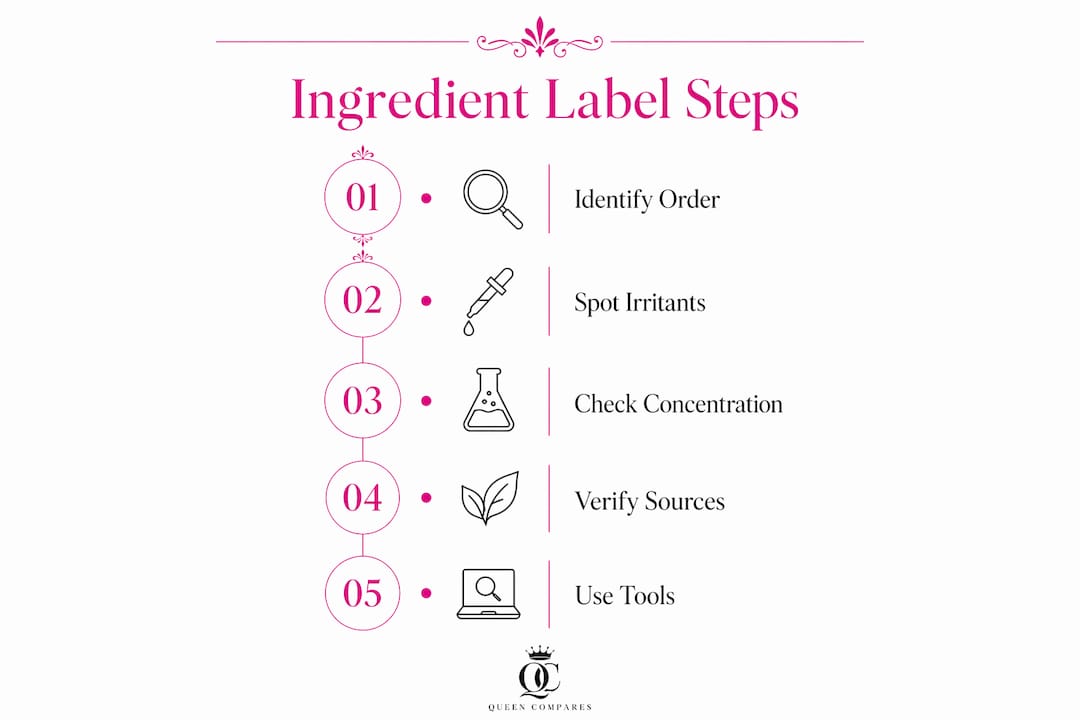
A skincare label reading checklist does not need to be complicated. The goal is to move through the label systematically so you catch both obvious and subtle concerns before a product touches your skin.
-
Read the full ingredient list before purchasing. Do not rely on front-label claims like “fragrance-free” or “hypoallergenic.” These terms have no standardized legal definition in the US.
-
Check the expiration or period-after-opening symbol. EU labels must include minimum durability information and a batch number. US labels are not required to show expiration dates for most cosmetics, but the period-after-opening symbol (the open jar icon with a number) tells you how many months the product is safe to use after opening.
-
Look up unfamiliar INCI names. The CosIng database covers regulatory status and restrictions for ingredients under EU law. For a faster consumer-facing check, the QueenCompares Ingredient Checker cross-references safety data and skin compatibility in seconds.
-
Cross-check against your personal blacklist. If you know Limonene or Methylisothiazolinone triggers your skin, search the ingredient list specifically for those INCI names before buying.
-
Patch test any new product. Apply a small amount to the inner forearm or behind the ear for 48 hours before full use. Patch testing remains essential because label information alone cannot predict individual reactions, especially given unknown manufacturing variables and ingredient interactions.
| Verification step | Tool or resource |
|---|---|
| INCI name lookup | CosIng database, QueenCompares Ingredient Library |
| Safety and restriction check | CosIng, FDA Cosmetic Ingredient Database |
| Allergen identification | EU allergen disclosure list, personal INCI blacklist |
| Product comparison | QueenCompares side-by-side product tool |
| Expiration and batch info | Product label, brand website |
Pro Tip: Personalized skincare built around ingredient-level awareness consistently outperforms generic product selection. Knowing which specific INCI names work for your skin type saves money and reduces the trial-and-error cycle significantly.
Key takeaways
Knowing how to read skincare ingredient labels requires understanding INCI naming, concentration order, the 1% threshold rule, and how to verify ingredient safety using trusted databases and tools.
| Point | Details |
|---|---|
| Descending order is the rule | Ingredients above 1% are listed from highest to lowest concentration by law in both the US and EU. |
| The 1% zone changes the game | Actives, preservatives, and fragrance components often sit below 1% but can still drive results or reactions. |
| INCI names are non-negotiable | Always read the standardized INCI list, not front-label marketing claims, for accurate ingredient identification. |
| Labels have real limits | Ingredient lists confirm what is present but reveal nothing about raw material quality, stability, or clinical dose. |
| Patch testing protects you | No label reading system replaces a 48-hour patch test for sensitive or reactive skin types. |
Why I read every label twice now
The most common mistake I see is treating ingredient order as a direct ranking of importance. A retinol listed at position 28 out of 30 ingredients is not a throwaway addition. At 0.1 percent, it is still a clinically active concentration. The label tells you it is there. It does not tell you whether the formulator used a stabilized encapsulated form or a raw retinol that degrades within weeks of opening.
What I have learned from years of reading formulations is that the label is a starting point, not a conclusion. Two products can share 90 percent of the same ingredient list and perform completely differently because of pH, processing temperature, and raw material sourcing. None of that appears on the label.
My honest advice is to stop looking for “good” or “bad” ingredients in isolation and start building a personal reference system. Track which INCI names consistently work for your skin and which ones consistently cause problems. Use the CosIng database and tools like QueenCompares to fill in the gaps that the label itself cannot answer. And pay attention to how your skin actually responds, because that data is more reliable than any ingredient ranking system.
The regulatory landscape is also shifting. The EU continues to update its restricted ingredient lists under Regulation 1223/2009, and MoCRA 2022 is expanding FDA oversight of cosmetics in the US for the first time in decades. Staying current with these changes matters if you want your label reading skills to stay accurate.
You can verify and explore brands that prioritize transparency by providing clear, detailed lists of their skincare ingredients. For example, you can visit Norml4men, which features a curated selection of companies committed to transparency. These brands often disclose all ingredients used in their products, including active and inactive components, so you can make informed choices. Additionally, some brands offer ingredient breakdowns and explanations for their formulations, helping you understand the purpose and safety of each component. This approach ensures you select skincare products free from harmful chemicals and unnecessary additives, promoting healthier skin and peace of mind.
Make ingredient reading easier with QueenCompares
Reading every label by hand is time-consuming. QueenCompares was built to make that process faster and more reliable for the whole community.
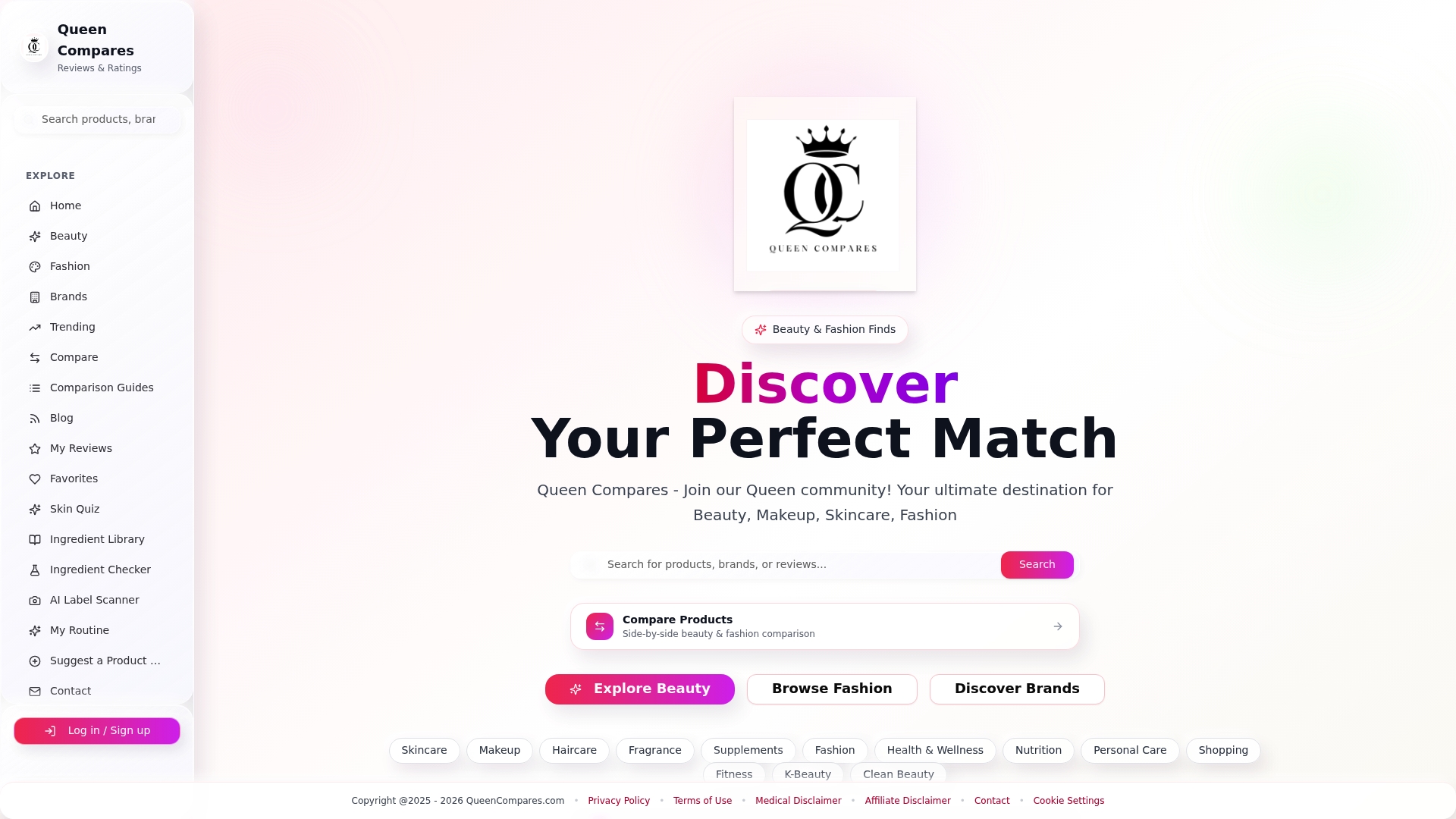
The Label Scanner lets you photograph or paste any ingredient list and get an instant breakdown of base ingredients, actives, preservatives, and flagged allergens. The Ingredient Checker lets you search any INCI name and see its function, safety rating, and known skin compatibility concerns in one view. You can also compare products side by side to see exactly where formulas differ before you spend a dollar. Whether you are building your first skincare routine or refining one that already works, QueenCompares gives you the ingredient-level clarity to choose with confidence.
FAQ
What does INCI stand for in skincare?
INCI stands for International Nomenclature of Cosmetic Ingredients. It is the standardized naming system used on ingredient lists worldwide, so every ingredient has one consistent scientific name regardless of brand or country of origin.
How do I know if an ingredient is present in a meaningful amount?
Ingredients listed in the top third of the label are generally present above 1 percent concentration. Ingredients below that threshold can appear in any order, so position alone does not confirm exact amount. Checking clinical research on effective use concentrations for specific actives gives you a better benchmark.
Is “fragrance-free” the same as having no fragrance ingredients?
No. “Fragrance-free” has no standardized legal definition in the US. A product can carry that claim while still containing fragrance-derived compounds listed individually by INCI name. Always scan the full ingredient list for Linalool, Limonene, Eugenol, and similar fragrance allergens.
Can I trust a product labeled “hypoallergenic”?
The term “hypoallergenic” is not regulated in the US and carries no legal requirement. It is a marketing claim. Reading the full INCI list and cross-checking against your personal sensitivity list is the only reliable way to assess a product’s compatibility with your skin.
Where can I look up an unfamiliar ingredient quickly?
The EU’s CosIng database covers regulatory status and restrictions for ingredients under European law. The QueenCompares Ingredient Library provides consumer-friendly safety ratings, function descriptions, and skin type compatibility data for thousands of INCI names.