Tracking skincare routine progress effectively means using consistent photo documentation, symptom logs, and digital tools to measure real skin changes over time rather than relying on memory or gut feeling. The industry term for this practice is skin progress monitoring, and it combines the rigor of experiment design with the simplicity of a daily habit. Most people abandon routines too early or switch products too fast because they have no reliable data to guide their decisions. This guide gives you the framework, timing rules, and tools to build a tracking system that actually works.
Check our Clean Beauty page where we feature skincare and makeup products whose AI ingredient safety analysis scored 80/100 or higher — cleaner formulations, fewer concerns.
What tools and conditions do you need to track skincare progress?
Tracking skincare results starts with controlling your measurement environment. Consistent photo conditions are the single most important factor in reliable skin monitoring. If your lighting shifts between photos, your brain will interpret shadows and color shifts as skin changes when nothing has actually changed.
The two non-negotiable photo conditions are lighting and angle. Natural window light or a fixed diffused setup outperforms bathroom lighting because it controls both brightness and color temperature. Color temperature and shadow geometry matter as much as brightness for accurate skin tone comparison. Stand in the same spot, face the same direction, and skip filters entirely.
Beyond photos, you need a written log. A symptom and product diary tracks what you applied, when you applied it, and how your skin responded. This low-tech habit improves treatment adherence and side effect detection far better than relying on memory alone. Apps like Queencompares.com have AI analysis layer that helps track ingredients safety, skin type and skincare routine:
-
Ingredient Library — A comprehensive resource with detailed information on various beauty and skincare ingredients, including descriptions, uses, benefits, allergens, and products. Ideal for beginners, professionals, and makeup artists, it helps you make informed choices. Learn about ingredients like aloe vera, retinol or jojoba oil and their role in beauty routines.
Explore our Hero Products and Skin Concerns sections to find ingredients and products tailored to your skin needs. Filter by concerns like acne, aging, hyperpigmentation, sensitivity, and dryness. Highlights include hero ingredients such as retinol, niacinamide, PDRN, hyaluronic acid, and vitamin C, known for their effectiveness. This organized layout helps you choose the best products and ingredients for your skin, making your routine more targeted and effective.
-
AI Label Scanner is an advanced AI tool that quickly analyzes product labels, helping consumers verify ingredients, nutrition, and allergens for transparency and safety. Users can upload images or input details to get instant reports on authenticity, allergens, and benefits, making it essential for health-conscious shoppers and quality enthusiasts.
-
Ingredient Checker — A quick, easy online tool to verify cosmetic and skincare ingredients. It helps assess safety, transparency, and quality before buying. Check for harmful additives or allergens in products like creams or mascara. With detailed ingredient info, the Ingredient Checker enables informed, health-conscious, and ethical choices.
-
SkinType Quiz - Take this quick and easy online assessment to determine your specific skin type, which can help you choose the most suitable skincare products and routines for your individual needs.

Here is a quick comparison of the most common tracking methods:
| Method | Best for | Effort level | Data quality |
|---|---|---|---|
| Smartphone photo diary | Visual progress comparison | Low | High (if consistent) |
| Written symptom log | Identifying triggers and reactions | Low | High |
| SkinPal AI app | Automated trend detection | Medium | Very high |
| Dermatologist photo review | Clinical-grade assessment | High | Very high |
| Memory only | Nothing reliable | None | Very low |
The table makes one thing clear: low-tech methods work when they are consistent. AI tools like SkinPal AI add value on top of consistency, not instead of it.
Pro Tip: Set a weekly phone alarm labeled “skin photo” and take your photo immediately after your morning routine, before applying makeup. Same window, same distance, no filter. That one habit removes 80% of the variables that make photo comparisons misleading.
How do you interpret skincare progress over time?
The biggest mistake in skin progress monitoring is expecting results on the wrong timeline. Skincare is a biology problem, and biology moves slowly. About 20% of adults report that retinoids take up to 12 weeks before showing visible results. That means you could be using a product that is working perfectly and still see no change at week four.
Clinical acne treatments follow a similar window. NICE NG198 guidelines recommend evaluating antibiotic treatment adequacy at 12 weeks, not sooner. This is not arbitrary. Skin cell turnover, inflammation cycles, and microbiome shifts all operate on timescales measured in weeks, not days.
Here is how to apply timing rules to your own tracking:
-
Weeks 1 to 2: Establish your baseline. Take photos, start your log, and introduce only one new product.
-
Weeks 3 to 6: Observe without intervening. Note reactions but do not switch products based on day-to-day fluctuations.
-
Weeks 6 to 12: Evaluate trends. Compare week 6 photos to your baseline. Look for directional change, not perfection.
-
Week 12: Make a data-driven decision. If no meaningful improvement appears, modify the routine. If progress is visible, continue.
“Tracking progress is an experiment design problem. You need repeated measurements under stable conditions and enough time for biological changes to occur.” — SkinPal AI Blog
The key principle is trend analysis over single observations. One bad skin day at week five means nothing. A consistent pattern of worsening across weeks five, six, and seven means something. Waiting 7 to 14 days before reacting to any change prevents you from abandoning a routine that is actually working.
Pro Tip: Create a monthly summary photo grid in your phone’s album. Place week 1, week 4, week 8, and week 12 photos side by side. Trends that are invisible week to week become obvious across a 12-week grid.
Changing only one product at a time is equally critical. Isolating one variable with at least six weeks of observation is the only way to know which product caused which result. Swap two products at once and you lose all interpretive power.
Step-by-step process for monitoring your skincare regimen progress
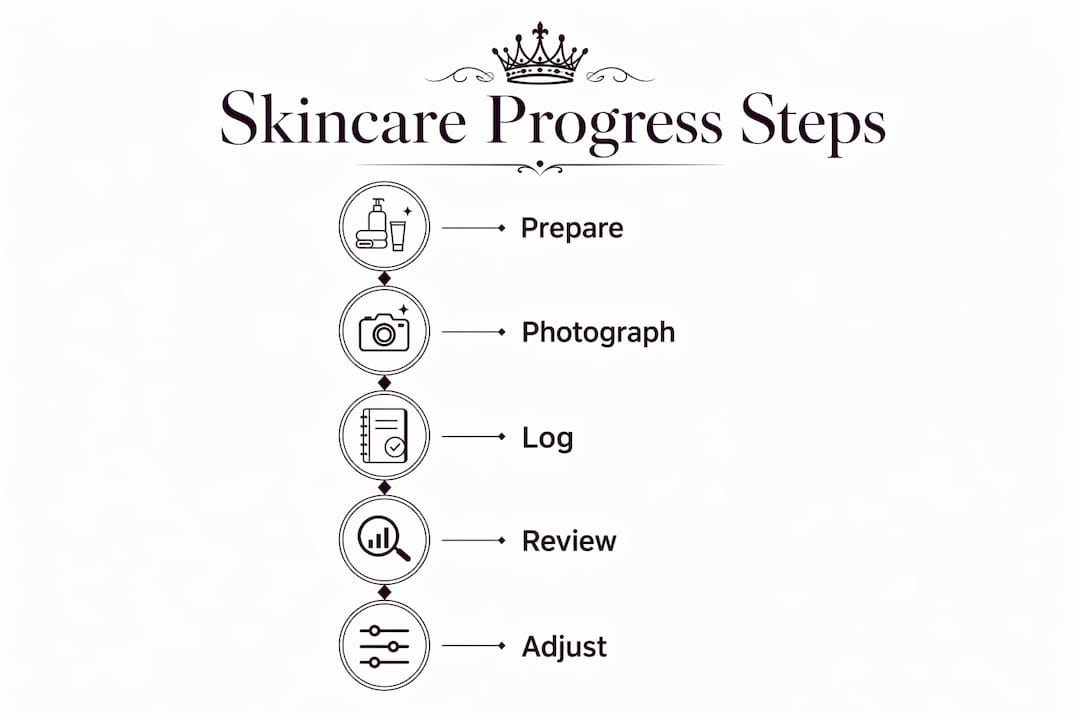
A reliable tracking system has four phases: baseline, logging, review, and decision. Follow this sequence and your data will tell you exactly what is working.
Phase 1: Establish your baseline
-
Take three baseline photos: front face, left profile, right profile. Use natural window light, no filter, same distance from the mirror.
-
Write down every product currently in your routine, including the order of application and the amount used.
-
Note your current skin concerns: breakouts, dryness, redness, texture. Rate each on a scale of 1 to 10.
-
Record external factors: current stress level, sleep quality, diet changes, and local weather conditions.
Phase 2: Log consistently
-
Take photos every 7 to 14 days. Weekly or biweekly photos reduce noise compared to daily shots while still capturing meaningful change.
-
Log any product changes, new additions, or removals on the exact date they happen.
-
Record skin reactions within 24 hours of noticing them, including the specific zone of your face affected.
-
Note lifestyle variables weekly: sleep hours, stress rating, diet shifts, and weather changes.
Phase 3: Review your data
Use this simple weekly review table to stay organized:
| Week | Skin concern rating (1-10) | Products changed | Notable reactions | External factors |
|---|---|---|---|---|
| Baseline | 8 | None | None | High stress |
| Week 4 | 6 | Added retinol | Mild dryness | Normal |
| Week 8 | 4 | None | None | Low stress |
| Week 12 | 2 | None | None | Normal |
Phase 4: Make decisions
Compare your week 12 data to your baseline. If your concern rating dropped by two or more points with no new products introduced, you have strong evidence that your current routine is effective. If ratings stayed flat or worsened, modify one variable and restart the 6-week observation window.
Pro Tip: Use a notes app like Apple Notes or Google Keep to create a skincare log template you can duplicate each week. Paste in your photo, rate your concerns, and add a two-sentence summary. The whole process takes under three minutes and builds a searchable archive of your skin history.
Integrating tracking into your existing routine removes friction. Take your photo right after cleansing, before applying any products. Log your routine immediately after finishing it. Attach the habit to something you already do automatically and it will stick.
Common mistakes that undermine effective skincare tracking
Most tracking failures come from a small set of predictable errors. Knowing them in advance saves weeks of wasted effort.
-
Changing multiple products at once. This is the most common mistake. If you swap your cleanser, add a new serum, and increase your retinol frequency in the same week, you cannot attribute any skin change to any specific product. Change one variable, wait six weeks, then evaluate.
-
Inconsistent photo conditions. A photo taken in harsh overhead lighting versus soft window light will look like two different people. Photographic consistency requires controlling color temperature and shadow geometry, not just brightness.
-
Overreacting to short-term changes. Skin fluctuates daily due to hormones, hydration, sleep, and stress. A breakout at day ten does not mean your new product is failing. Commit to the 7 to 14-day rule before drawing any conclusions.
-
Extending ineffective treatments too long. A 2026 study found that antibiotic courses longer than 16 weeks increase acne recurrence risk by 2.3 times at 12 months. Continuing a treatment past its clinical window does not improve outcomes. It increases resistance risk. If no improvement appears by week 12, modify the plan.
-
Ignoring skin zone differences. Your T-zone and cheeks may respond differently to the same product. Log reactions by zone, not just as a whole-face assessment. A product that clears your forehead while drying your cheeks needs a targeted adjustment, not elimination.
Pro Tip: Keep a “change log” separate from your daily diary. Every time you modify your routine, write the date, what changed, and why. This single document will save you from repeating the same mistakes across multiple product cycles.
Using a photo diary alongside a symptom log consistently outperforms relying on memory or marketing claims. The data you collect is yours. It reflects your skin, your biology, and your specific routine. No brand advertisement can replicate that.
Key takeaways
Consistent, condition-controlled photo tracking combined with a single-variable change rule and a 6 to 12-week evaluation window is the most reliable way to monitor skincare regimen progress.
| Point | Details |
|---|---|
| Control photo conditions | Use the same lighting, angle, and distance every time to prevent misleading comparisons. |
| Follow clinical timing | Allow 6 to 12 weeks minimum before evaluating any new product or treatment. |
| Change one variable at a time | Isolating each change is the only way to know which product caused which result. |
| Log symptoms by skin zone | Track reactions on specific face zones to make precise, targeted adjustments. |
| Use trend analysis | Compare weekly data across a 12-week grid rather than reacting to single-day observations. |
What consistent tracking taught me about patience and skin science
I spent years cycling through skincare products faster than any of them could actually work. The turning point was not finding a better product. It was building a tracking system that forced me to wait long enough to see real results.
The most counterintuitive thing I have learned is that good tracking makes you less reactive, not more. When you have a photo grid and a symptom log, you stop panicking at every bad skin day because the data tells you whether it is a blip or a trend. That shift in mindset is worth more than any single product.
AI tools like SkinPal AI genuinely add value when layered on top of consistent manual tracking. They catch gradual improvements your eyes normalize to over time. But they are not a replacement for the discipline of same-window, same-angle, no-filter photos taken on a fixed schedule.
My honest recommendation: start with the simplest possible system. One photo per week, one log entry per day, one product change at a time. The Queencompares Skin Type Quiz is a smart starting point for identifying your skin type before you build your baseline, because knowing your skin type shapes which ingredients and timelines apply to you. Build the habit first. Add tools and complexity only after the habit is locked in.
— Affgoal
Find and compare the right products for your tracking journey
Knowing what to track is only half the equation. Knowing which products to track matters just as much.

Queencompares is built for exactly this moment in your skincare journey. You can compare products side by side to evaluate formulas before adding anything new to your routine, which means fewer wasted 12-week tracking cycles on products that were never right for your skin. The Ingredient Library lets you research every active in your current lineup so you understand what each ingredient does and how long it realistically takes to work. Pair that with the brand database to research product lines that align with your skin goals. The Queen community is here to help you choose smarter from the start.
FAQ
How often should I take skincare progress photos?
Take photos every 7 to 14 days under consistent lighting and at the same angle. Weekly or biweekly cadence reduces daily noise while still capturing meaningful skin changes over time.
How long does it take to see results from a new skincare product?
Most products require 6 to 12 weeks of consistent use before results are visible. Retinoids specifically can take up to 12 weeks, with about 20% of adults reporting no visible change until that point.
Why should I only change one skincare product at a time?
Changing one product at a time and tracking for at least six weeks is the only reliable way to attribute skin changes to a specific variable. Changing multiple products simultaneously makes your tracking data unreadable and your decisions unreliable.
What is the best app for tracking skincare progress?
SkinPal AI is a strong option for AI-powered skin trend analysis layered on top of photo documentation. For manual tracking, a simple notes app like Apple Notes or Google Keep paired with a consistent photo schedule works just as well for most people.
When should I stop a skincare treatment that is not working?
If no meaningful improvement appears by week 12, modify the regimen rather than extending it. NICE NG198 guidelines recommend reviewing treatment adequacy at 12 weeks, and extending ineffective antibiotic courses beyond 16 weeks increases recurrence risk significantly.