
TL;DR:
- Maintaining skin pH between 4.5 and 5.5 preserves the acid mantle, barrier function, and microbiome health. Using pH-balanced cleansers, layering products from low to high pH, and supporting the barrier with hydration prevent disruption and irritation. Simplifying routines and avoiding high-pH products like traditional soap and alcohol-based toners are essential for long-term skin health.
Skincare pH balance is the practice of maintaining your skin’s natural acidic environment, typically between 4.5 and 5.5, to preserve barrier function and get the most out of every product you use. This range supports your acid mantle, the thin protective film that shields your skin from bacteria, environmental stress, and moisture loss. When pH drifts too high or too low, your barrier weakens, your microbiome shifts, and even your best serums stop working as intended. Mastering pH balance in skincare is not about obsessing over numbers. It is about making smarter, more informed choices every single day.
1. Skincare pH balance best practices start with your cleanser
The cleanser is the single highest-impact product in any pH-conscious routine. Traditional soap bars sit at pH 8 to 10, which is far above your skin’s ideal range. Every wash with a high-alkaline cleanser strips the acid mantle and forces your skin into a recovery cycle it may not complete before your next cleanse.
Syndet cleansers, short for synthetic detergent bars, are formulated at pH 4.5 to 5.5. They clean effectively without disrupting the enzymes your barrier depends on to stay intact. Brands like CeraVe Hydrating Cleanser, La Roche-Posay Toleriane Hydrating Gentle Cleanser, and Vanicream Gentle Facial Cleanser all fall within this safe range.
After alkaline exposure, skin recovery takes 1 to 3 hours. During that window, barrier enzymatic activity is impaired and your microbiome defenses are down. If you cleanse twice daily with a high-pH product, your skin may never fully recover between sessions.
Signs your cleanser is too alkaline include immediate tightness after rinsing, a squeaky-clean feeling, and increased sensitivity over time. These are not signs of a thorough cleanse. They are signs of barrier lipid stripping that calls for a product switch.
-
Look for cleansers labeled “syndet,” “soap-free,” or “pH-balanced”
-
Avoid cleansers with sodium lauryl sulfate as the first surfactant
-
Test your cleanser: skin should feel comfortable and supple after rinsing, not tight
Pro Tip: If your skin feels tight within 60 seconds of rinsing your cleanser, that product is almost certainly too alkaline. Swap it before addressing any other step in your routine.
2. How to layer skincare products by pH for maximum results
Product layering order is where most routines quietly fall apart. The rule is straightforward: apply products from lowest pH to highest pH. This preserves the efficacy of your actives and protects your barrier from unnecessary stress.
Here is the sequence that works:
-
Cleanser (pH 4.5 to 5.5): Sets a clean, slightly acidic base for everything that follows.
-
AHA or BHA exfoliant (pH 3 to 4): Glycolic acid, lactic acid, and salicylic acid all require a low pH environment to penetrate and exfoliate effectively. AHAs and BHAs function optimally at pH 3 to 4.
-
Vitamin C serum (pH 2.5 to 3.5): L-ascorbic acid, the most studied form of vitamin C, is only stable and active at a very low pH. Apply it before anything that would raise the pH around it.
-
Wait 15 to 20 minutes: Allowing acid time to work at low pH before layering a higher-pH product prevents dilution and maximizes benefit.
-
Niacinamide or peptide serum (pH 5 to 7): These work at a more neutral range and should follow your low-pH actives, not precede them.
-
Moisturizer (pH 5 to 7): Barrier repair ingredients like ceramides and hyaluronic acid work best after actives have had time to absorb.
-
Sunscreen (pH 6 to 8): Apply last in your morning routine. Its slightly higher pH is offset by the protective benefits it delivers.
Avoid mixing a low-pH acid with a high-pH product in the same layer. The two neutralize each other, reducing the acid’s effectiveness and creating unnecessary pH swings for your skin. Cumulative pH load across a single routine matters more than any individual product’s pH in isolation.
Retinoids deserve a separate note. Unlike acids, buffering retinoids with moisturizer eases irritation without reducing long-term efficacy. Buffering acids, however, substantially reduces their effectiveness by altering their working pH. Alternate retinoids and acids on different nights rather than stacking them.
Pro Tip: You do not need to use every active every day. Rotating your low-pH acids and retinoids on alternating nights gives your barrier time to recover and reduces the risk of cumulative irritation.
3. Comparing common skincare products and their pH impact
Understanding where your products fall on the pH scale helps you spot potential conflicts before they show up on your skin.
| Product type | Typical pH range | Effect on skin pH balance |
|---|---|---|
| Traditional soap bar | 8 to 10 | Strongly disrupts acid mantle; causes barrier stress |
| Syndet cleanser | 4.5 to 5.5 | Supports barrier; minimal disruption |
| AHA/BHA exfoliant | 3 to 4 | Temporarily lowers pH; effective when used correctly |
| Vitamin C (L-ascorbic acid) | 2.5 to 3.5 | Highly acidic; requires correct sequencing |
| Toner (alcohol-free) | 5 to 7 | Neutral to slightly acidic; generally safe |
| Toner (alcohol-containing) | Variable | Disrupts barrier lipids and pH; avoid in pH-focused routines |
| Moisturizer | 5 to 7 | Supports barrier; compatible with most routines |
| Sunscreen | 6 to 8 | Slightly above skin pH but protective benefits outweigh disruption |
Alcohol-containing toners are one of the most common hidden disruptors in skincare routines. Despite marketing claims about pore refinement and freshness, denatured alcohol causes pH disruption and strips barrier lipids. Swap them for hydrating, alcohol-free toners or essence-style products instead.
Sunscreen sits slightly above the skin’s ideal pH, but UV protection preserves barrier function over the long term. Skipping SPF to avoid a minor pH shift is a trade-off that consistently works against you.
-
Prioritize syndet cleansers over traditional soap bars
-
Replace alcohol-based toners with hydrating, low-pH alternatives
-
Check your vitamin C serum’s pH if it is not delivering visible results
4. Hydration and protection practices that support pH balance
Hydration is not just about comfort. Well-hydrated skin maintains its acidic environment more reliably than dry, compromised skin. Hyaluronic acid and ceramides support barrier function and help skin retain its natural acidity by reinforcing the lipid matrix that holds moisture in.
Ceramides are particularly important here. They make up roughly 50% of the skin’s lipid barrier and are directly involved in maintaining the acidic pH that keeps pathogens out and moisture in. Products from brands like CeraVe, Eucerin, and Dr. Jart+ Cicapair are formulated with ceramide complexes that actively support barrier repair.
Sun protection is the most underrated pH-balancing habit in any routine. UV damage elevates skin pH over time by degrading the acid mantle and disrupting lipid production. Daily SPF 30 or higher is not optional if you want to maintain stable pH levels for healthy skin long-term.
-
Apply a ceramide or hyaluronic acid moisturizer morning and night
-
Use SPF 30 or higher every morning, even on cloudy days
-
Avoid over-exfoliating: limit AHA/BHA use to 2 to 3 times per week maximum
-
Simplify your routine when your skin is reactive. Fewer products mean fewer pH swings
Reducing the total number of products in your routine is one of the most effective adjustments you can make. Every additional product introduces another pH variable. A simplified routine gives your skin’s self-regulation mechanisms room to maintain healthy pH balance without constant interference.
5. Common pH mistakes to avoid and pro tips that actually work
Most pH disruption in skincare routines comes from a small set of repeated mistakes. Recognizing them is the fastest way to stop the cycle of irritation and sensitivity.
Elevated skin pH promotes barrier disruption, inflammation, and microbial imbalance. This is the clinical reality behind conditions like acne, eczema, and chronic redness. Restoring an acidic environment is often the overlooked first step in treating these issues, not an afterthought.
-
Using alkaline soaps daily: The most common and most damaging mistake. Switch to a syndet cleanser before changing anything else.
-
Stacking multiple low-pH actives in one routine: Using glycolic acid, salicylic acid, and vitamin C in the same session creates a cumulative pH load your barrier cannot handle.
-
Relying on toners to “balance” pH after cleansing: A toner cannot undo the damage from an alkaline cleanser. Fix the cleanser first.
-
Ignoring skin signals: Tightness, redness, and stinging after product application are your skin telling you something is wrong. Do not push through.
-
Assuming “natural” or “gentle” means pH-safe: Many natural cleansers use baking soda or high-pH plant-based surfactants that are just as disruptive as traditional soap.
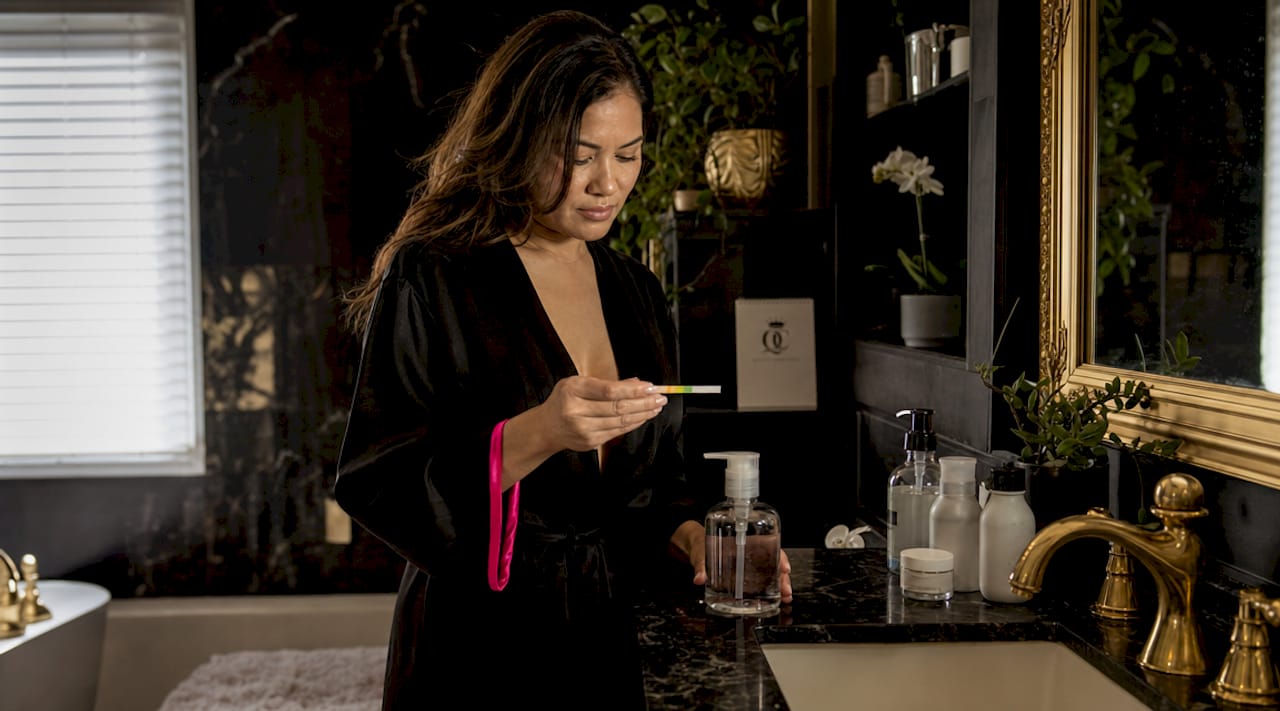
Pro Tip: You can use affordable pH strips or a digital pH meter to test your cleansers and toners at home. Anything above pH 6.5 for a cleanser is worth reconsidering, regardless of how it is marketed.
Tracking how your skin responds to routine changes over time is one of the most practical habits you can build. The QueenCompares guide on tracking routine progress walks through exactly how to do this without overcomplicating it.
Key takeaways
Maintaining skin pH between 4.5 and 5.5 requires starting with a pH-balanced cleanser, layering products from lowest to highest pH, and supporting the barrier with ceramides, hydration, and daily SPF.
| Point | Details |
|---|---|
| Start with the cleanser | Switching to a syndet cleanser at pH 4.5 to 5.5 is the single highest-impact change you can make. |
| Layer low to high pH | Apply AHAs, BHAs, and vitamin C before moisturizers and sunscreen to preserve efficacy. |
| Wait between actives | Allow 15 to 20 minutes after acids before applying higher-pH products to prevent neutralization. |
| Hydrate and protect | Ceramides, hyaluronic acid, and daily SPF 30 or higher maintain stable, acidic skin pH over time. |
| Simplify when reactive | Fewer products mean fewer pH swings and more room for your skin to self-regulate. |
Why the cleanser switch changed everything for me
By Magdalena Kapuscinska
I spent years layering expensive serums onto skin that never quite responded the way I expected. Vitamin C that oxidized fast, acids that stung without delivering results, moisturizers that sat on top instead of absorbing. The problem was not the products. It was the cleanser I had been using for a decade, a traditional bar soap with a pH well above 9.
The moment I switched to a syndet cleanser, my skin’s baseline changed within two weeks. Not dramatically, but noticeably. Less tightness, less reactive redness, and for the first time, my vitamin C serum actually started doing something visible.
What I have learned from years of paying close attention to ingredient interactions is this: most people are trying to fix with serums what they are breaking with their cleanser. The acid mantle is not a marketing concept. It is a functional system, and you cannot out-serum a disrupted barrier.
I also think the skincare community over-indexes on individual product pH and under-indexes on the total pH stress of a full routine. You can have a perfectly pH-appropriate acid serum and still wreck your barrier by using it alongside three other low-pH products every single night. The cumulative load is what matters. Simplicity is not a compromise. It is a strategy.
If you are just starting to think about pH balance in skincare, do not try to overhaul everything at once. Swap the cleanser. Wait three weeks. Then reassess what your skin actually needs.
— Magdalena Kapuscinska
Find pH-balanced skincare products with QueenCompares
Ready to put these practices into action? QueenCompares makes it easy to find products that actually match your skin’s pH needs, without the guesswork.

Browse the QueenCompares product catalog to compare pH-balanced cleansers, serums, and moisturizers side by side, with ingredient safety ratings and community reviews built right in. Use the Ingredient Library to research barrier-friendly actives before you buy, and take the Skin Type Quiz to get personalized recommendations tailored to your skin’s specific needs. Whether you are building a routine from scratch or fine-tuning what you already have, the QueenCompares community has you covered. Join us and make every product choice count.
FAQ
What is the ideal skin pH for a healthy barrier?
Healthy facial skin pH ranges between 4.5 and 5.5. This slightly acidic range supports the acid mantle, maintains microbiome balance, and keeps barrier enzymes functioning correctly.
How do I know if my cleanser is disrupting my skin pH?
Immediate tightness or a squeaky-clean feeling after rinsing are the clearest signs. These indicate your cleanser is too alkaline and is stripping barrier lipids, which calls for switching to a syndet or soap-free formula.
Can I use AHAs and vitamin C in the same routine?
Yes, but sequence matters. Apply vitamin C first at pH 2.5 to 3.5, wait 15 to 20 minutes, then apply your AHA. Avoid using both alongside additional low-pH actives in the same session to prevent cumulative barrier stress.
Do toners help balance skin pH?
Alcohol-free, hydrating toners can support pH balance, but they cannot correct the damage from an alkaline cleanser. Alcohol-containing toners actively disrupt pH and barrier lipids and should be avoided in any pH-focused routine.
How long does skin take to recover from alkaline cleansing?
Skin recovery from alkaline exposure takes 1 to 3 hours. During this window, barrier enzymatic activity and microbiome defenses are impaired, which is why frequent use of high-pH cleansers leads to chronic barrier disruption over time.