TL;DR:
- A simplified skincare routine includes only cleansing, moisturizing, and sun protection, focusing on products that truly work. Consistent use of these three essentials yields measurable skin improvements within four to six weeks and protects the skin barrier effectively. Introducing targeted treatments gradually and tracking reactions helps avoid irritation while maintaining a minimalist, effective regimen.
A skincare routine simplification checklist is a strategic set of steps that cuts your daily regimen down to three proven essentials: cleansing, moisturizing, and sun protection. This approach, often called “skinimalism” in the industry, is not about settling for less. It is about choosing products that actually work and dropping everything that does not. Brands like Cetaphil, La Roche-Posay, and Eucerin have built their reputations on exactly this philosophy. Research confirms that three products can maintain most people’s skin health without over-treating, and that consistent use of a barrier-focused routine shows measurable improvement within 4 to 6 weeks.
1. What a skincare routine simplification checklist actually includes
The core of any minimalist skincare guide is three non-negotiable steps. Every other product you own is optional. This is not a popular opinion in an industry that profits from complexity, but it is the one backed by dermatologists and ingredient science alike.
Your daily checklist looks like this:
-
Gentle cleanser(morning and evening)
-
Barrier-supporting moisturizer (morning and evening)
-
Broad-spectrum SPF 30 or higher (morning only)
That is it. Everything else, from toners to essences to facial mists, falls outside the core. You can add targeted treatments later, but these three steps are your permanent foundation.
Pro Tip: If you are just starting out, use the QueenCompares Skin Type Quiz to identify your skin type before buying a single product. Choosing the wrong cleanser for your skin type is the most common beginner mistake.
2. How to choose the right cleanser for your skin type
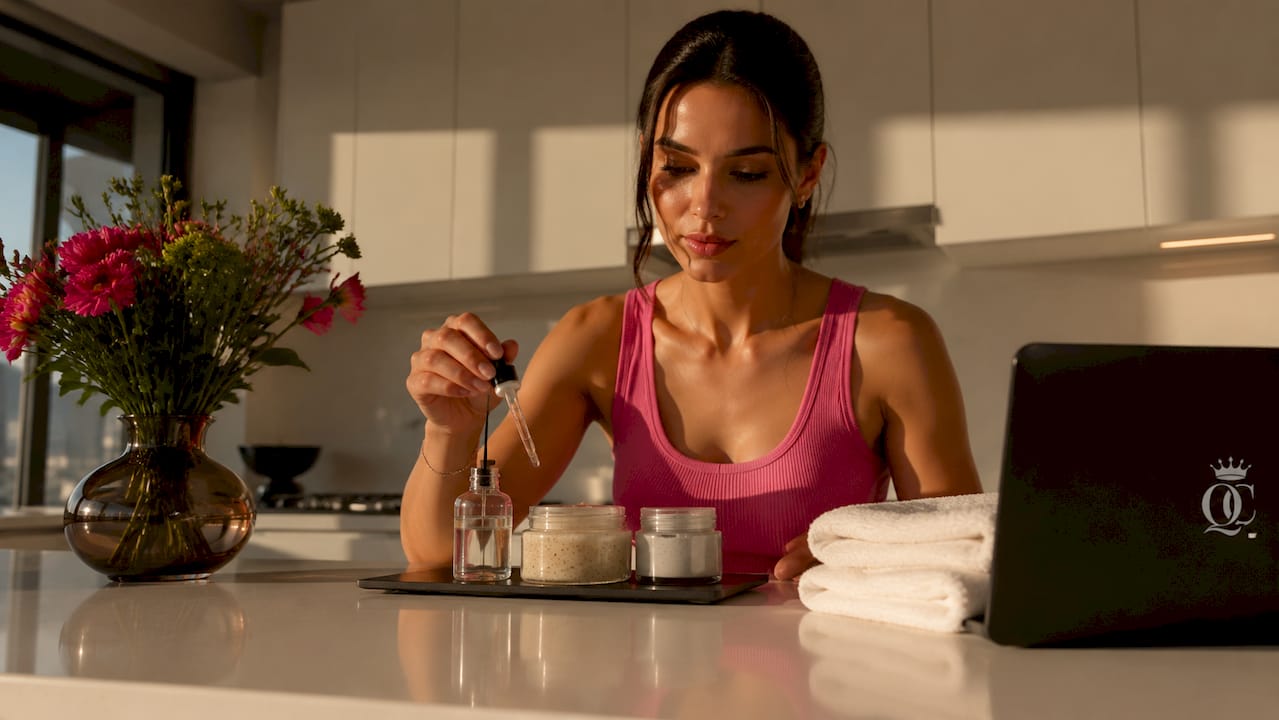
Cleansing is the step most people get wrong. The goal is to remove dirt, oil, and sunscreen without stripping your skin’s natural moisture barrier. A pH-balanced cleanser keeps your skin’s surface at its natural slightly acidic level, which protects against bacteria and irritation.
In the morning, a splash of water or a very gentle cleanser is enough for most skin types. At night, you need something that removes SPF and makeup fully. Micellar water from Garnier or a gentle gel cleanser from CeraVe both work well for this. Avoid anything that leaves your skin feeling “squeaky clean.” That sensation signals barrier damage from stripping, not cleanliness.
For dry or sensitive skin, cream cleansers like Cetaphil Gentle Skin Cleanser are ideal. For oily or acne-prone skin, a foaming gel like La Roche-Posay Toleriane Purifying Foaming Cleanser cleans thoroughly without over-drying.
3. What to look for in a minimalist moisturizer
A moisturizer does three jobs: it attracts water to the skin (humectants), seals it in (occlusives), and repairs the skin barrier (emollients). The best minimalist formulas combine all three in one product. Look for ceramides, glycerin, niacinamide, and hyaluronic acid on the ingredient label.
CeraVe Moisturizing Cream is the most cited dermatologist recommendation for a reason. It contains ceramides 1, 3, and 6-II alongside hyaluronic acid, hitting all three moisturizer functions in a single affordable product. Eucerin Original Healing Cream is another strong option, particularly for very dry or eczema-prone skin. Barrier repair reduces irritation, redness, and ingredient fatigue, which means a good moisturizer actually makes your skin less reactive over time.
Apply moisturizer while your skin is still slightly damp after cleansing. This locks in extra hydration and improves absorption.
4. Why sunscreen is non-negotiable in any easy skincare routine
UV exposure causes about 80% of visible facial aging. That single statistic makes sunscreen the highest-return product in any routine, minimalist or not. If you skip every other optional product but keep your SPF, your skin will age better than someone using a 10-step routine without sun protection.
Choose a broad-spectrum SPF 30 or higher. EltaMD UV Clear SPF 46 is a favorite for acne-prone and sensitive skin. La Roche-Posay Anthelios Melt-in Milk SPF 100 suits those who want maximum protection. Apply sunscreen as the last step in your morning routine, after moisturizer. Reapply every two hours if you are outdoors.
Many people skip sunscreen on cloudy days or when working indoors near windows. UVA rays, which cause aging, penetrate glass and clouds. Daily application is the rule, not the exception.
5. How to reduce excess products and transition to a simplified routine
Excessive product layering and frequent switching cause most routine-driven skin problems. The fix is not adding more products to counteract the damage. It is removing the ones causing it.
Use a gradual withdrawal approach over 4 to 8 weeks. Here is how to do it:
-
Identify your current full product list and write it down.
-
Keep your cleanser, moisturizer, and SPF. Set everything else aside.
-
In week one and two, use only the core three products.
-
Note any changes: breakouts, dryness, redness, or improvement.
-
After four weeks, assess whether your skin has stabilized.
-
If you want to reintroduce a product, add one at a time and wait two weeks before adding another.
-
Discard anything that caused irritation or showed no benefit.
Pro Tip: Tracking your skin’s daily responses in a simple notes app prevents marketing-driven panic buys. When your skin looks good, you will know exactly which three products deserve the credit.
6. How to add targeted treatments without breaking your routine
Once your core routine is stable and your skin barrier feels healthy, you can add one targeted treatment. Just one. Common actives include retinoids, vitamin C, niacinamide, azelaic acid, and benzoyl peroxide. Each addresses a specific concern: retinoids for aging and texture, vitamin C for brightening, azelaic acid for redness and hyperpigmentation, benzoyl peroxide for acne.
Safe incorporation follows a clear protocol:
-
Patch test first. Apply a small amount to your inner arm for 48 hours before using it on your face.
-
Start low and slow. Use the lowest available concentration, two to three times per week, then build frequency gradually.
-
Apply thinnest textures first. Serums go before moisturizer. Moisturizer goes before SPF.
-
Wait between layers. Waiting 3 to 5 minutes between a treatment serum and your moisturizer reduces irritation and improves efficacy.
-
Cycle your treatments. Give your skin one week off from actives every four to six weeks to allow barrier recovery.
“Skinimalism is less a trend and more a mindset of slowing down, decluttering, and trusting your skin’s natural balance.” — skincare.com
Limiting yourself to one active at a time also gives you clear data. If your skin reacts badly, you know exactly what caused it.
7. How to simplify your morning skincare routine steps specifically
Morning routines are where most people over-complicate things. Your skin does not need a full reset in the morning because it has not been exposed to pollution, makeup, or heavy products overnight. A simplified morning skincare routine steps sequence looks like this: rinse or gentle cleanse, apply moisturizer, apply SPF. That is three minutes, maximum.
If you use a vitamin C serum, morning is the right time. Vitamin C is an antioxidant that works synergistically with sunscreen to neutralize free radical damage from UV exposure. Apply it after cleansing, wait a few minutes, then layer moisturizer and SPF on top. For men building a routine from scratch, the same three-step morning sequence applies with no modifications needed.
8. Common mistakes that undermine daily skincare simplification
Simplifying your routine sounds straightforward, but several common errors slow progress or reverse it entirely.
-
Mistaking simplification for deprivation. Simplification is about prioritizing high-signal products proven to work. Dropping your SPF to save time is not minimalism. It is a mistake.
-
Over-cleansing. Washing your face more than twice a day strips the barrier. Harsh sulfate-heavy cleansers do the same damage in a single use.
-
Skipping or inconsistently applying sunscreen. This single habit undermines every other benefit your routine delivers.
-
Expecting results in days. Skin cell turnover takes roughly 28 days. Give any new routine at least four to six weeks before judging it.
-
Wrong layering order. Thicker products applied before thinner ones block absorption. Always go lightest to heaviest: serum, moisturizer, SPF.
Sensitive skin transitions deserve extra patience. If you experience redness or breakouts in the first two weeks of simplifying, that is often your skin recalibrating, not a sign the routine is wrong. Stay consistent and give it time.
For those managing aging skin concerns, the same core principles apply. A barrier-focused minimalist routine is actually more effective for mature skin than a complex multi-step regimen loaded with actives.
Key takeaways
A minimalist skincare routine built on cleansing, moisturizing, and daily SPF delivers consistent, measurable results because it protects the skin barrier instead of overwhelming it.
| Point | Details |
|---|---|
| Core three steps | Gentle cleanser, barrier moisturizer, and broad-spectrum SPF form the non-negotiable foundation. |
| Gradual transition | Remove excess products over 4 to 8 weeks to prevent rebound irritation and barrier disruption. |
| One active at a time | Introduce targeted treatments slowly with patch testing to isolate reactions and protect barrier health. |
| Consistency over complexity | A minimalist routine’s effectiveness depends on long-term, consistent use, not layering perfection. |
| Track your progress | Logging daily skin responses helps you identify what works and avoid unnecessary product additions. |
Why I stopped chasing the 10-step routine and never looked back
I spent two years convinced that my skin needed more. More serums, more acids, more steps. Every new product launch felt like a solution to a problem I had probably created myself. When I finally stripped back to a cleanser, a ceramide moisturizer, and SPF, my skin did something unexpected: it calmed down within three weeks.
What I did not expect was how much I learned about my own skin once I removed the noise. When you are layering six products, you have no idea which one is helping or hurting. A simplified routine gives you real feedback. My skin told me it was dehydrated, not oily, once I stopped over-cleansing with a harsh gel formula.
The hardest part was trusting the process during the first two weeks. There was a brief purge period where my skin looked worse before it looked better. That is normal. The skin barrier needs time to recalibrate after being stripped repeatedly. Patience here is not passive. It is the actual strategy.
My honest advice: start with the core three, give it six weeks, and only add a treatment if you still have a specific concern that the basics have not addressed. Most people find they need far less than they thought.
— Magdalena Kapuscinska
Find your perfect minimalist routine with QueenCompares
Building a simplified routine is easier when you know exactly what is in your products.

QueenCompares gives you the tools to make smarter, faster choices. Use the Ingredient Checker to scan any product label and identify high-signal ingredients like ceramides, niacinamide, and hyaluronic acid while flagging unnecessary fillers or irritants. Browse the product comparison library to compare cleansers, moisturizers, and SPFs side by side based on formula, safety ratings, and community reviews. Take the Skin Type Quiz to personalize your checklist from the start. Our Queen community is here to help you choose with confidence, not guesswork.
FAQ
What are the only 3 steps you truly need?
A gentle cleanser, a barrier-supporting moisturizer, and a broad-spectrum SPF 30 or higher cover the core needs of most skin types. Everything else is optional and should only be added once these three steps are consistent.
How long before a simplified routine shows results?
Consistent use of a barrier-focused routine typically shows measurable improvement within 4 to 6 weeks. Skin cell turnover takes roughly 28 days, so patience through the first month is part of the process.
Can I add a serum to a minimalist routine?
Yes, but limit yourself to one targeted active at a time. Introduce it slowly with a patch test and low frequency, then build up. Adding multiple actives at once makes it impossible to identify what is helping or causing irritation.
Is a simplified routine enough for aging skin?
A barrier-focused minimalist routine is highly effective for mature skin. Adding one retinoid or peptide serum to the core three steps addresses most aging concerns without overwhelming the skin.
Do I really need sunscreen if I work indoors?
Yes. UVA rays penetrate glass and are present even on cloudy days. Since UV exposure causes about 80% of visible facial aging, daily SPF application is the single highest-return habit in any skincare routine.