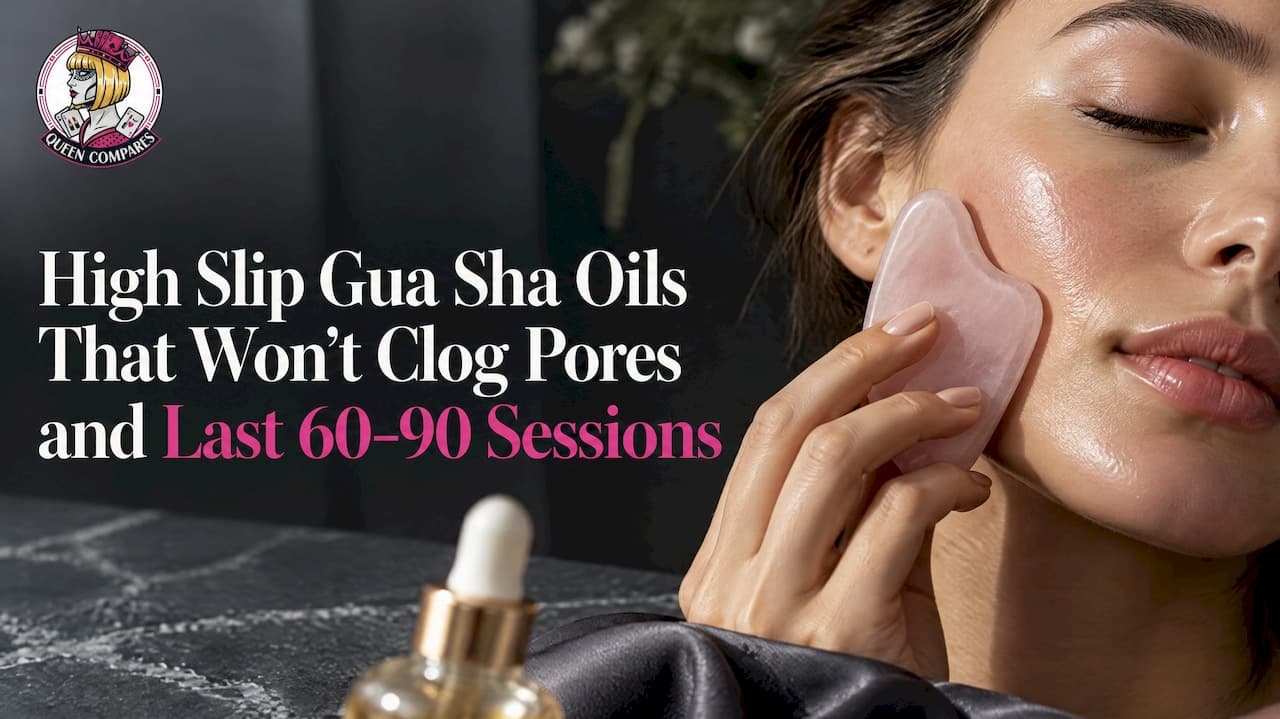
If your skin leans oily or acne-prone, Cannabis Sativa Seed Oil is a calming alternative. A few drops warmed between your fingers before your tool touches skin is all you need.
TL;DR:
- Squalane and hemp seed oils provide the best balance of glide and safety for oily or acne-prone skin, thanks to their low comedogenic risks.
- Heavier oils like argan or rosehip are suitable for dry or mature skin but require lighter application to prevent clogging pores or micro-tears.
- Fragrance-free, transparent labels help identify irritant triggers, especially for sensitive skin, and bottle size should match your session frequency.
- Warming the oil before application enhances glide and reduces tugging, improving gua sha effectiveness and skin comfort.
- Shortlisting products based on slip, safety, ingredient transparency, and community reviews simplifies finding the ideal oil for your skin type and routine.
Table of Contents
- Twelve face oils built for a smooth gua sha glide
- How the shortlist compares on slip, safety, and price
- What to check before you buy your gua sha oil
- Your step-by-step gua sha oil application routine
- How we chose these picks
- A queen's honest take on what actually works
- Find your perfect match on Queen Compares
- Where we sourced our safety and technique claims
- Sources
- FAQ
Twelve face oils built for a smooth gua sha glide
Your gua sha tool only works as well as the oil underneath it. Too little slip and you risk tugging or micro-tearing skin; too much heaviness and you risk clogged pores. Here is how our shortlist stacks up, queens.
- The Ordinary 100% Organic Cold-Pressed Rose Hip Seed Oil: cold-pressed rosehip brings vitamin A precursors and linoleic acid for brightening; moderate slip suits dry to normal skin that tolerates seed oils; budget-friendly.
- Biossance 100% Squalane Oil: plant-derived squalane glides fast without residue, making it a favorite for oily and combination skin that wants non-comedogenic lubrication at a mid price.
- Biossance Squalane + Vitamin C Rose Oil: the same squalane base plus a stabilized vitamin C derivative for dullness, with manageable slip and a mid price tier.
- Josie Maran 100% Pure Argan Oil: rich in oleic and linoleic acids, this thicker oil suits dry or mature skin that tolerates nut oils, though its density calls for a lighter hand.
- Kiehl's Cannabis Sativa Seed Oil: hemp seed oil with moderate slip and calming properties, a smart pick for oily or acne-prone skin at a mid to premium price
- Whamisa Organic Flowers Face Oil: a botanical, fermented-extract blend with solid slip for normal to dry skin wanting a clean formula, positioned at a premium tier.
- YINA Nourish Botanical Serum: a practitioner-formulated blend designed with gua sha technique in mind, appealing to users who want a ritual-specific product at a premium price.
- Amaki Skincare Japanese Tsubaki Anti Aging Face Oil: camellia seed oil offers a silky, antioxidant-rich glide favored by mature or dry skin, at a mid to premium price point.
- Cocokind Watermelon Hemp Oil: a light, non-greasy blend of watermelon seed and hemp oils suited to oily or combination skin, priced for everyday budgets.
- Pink Moon Over the Moon Gua Sha Facial Oil: formulated specifically for high slip and massage compatibility, a ready-made option for anyone who wants a gua sha-specific bottle at a premium price.
- 100% Pure Super Fruits Facial Oil: an antioxidant-forward fruit seed oil blend for dry skin comfortable with botanical fragrance, mid-priced.
- Herbivore Phoenix Rosehip Oil: a rosehip formulation aimed at barrier repair and texture, fitting dry to normal skin at a mid to premium tier.
- Aromatica Brightening Neroli Facial Oil: a neroli-scented brightening oil with a light, glide-friendly texture suited to dull or uneven skin tone.
- Charlotte Tilbury Collagen Superfusion Oil: a luxury formula built for plumping and glide, positioned for mature skin at a premium price.
- Youth to the People Superberry Dream Oil: a superberry-rich blend offering lightweight slip and antioxidant support for normal to combination skin.
- Blume Meltdown Oil: a lightweight, acne-friendly oil formulated for blemish-prone skin that still wants gua sha slip without heaviness.
How the shortlist compares on slip, safety, and price
Slip and comedogenic risk are the two axes that matter most for gua sha, and they often pull in opposite directions: richer, more nourishing oils tend to sit heavier on the skin, while lightweight esters like squalane glide beautifully but offer less intensive nutrition. Weigh your skin's tolerance for richness against how much your tool needs to glide before you commit to a bottle.
| Oil | Slip / texture | Best for | Comedogenic note | Standout ingredient | Price tier |
|---|---|---|---|---|---|
| The Ordinary Rose Hip Seed Oil | Moderate | Brightening, dry to normal | Moderate risk | Rosehip vitamin A precursors | Budget |
| Biossance 100% Squalane Oil | High, fast-absorbing | Oily to combination | Low risk | Plant-derived squalane | Mid |
| Josie Maran Argan Oil | Rich, thicker | Dry, mature | Moderate risk | Oleic and linoleic acids | Mid |
| Cannabis Sativa Seed Oil | Moderate | Oily, acne-prone | Low to moderate | Hemp seed oil | Various price tiers |
| Pink Moon Over the Moon | High, formulated for tools | Gua sha-specific ritual | Low to moderate | Blended slip formula | Premium |
Steer clear of heavy occlusives, dense butters, and strongly fragranced blends for gua sha. They slow your tool's glide and raise the odds of an irritant reaction on skin already under repeated pressure.
What to check before you buy your gua sha oil
Picking the right oil comes down to matching formula to skin, not chasing the prettiest bottle. Run through this before checking out:
- Identify your skin type first: oily and acne-prone skin does best with squalane or lightweight esters, while dry and mature skin can handle richer seed and nut oils.
- Scan the label for fragrance and essential oils if you have reactive or sensitive skin, since these are common triggers flagged by the American Academy of Dermatology.
- Check the comedogenic reputation of the base oil, favoring squalane or hemp-based formulas over dense butters if you break out easily.
- Match bottle size to frequency: a 30ml bottle covers roughly 60 to 90 sessions at the small amount clinical protocols use per treatment.
- Compare price per use rather than sticker price, since a concentrated formula stretches further than a thin, diluted one.
Pro Tip: Warm the oil between your palms for a few seconds before applying. It thins the texture just enough for smoother tool glide.
Your step-by-step gua sha oil application routine
Apply your oil to clean, dry skin rather than damp skin, since dryness lets the oil sit on the surface for glide instead of sinking in immediately.
- Dispense a small, dime-sized amount and warm it between your fingertips.
- Start at the neck and collarbone with upward strokes to prep lymphatic flow.
- Move to the jawline, sweeping from chin to ear.
- Glide across the cheeks from nose to temple.
- Sweep the temples gently, then finish across the forehead from center to hairline.
- Repeat the full sequence for about 8 to 10 minutes total.
A randomized controlled trial comparing facial roller and gua sha massage used a standardized 10-minute sequence with moderate pressure, firm enough to move superficial tissue without causing bruising. Always patch-test a new oil on your inner arm before your first facial session.
How we chose these picks
We scored every oil on slip, comedogenic risk, ingredient transparency, and community review signals before shortlisting. Ingredient Checker and Label Scanner tools can flag fragrance, essential oils, and pore-clogging bases to help screen products before purchase.
- Slip and glide performance under repeated tool strokes.
- Comedogenic rating and pore-clogging risk by skin type.
- Ingredient transparency, cross-checked against known irritants.
- Community review patterns shared by our Queen Compares users.
Dermatology guidance from the American Academy of Dermatology on patch-testing informed every safety note above.
A queen's honest take on what actually works
Users often prefer squalane and hemp-based blends for issues like puffiness, with some reporting calmer under-eyes after consistent use. Real results come from consistency and the right formula for your skin, not the fanciest bottle. Compare your options on product comparison platforms before you commit.
— Magdalena Kapuscinska
Find your perfect match on Queen Compares
Choosing between sixteen oils is a lot easier when you can see them side by side. Some product comparison platforms offer tools like Ingredient Checkers to flag fragrance, essential oils, or pore-clogging bases, and Label Scanners to analyze ingredient contents.

- Compare slip, price, and comedogenic notes across products in one view.
- Screen a formula for irritants with the Ingredient Checker in seconds.
- Read real community reviews from queens who already tried your shortlist.
Browse our full Beauty Products category to compare gua sha oils and start building your routine today.
Where we sourced our safety and technique claims
- Randomized controlled trial: standardized gua sha protocol, oil use, and pressure guidance.
- Clinical synthesis on traditional therapies: supports gua sha as a safe adjunct when done correctly.
- AAD skin care testing guidance: patch-testing and fragrance irritation advice.
Sources
- Comparative Effects of Facial Roller and Gua Sha Massage on Facial Contour, Muscle Tone, and Skin Elasticity: Randomized Controlled Trial - PMC
- How to test skin care products - AAD
- PMC clinical synthesis referenced in insights
FAQ
What is the best face oil for using with gua sha massage?
It suits most skin types, making it a safe starting point for new gua sha users.
What is the best face oil for lymphatic massage?
Lightweight oils with good glide, like squalane or hemp seed blends, work well for lymphatic-style gua sha strokes since they let the tool move smoothly without tugging skin. Cocokind Watermelon Hemp Oil is a light option built for this kind of gentle, repeated motion.
What is the best Korean face oil for gua sha massage?
Whamisa Organic Flowers Face Oil is a K-beauty favorite for gua sha thanks to its fermented botanical blend and solid slip. It suits normal to dry skin looking for a clean, plant-based formula.
What should I put on my face before gua sha?
Apply a small, dime-sized amount of facial oil to clean, dry skin before you start, since a properly oiled surface lets your tool glide instead of dragging. Warming the oil between your fingers first helps it spread evenly across the neck, jaw, and cheeks.
General Entertainment & Information Purposes Only At QueenCompares.com we share content for general entertainment and information. It's not medical, dermatological, nutritional, or fitness advice and shouldn't replace guidance from a licensed professional. If you're making health-related decisions, please check with a qualified expert — and know that using this site and its information is at your own discretion.