TL;DR:
- AI skincare recommendations analyze skin from photos using deep learning to match concerns with targeted products. They classify over 80 skin conditions, provide severity scores, and suggest products based on analyzed data, but cannot replace dermatologist assessments. Users should treat AI advice as a starting point, prioritize simple routines, and consult professionals for complex skin issues.
AI skincare recommendations use computer vision and deep learning to analyze your skin from photos or live scans, then match your unique skin profile to targeted product suggestions. This technology, formally called AI-powered skin analysis, has moved from beauty counters to your phone camera in just a few years. Tools like ScanSkinAI, SkinConsult AI, and the Geske app now deliver personalized results in under a minute. Understanding how this process actually works, and where it falls short, helps you use these tools confidently rather than blindly.
Finally serious about weight loss? Start your plan by October with personalized care and GLP-1 medication. (US ONLY)
How do AI skincare recommendations work, step by step?
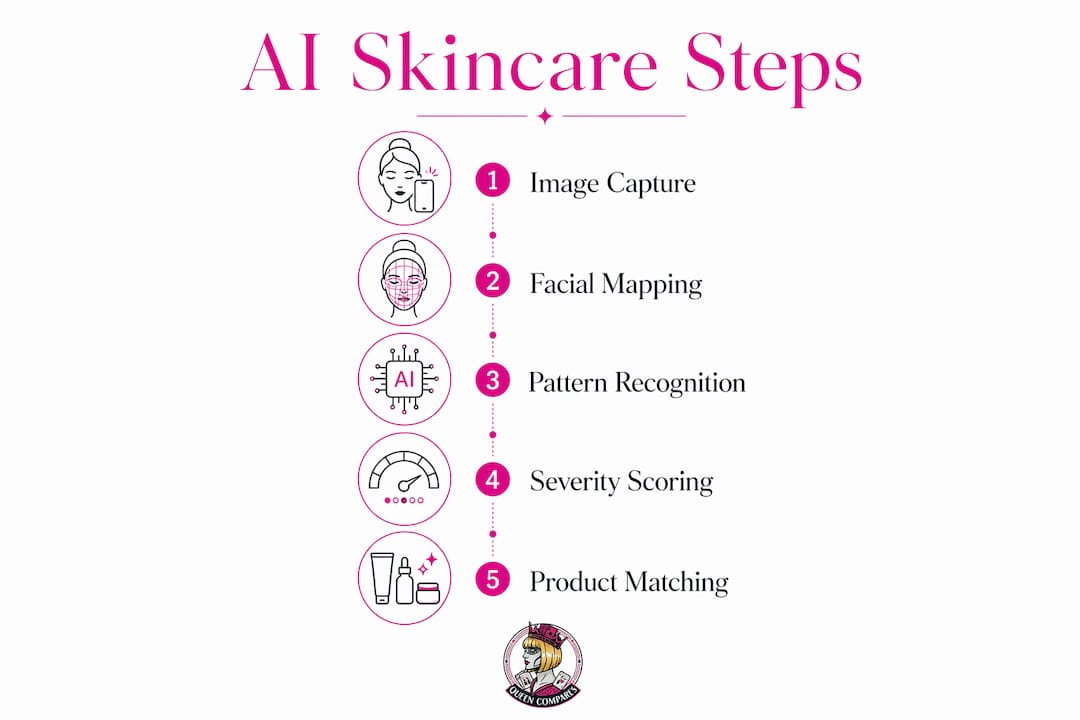
AI skincare analysis completes in under 60 seconds, moving through five distinct stages from image capture to product match. Each stage builds on the last, and skipping any one of them produces weaker results.
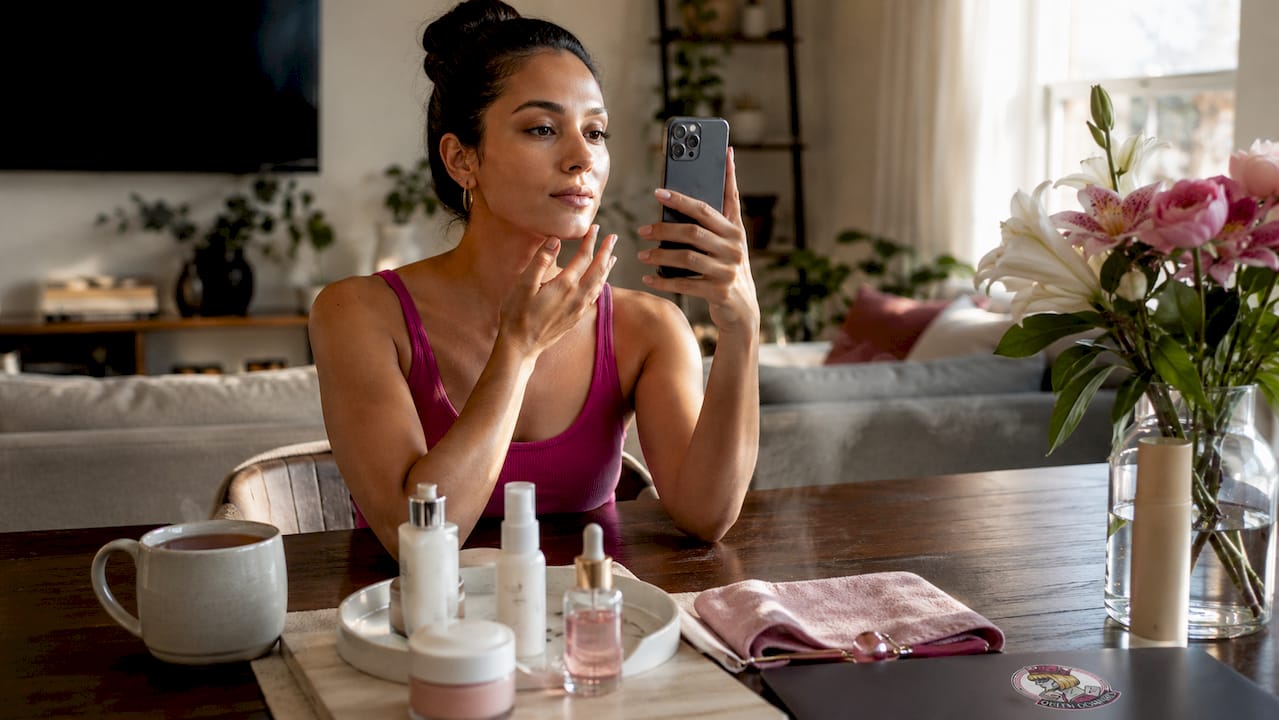
1. Image capture You photograph your face under consistent lighting, usually following on-screen guides for angle and distance. Lighting quality directly affects how well the model reads your skin tone and texture. Most apps ask for front-facing and side-angle shots to cover the full face.
2. Facial mapping and zone detection The AI divides your face into zones: forehead, cheeks, nose, chin, and under-eyes. Each zone gets analyzed independently because skin conditions vary significantly across regions. Oily T-zones and dry cheeks, for example, require different product strategies.
3. Pattern recognition across skin conditions This is where the real work happens. Models like DINOv2 and YOLOv8 classify over 80 skin conditions, including wrinkles, acne, dark spots, redness, enlarged pores, and hydration levels. EfficientNetV2 handles classification tasks like pigmentation and texture analysis. These models are trained on datasets with over 3 million data points, covering all six Fitzpatrick skin types.
4. Severity scoring Each detected concern receives a severity score. That score lets you track changes over time, so you can see whether a product is actually working. AI tools track user feedback over time and use machine learning to refine future recommendations based on ratings and repurchases.
5. Product matching Your skin profile gets matched against a product catalog. The AI cross-references your detected concerns with ingredient profiles and generates a ranked list of recommendations. Matching at the ingredient level and explaining why each product fits your skin builds trust and makes the advice feel genuinely useful.
Pro Tip: Take your scan in natural daylight near a window. Artificial lighting, especially warm or yellow tones, can skew how the AI reads redness and pigmentation.
How accurate and reliable are AI skincare recommendations?
AI skin analysis is genuinely impressive in scope, but it has real limits you should know before trusting it completely.
On the accuracy side, the strongest models are trained on dermatology datasets like HAM10000 and PAD-UFES-20, which include thousands of clinically labeled skin images. DINOv2 vision models validate classification across all Fitzpatrick skin types, from very fair to deeply pigmented. That breadth matters because earlier AI tools performed poorly on darker skin tones, a gap the field has actively worked to close.
On the limitation side, the picture is more complicated:
-
No tactile feedback. AI relies on 2D pattern recognition and cannot assess skin temperature, firmness, or depth of a lesion.
-
Misreading normal features. Enlarged pores, natural skin texture, and fine lines can be flagged as concerns when they are simply part of healthy skin.
-
No medical diagnosis. Most AI skincare tools are free screening or educational tools, not regulated medical devices.
-
Limited environmental context. The AI does not know your climate, stress levels, diet, or hormonal patterns, all of which affect skin behavior.
“AI skin analysis tools are best understood as a starting point for skincare education, not a replacement for a dermatologist’s clinical assessment.” — Clinical experts cited by The Tweakments Guide
AI can mislabel normal skin features as problems, which risks pushing people toward unnecessary treatments. For persistent concerns, rashes, or anything that looks medically significant, a board-certified dermatologist remains the right call.
What are the real benefits and drawbacks of AI-driven skincare advice?
AI skincare tools offer genuine advantages, but they also come with trade-offs worth weighing before you build a routine around their output.
| Factor | Benefit | Drawback |
|---|---|---|
| Speed | Results in under 60 seconds | Fast output can feel more authoritative than it is |
| Personalization | Analyzes multiple concerns simultaneously | Recommendations may reflect brand catalog, not best fit |
| Accessibility | Available 24/7 from your phone | Cannot replace in-person clinical assessment |
| Tracking | Monitors skin changes over time | Severity scores vary between apps and lack standardization |
| Education | Explains ingredient roles and product rationale | Complex routines can overwhelm and lead to overtreatment |
The personalization benefit is real. Traditional skincare advice grouped people into broad categories like “oily” or “dry.” AI identifies multiple overlapping concerns at once, such as dehydration combined with post-acne pigmentation, and suggests products that address both. That specificity is a genuine step forward.
The drawback most people miss is brand bias. Many AI skincare tools serve retail strategies, meaning their recommendations pull from a specific brand’s product catalog rather than the full market. The tool may be excellent at identifying your skin concerns while still steering you toward products that serve the brand’s sales goals.
AI recommendations often aim for comprehensive routines that can be overly complex. Dermatologists consistently recommend starting with basics like SPF and a gentle cleanser before layering in actives.
Pro Tip: When an AI tool recommends five or more products at once, treat it as a wishlist, not a prescription. Pick one or two products that address your top concern and start there.
How can you use AI skincare recommendations safely and effectively?
AI advice works best when you treat it as a starting point, not a final answer. Here is how to get real value from it without overcomplicating your routine.
-
Start with the basics. SPF and a gentle cleanser come before any active ingredient. Prioritize simplicity and build from a protective foundation before adding serums or treatments.
-
Introduce one new product at a time. Adding multiple actives simultaneously makes it impossible to identify what caused a reaction. Wait two to four weeks before adding the next product.
-
Treat recommendations as a starting point. AI gives you a direction, not a prescription. Your skin’s actual response to a product tells you more than any algorithm can.
-
Track your own progress. Use the app’s tracking features or take weekly photos in consistent lighting. Real-world feedback matters more than the initial score.
-
Check for brand bias. If every recommended product is from the same brand, run a quick search to see whether comparable products exist at different price points or with cleaner ingredient lists.
-
Use ingredient education tools. Many apps explain why a specific ingredient was matched to your concern. That context helps you evaluate whether the recommendation makes sense for your skin. Check our Ingredient Library where you can find ingredients and beauty products that contain ingredients that you look for.
-
Consult a dermatologist for complex concerns. AI in skincare is moving toward flagging complex cases to human dermatologists rather than attempting to resolve them algorithmically. Take that cue seriously.
Learning how to build a safe skincare routine before you layer in AI suggestions gives you a much stronger foundation for evaluating what the tool recommends.
Pro Tip: Screenshot your AI scan results and bring them to your next dermatologist appointment. It gives your doctor useful context and opens a more specific conversation about your skin.
Key Takeaways
AI skincare recommendations are a powerful starting point for personalized routines, but their accuracy depends on the quality of the model, the diversity of training data, and how honestly the tool discloses its brand affiliations.
| Point | Details |
|---|---|
| AI analyzes skin in stages | Image capture, zone mapping, pattern recognition, scoring, and product matching all happen in under 60 seconds. |
| Models cover 80+ conditions | Tools trained on datasets like HAM10000 classify wrinkles, acne, pigmentation, and hydration across all skin tones. |
| Limitations are real | AI lacks tactile feedback and can misread normal skin features, so it is not a substitute for clinical diagnosis. |
| Brand bias affects results | Many tools recommend products from a single brand’s catalog, which may not reflect the best option for your skin. |
| Simplicity wins | Start with SPF and a gentle cleanser, then add one active at a time based on AI guidance and your skin’s actual response. |
AI skincare tools are useful, but simplicity still wins
By Magdalena Kapuscinska
I have spent a lot of time interacting with AI skincare tools, and the pattern I see most often is this: I get a detailed scan, feel excited by the specificity, and immediately try to implement a six-step routine. Two weeks later, my skin is irritated and I blame the products.
The technology is genuinely impressive. The fact that a phone camera can identify post-inflammatory pigmentation versus melasma, or distinguish dehydration from oiliness, would have seemed far-fetched five years ago. AI beauty technology has made personalized skincare accessible to people who will never see a dermatologist. That matters.
What concerns me is the gap between what AI can identify and what it should prescribe. An algorithm trained on millions of images can detect a concern with real accuracy. But it does not know that you just changed your diet, moved to a drier climate, or started a new medication. Those variables shape your skin as much as your genetics do.
My honest advice: use the scan to understand your skin better, not to build a shopping list. The 2026 skincare trends point toward AI tools that defer to dermatologists for complex cases, and I think that is exactly the right direction. The best version of this technology is one that knows its own limits.
— Magdalena Kapuscinska - QueenCompares Founder
QueenCompares makes AI skincare advice easier to act on
AI tools tell you what your skin needs. QueenCompares helps you figure out which products actually deliver it.
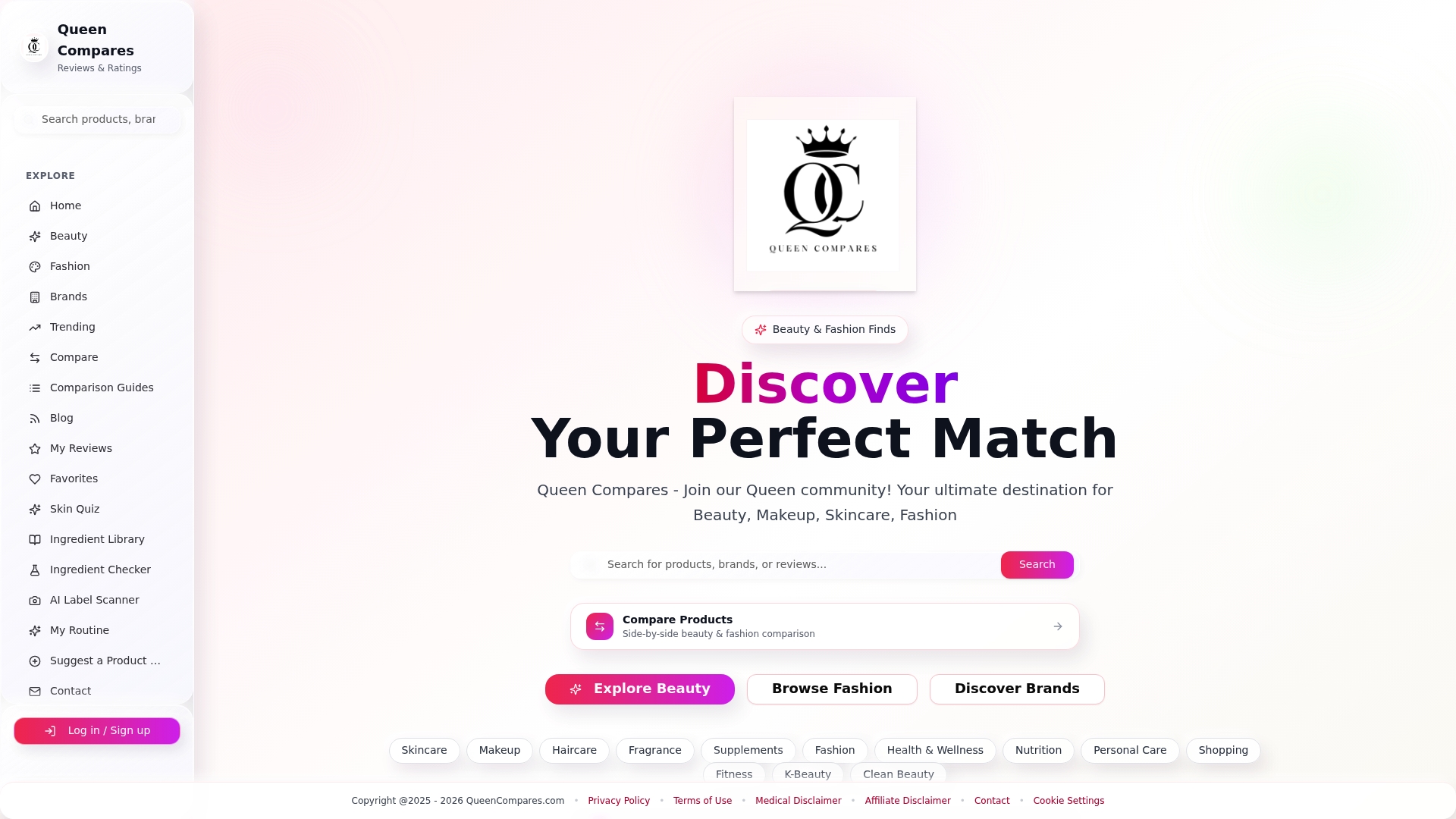
The QueenCompares ingredient library lets you look up every ingredient in an AI-recommended product so you understand exactly what you are putting on your skin. The SkinQuiz matches your skin concerns to community-reviewed products across multiple brands, giving you a broader, less biased view than a single-brand AI tool can offer. You can also compare products side by side, check safety ratings, and read real reviews from people with similar skin types. Our Queen community is here to help you make smarter choices, not just faster ones.
FAQ
What does AI skincare analysis actually detect?
AI skincare analysis detects conditions like wrinkles, acne, dark spots, redness, enlarged pores, and hydration levels. Advanced models classify over 80 skin conditions using deep learning trained on millions of dermatology images.
Are AI skincare recommendations medically accurate?
AI skincare tools are screening and educational tools, not regulated medical devices. They can identify patterns in your skin but cannot replace a dermatologist’s clinical assessment for complex or persistent concerns.
Why do AI tools recommend so many products at once?
AI recommendations often aim for comprehensive coverage of every detected concern, which results in long product lists. Dermatologists recommend starting with basics like SPF and a gentle cleanser before adding any active ingredients.
Can AI skincare tools work on all skin tones?
The strongest current models are validated across all six Fitzpatrick skin types, from very fair to deeply pigmented. Earlier tools had gaps with darker skin tones, but leading platforms have actively addressed this through more diverse training datasets.
How do I know if an AI skincare recommendation is biased toward a brand?
Check whether every recommended product comes from the same brand. Many AI tools are built by or for specific brands and pull recommendations only from that brand’s catalog. Cross-referencing suggestions on a platform like QueenCompares helps you evaluate whether better options exist.