TL;DR:
- Makeup finish describes the visual and textural effect a product leaves on the skin, ranging from matte to glass skin. Choosing the correct finish depends on skin type, desired look, and occasion to ensure makeup complements rather than conflicts with your skin.
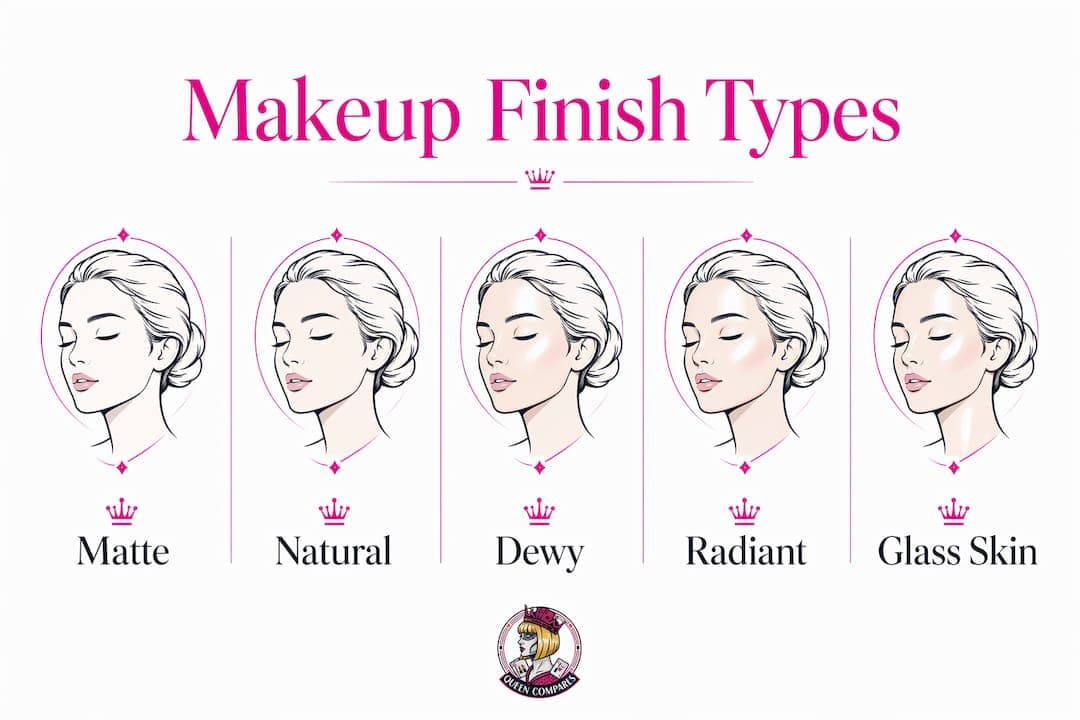
Makeup finish is the visual and textural effect a product leaves on your skin after application, ranging from a shine-free matte to a light-reflecting dewy glow. Understanding how finish types differ in makeup is the single most useful skill you can develop for choosing the right foundation, powder, or setting spray. The main finish categories are matte, natural/satin, radiant, dewy, and glass skin, and each one behaves differently based on your skin type, the formula’s ingredients, and the look you want to create. Getting this right means your makeup works with your skin instead of against it.
What are the most common makeup finish types and how do they differ?
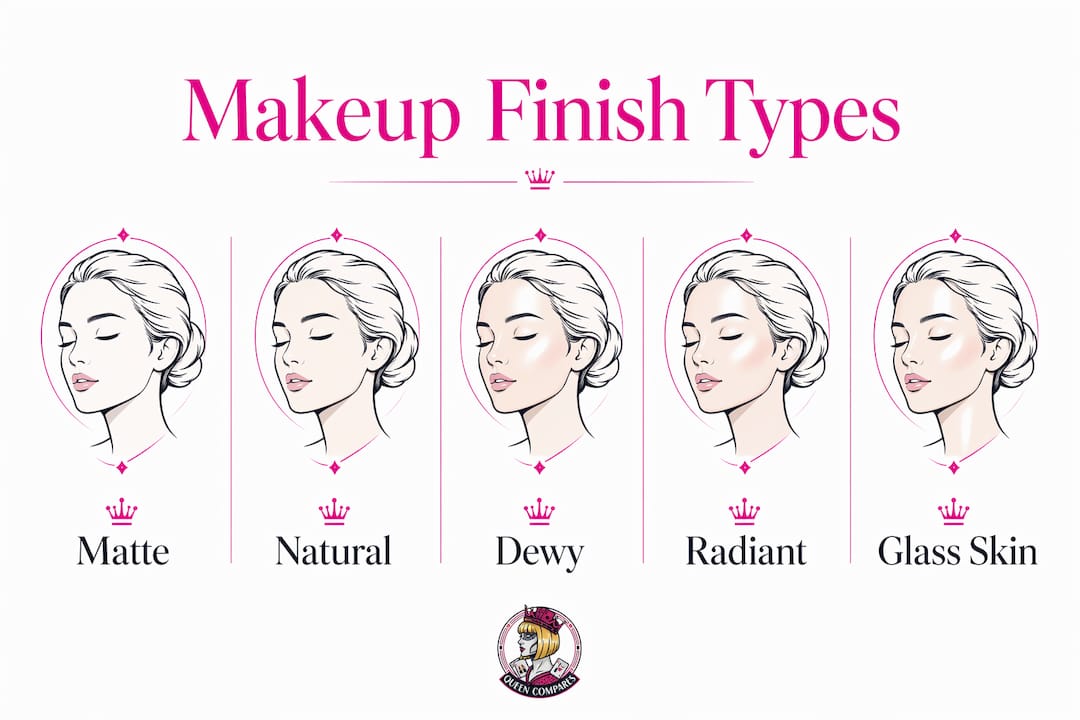
Makeup finishes span a spectrum from full-matte to glass skin, and each point on that spectrum has a distinct appearance and formula logic. Knowing what separates them helps you shop with confidence and apply products with intention.
Matte finish
Matte finish absorbs light rather than reflecting it, leaving skin looking flat, smooth, and completely shine-free. Matte formulas use oil-absorbing agents like kaolin clay and silica to control sebum and reduce surface sheen. These formulas can stay stable for extended wear without creasing when applied correctly. The tradeoff is that heavy matte products can settle into fine lines if the skin underneath is not well-hydrated.
Natural/satin finish
Natural finish sits in the middle of the spectrum. It is neither flat nor shiny, mimicking the look of healthy, hydrated skin. Natural finish is widely recommended as the safest default because it suits a broad range of skin types and offers buildable coverage. Satin is a close cousin, adding a very subtle sheen that catches light softly without looking glowy.
Dewy and radiant finishes
Dewy and radiant finishes use light-reflecting particles and humectants like glycerin and mica to amplify skin luminosity. Radiant sits just below dewy on the glow scale, offering a healthy brightness without looking wet. Dewy goes further, creating a visibly luminous, almost lit-from-within effect. Dewy formulas reflect light to amplify skin luminosity, making them a strong choice for anyone who wants their skin to look alive and fresh.
Glass skin finish
Glass skin is the most extreme finish on the spectrum. It creates a high-shine, almost translucent effect that mimics poreless, perfectly smooth skin. This finish relies heavily on layering hydrating serums, luminous primers, and dewy foundations. It is a bold choice best suited to controlled lighting and editorial or special-occasion looks.
Here is a quick comparison of the main finish types:
| Finish Type | Light Behavior | Best For | Key Ingredients |
|---|---|---|---|
| Matte | Absorbs light | Oily skin, long wear | Kaolin clay, silica |
| Natural/Satin | Soft reflection | All skin types | Balanced emollients |
| Radiant | Moderate glow | Normal to dry skin | Mica, light humectants |
| Dewy | High luminosity | Dry and mature skin | Glycerin, emollients |
| Glass Skin | Maximum shine | Special occasions | Layered hydrating formulas |
How do makeup finishes interact with different skin types?
Your skin type is the most reliable guide for choosing a finish. The wrong pairing creates problems that no setting spray can fix.
Oily skin produces excess sebum throughout the day. A matte or satin finish controls that shine and keeps makeup looking fresh longer. Ingredients like silica and kaolin clay in matte formulas absorb oil at the surface, which is exactly what oily skin needs. Pairing a matte foundation with a skincare routine for oily skin creates the best base for long wear.
Dry and mature skin needs the opposite approach. Matte products tend to settle into fine lines and accentuate texture on mature skin, which makes dewy and radiant formulas the smarter pick. Hydrating formulas with glycerin and emollients keep the skin surface plump and fresh-looking throughout the day. Mature skin also benefits from avoiding heavy powders, which can emphasize dryness.
Combination skin is the trickiest to dress. The T-zone tends to be oily while cheeks stay dry or normal. A natural or satin finish foundation works well as a base, and you can then apply targeted powder only on the T-zone to control shine where you need it.
A few common pitfalls to avoid:
-
Applying a full-coverage matte foundation over dry, unprepped skin causes caking within hours.
-
Using a dewy foundation on oily skin without any powder leads to excessive shine by midday.
-
Layering too many products with different finish properties creates an inconsistent, patchy surface.
Pro Tip: Apply a hydrating primer before a matte foundation on dry patches. This creates a smooth surface and prevents the matte formula from clinging to flaky areas.
How to choose the right makeup finish for your look and occasion
The occasion and lighting conditions matter just as much as your skin type when selecting a finish. A finish that looks stunning in natural daylight can behave very differently under flash photography.
-
Natural and everyday looks call for a natural or satin finish. These finishes are forgiving, easy to build up, and look polished without appearing overdone. They photograph well in most lighting conditions and work across seasons.
-
Professional or office settings favor matte or satin finishes. These read as polished and controlled under fluorescent lighting, which tends to amplify shine. A matte finish also holds up longer through a full workday without touch-ups.
-
Evening and glam looks benefit from radiant or dewy finishes. Warm, dim lighting flatters luminous skin, and a dewy base makes skin look healthy and vibrant in photos taken at events. Pair a radiant foundation with a highlighter on the high points of the face for maximum effect.
-
Photography and video require careful thought. Makeup flashback is a real risk with highly reflective finishes under flash, so a natural or matte finish is safer for professional shoots. Dewy finishes can look beautiful in natural-light photography but may appear greasy under harsh studio lights.
-
Hybrid layering gives you the most control. Professional makeup artists apply a radiant base all over, then press translucent powder selectively on high-shine zones like the forehead, nose, and chin. This preserves the glow on cheeks and temples while keeping the center of the face fresh.
Pro Tip: Warm up a dewy foundation by mixing one drop of facial oil into it before application. This deepens the luminosity and makes the finish look more skin-like than product-like.
What role do setting sprays, finishing sprays, and powders play?
These products do not just lock your makeup in place. They actively change the finish of whatever you have applied underneath.
Setting sprays use film-forming polymers to bond makeup to the skin and extend wear. Their primary job is longevity, not aesthetics. Finishing sprays, by contrast, use emollients and silicones to refine texture and add a light-reflective sheen to the surface. You reach for a setting spray when you need your makeup to last. You reach for a finishing spray when you want to adjust how the surface looks and feels.
Powders follow the same logic:
-
Setting powder is designed for oil control and longevity. It typically delivers a matte finish and is best applied to the T-zone or any area prone to shine.
-
Finishing powder provides a soft-focus blur effect with light-reflecting properties. It enhances radiance and smooths the look of texture without fully mattifying.
Using both powders together often creates a cakey, heavy appearance. Pick one based on your goal. If you need oil control, use a setting powder. If you want a polished, blurred look, use a finishing powder instead.
Here is a quick reference for choosing the right finishing product:
| Product | Primary Function | Effect on Finish |
|---|---|---|
| Setting spray | Locks makeup for extended wear | Minimal change to finish |
| Finishing spray | Refines texture and adds sheen | Enhances glow or dewiness |
| Setting powder | Controls oil and extends wear | Mattifies surface |
| Finishing powder | Blurs texture and reflects light | Softens and adds radiance |
Key Takeaways
Choosing the right makeup finish starts with your skin type and ends with the occasion, and the formula’s ingredients determine everything in between.
| Point | Details |
|---|---|
| Finish types span a spectrum | Matte, natural, satin, radiant, dewy, and glass skin each behave differently on skin. |
| Skin type guides finish choice | Oily skin suits matte or satin; dry and mature skin benefits from dewy or radiant formulas. |
| Ingredients create the finish | Kaolin clay and silica produce matte results; glycerin and mica create dewy, luminous effects. |
| Hybrid layering gives control | Apply a radiant base, then powder selectively on oily zones for a balanced, lasting finish. |
| Setting and finishing products differ | Setting products extend wear; finishing products change how the surface looks and feels. |
What I have learned from years of working with finish types
By Magdalena Kapuscinska
The biggest mistake I see is treating finish as a fixed choice. People pick matte because they have oily skin and stick with it forever, even when their skin changes with the seasons, age, or hormones. Skin is not static, and your finish should not be either.
The hybrid approach changed how I think about this entirely. Matte formulas have evolved to be lighter and less flat, and dewy formulas are no longer synonymous with greasy skin. That shift means the old rules about who can wear what finish are largely outdated. We made a comparison between two top matte foundations Shiseido Synchro Skin Self-Refreshing Foundation and Estée Lauder Double Wear Stay-in-Place Makeup in our Comparison Guide that shows how the foundations evolve. These matte foundations don’t look heavy on the skin while providing high coverage. Shiseido Synchro Skin Self-Refreshing Foundation creates a blurry effect thanks to innovative ActiveForce™ technology that resists heat, humidity, oil, and facial movement to maintain a just-applied look all day. Estée Lauder Double Wear Stay-in-Place Makeup is far from the chalky, drying mattes of the past, this foundation is infused with barrier-loving Niacinamide, hydrating Sodium Hyaluronate, and microbiome-supporting Lactobacillus Ferment.
A person with oily skin can wear a radiant foundation if they powder strategically. A person with dry skin can wear a satin finish if they prep their skin with enough hydration.
The detail most people overlook is selective powdering. Pressing translucent powder only onto the nose, forehead, and chin while leaving the cheeks untouched creates a finish that looks intentional and dimensional. Full-face powdering flattens everything and erases the natural variation that makes skin look real. That one technique alone upgrades any makeup look.
My honest advice: buy one product from a finish category you have never tried and test it for two weeks. You will learn more about your skin from that experiment.
— Magdalena Kapuscinska - QueenCompares.com Founder
Find your perfect finish with QueenCompares
Knowing the theory behind finish types is one thing. Finding the specific product that delivers the finish you want for your skin is another challenge entirely.

QueenCompares makes that search straightforward. The product comparison platform lets you compare foundations, setting sprays, and powders side by side, filtering by finish type, skin compatibility, and formula ingredients. The Ingredient Library breaks down exactly what is inside each product, so you can confirm whether a formula actually contains the humectants and light-reflecting particles that create a dewy finish, or the oil-absorbing agents that deliver a true matte. No guesswork, no wasted purchases. Just clear, community-backed information that helps you choose with confidence.
FAQ
What does makeup finish mean?
Makeup finish is the visual and textural effect a product leaves on the skin after application. It describes how the surface looks, from shine-free matte to luminous dewy, and is determined by the formula’s ingredients.
What is the best makeup finish for oily skin?
Matte and satin finishes work best for oily skin because they contain oil-absorbing ingredients like silica and kaolin clay that control shine and extend wear throughout the day.
Is dewy finish good for mature skin?
Dewy and radiant finishes are the best choices for mature skin. Matte formulas tend to settle into fine lines and accentuate texture, while hydrating, luminous formulas keep skin looking fresh and plump.
What is the difference between a setting spray and a finishing spray?
A setting spray uses film-forming polymers to lock makeup in place for extended wear. A finishing spray uses emollients and silicones to refine surface texture and add a light-reflective sheen.
Can you mix different makeup finishes in one look?
Yes, and professional makeup artists do this regularly. A common technique is applying a radiant base all over and then pressing translucent setting powder selectively onto oily zones to balance glow and longevity.