TL;DR:
- Makeup flashback appears as a white or ashy cast in photos caused by light-reflecting ingredients like titanium dioxide, zinc oxide, and silica. Layering products with these ingredients increases the risk of flashback, especially with mineral SPF foundations, HD powders, and silica-heavy products. Switching to chemical SPF and performing flash tests before events helps prevent visible white casts in photos.
Makeup flashback is defined as the white or ghostly cast that appears on skin in photos taken with a camera flash, caused by light-reflecting particles in your makeup. Ingredients like titanium dioxide, zinc oxide, and silica reflect intense flash light back into the camera lens, creating that washed-out, ashy look you never see in the mirror. Your makeup can look perfect in person and completely wrong in photos. Knowing what is makeup flashback explained means knowing exactly which ingredients and products create this effect, and how to stop it before your next event.
What is makeup flashback and why does it happen?
Makeup flashback is a photographic effect, not a visible one. Flashback only appears when a camera flash fires, not in ambient or bathroom lighting. That distinction matters because most people diagnose the problem too late, after seeing their photos.

The science is straightforward. Physical sunscreen filters like titanium dioxide and zinc oxide sit on top of the skin rather than absorbing into it. When a camera flash hits those particles, they bounce the light straight back at the lens. The result is a bright, white patch, most often across the forehead, nose, and under the eyes.
Silica compounds the problem. Found in many HD setting powders and primers, silica acts like microscopic mirrors reflecting harsh flash light and creating white patches in photos. The ingredient is genuinely useful for blurring pores and controlling shine in daylight. Under flash, it becomes a liability.
How do specific ingredients cause makeup flashback?
Three ingredients are responsible for the vast majority of flashback cases: titanium dioxide, zinc oxide, and silica. Each one reflects light differently, but all three amplify the effect of a camera flash.
-
Titanium dioxide is a physical UV filter used in mineral sunscreens and many foundations with SPF. It sits on the skin’s surface and scatters all wavelengths of light, including the intense burst from a camera flash.
-
Zinc oxide works the same way as titanium dioxide and is often paired with it in mineral SPF formulas, doubling the reflective load on your skin.
-
Silica is a finely milled powder used in HD formulas to diffuse light and create a soft-focus effect. That same diffusion property turns aggressive under flash, creating white patches across the face.
Concentration and layering make everything worse. A foundation with a low percentage of titanium dioxide may produce minimal flashback on its own. Add a mineral SPF moisturizer underneath and a silica-heavy setting powder on top, and you have stacked three reflective layers. Heavy buildup of mineral SPF and silica powders creates dense reflective surfaces that amplify flashback significantly.
Pro Tip: Check your full routine, not just one product. Flashback is often a layering problem, not a single-product problem.
Which makeup products are most prone to flashback?
The makeup flashback definition applies most directly to products that contain mineral filters or high concentrations of silica. Knowing which categories carry the highest risk helps you make smarter swaps before a photo-heavy event.
| Product type | Flashback risk | Main reason |
|---|---|---|
| Mineral SPF foundation | High | Titanium dioxide and zinc oxide content |
| HD setting powder | High | Dense silica concentration |
| Mineral SPF concealer | High | Reflective filters under eyes and brow bone |
| Chemical SPF foundation | Low | No physical reflective particles |
| Matte setting powder (no silica) | Low | Absorbs rather than reflects light |
| Tinted moisturizer with chemical SPF | Low | Sheer coverage, no mineral filters |
The comparison between mineral and chemical sunscreens is the most misunderstood point in this topic. Mineral sunscreens use titanium dioxide and zinc oxide, which physically reflect UV light and camera flash alike. Chemical sunscreens use filters like avobenzone or octinoxate, which absorb UV energy and convert it to heat. They do not reflect flash light. For photography, chemical SPF is the safer choice.
HD powders deserve a specific mention because their marketing creates confusion. HD makeup products are often misunderstood. They blur imperfections beautifully in daylight and studio lighting, but their silica content causes significant flashback under harsh camera flash. The same property that makes them look great on camera in controlled studio conditions makes them a risk at a wedding or event with direct flash photography.
-
Avoid foundations labeled “mineral SPF” for flash photography events.
-
Swap HD setting powders for translucent or tinted powders with no silica listed in the top five ingredients.
-
Check concealers for zinc oxide, especially products marketed as “brightening” or “color correcting.”
How can you prevent and manage makeup flashback effectively?
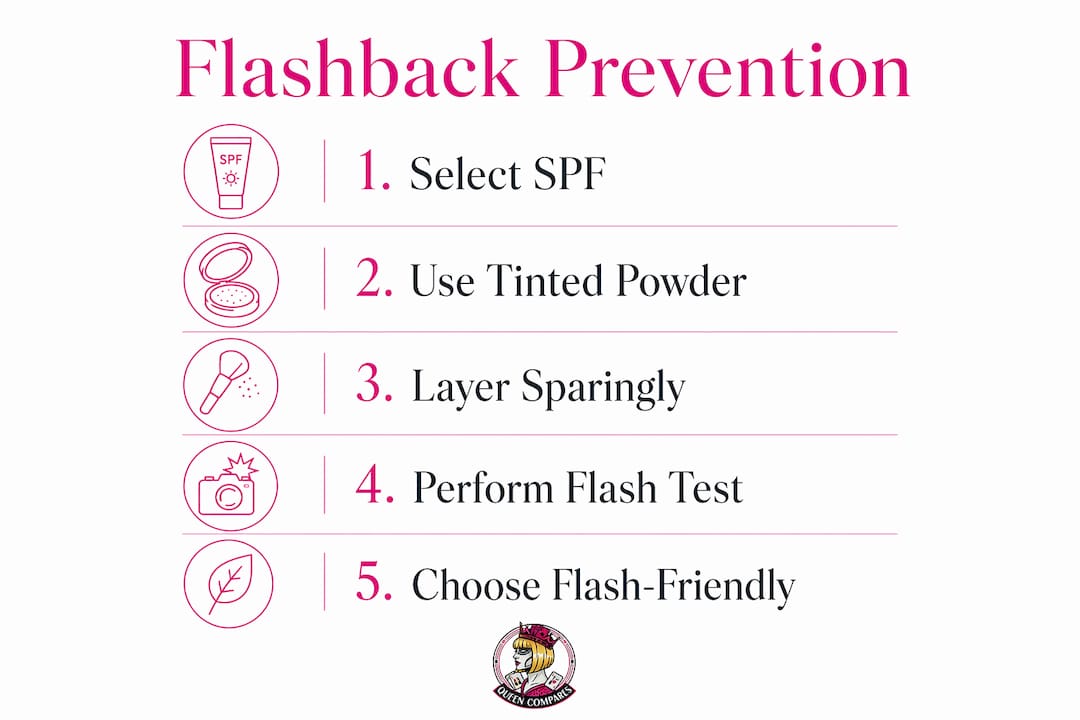
Preventing flashback starts with product selection, not application technique. The most reliable strategy is removing the reflective ingredients from your routine before any photo-heavy event.
-
Switch to chemical SPF. Replace mineral SPF moisturizers and foundations with chemical SPF alternatives on event days. This single swap removes the biggest flashback trigger from your routine. Be careful and avoid with harsh chemical sunscreens with Octocrylene. You can check safer chemical sunscreens at QueenCompares such as Thank You Farmer Sun Project Skin Relief Sun Cream
-
Limit silica-heavy powders. Use setting powders sparingly and check ingredient lists for silica near the top. A light dusting causes far less flashback than a full bake.
-
Skip heavy baking. Over-application of baking powders intensifies flashback by layering reflective ingredients into a dense, light-bouncing surface. A light press with a damp sponge is enough.
-
Do a flash photo test. Take a test photo with your phone’s flash before leaving the house. This is the only reliable way to catch flashback before it ruins your event photos.
-
Choose flash-friendly setting sprays. Setting sprays with no silica or mineral filters lock your makeup without adding reflective particles.
Pro Tip: Apply a tinted powder over any SPF products in your routine. Tinted powders help moderate the stark white reflectiveness of mineral SPF ingredients under flash photography.
The flash photo test is the single most underused prevention tool. Professional recommendations consistently include this step, yet most people skip it entirely. Take the photo in the same lighting conditions you expect at the event. If you see a white cast, adjust your powder or swap a product before you leave.
What is the difference between flashback and other makeup lighting issues?
Flashback and white cast are two different problems, and mixing them up leads to the wrong fix. White cast is visible in ambient lighting and shows up in the mirror. Flashback only appears in photos taken with a direct camera flash.
-
White cast: Visible to the naked eye in daylight or indoor lighting. Caused by too-light a foundation shade or heavy mineral SPF sitting on the skin. Fix it by shade-matching or blending more thoroughly.
-
Flashback: Invisible in person. Only shows in flash photography. Caused by reflective ingredients reacting to the burst of light from a camera.
-
Oxidation: Foundation darkens over the course of the day due to skin oils and air exposure. Visible in person, not specific to flash.
-
Color shift under different lighting: Foundations with pink or yellow undertones can look different under fluorescent, natural, and incandescent light. Not a flash issue.
Many makeup mishaps in photos come from light-scattering ingredients reacting unexpectedly with camera flash, something human vision does not detect at all. This is why bathroom lighting is a completely unreliable testing environment for flashback. Testing under expected photo lighting is the only way to catch the problem before it shows up in your photos.
Understanding the difference between these issues saves you from chasing the wrong solution. If your foundation looks fine in the mirror but washed out in photos, flashback is the culprit, not your shade.
How do professional makeup artists avoid flashback?
Professional makeup artists treat flashback prevention as a technical skill, not an afterthought. Makeup artists assess ingredient light reflectivity and layering depth when designing looks for photography, choosing every product with the camera in mind.
-
Read ingredient lists before selecting products. Professionals check for titanium dioxide, zinc oxide, and silica before building a photography look. They know which brands formulate without these ingredients in high concentrations.
-
Perform the camera flash test on set. A flash test photo before shooting is standard practice. It catches flashback before the camera rolls, not after.
-
Layer with intention. Professionals apply the minimum number of products needed. Fewer layers mean fewer chances for reflective ingredients to stack up.
-
Use photography-specific formulas. Brands like Make Up For Ever and NARS offer formulas specifically designed for camera work, with controlled silica levels and no mineral SPF.
Pro Tip: Ask your makeup artist specifically about flash photography before your wedding or event. Not every artist tests for flashback by default, and mineral sunscreens are not bad ingredients in general. They just need to be balanced correctly for the context.
The ingredient awareness that professionals carry is something every makeup user can develop. Checking a product’s ingredient list for titanium dioxide, zinc oxide, and silica takes under a minute and tells you everything you need to know about its flashback risk.
Key takeaways
Makeup flashback is a solvable problem once you understand that it is an ingredient issue, not an application issue. The fix is choosing the right products for the context.
| Point | Details |
|---|---|
| Flashback definition | A white or ashy cast in flash photos caused by reflective makeup ingredients. |
| Main culprits | Titanium dioxide, zinc oxide, and silica are the three primary flashback triggers. |
| Layering risk | Stacking mineral SPF and silica powders multiplies the reflective effect significantly. |
| Best prevention | Switch to chemical SPF and limit silica-heavy powders on event days. |
| Flash test rule | Take a test photo with flash before any event to catch flashback before it matters. |
My honest take on flashback after years of beauty testing
The first time I saw flashback ruin a photo, I blamed the photographer. The lighting was harsh, the flash was strong, and I assumed the camera was the problem. It was not. I was wearing a mineral SPF moisturizer, a foundation with titanium dioxide, and a silica-heavy HD powder. I had stacked every possible flashback trigger without realizing it.
The mistake most people make is testing their makeup in bathroom lighting and calling it done. Bathroom lighting is warm and forgiving. It hides exactly the kind of reflective shimmer that a camera flash will expose. The only honest test is a flash photo, taken in conditions close to what you expect at the event.
The other myth worth addressing is that mineral sunscreens are always the problem. They are not. Plenty of well-formulated products include titanium dioxide and zinc oxide without producing visible flashback. The issue is concentration and layering. One product with a low mineral SPF percentage is manageable. Three products stacked on top of each other is not.
My advice is simple. Before any event where photos matter, audit your full routine for reflective ingredients. Swap where you need to. Take a test photo. Adjust. Flashback is not mysterious once you know what causes it. It is just chemistry, and chemistry is predictable.
— Magdalena Kapuscinska
Find flashback-friendly makeup on QueenCompares
Knowing which ingredients to avoid is half the battle. Finding products that are actually formulated without them is the other half.

QueenCompares makes that search straightforward. The Ingredient Checker tool lets you paste any product’s ingredient list and flag flashback-causing components like titanium dioxide, zinc oxide, and silica instantly. You can also browse the full makeup product catalog to compare formulas side by side and find options that work for flash photography. The QueenCompares community shares real reviews from people who have tested products in actual event conditions, not just bathroom lighting. That kind of real-world feedback is exactly what you need when choosing makeup for photos that matter. For a deeper look at ingredient safety across your full routine, the Ingredient Library gives you detailed profiles on every compound in your kit.
FAQ
What is makeup flashback?
Makeup flashback is the white or grayish cast that appears on skin in photos taken with a camera flash. It is caused by light-reflecting ingredients like titanium dioxide, zinc oxide, and silica bouncing flash light back into the camera lens.
What causes makeup flashback in photos?
Physical sunscreen filters like titanium dioxide and zinc oxide, plus silica in HD powders, reflect camera flash light strongly. Layering multiple products with these ingredients intensifies the effect.
How do I prevent makeup flashback?
Switch to chemical SPF products on event days, use silica-heavy powders sparingly, and always perform a flash test photo before leaving the house. Tinted powders applied over mineral SPF products also reduce visible flashback.
Is flashback the same as white cast?
No. White cast is visible to the naked eye in normal lighting. Flashback is invisible in person and only appears in photos taken with a direct camera flash.
Do all HD powders cause flashback?
Not all, but most. HD setting powders high in silica are a common flashback trigger. Check the ingredient list and look for silica in the first five ingredients as a warning sign.