Hyaluronic Acid - what is it?
Hyaluronic Acid is a naturally occurring substance found in the human body, primarily in connective tissues, skin, and eyes. It plays a crucial role in maintaining skin hydration, elasticity, and overall tissue health by attracting and retaining water molecules. Widely used in skincare products and medical treatments, hyaluronic acid helps to reduce the appearance of fine lines and wrinkles, promote wound healing, and provide deep moisturization. Its ability to hold up to 1,000 times its weight in water makes it a popular ingredient for achieving a plump, youthful complexion.
In our Ingredient Library in the section Hyaluronic Acid, we cover thoroughly the different types of hyaluronic acid, such as high molecular weight, low molecular weight, and cross-linked hyaluronic acid, explaining their unique benefits and best uses. We also delve into various ingredients that stimulate the natural production of hyaluronic acid in the skin, including peptides, ceramides, and certain plant extracts like aloe vera and green tea polyphenols. Additionally, there are bonus discoveries featuring popular beauty products that contain these ingredients, providing insights into how they work together to enhance skin hydration, plumpness, and overall youthful appearance.
How to use Hyaluronic Acid?
Apply hyaluronic acid to clean, slightly damp skin and follow immediately with a moisturizer to lock in hydration. That “attract, then seal” pairing is the whole trick. Use a few drops of serum, morning and night depending on your skin’s needs, and if you have sensitive skin, patch-test first since HA is broadly well tolerated but not automatically fragrance-free or irritant-free.
TL;DR:
Hyaluronic acid should always be applied to damp skin within 30 to 60 seconds after cleansing to maximize water binding before evaporation.
Sealing HA with a moisturizer is essential, especially in dry or heated environments, to prevent water loss and maintain hydration benefits.
Combining HA with retinol, vitamin C, or exfoliating acids requires proper layering and waiting periods to avoid pilling or reduced absorption.
Use serums containing multiple molecular weights of HA to improve surface hydration and deep skin penetration, tailored to your skin type.
Store HA products in a cool, dark place, check shelf life, and avoid applying to fully dry skin or over oil-based products to prevent irritation and ineffective results.
Table of Contents
-
How to Implement Hyaluronic Acid Into Your Skincare Routine, Step by Step
-
What the Research Says About Multi-Weight HA and the “Seal” Rule
How to Implement Hyaluronic Acid Into Your Skincare Routine, Step by Step
Once you know hyaluronic acid (HA) belongs on damp skin sealed with moisturizer, the next question is exactly when, in what order, and how much. Here’s the routine, broken down for both halves of your day.
-
Cleanse first. Use a gentle, non-stripping cleanser. Pat your face so it’s damp, not dripping.
-
Mist or tone (optional). A hydrating toner or facial mist adds extra moisture for the HA to grab onto.
-
Apply HA serum within 30 to 60 seconds of cleansing. This window matters more than most people realize. That’s when surface dampness peaks and evaporation is lowest, so the serum has water to bind before your skin dries out.
-
Layer any other water-based serums. Vitamin C or niacinamide can go on top while skin is still slightly tacky.
-
Seal with moisturizer. This step is not optional. Applying HA to dry skin, or skipping the moisturizer afterward, can actually leave you feeling tighter and drier than before you started.
-
In the morning, finish with sunscreen. At night, that’s usually your last step unless you’re using a facial oil.
For amounts, a small amount of serum covers the full face; you don’t need more just because your skin feels thirsty. Moisturizer gets a pea-sized amount, with a little extra worked gently around the eyes and down the neck, where skin is thinner and loses moisture faster.
Pro Tip: Keep a small water spritz on your bathroom counter. If your serum has already dried down before you get to the moisturizer step, a light mist reactivates it and buys you back that hydration window.
Why Hyaluronic Acid Has to Be Sealed to Work
Skincare layering generally follows a thinnest-to-thickest rule, and HA sits early in that lineup for a specific reason: it’s a humectant, not a moisturizer in the traditional sense.
-
HA molecules bind to water molecules in the air and in your skin, pulling them toward the surface.
-
On its own, that pulled-in moisture can evaporate straight back out, particularly in dry conditions.
-
A moisturizer applied right after acts as the lid on the jar, trapping that water against the skin instead of letting it escape.
The Cleveland Clinic notes that hyaluronic acid can bind astonishing amounts of water, roughly a quarter teaspoon capable of holding a large amount of water. That capacity is the whole appeal, but it only pays off if something keeps the water from evaporating once HA has attracted it.
Winter heating and dry indoor air make this rule more important, not less. If your skin feels tight an hour after applying HA, the fix usually isn’t a stronger serum. It’s a richer moisturizer, an occlusive layer like a balm on top, or a humidifier running in the room where you sleep.
What Pairs Well With Hyaluronic Acid (and What Doesn’t)
HA is famously easygoing, but a few combinations trip people up.
-
Retinol: apply HA first on damp skin, wait a minute, then layer retinol on top. This buffers some of retinol’s dryness and irritation.
-
Vitamin C: works well underneath or mixed into the same step since both are water-based; apply vitamin C first if you’re using a low pH formula, then HA.
-
AHAs and BHAs: use HA afterward to rehydrate skin that exfoliating acids can leave feeling tight or reactive.
-
Facial oils and heavy occlusives: apply these last, never before HA. Oil-based products create a barrier that blocks water-based serums from absorbing, which causes pilling.
If you’re using a prescription retinoid or a strong acid treatment, HA is one of the better ways to cut down on flaking and stinging, since it rehydrates while those actives do their job.
Pro Tip: If your serum balls up or slides around under moisturizer, you’re probably applying it over an oil-based product instead of before it. Rebuild the order: water-based steps first, oils and creams last.
Choosing the Right Hyaluronic Acid Product for Your Skin
Hyaluronic acid shows up in serums, moisturizers, creams, and eye gels, and the format you pick matters almost as much as the ingredient itself.
-
Serums deliver the highest concentration and are the most efficient way to get a hydration boost, since dermatologists note serums concentrate HA while moisturizers add occlusion on top.
-
HA-infused moisturizers combine the humectant with the sealing step in one product, which suits anyone who wants a simpler routine.
-
Eye gels use lighter textures suited to thinner skin around the eyes, where heavier creams can feel greasy or cause milia.
Multi-weight formulas matter more than most labels let on. High molecular weight HA sits on the surface and hydrates the outer layer, while low molecular weight versions penetrate deeper, and a product that lists both is doing more work than one that lists a single form. Look for “sodium hyaluronate,” multiple molecular weight callouts, or concentrations in the 0.5% to 2% range.
By skin type: oily and acne-prone skin does best with a lightweight, alcohol-free serum; dry skin benefits from an HA serum plus a richer cream on top; sensitive skin should avoid fragrance and go for short ingredient lists. QueenCompares’s Ingredient Library is a useful place to check what’s actually in a formula before you buy it.
Common Mistakes People Make With Hyaluronic Acid
Most HA complaints trace back to one of three habits, and all three are fixable.
-
Pilling: usually caused by applying too much product or layering over something oil-based. Use fewer drops and rebuild your order water-based first.
-
Feeling drier afterward: this happens when HA is applied without a moisturizer on top, especially in low-humidity air, since skipping the seal step can leave skin feeling worse than before rather than better.
-
Sticky or tacky residue: often a sign you applied HA to skin that was too wet, or didn’t wait long enough before the next step.
If you notice redness, stinging, or breakouts that don’t resolve within a few days, that’s a signal to check the full ingredient list. Fragrance and drying alcohols are more likely culprits than the HA itself, and it’s worth patch-testing any new product on your inner arm before putting it on your face.
What the Research Says About Multi-Weight HA and the “Seal” Rule
The advice to apply HA on damp skin and seal it isn’t a beauty myth. It’s grounded in how the molecule behaves.
Products with multiple molecular weights of hyaluronic acid can improve dryness, roughness, and the appearance of fine lines within a short period of consistent use.
That finding comes from Harvard Health’s review of topical HA, and it lines up with the Cleveland Clinic’s explanation of HA’s water-binding capacity as the mechanism behind the hydration effect. Neither source claims HA reverses aging or works as a permanent fix; the honest expectation is improved surface hydration and a temporarily smoother look, sustained by consistent use rather than a one-time application.
At QueenCompares, this is exactly the kind of ingredient science we build into our comparison tools, so you’re matching product claims against what the research actually supports rather than what the packaging promises.
Shelf Life and Storage for Hyaluronic Acid Products
Most hyaluronic acid serums and moisturizers last 6 to 12 months once opened, though the exact window depends on the formula and packaging. Check the small jar icon on the label, often printed as “12M” or “6M,” which tells you how long the product stays stable after first use.
A few storage habits extend that window. Keep HA products away from direct sunlight and heat, both of which can degrade the humectant and any antioxidants formulated alongside it. A bathroom medicine cabinet works better than a windowsill. Airless pump bottles protect the formula better than open jars, since repeated air exposure speeds up oxidation, particularly if the product also contains vitamin C.
Watch for changes in texture, smell, or color. A serum that’s turned cloudy, separated, or picked up an off scent has likely broken down, even if it’s technically within its printed shelf-life window. HA itself doesn’t spoil quickly, but the preservative system and any companion ingredients can degrade faster in humid bathroom environments.
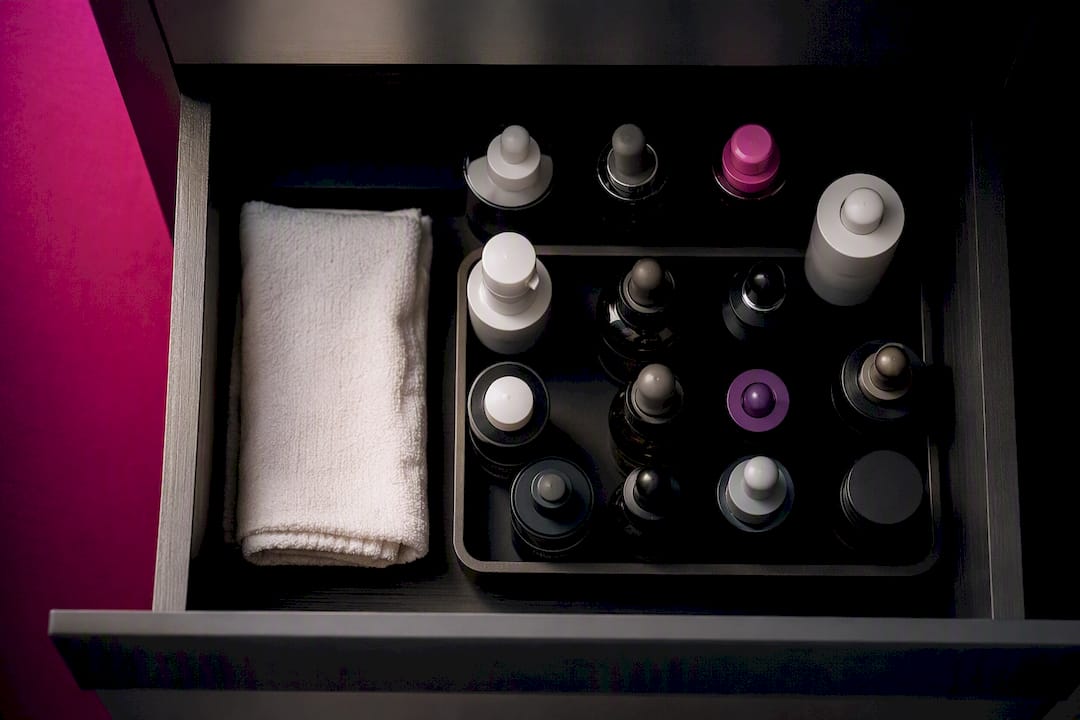
If you buy HA in bulk or stock up during a sale, store backup bottles in a cool, dark drawer rather than the bathroom, and don’t decant serums into unlabeled containers. Losing track of when a product was opened is the most common reason people use HA well past its useful window without realizing the formula has already broken down.
Introducing Hyaluronic Acid Without Overwhelming Your Skin
Even though HA is one of the gentler actives on the market, easing in still makes sense, especially if you’re combining it with retinol, exfoliating acids, or a prescription treatment for the first time.
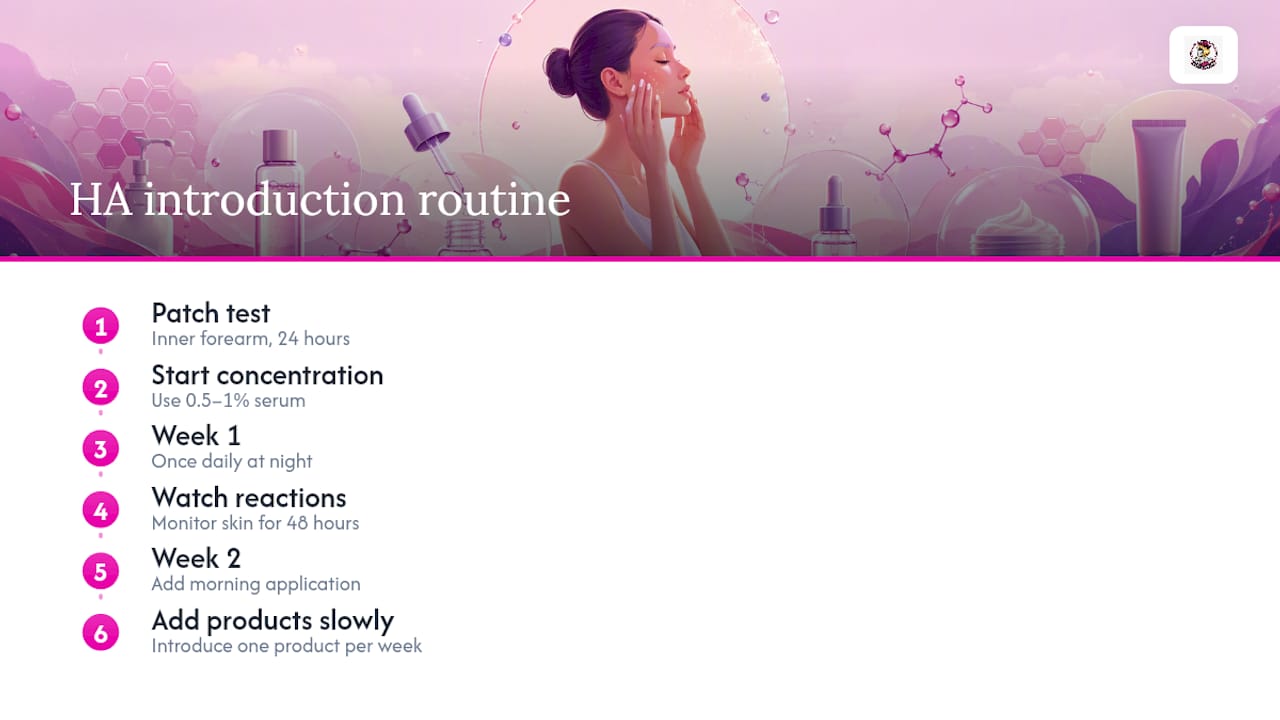
Start with once-daily use, ideally at night, for the first week. This lets you watch for any reaction without adding a second application into an already busy morning. If your skin tolerates it well, and most people find it does, add a morning application in week two.
Begin with a lower concentration serum, in the 0.5% to 1% range, rather than jumping straight to a 2% formula. Higher concentrations aren’t automatically better results; they’re simply more product for your skin to process at once. Pay attention to how your skin behaves over the following 48 hours, since HA is generally low risk but can still cause a reaction in skin that’s already compromised or heavily layered with other actives.
Introduce one new product at a time. If you’re starting HA alongside a new retinol or acid exfoliant, add them a week apart so you can tell which product is responsible if irritation shows up. Patch-testing on your inner forearm for 24 hours before a full-face application catches most sensitivities before they become a problem on your face.
Synthetic vs. Natural Hyaluronic Acid: Does It Matter?
Nearly every hyaluronic acid used in skincare today is biofermented, meaning it’s produced by bacteria in a controlled lab process rather than extracted from animal tissue, which was the older method using rooster combs. This shift happened for practical reasons: biofermented HA is more consistent, easier to scale, and free of the animal-derived allergens that occasionally caused issues with older extraction methods.
“Natural” on a label typically refers to the biofermentation process still counting as naturally derived, not synthetic in the sense of being lab-created from scratch. True synthetic alternatives, engineered without any biological fermentation step, exist but are far less common in mainstream skincare. For most readers, the practical difference between products marketed as “natural” HA and standard biofermented HA is minimal, since both trace back to the same production method.
What actually varies between products is molecular weight and purity, not whether the HA is “natural” or “synthetic” in marketing terms. A biofermented HA with a clean, well-documented molecular weight profile will typically outperform a vaguely labeled “natural” version with no specifics. When comparing products, spend less time chasing the natural label and more time checking whether the brand discloses molecular weight, concentration, and sourcing, information that tells you far more about how the product will actually perform on your skin.
A Quick, Honest Note on What to Expect
Here’s the shortcut I give people who don’t have time for a ten-step routine: press a hyaluronic acid serum into damp skin, then reach for a multitasking moisturizer with SPF built in. Two steps, one seal, done.
Set your expectations correctly and you’ll stick with it longer. Visible plumping and improved hydration usually show up within a couple of weeks of consistent use, but that softness fades if you stop. HA isn’t a one-time fix; it’s a maintenance habit, closer to brushing your teeth than to a spot treatment.
Before you buy anything, run the label through QueenCompares’s scanning tools so you know what you’re actually putting on your face.
— Magdalena Kapuscinska
Check Your Hyaluronic Acid Product Before You Buy It
Not every “hyaluronic acid” label tells you what you actually need to know, like whether it’s a single molecular weight or a multi-weight blend, or whether it’s hiding fragrance and drying alcohol behind a hydrating claim. That’s the gap QueenCompares closes.

Our Ingredient Checker scans a product’s full ingredient list and flags exactly what you’re dealing with: multi-molecular HA claims, added fragrance, alcohols that can undercut the hydration you’re paying for. Pair it with our Ingredient Library to look up any ingredient you don’t recognize before it ends up on your skin. This is a research step, not a medical recommendation, but it’s the difference between guessing at a label and actually knowing what’s inside the bottle. Scan your current serum or compare a few options side by side before your next purchase, and shop with the label already decoded.
Sources
-
Hyaluronic acid for skin: Benefits, how to use it, and side effects - Harvard Health
-
Hyaluronic acid: What it is and how it helps - Cleveland Clinic
-
How to use hyaluronic acid in your skin care routine - Healthline
-
How to Use Hyaluronic Acid in Your Daily Skin Care Routine, According to a Dermatologist - Glamour
FAQ
What’s the best way to use hyaluronic acid in a skincare routine?
Apply it to clean, damp skin right after cleansing or toning, then follow immediately with a moisturizer to seal in the hydration it pulls to the surface.
Where does hyaluronic acid go in a skincare routine?
It goes after cleanser and toner but before heavier serums, moisturizer, and sunscreen, since it works best applied early while skin is still damp.
What should you not mix hyaluronic acid with?
Avoid applying it directly under or mixed with oil-based serums and facial oils, since the oil barrier blocks absorption and causes pilling; apply HA first, oils last.
Where should you not apply hyaluronic acid?
Skip applying it to fully dry skin or skin with no follow-up moisturizer, since without sealing, the water it attracts can evaporate and leave skin feeling tighter than before.
How often should you use hyaluronic acid?
Most people can use it twice daily, morning and night, though starting once daily for the first week helps sensitive skin adjust before adding a second application.