
A lactose-free diet prevents the gastrointestinal symptoms of lactose intolerance for most people, and it does not have to mean giving up nutrition. Many people tolerate small amounts of lactose without a problem, and fortified plant milks, lactose-free dairy, and calcium-rich foods fill the gaps easily. Below, you’ll find real grocery lists, nutrient swaps, and a short plan for testing your own tolerance.
Feeling daunted by lactose-free meal planning? You might find <u>Marley Spoon</u> helpful—a well-known meal kit service that lets you customize vegetarian menus. These services deliver pre-measured ingredients along with clear recipes, simplifying the process of eating a nutritious vegetarian diet. Many also offer options to modify meals based on allergies or cuisine preferences, so your dishes match your dietary needs and flavor likes. This method not only saves time and cuts down on food waste but also encourages you to try new vegetarian recipes comfortably and confidently.
TL;DR:
Small amounts of lactose, such as aged cheese and yogurt, are often tolerated because fermentation reduces lactose content.
Hidden sources of lactose can be found in baked goods, processed meats, powdered drinks, and some alcoholic beverages, so label reading is crucial.
Lactose-free milk offers the same nutrients as regular milk, while plant milks vary greatly in protein and calcium content, requiring careful selection.
Meeting daily calcium and vitamin D intake is possible through fortified plant milks, canned fish with bones, greens, and supplements if needed.
Testing tolerance with a structured elimination and reintroduction plan, including clinical testing, helps determine individual lactose sensitivity accurately.
Table of Contents
-
Milk Alternatives and Lactose-Free Dairy: Which One Fits You?
-
Testing Your Tolerance: A Simple Elimination and Reintroduction Plan
-
Lactose Intolerance vs. Milk Allergy: They’re Not the Same Thing
-
Combining a Lactose-Free Diet With Vegan or Gluten-Free Eating
-
Author Perspective: Moderation, Testing, and Preserving Nutrition
What to Eat on a Lactose-Free Diet: Your Grocery List
Building a lactose-free diet starts with knowing what already fits, no substitutions needed. Fresh produce, whole grains, and most proteins are naturally free of lactose because lactose only occurs in milk and milk-based products.
Here’s what belongs in your cart:
-
Fruits and vegetables of every kind, fresh, frozen, or canned without dairy sauces
-
Legumes and whole grains: lentils, chickpeas, brown rice, quinoa, oats
-
Lean proteins: chicken, turkey, beef, pork, tofu, and tempeh
-
Eggs and fish, including canned options like salmon and sardines
-
Nuts and seeds, plain or roasted without dairy coatings
-
Low-lactose dairy: hard aged cheeses like cheddar, Swiss, and parmesan, plus yogurt with live cultures, both of which tend to contain less lactose than milk
-
Lactose-free labeled dairy, where lactase has already broken down the sugar for you
-
Fortified plant milks and dairy-free yogurts, many of which match cow’s milk for protein and calcium when you pick the right brand
When you’re scanning labels, look for the words “lactose,” “whey,” “milk solids,” and “casein.” Any of these signal dairy is present, even on a product marketed as plant-based or “non-dairy” explained.
Pro Tip: Aged cheeses and yogurt often sit well with people who react badly to milk, since fermentation and aging break down much of the lactose naturally. Try a small serving of Greek yogurt before writing off dairy entirely.

Foods to Avoid: Where Lactose Hides in Plain Sight
The obvious culprits are easy to spot: milk, ice cream, cream-based soups, custards, and pudding all carry heavy lactose loads. The sneakier sources are the ones that catch people off guard.
Lactose shows up as a cheap filler in places you wouldn’t expect:
-
Some baked goods (cakes, biscuits, pancake mixes) made with milk powder
-
Processed meats like deli slices and sausages, which sometimes use milk solids as a binder
-
Powdered drink mixes and instant soups
-
Certain alcoholic drinks, including some cream liqueurs and a handful of craft beers
Manufacturers commonly use lactose as a cheap filler in processed foods, so checking the ingredient panel matters more than checking the front of the package. Watch for “whey,” “milk solids,” “curds,” and “malted milk” on the list. A front label that reads “contains no milk” can still hide dairy derivatives in the small print.
When a label is genuinely unclear, calling the manufacturer’s customer service line is one option. A faster route is scanning the ingredient list with a tool like QueenCompares’s Ingredient Checker, which flags dairy-derived ingredients before the product ever reaches your cart.
Milk Alternatives and Lactose-Free Dairy: Which One Fits You?
Lactose-free milk is not a substitute made from something else. It’s regular cow’s milk treated with lactase enzyme, so it delivers the same calcium and protein as standard dairy, just without the sugar that causes symptoms. That makes it the closest one-to-one swap if you liked drinking milk before.
Plant milks work differently, and they are not interchangeable with each other:
-
Soy milk delivers the most protein per cup, closest to cow’s milk
-
Oat milk brings a creamy texture good for coffee and baking
-
Almond milk runs lower in calories but also lower in protein
-
Coconut milk adds richness but very little protein or calcium unless fortified
Fortification levels vary a lot between brands, so check the nutrition label rather than assuming any “milk” carton matches dairy nutrient for nutrient. Some vegan cheeses also pack in added sugars and oils to mimic texture, so read past the ingredient list to the nutrition facts.
If you’d rather keep dairy in your diet altogether, lactase enzyme drops or capsules taken right before eating can let you enjoy regular milk products with fewer symptoms.
How Do You Get Enough Calcium and Vitamin D Without Dairy?
Adults generally need 1,000 to 1,500 milligrams of calcium daily, and cutting dairy doesn’t have to mean falling short. Fortified plant milks and cereals, tofu processed with calcium sulfate, canned salmon with the bones left in, and dark leafy greens like kale and collards all contribute meaningfully.
Good calcium sources to build meals around:
-
Fortified plant milk (soy, oat, or almond)
-
Fortified breakfast cereal
-
Calcium-set tofu
-
Canned salmon or sardines with bones
-
Collard greens, kale, and bok choy
Vitamin D is trickier because few whole foods naturally contain much of it. Many people who tolerate up to 12 grams of lactose, roughly one cup of milk, still choose lactose-free milk for the guaranteed fortification. If your sun exposure is limited or your diet skips fortified foods most days, a supplement is worth discussing. A quick blood test from your clinician can settle whether you’re actually low before you start guessing.
Testing Your Tolerance: A Simple Elimination and Reintroduction Plan
You don’t have to guess where your limit sits. Clinical guidance points to a structured trial that removes the guesswork.
-
Eliminate completely for 1 to 2 weeks. Cut all lactose sources to establish a clean symptom baseline.
-
Reintroduce one food at a time. Start small, roughly a quarter cup of milk or a small slice of soft cheese.
-
Track your response over 24 hours before adding the next food.
-
Use the 12-gram guideline as your ceiling for a single sitting, about one cup of milk, and adjust down if symptoms show up sooner.
-
See a clinician if symptoms persist despite careful elimination, since hydrogen breath testing can confirm intolerance and rule out other causes.
Pro Tip: Keep a lactase enzyme pill in your bag during the reintroduction phase. Taking one right before a dairy-containing meal can prevent a false negative reading on a food you might actually tolerate fine.
Sample Day: Easy Lactose-Free Meals and Swaps
A full day on a lactose-free diet looks less restrictive than most people expect once the swaps become second nature.
-
Breakfast: Oatmeal made with fortified soy milk, topped with berries and a spoonful of almond butter
-
Lunch: Grilled chicken salad with chickpeas, roasted vegetables, and a lemon vinaigrette
-
Snack: Dairy-free yogurt with fortified calcium, mixed with walnuts
-
Dinner: Baked salmon with bones removed, sautéed kale, and quinoa
For recipes that call for milk or cream, swap in fortified oat milk for baking and canned coconut milk for richer sauces. Pairing any lactose-containing food with a full meal rather than eating it alone also slows digestion and tends to ease symptoms.
Nutrients That Slip Through the Cracks Besides Calcium
Calcium and vitamin D get most of the attention, but dairy also carries riboflavin (vitamin B2) and a meaningful chunk of daily protein for many people, especially those who drank milk regularly or ate cheese as a protein source.
Riboflavin deficiency is uncommon in the general population, but people who eliminate dairy without deliberately replacing it can end up on the low end. Eggs, lean meats, mushrooms, and fortified whole grains all carry riboflavin, so a lactose-free diet built around whole foods rarely runs short as long as those categories stay on the plate.
Protein is the bigger practical concern. A cup of milk carries about 8 grams of protein, and if you swap it for a plant milk without checking the label, you could be trading that for 1 gram in an unfortified almond milk. Soy milk closes that gap almost completely, which is why it’s worth keeping in rotation even if you prefer the taste of oat or almond milk for coffee.
The fix here isn’t complicated: build meals around a protein source at every sitting, whether that’s tofu, legumes, eggs, fish, or poultry, rather than assuming a plant milk swap alone will cover what dairy used to provide. People who eat a varied, whole-food-based lactose-free diet typically don’t need to worry about riboflavin or protein gaps at all. The risk shows up mainly when dairy is cut without any deliberate replacement plan.
Common Symptoms and How Lactose Intolerance Gets Diagnosed
Bloating, gas, stomach cramps, and diarrhea are the classic signs, usually showing up 30 minutes to two hours after eating or drinking something with lactose. Some people also report nausea, and symptoms can range from mildly annoying to genuinely disruptive depending on how much lactose was consumed and how sensitive the individual is.
Diagnosis often starts with exactly the process described earlier: an elimination trial followed by careful reintroduction to see if symptoms track with lactose intake. When that self-directed approach isn’t conclusive, or when a clinician wants confirmation, a hydrogen breath test measures hydrogen gas on your breath after drinking a lactose solution. Undigested lactose ferments in the colon and produces that hydrogen, so a spike after the test drink points clearly to intolerance.
A lactose tolerance test, which checks blood sugar response after a lactose dose, is another option some clinicians use, though it’s less common now than the breath test. Stool acidity testing is sometimes used for infants and young children who can’t do a breath test.
None of these tests require you to guess blindly. If your symptoms are frequent, severe, or paired with weight loss or other red flags, that’s the point to bring in a clinician rather than continuing to self-manage through trial and error.
Lactose Intolerance vs. Milk Allergy: They’re Not the Same Thing
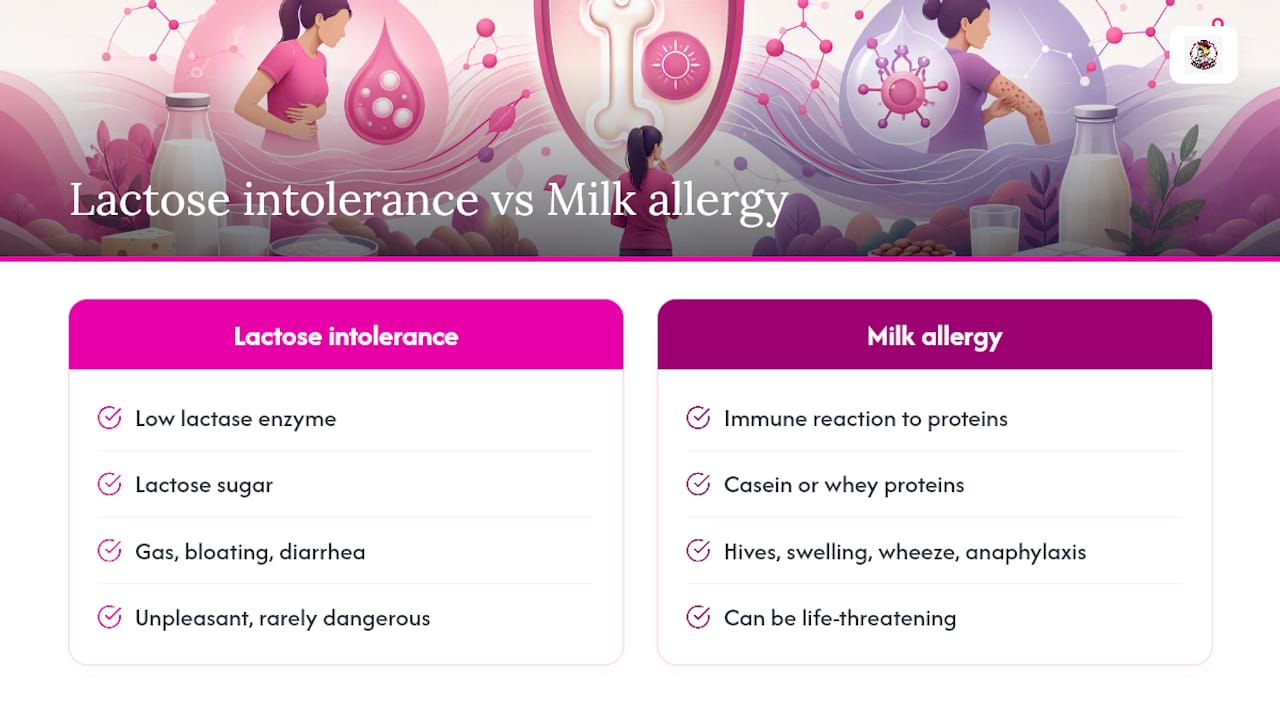
Lactose intolerance is a digestive issue. A milk allergy is an immune response, and mixing the two up leads people down the wrong management path entirely.
Lactose intolerance happens because your small intestine doesn’t produce enough lactase enzyme to break down the lactose sugar in dairy. The result is gas, bloating, and diarrhea, unpleasant but not dangerous. A milk allergy involves your immune system mistakenly treating milk proteins, usually casein or whey, as a threat. That can trigger hives, swelling, wheezing, or in severe cases, anaphylaxis, which is a medical emergency.
The practical difference matters for how carefully you need to read labels. Someone with lactose intolerance can often handle a food processed on shared equipment with dairy, since trace amounts of lactose are unlikely to cause a real reaction. Someone with a true milk allergy cannot take that risk. Even trace protein exposure can set off a serious reaction, so allergy sufferers need to treat “may contain milk” warnings far more seriously than someone managing intolerance does.
If you’re not sure which one you’re dealing with, that uncertainty alone is a good reason to see a clinician. An allergist can run a skin prick or blood test to check for a true milk allergy, which is a very different conversation than the elimination and reintroduction approach that works for lactose intolerance.
Combining a Lactose-Free Diet With Vegan or Gluten-Free Eating
A lactose-free diet layers onto other dietary patterns more easily than most people expect, though each combination has its own wrinkles worth knowing about.
Going vegan and lactose-free at the same time is almost redundant, since a fully plant-based diet already excludes all dairy, lactose included. The challenge shifts to making sure plant milk and yogurt choices are fortified enough to replace the calcium, vitamin D, and protein that dairy would have provided, which circles back to reading nutrition labels carefully rather than assuming all plant-based products are nutritionally equal.
Pairing lactose-free with gluten-free takes more label vigilance, since the two restrictions don’t overlap and each has its own hidden-ingredient traps. A gluten-free cracker might still use milk powder as a binder, and a lactose-free sauce might still be thickened with wheat flour. The safest approach is checking both concerns on every label rather than assuming clearing one hurdle clears the other automatically.
For anyone managing lactose intolerance alongside a food allergy or another intolerance, the ingredient list becomes the single most important part of grocery shopping. QueenCompares’s Ingredient Library breaks down what specific dairy-derived terms mean on a label, which helps when you’re cross-checking a product against multiple restrictions at once instead of just one.
Is a Lactose-Free Diet Good for You Long Term?
Staying lactose-free long term is generally safe and can meaningfully improve day-to-day comfort for people whose bodies genuinely can’t process lactose well. The main risk isn’t the diet itself; it’s what happens when dairy gets removed without a deliberate replacement plan.
The benefit side is straightforward: consistent avoidance of trigger foods means fewer digestive symptoms, less unpredictable discomfort around meals, and often better quality of life for people who spent years not understanding why certain foods made them miserable. Some people also find that going lactose-free clarifies other food sensitivities they’d been blaming on dairy.
The risk side centers on nutrition gaps that build slowly. Long-term dairy elimination without fortified substitutes can chip away at calcium and vitamin D status over years, which matters for bone density, particularly for older adults, women past menopause, and anyone with a family history of osteoporosis. That’s not a reason to avoid a lactose-free diet. It’s a reason to be deliberate about what replaces the dairy, rather than simply subtracting it and moving on.
The people who do best long term are the ones who treat this as a substitution project, not a subtraction project. Swap milk for fortified alternatives, keep protein sources varied, and get calcium and vitamin D levels checked periodically if there’s any doubt. Done that way, a lactose-free diet is a sustainable long-term pattern rather than a slow drift toward nutrient shortfalls.
Moderation, Testing, and Preserving Nutrition
The instinct to cut dairy completely and permanently is understandable, but it’s often more restriction than necessary. Try the elimination trial first, then reintroduce carefully. Most people land somewhere in the middle, tolerating small amounts just fine. Whatever you cut, replace deliberately, especially calcium and vitamin D. And if symptoms stick around despite doing everything right, that’s a conversation for a clinician, not a bigger elimination list.
Sources
FAQ
What Should You Eat on a Lactose-Free Diet?
Focus on naturally lactose-free foods like fruits, vegetables, whole grains, lean proteins, and eggs, then add fortified plant milks, lactose-free dairy, and low-lactose options like aged cheese and yogurt for calcium and protein.
What Foods Are Completely Free of Lactose?
Fresh produce, meat, poultry, fish, eggs, legumes, nuts, seeds, and whole grains contain no lactose since it only occurs in milk and milk-derived ingredients.
What Foods Should You Avoid on a Lactose-Free Diet?
Avoid milk, ice cream, cream soups, custards, and puddings outright, and check labels on baked goods, processed meats, and powdered drink mixes for hidden dairy listed as whey, milk solids, or casein.
What Foods Are Highest in Lactose?
Milk, cream, ice cream, and soft unaged cheeses carry the most lactose per serving, while aged hard cheeses and cultured yogurt tend to contain much less.
Is Yogurt Lactose-Free?
Regular yogurt is not lactose-free, but the fermentation process breaks down some of the lactose, so many people tolerate it better than milk. True lactose-free yogurt exists and has the lactase already added.