TL;DR:
- Eating a plant-forward diet rich in protein and omega-3s promotes visible skin, hair, and nail improvements. Reducing ultra-processed foods and focusing on nutrient-dense choices yield faster results, with skin changing within weeks and hair or nails taking months. Combining dietary changes with skincare routines enhances overall beauty outcomes and supports long-term health.
A minimally processed, plant-forward eating pattern with adequate protein and essential fatty acids is the single best dietary approach for visible beauty outcomes. Think of it as a Mediterranean-style plate tailored to your tastes, not a rigid rulebook.
Start here today:
-
Fill half your plate with colorful vegetables and fruit at every meal
-
Include a lean or plant-based protein source at breakfast, lunch, and dinner
-
Add an omega-3 source at least twice a week (salmon, sardines, walnuts, flaxseed)
-
Drink water consistently throughout the day to support skin turgor
-
Cut ultra-processed snacks and high-sugar drinks first — they drive the most visible damage
TL;DR: Most people notice early skin improvements in several weeks; hair and nail changes take a few months. If you see rapid shedding, sudden rashes, or signs of nutritional deficiency, consult a dermatologist or registered dietitian before making further changes.
This article is general information, not medical or nutritional advice. Confirm any significant dietary changes with a qualified clinician for your specific situation.
Table of Contents
How your diet shapes skin, hair, and nails
The connection between what you eat and how you look runs deeper than most people realize. Ultra-processed foods strip out nutrients and introduce inflammatory additives, and that combination shows up on your face before it shows up anywhere else.

Inflammation and the glycemic load effect. High-sugar and high-glycemic foods spike insulin, which triggers androgen hormones that increase sebum production. That chain reaction is one of the clearest dietary drivers of acne. Reducing added sugar and refined carbs often produces noticeable changes in skin clarity within 4–8 weeks.
The nutrients that build structure. Protein supplies amino acids for collagen and keratin, the structural proteins in skin, hair, and nails. Omega-3 fatty acids (EPA and DHA) reinforce the skin’s lipid barrier and reduce inflammatory signaling. Vitamins A, C, and E protect against oxidative damage; zinc and iron support cell turnover and oxygen delivery; biotin supports keratin synthesis, though it only helps if you’re actually deficient. Antioxidants from berries, leafy greens, and olive oil neutralize free radicals that accelerate visible aging.
The gut-skin axis. Fiber and fermented foods feed beneficial gut bacteria, which regulate systemic inflammation. A disrupted gut microbiome is increasingly linked to conditions like acne, eczema, and dull skin tone. Probiotic-rich foods such as plain yogurt, kefir, and kimchi support that balance without requiring a supplement.
Hydration. Plate composition and fluid intake both influence visible skin appearance. Dehydration reduces skin turgor and makes fine lines more pronounced within hours.
Realistic timelines: Epidermal cell turnover takes roughly 28 days, so early skin changes appear in several weeks. Hair-shaft strength and growth improvements take a few months, and nails grow approximately 3 mm per month, meaning full nail-plate renewal takes several months.
What a beauty-focused plate actually looks like
Harvard’s five principles for a healthy eating plan map cleanly onto beauty goals: lots of plants, adequate protein, minimally processed foods, limited saturated fat and added sugar, and variety. Here is how that translates to your plate.
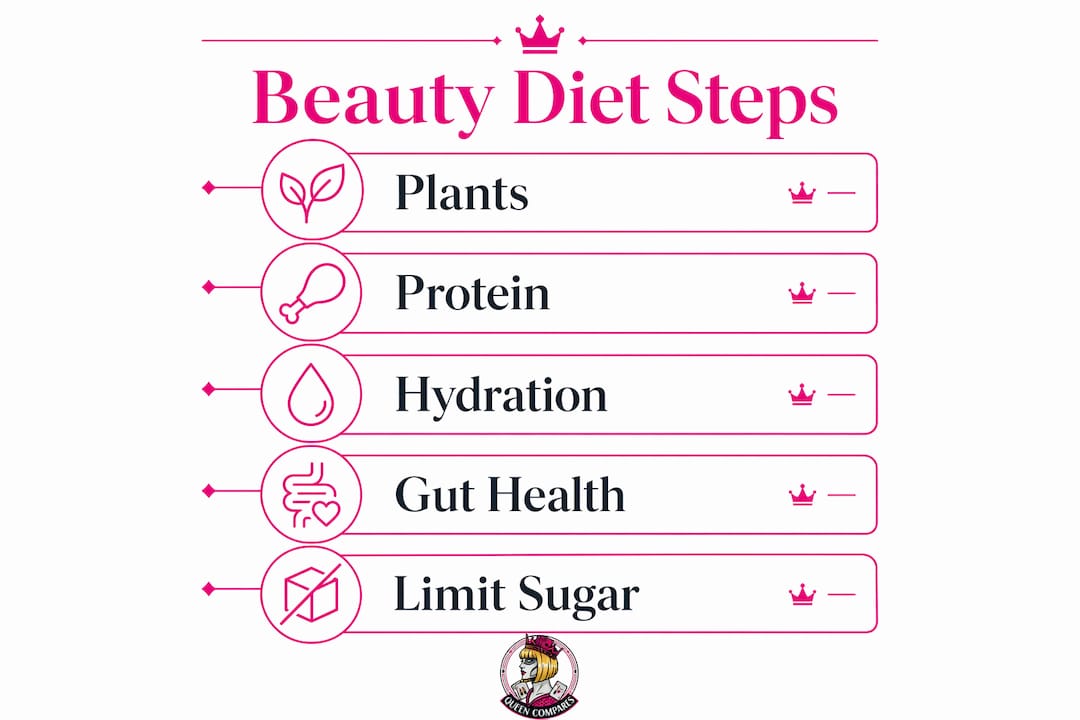
The plate template: Half colorful vegetables and fruit, one quarter whole grains or complex carbs, one quarter lean or plant protein, plus a small serving of healthy fat (olive oil, avocado, nuts, or seeds).
| Food Category | Beauty-Forward Choices | Serving Guidance |
|---|---|---|
| Oily fish | Salmon, sardines, mackerel | several times per week |
| Leafy greens | Spinach, kale, arugula | a couple cups per meal |
| Berries | Blueberries, strawberries, raspberries | about half a cup per serving |
| Legumes | Lentils, chickpeas, black beans | about half a cup cooked |
| Whole grains | Oats, quinoa, farro, brown rice | a quarter of the plate per meal |
| Nuts and seeds | Walnuts, flaxseed, pumpkin seeds | a small handful |
| Healthy fats | Extra virgin olive oil, avocado | a tablespoon or two of oil; a portion of avocado |
Serving size vs. portion size. Mayo Clinic draws a clear distinction: a serving size is the amount listed on a nutrition label, while a portion is what you actually put on your plate. Learning to eyeball portions (a fist for grains, a palm for protein) removes the need for calorie counting while still keeping your plate balanced.
Three sample days (quick meal prep ideas):
-
Day 1: Overnight oats with walnuts and blueberries / Lentil and arugula salad with olive oil / Baked salmon with roasted broccoli and quinoa / Snack: plain Greek yogurt with pumpkin seeds
-
Day 2: Spinach and egg scramble on whole-grain toast / Chickpea and farro salad with lemon dressing / Stir-fried tofu with bok choy and brown rice / Snack: apple with almond butter
-
Day 3: Plain yogurt with mixed berries and flaxseed / Black bean soup with whole-grain bread / Grilled sardines with roasted sweet potato and kale / Snack: a small handful of walnuts
Pro Tip: Swap flavored yogurt for plain Greek yogurt topped with fresh berries — you cut added sugar while doubling the protein and adding live cultures. Canned salmon is also an underrated swap for processed deli meats: same convenience, far better omega-3 and protein profile.
Supplements, safety, and when to call a clinician
Supplements are not a shortcut. Most beauty-focused nutrients work best when they come from food, and the supplement market is poorly regulated in the United States.
The evidence in brief: Biotin supplements support nail strength primarily in people with a confirmed deficiency — not in those with adequate intake. Omega-3 supplements can reduce inflammatory skin conditions when dietary intake is low. Vitamin D supplementation is warranted only if blood levels are deficient, confirmed by a lab test. Fat-soluble vitamins (A, D, E, K) accumulate in tissue and can reach toxic levels with excess supplementation. Iron loading without a deficiency diagnosis carries real health risks.
Safety rules worth following:
-
Choose supplements with third-party testing verification (NSF International, USP, or Informed Sport seals)
-
Disclose every supplement to your dermatologist and primary care provider — interactions with medications are common
-
Avoid doubling up on fat-soluble vitamins through both oral supplements and high-dose topical products without clinician guidance
-
Request a basic nutrient panel (iron, ferritin, vitamin D, zinc) before starting any targeted supplement protocol
See a clinician if you notice: rapid or patchy hair shedding, sudden unexplained rashes, brittle nails with no dietary explanation, or fatigue and pallor alongside skin changes. These can signal thyroid disorders, anemia, or autoimmune conditions that no eating plan will fix on its own. For a personalized wellness approach that accounts for your health history, a registered dietitian is your best first call.
How your eating habits interact with your skincare products
What you eat changes your skin’s barrier, pH, and sensitivity, which directly affects how topical products perform and how your skin reacts to active ingredients.
Scenarios where diet affects topical outcomes:
-
Low essential fat intake weakens the lipid barrier, making skin more reactive to acids, retinoids, and alcohol-based toners
-
High sugar intake increases glycation, which can reduce the effectiveness of collagen-stimulating topicals
-
Low zinc status is linked to increased skin sensitivity and slower wound healing after chemical exfoliation
-
High alcohol consumption dehydrates skin and can amplify irritation from active ingredients
-
Starting a new supplement (especially high-dose vitamin C or zinc) can temporarily shift skin reactivity
Matching topicals to your dietary status: If your diet is low in antioxidants, a topical vitamin C serum or niacinamide-based product can partially compensate. But if you’re already eating plenty of berries, leafy greens, and olive oil, layering high-dose antioxidant topicals adds less incremental benefit. The role of antioxidants in skincare is well established — the question is whether you need more from a bottle or from your plate.
Pro Tip: Any time you change your diet significantly or start a new supplement, do a 24-hour patch test with your current actives before resuming your full routine. Barrier changes from dietary shifts can make previously tolerated ingredients suddenly irritating.
How to personalize your plan and track real progress
There is no single best diet for everyone. Registered dietitian Natalie Romito and her colleagues consistently emphasize that adherence predicts success more reliably than any specific macronutrient ratio. The eating pattern you can sustain is the one that works.
Personalization framework:
-
Start with your current eating habits and identify two or three specific swaps (not overhauls)
-
Match protein sources to your preferences — fish, legumes, eggs, or poultry all deliver results
-
Factor in medical history: dairy sensitivity, IBS, or thyroid conditions all affect which foods serve you best
-
Align with your activity level — higher activity increases protein and micronutrient needs
Simple tracking template:
-
Daily: note what you ate, water intake, and any new products or supplements
-
Weekly: count active breakouts, estimate daily hair shedding (a moderate amount is normal), and assess nail flexibility
-
Monthly: take a consistent photo in the same lighting to track complexion changes over time
Realistic timelines: Acne and skin tone improvements typically appear in several weeks. Hair-shaft strength and growth rate changes take a few months. Full nail renewal runs several months. The Mayo Clinic Diet’s two-phase approach uses a short habit-reset phase followed by a lifelong maintenance phase — a useful model for anyone who wants early momentum without unsustainable restriction. For age-specific personalization, how your skin’s needs shift by decade is worth reading alongside this guide.
Key Takeaways
A plant-forward, minimally processed eating pattern with adequate protein and omega-3s is the most reliable dietary approach for visible skin, hair, and nail improvements.
| Point | Details |
|---|---|
| Start with plants and protein | Fill half your plate with colorful produce and include protein at every meal for collagen and keratin support. |
| Cut ultra-processed foods first | Processed foods drive inflammation and glycemic spikes — reducing them delivers the fastest visible skin improvements. |
| Expect several weeks for skin, a few months for hair and nails | Epidermal turnover and hair-growth cycles set the timeline; patience and consistency matter more than perfection. |
| Supplement cautiously | Only supplement nutrients confirmed deficient by a lab test; fat-soluble vitamins accumulate and can cause harm in excess. |
| Use QueenCompares to cross-check ingredients | The Ingredient Library helps you verify that topical actives and oral supplements are safe to use together before you buy. |
The diet advice nobody talks about honestly
There is a gap between what the wellness industry sells and what the evidence actually supports, and it shows up most clearly in the beauty space.
Most “skin diet” content focuses on what to add: collagen powders, biotin gummies, vitamin C megadoses. The more useful question is what to remove. Ultra-processed snacks, high-sugar drinks, and refined carbs are doing more damage to your complexion than any missing supplement can fix. The research on dietary quality and inflammation is consistent on this point: food quality is an independent variable, not just a calorie container.
The second thing nobody says plainly: topical products and diet work on different timescales and different mechanisms. A retinoid speeds up cell turnover from the outside; dietary vitamin A supports the same process from within. They are not interchangeable, and they are not redundant. The readers who see the best results are the ones who treat both as part of the same system, not competing strategies. Combining a personalized skincare routine with consistent dietary changes is where the real compounding happens.
One more honest note: the 3–6 month timeline for hair changes is genuinely hard to stick with. Most people abandon dietary changes before the hair-growth cycle has had time to respond. Set a calendar reminder for month three before you decide whether it’s working.
QueenCompares makes ingredient safety easy
Before you add a new supplement or active serum to your routine, it’s worth knowing exactly what’s in it and whether it plays well with everything else you’re using. That’s where QueenCompares comes in.

The Ingredient Library lets you look up any ingredient — from biotin and zinc to retinol and niacinamide — and see safety ratings, known interactions, and community reviews in one place. If you’re pairing an omega-3 supplement with a vitamin C serum, or adding a new collagen powder alongside your current actives, a quick check takes less than two minutes and can save you from an unexpected reaction. You can also browse and compare products side by side to find options that match your skin goals and dietary approach. For medical concerns, always consult a qualified clinician — QueenCompares is your ingredient research companion, not a substitute for professional advice.
Authoritative sources and further reading
These are the primary sources behind this guide. Each one is worth bookmarking for deeper reading.
-
WHO Healthy Diet Fact Sheet — The global evidence base for dietary adequacy, balance, moderation, and diversity; foundational for understanding what a balanced diet actually means.
-
Harvard Health: 5 Principles of a Healthy Diet — Concise summary of consensus dietary principles from Harvard Medical School nutritionists; useful for cutting through conflicting advice.
-
Harvard Health: Guide to the Mediterranean Diet — Evidence review of the Mediterranean pattern’s health benefits, including metabolic and inflammatory markers relevant to skin health.
-
NCBI StatPearls: Dietary Approaches to Obesity Treatment — Clinical review covering ultra-processed food effects, inflammation, and evidence-based dietary patterns; the most rigorous source in this guide.
-
Mayo Clinic: Healthy Meals Start with Planning — Practical plate-building and portion guidance, including the serving size vs. portion size distinction.
-
Mayo Clinic Diet Overview — Details on the two-phase habit-reset model; useful for readers who want a structured starting framework.
-
Cleveland Clinic: Best Weight Loss Diets from a Dietitian — Registered dietitian perspective on personalization and adherence as the primary predictors of long-term success.
-
NHLBI: DASH Eating Plan — Full DASH framework with daily and weekly serving targets; a practical reference for anyone building a structured healthy eating plan.
-
QueenCompares Ingredient Library — Cross-check supplement and topical ingredient safety, interactions, and community ratings before purchasing.
FAQ
What is the best diet for clearer skin?
A minimally processed, plant-forward pattern with low glycemic load and adequate omega-3s has the strongest evidence for reducing acne and improving skin clarity. The Mediterranean-style eating pattern is the most studied and broadly recommended option.
How long does it take to see skin changes from diet?
Most people notice early improvements in skin clarity and tone within several weeks. Hair and nail changes take longer — typically a few months — because of the slower growth cycles involved.
Do biotin supplements actually improve hair and nails?
Biotin supports hair and nail strength primarily when there is a confirmed deficiency. For people with adequate biotin intake, supplementation shows limited benefit; a dermatologist can order a simple blood test to check your levels.
Can what I eat affect how my skincare products work?
Yes. A weakened skin barrier from low essential fat intake, or increased sensitivity from high sugar consumption, can change how your skin responds to active ingredients like retinoids and acids. Patch-test your current routine whenever you make a significant dietary change.
Is there one single best weight loss diet for beauty goals?
No. Cleveland Clinic registered dietitians consistently note that the best eating plan is the one you can follow long-term. Adherence to a nutrient-dense, varied pattern matters more than any specific macronutrient ratio or named diet program.