TL;DR:
- In 2026, Korean skincare emphasizes skin longevity using regenerative ingredients and advanced delivery systems. Consumers prefer fewer, high-value products aligned with slow beauty and skinification trends, with clinical credibility gaining importance. Brands that demonstrate ingredient transparency and effective technology will lead in the evolving K-Beauty market.
K-Beauty is defined by its commitment to skin health first, and in 2026 that commitment has reached a new level of scientific precision. Korean skincare brands grew 23% in dollar value in prestige retail during Q1 2026, driven by biotech formulations, regenerative ingredients, and clinical positioning that Western brands are still catching up to. The top K-Beauty trends this year are not about adding more steps. They are about doing less with far more effective products. If you want to know what is actually moving the needle in Korean skincare right now, this is where to start.
1. What are the top K-Beauty trends shaping 2026?
The defining shift in K-Beauty this year is from surface correction to skin longevity. Products are no longer designed just to smooth or brighten. They are built to repair cellular function, reinforce the skin barrier, and extend the skin’s healthy lifespan. K-Beauty prioritizes skin longevity over traditional anti-aging, and that philosophy now drives ingredient selection, formulation strategy, and product positioning across every category.
Skincare dominates the category. Skincare grew 35% in dollar value compared to just 8% growth in makeup, which tells you exactly where Korean brands are placing their bets. Clinical credibility and pharmacy-style positioning are the key success factors for brands targeting serious beauty consumers in 2026.
2. Which ingredients are leading K-Beauty innovation?
PDRN (polydeoxyribonucleotide) is the standout ingredient of 2026. PDRN appeared in 26% of new product submissions at the Cosmo Beauty Seoul Trend Report, making it the most featured active of the year. PDRN is a regenerative compound originally used in clinical wound healing. Its presence in mainstream skincare signals how far the line between professional treatments and at-home routines has blurred.
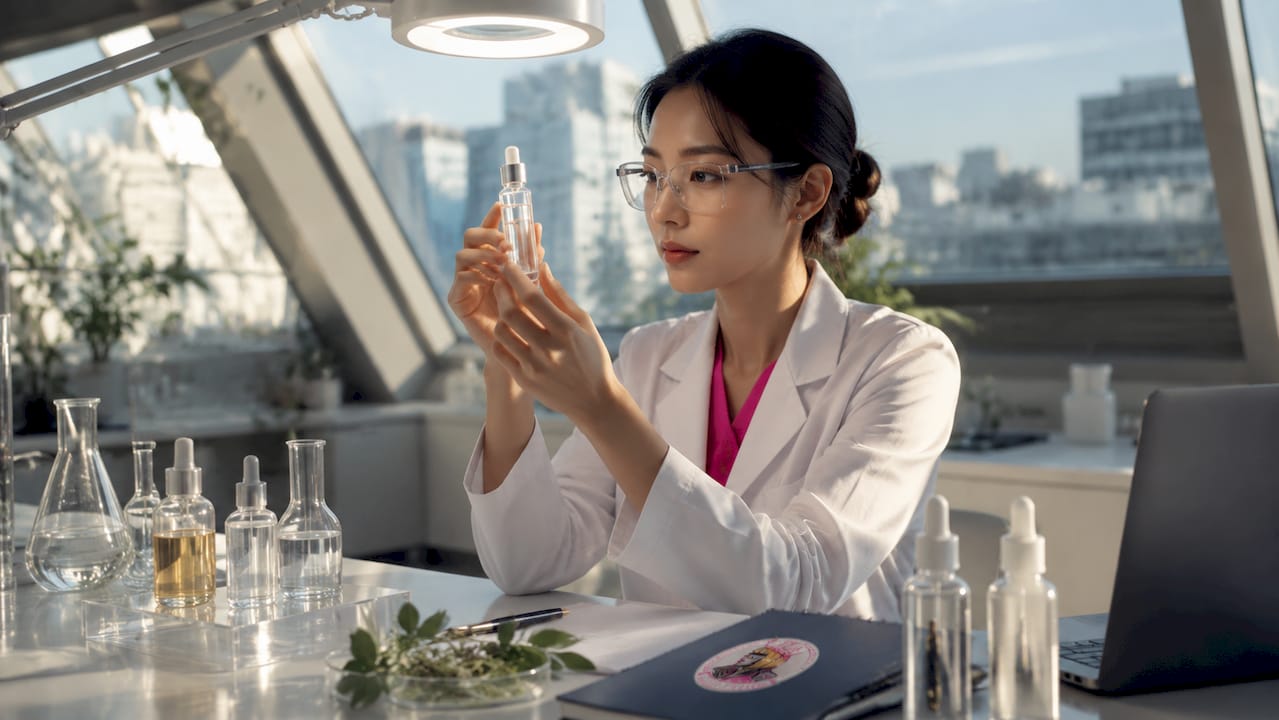
The full ingredient ranking from Cosmo Beauty Seoul shows collagen at 22%, glutathione at 20%, vitamin C at 18%, and retinol at 14%. Each of these serves a specific function in the skin longevity framework. Glutathione brightens and protects against oxidative stress. Collagen supports structural integrity. Retinol accelerates cell turnover.
Beyond PDRN, biomimetic peptides are projected as a major trend for 2026. These peptides mimic the skin’s own signaling molecules to support collagen production, elasticity, and barrier function. They work at a cellular communication level, which makes them more targeted than traditional peptide blends. Exosomes, EGF (epidermal growth factor), and copper peptides round out the regenerative ingredient category.
Fermentation techniques also play a key role. Fermented ingredients increase bioavailability, meaning the skin absorbs and uses them more efficiently. Ginseng, madecassoside (from cica), and postbiotics all benefit from fermentation processing. Ingredient synergy matters here. Combining PDRN with cica, for example, enhances efficacy and reduces irritation, which is especially useful for sensitive skin types.
-
PDRN: Regenerative, wound-healing origin, top trending ingredient in 2026
-
Glutathione: Antioxidant and brightening, supports oxidative stress defense
-
Biomimetic peptides: Mimic skin biology for collagen and barrier support
-
Ginseng and madecassoside: Antioxidant and barrier repair, enhanced by fermentation
-
NAD+ and NMN: Emerging cellular energy compounds guiding the skin longevity shift
-
Beta-glucan and postbiotics: Barrier reinforcement and microbiome support
Pro Tip: If you are new to PDRN, pair it with a cica-based moisturizer rather than layering it with retinol right away. The combination reduces the risk of irritation while still delivering regenerative benefits.
You can explore detailed profiles for each of these actives in the QueenCompares Ingredient Library to understand how they interact with your skin type before you buy.
3. How are delivery systems changing what K-Beauty products can do?
The best ingredient in the world does nothing if it cannot reach the right layer of skin. That is why delivery technology has become one of the most important differentiators in Korean skincare this year.
Spicule technology, also called reedle shot technology, uses microscopic silica needles derived from freshwater sponges. Spicules create micro-channels in the skin surface that allow actives like PDRN and glutathione to penetrate far deeper than standard topical application. The result is a professional-level delivery mechanism you can use at home. This is what “regenerative aesthetic-inspired skincare” means in practice.
Encapsulation is another major delivery method gaining ground. Encapsulated actives are protected during storage and release only when they contact the skin, which prevents degradation and improves efficacy. Vitamin C and retinol both benefit significantly from encapsulation because they are notoriously unstable in open formulas.
Toner pads have evolved into a dual-function format that combines delivery with gentle physical exfoliation. Dual-sided toner pads feature a textured side for exfoliation and a smooth side for hydration absorption. Many people use only the smooth side and miss the exfoliation benefit entirely. Alternating between both sides gives you the full routine in a single product.
Pro Tip: Spicule products are not daily toners. Use them two to three times per week and always follow with a barrier-supporting moisturizer. Post-application care prevents micro-channel disruption and keeps the skin barrier intact.
| Delivery method | Primary benefit | Best paired with |
|---|---|---|
| Spicule technology | Deep penetration of actives | PDRN, glutathione serums |
| Encapsulation | Ingredient stability and timed release | Vitamin C, retinol |
| Dual-sided toner pads | Hydration and gentle exfoliation | Barrier repair moisturizers |
| Microneedle-inspired patches | Targeted delivery to specific zones | Peptide and EGF actives |
4. What routine shifts are defining K-Beauty consumer habits?
The 10-step routine is no longer the gold standard. Gen Z reduced their daily skincare steps from 6.2 in 2024 to 4.1 in 2026, and that number is still falling. This shift has a name: “slow beauty.” It is not about doing less because people care less. It is about choosing fewer products that each do more.
Minimalist routines grew 38% in search volume, and the economics back up the behavior. The average price per product is rising even as purchase volume drops. Consumers are willing to spend more on a single high-function product than to build a multi-step stack of average ones. That is a meaningful change in how people think about skincare value.
The “skinification” of makeup is the other major format shift. This trend blends skincare actives directly into cosmetic products. Foundations with SPF and niacinamide, tinted serums with peptides, and lip treatments with hyaluronic acid are all part of this category. Skinification-related searches grew 47% year over year, and US Sephora revenue tied to this trend grew 62%. That is not a niche movement. That is a mainstream category shift.
-
Slow beauty: Fewer steps, higher-value products, no compromise on clinical results
-
Skinification: Makeup products formulated with active skincare ingredients
-
Multifunctional formats: Toner pads, cushion foundations, and serum-primers that replace multiple steps
-
Time efficiency: Products that deliver clinical benefits in under five minutes
For practical guidance on building a routine that fits this approach, the five-minute skincare routine framework is a solid starting point.
5. How is K-Beauty earning clinical credibility?
K-Beauty has always been trend-forward, but the 2026 wave is different because it is science-first. K-Beauty moves from anti-aging to skin longevity, guided by concepts like cell senescence, NAD+ metabolism, and barrier biology. This is the language of dermatology, not marketing.
Pharmacy-positioned skincare is gaining serious ground. Products formulated with dermatologist input, tested for barrier compatibility, and sold through clinical channels carry more weight with today’s beauty consumers. Transparent ingredient lists, published efficacy data, and safety ratings are now buying criteria, not bonus features.
Barrier-first formulation is the clearest expression of this shift. Ingredients like cica, beta-glucan, and postbiotics all support the skin’s natural defense layer rather than stripping or overwhelming it. The goal is a skin barrier strong enough to tolerate actives, not one that is constantly recovering from them. That philosophy shapes how the best Korean brands sequence their formulas and recommend their routines.
6. How to choose the right K-Beauty products for your skin
Matching the right trend to your actual skin concern saves money and prevents setbacks. Here is a practical framework for navigating the 2026 K-Beauty market.
-
Identify your primary concern first. Regenerative products like PDRN serums work best for skin that shows early signs of aging, dullness, or slow recovery. If your main concern is redness or sensitivity, start with barrier-repair products featuring cica or beta-glucan before adding any actives.
-
Introduce delivery system products gradually. Spicule technology is potent. Start with once-a-week use and assess your skin’s response before increasing frequency. People with compromised or reactive skin should consult a dermatologist before using micro-channel delivery products.
-
Choose multifunctional formats if your routine feels overwhelming. A dual-sided toner pad replaces a separate exfoliant and a separate hydrating toner. A skincare-infused foundation replaces a primer and provides SPF coverage. Fewer products mean fewer potential conflicts between ingredients.
-
Match your budget to your priorities. Slow beauty economics favor spending more on one excellent serum than spreading the same budget across five average products. Identify the one step where your skin needs the most support and invest there first.
-
Verify ingredients before you buy. Label claims do not always match formula reality. Use the QueenCompares Label Scanner to confirm that trending actives like PDRN, biomimetic peptides, or encapsulated vitamin C are actually present in the concentrations that matter.
-
Check ingredient interactions. Some actives compete or cause irritation when layered. PDRN and retinol, for example, need careful sequencing. The QueenCompares Ingredient Checker flags these conflicts before you commit to a purchase.
Key takeaways
The most important shift in K-Beauty right now is the move from cosmetic correction to skin longevity, backed by regenerative ingredients, advanced delivery systems, and clinical formulation standards.
| Point | Details |
|---|---|
| Regenerative ingredients lead | PDRN, biomimetic peptides, and exosomes define the 2026 ingredient story. |
| Delivery technology matters | Spicules and encapsulation determine how well actives actually reach the skin. |
| Slow beauty is real | Gen Z cut daily skincare steps from 6.2 to 4.1, favoring fewer, higher-value products. |
| Skinification is mainstream | Makeup with active skincare ingredients grew 47% in search and 62% in US revenue. |
| Clinical credibility wins | Barrier-first formulas and transparent ingredient claims are now consumer expectations. |
Why the 2026 K-Beauty shift feels different to me
By Magdalena Kapuscinska
I have followed Korean skincare closely for years, and the 2026 cycle genuinely surprises me. Not because the ingredients are new, but because the philosophy behind them has changed so completely. PDRN has existed in clinical settings for decades. What is new is that Korean brands have figured out how to make it work in a jar you buy online, at a price point that does not require a medical budget.
The delivery system conversation is what I find most underrated. Most beauty coverage focuses on what is in a product. Almost none of it focuses on whether those ingredients can actually get where they need to go. Spicule technology and encapsulation are not marketing terms. They are the reason two products with identical ingredient lists can perform completely differently on skin.
The slow beauty trend also feels more durable than previous minimalism waves. Past versions of “fewer steps” were often just laziness dressed up as philosophy. This one is backed by real consumer spending data. People are paying more per product and buying fewer of them. That is a genuine values shift, not a trend cycle.
My honest prediction is that the brands that survive the next three years will be the ones that can prove their claims. Ingredient transparency, third-party testing, and honest efficacy data will separate the serious players from the ones riding the biotech aesthetic without the science to back it up. The 2026 skincare trends overview on the QueenCompares blog gives a solid broader picture if you want to see how K-Beauty fits into the global skincare shift.
— Magdalena Kapuscinska
Find your next K-Beauty favorite with QueenCompares
QueenCompares is the community built for beauty consumers who want real information before they buy. Whether you are researching PDRN serums, comparing toner pad formulas, or checking whether a trending ingredient is right for your skin type, the platform gives you the tools to decide with confidence.
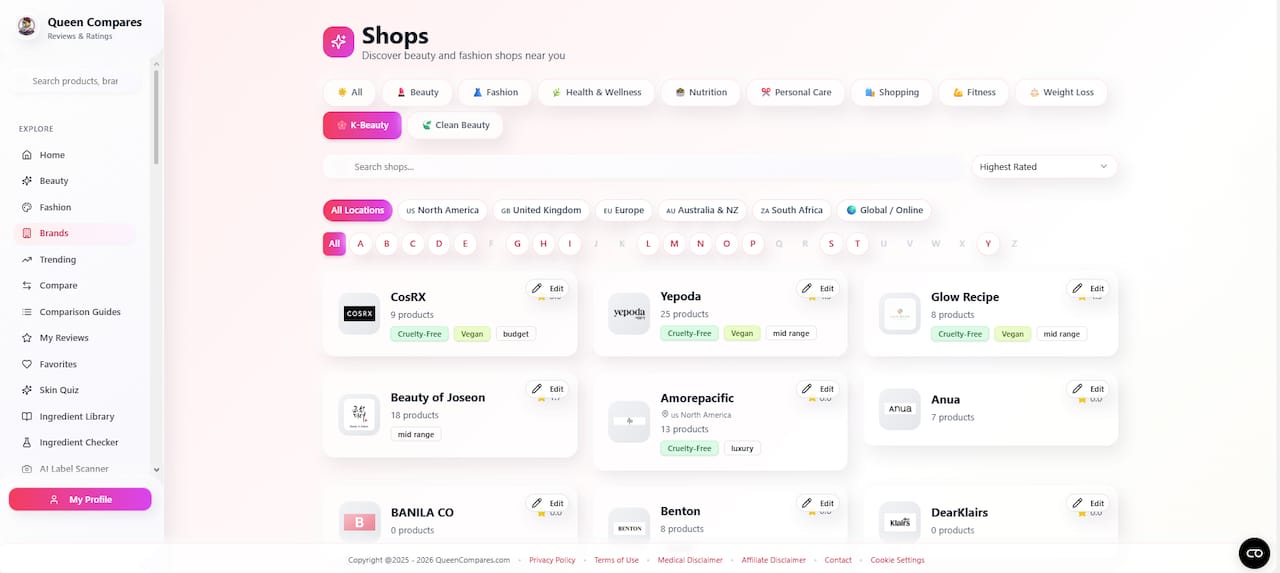
Browse the full K-Beauty product catalog to compare formulas side by side, read community reviews, and filter by ingredient. The Ingredient Library covers every major 2026 active in plain language, and the Label Scanner confirms whether a product actually delivers what its packaging promises. Join the QueenCompares community and shop the trends that are worth your time and money.
FAQ
What is the top trending K-Beauty ingredient in 2026?
PDRN (polydeoxyribonucleotide) is the top trending ingredient, appearing in 26% of new product submissions at the 2026 Cosmo Beauty Seoul Trend Report. It is a regenerative compound that supports skin repair and cellular recovery.
What does “slow beauty” mean in K-Beauty?
Slow beauty refers to minimalist skincare routines that use fewer, higher-function products. Gen Z reduced their daily skincare steps from 6.2 to 4.1 between 2024 and 2026, and search volume for minimalist routines grew 38%.
Is spicule technology safe for sensitive skin?
Spicule technology is potent and not suitable for daily use on sensitive skin. Start with once-a-week application, always follow with a barrier-repair moisturizer, and consult a dermatologist if your skin is reactive or compromised.
What is the “skinification” of makeup?
Skinification is the trend of formulating makeup products with active skincare ingredients like peptides, niacinamide, and hyaluronic acid. Related search volume grew 47% year over year, and US Sephora revenue tied to this category grew 62%.
How can I verify that a K-Beauty product contains its claimed ingredients?
Use the QueenCompares Label Scanner to scan a product’s ingredient list and confirm that trending actives are present. The Ingredient Checker also flags potential conflicts between ingredients before you commit to a purchase.