TL;DR:
- The best fitness apps for beauty and fashion goals focus on ingredient-level nutrition, sleep, recovery tracking, and progressive training programs. These features help improve skin clarity, reduce puffiness, and reshape the body over time, more effectively than simple step counting. Prioritizing one ecosystem and verifying supplement ingredients with QueenCompares enhances results and maintains privacy.
For beauty and fashion enthusiasts, the best fitness apps combine ingredient-level nutrition logging, sleep and recovery tracking, and progressive programs that visibly improve skin, posture, and how clothes fit. Start here:
-
Nutrition and ingredient tracking: MyFitnessPal or Lifesum, Nutrinixy,
-
AI coaching with recovery integration: Fitbit or Apple Fitness+, Hume Health, Ambrosia Systems
-
Progressive strength and shaping programs: Sweat, Centr, or Nike Training Club,
-
Pilates and workout at home: JustFit Pilates App, Slimkit App, Verv
The apps that move the needle for appearance goals are the ones that track what you eat at the ingredient level, how well you recover overnight, and whether your training is actually progressing week over week — not just counting steps.
These three categories matter because nutrition quality affects skin clarity, sleep depth reduces morning puffiness, and progressive training reshapes posture and body composition in ways that random workouts simply do not.
Table of Contents
-
Why fitness app data actually affects your skin and how clothes fit
-
How are fitness apps priced, and how do you avoid subscription fatigue?
-
What do fitness apps collect, and what should you check before signing up?
-
How do you fit a fitness app into your beauty routine without adding friction?
-
Do scheduling and casting features actually help you stay consistent?
-
Can you customize a fitness app for skin, posture, or body-shaping goals?
-
The gap between what fitness apps promise and what actually matters
-
QueenCompares is your ingredient analysis companion for fitness-driven nutrition
Why fitness app data actually affects your skin and how clothes fit
Tracking macros, specific food ingredients, and sleep recovery does more for your appearance than any single product swap. When you log what you eat at the ingredient level, you can spot patterns: excess sodium causing bloating, low omega-3 intake dulling skin, or sugar spikes triggering breakouts. Sleep data closes the loop on recovery, since poor sleep raises cortisol, which directly affects skin texture and water retention.
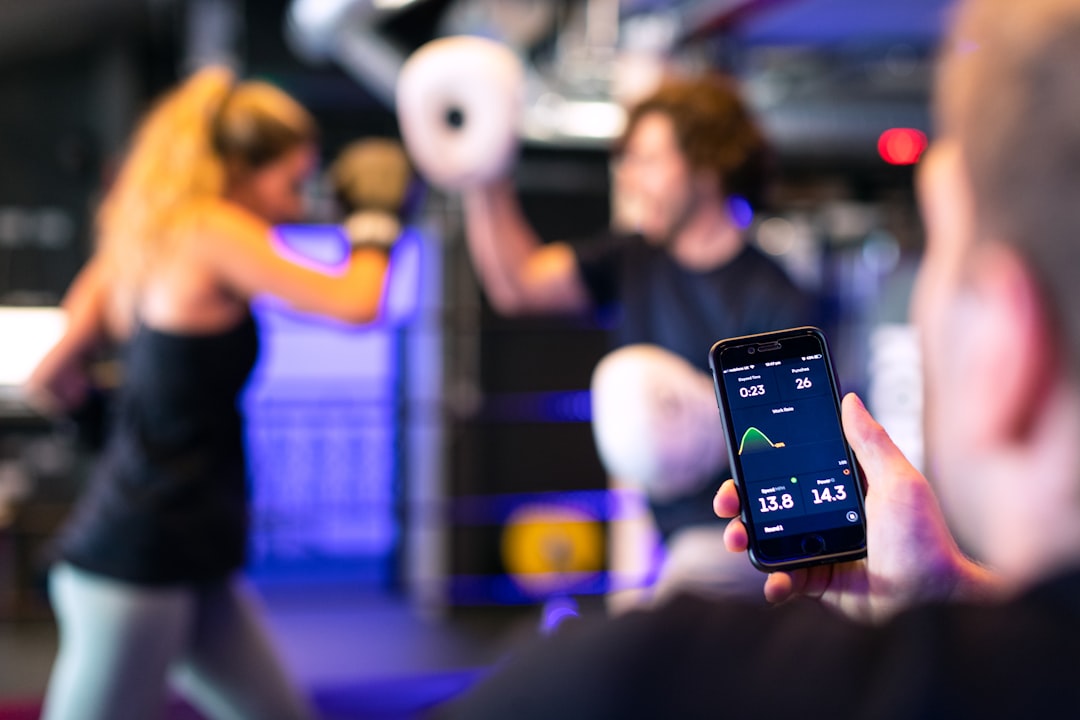
Apps typically ask for your age, height, weight, and sex during setup to estimate your Basal Metabolic Rate, then calibrate your calorie and macro targets from there. That baseline is what makes personalized goal-setting possible rather than generic.
Syncing a wearable through Apple Health or Google Health adds sleep stages, resting heart rate, and step data to the picture, giving the app enough context to adjust intensity recommendations based on how recovered you actually are.
-
Nutrition quality logged daily → fewer skin-irritating ingredients, better micronutrient balance
-
Sleep tracked consistently → reduced puffiness, improved skin barrier recovery overnight
-
Progressive training logged weekly → better posture, visible body composition changes over 8–12 weeks
Pro Tip: Pick one ecosystem, either Apple Health or Google Health, before you download anything. Centralizing your data in one hub prevents fragmentation and makes trends actually readable.
What features should you look for in a fitness app?
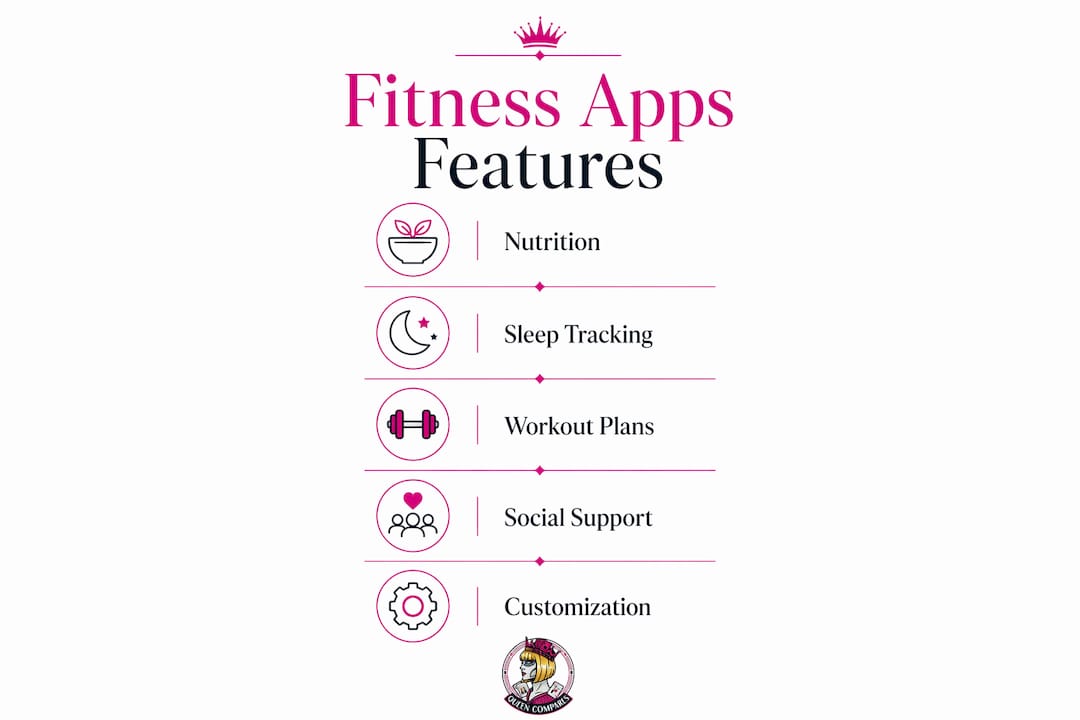
Lead with these six features when evaluating any health tracking application:
-
Ingredient-level nutrition logging — barcode scanning or camera-based meal recognition, not just calorie counts
-
AI personalization — plans that adapt based on your logged data, not static templates
-
Sleep and wearable sync — integration with your smartwatch or health platform
-
Progressive program structure — workouts that build week over week, not random daily picks
-
Logging history and set/rep tracking — so you can see whether you are actually progressing
-
Casting and multi-device support — workout on your TV when you want more space
| Feature | Nutrition-first apps | AI-coach apps | Program-based apps |
|---|---|---|---|
| Ingredient-level food logging | High | Medium | Low |
| AI personalization | Medium | High | Medium |
| Sleep and wearable sync | Medium | High | Low–Medium |
| Progressive program structure | Low | Medium | High |
| Logging history | High | High | High |
| Casting to TV | Low | Medium | High |
Expert reviewers at Garage Gym Reviews consistently find that program-based apps outperform library-style apps for habit formation and measurable progress. Random workouts feel productive but rarely produce visible shaping results.
Pro Tip: Before committing to a paid plan, open the app’s food database and search for a specific supplement or packaged food you use regularly. If the ingredient breakdown is missing or vague, the nutrition tracking will not serve your skin goals.
How are fitness apps priced, and how do you avoid subscription fatigue?
Most apps use a freemium model: basic tracking is free, while AI coaching, custom macro goals, and advanced program libraries sit behind a paid subscription. Most apps use monthly and annual plans, with annual subscriptions generally providing meaningful discounts. Free trials are standard — Sworkit offers a 7-day free trial for full feature access, and most premium tiers follow a similar pattern.
The real cost trap is stacking multiple subscriptions without a clear primary app. Three apps at $15/month adds up fast, and the data stays siloed.
-
Run one app on its free trial before paying anything
-
Choose one primary ecosystem (Apple Health or Google Health) to aggregate data
-
Audit your subscriptions every 90 days and cancel anything you have not opened in two weeks
-
Prioritize apps that integrate with tools you already pay for (Apple Watch, Fitbit)
Which apps are worth trying for beauty and fashion goals?
Here is a quick snapshot of the eight apps you will see recommended most often, with what each actually does for appearance-focused goals.
| App | Best for | Free tier? | Nutrition logging | Wearable/sleep sync | Program vs. library |
|---|---|---|---|---|---|
| MyFitnessPal | Ingredient-level food tracking | Yes | 18 million foods, barcode + camera scan | — | Library |
| Lifesum | Clean eating and macro balance | Yes (limited) | Detailed macros, meal plans | Apple Health, Google Health | Hybrid |
| Nike Training Club | Free progressive programs | Yes (fully free) | Guidance only, no food log | Limited | Programs |
| Sweat | Women-focused progressive training | 7-day trial | No food log | Apple Health | Programs |
| Centr | Holistic coaching with recovery content | 7-day trial | Meal plans included | Limited | Programs + recovery |
| Apple Fitness+ | Apple ecosystem integration | No (subscription) | No food log | Apple Watch required | Programs + library |
| Peloton | Cardio and strength with community | Limited free | No food log | Apple Health, Fitbit | Programs + library |
| Fitbit | Sleep and recovery tracking | Yes (limited) | Basic food log | Fitbit wearables | Library |
A few things worth knowing beyond the table. MyFitnessPal’s AI Nutrition Coach gives personalized advice drawn from your food diary, which is genuinely useful when you are trying to connect specific ingredients to skin or energy patterns. Nike Training Club is fully free and includes casting to your TV, making it one of the best no-cost options for progressive programs. Sweat is built specifically for women and structures its programs around progressive overload, which translates directly to posture and body-shaping results. Centr pairs workout programs with guided recovery and mindfulness content, addressing the stress-to-skin connection that most apps ignore. Fitbit and Apple Fitness+ shine when you already own the hardware: sleep-stage analysis and ECG-based recovery metrics require a compatible smartwatch to be accurate rather than estimated. Peloton’s community features and live classes add accountability that solo apps rarely replicate.
What do fitness apps collect, and what should you check before signing up?
Apps commonly collect personal metrics (age, height, weight, sex), activity logs, nutrition diaries, sleep data, location, and sometimes photos. Before you share any of it, run through this checklist:
-
Health data access: does the app request read/write access to Apple Health or Google Health? Confirm what it pulls.
-
Social and contacts sharing: opt out of any default sharing to social networks.
-
Location permissions: most workout apps do not need continuous location; set to “while using” only.
-
Photo access: camera-based meal scanning needs photo access, but check whether images are stored on their servers.
-
Data export and deletion: can you download your data and delete your account fully? If the privacy policy is vague on this, treat it as a red flag.
Red flags to watch for: default data sharing with advertising partners, no clear account deletion path, and privacy policies that use broad language like “we may share with third parties for business purposes” without specifics.
How do you fit a fitness app into your beauty routine without adding friction?
Four steps, and you can start today.
-
Pick your primary goal and connect one ecosystem. Choose Apple Health or Google Health as your hub, then select one app that addresses your top goal (nutrition, recovery, or progressive training).
-
Enable ingredient-level food logging. Use MyFitnessPal’s barcode or camera scan for packaged foods, and cross-reference any supplement ingredients with the QueenCompares Ingredient Checker to flag potential skin interactions.
-
Sync sleep and recovery data, then adjust your evening routine. If your sleep score drops, that is the signal to move your active skincare steps (retinol, acids) to nights when recovery looks stronger. Lifestyle directly affects how well topical products work.
-
Set progressive program milestones tied to posture and body-shaping checkpoints. Log your workouts weekly. At the 4-week mark, check whether weights, reps, or difficulty have increased. No progression means no visible change.
Weekly logging checklist: food diary (daily), sleep score (daily), workout log with sets and reps (each session), body measurements or fit check (weekly).
Pro Tip: Link your app’s workout reminder to an existing skincare cue, like your morning cleanser or evening moisturizer. Habit stacking onto something you already do every day is the fastest way to make a new behavior stick.
Do scheduling and casting features actually help you stay consistent?
Yes, and the research on habit formation backs it up. Nike Training Club lets you schedule workouts and cast them to your TV, which removes the friction of working out on a small screen. When a workout feels more like a real session and less like scrolling your phone, you are more likely to complete it. Scheduling a specific time also converts a vague intention into a committed appointment, which is the behavioral difference between people who work out three times a week and people who mean to.
Reminders work best when they are tied to a consistent time and place, not just a notification. Set your app reminder for the same time you already do something else, and the habit forms faster.
How do community and social features keep you accountable?
Peloton’s live leaderboard and Nike Training Club’s trainer-led community are two of the strongest examples of social accountability built into a fitness app. Seeing real people complete the same workout, or getting a high-five from another user mid-class, creates a sense of shared effort that solo tracking cannot replicate.
For beauty and fashion enthusiasts specifically, community features also surface real results. User reviews and before/after posts within app communities give you a more honest picture of what a program actually produces than marketing copy does. Sweat’s community is particularly active among women focused on body-shaping goals, making it a useful source of peer feedback on program effectiveness.
Can you customize a fitness app for skin, posture, or body-shaping goals?
Most apps offer goal-setting at the macro level (weight loss, muscle gain, endurance), but the best ones let you go deeper. For skin health, the key customization is micronutrient tracking: apps like MyFitnessPal let you set targets for specific vitamins and minerals, so you can monitor whether you are hitting the zinc, vitamin C, and omega-3 levels that support skin barrier function. For posture, look for apps that include mobility and corrective exercise programs, not just strength or cardio. Centr and Nike Training Club both include yoga and mobility content that directly addresses postural imbalances.
Body shaping is where progressive overload tracking matters most. An app that logs your sets, reps, and weights over time lets you see whether you are actually building the muscle that reshapes your silhouette, or just maintaining. That logged history is what separates visible results from gym wandering.
Key Takeaways
The most effective fitness apps for beauty goals combine ingredient-aware nutrition logging, sleep and recovery tracking, and progressive programs that build visible results over 8–12 weeks.
| Point | Details |
|---|---|
| Ingredient-level nutrition first | Choose apps with barcode or camera scanning and micronutrient breakdowns, not just calorie counts. |
| Sleep data affects your skin | Sync a wearable to track sleep stages; use low-recovery nights as a cue to adjust your skincare timing. |
| Progressive programs beat random workouts | Log sets and reps weekly; no progression in the log means no visible change in posture or shape. |
| One ecosystem, one subscription | Centralize data in Apple Health or Google Health to avoid fragmentation and subscription fatigue. |
| QueenCompares for ingredient verification | Use the QueenCompares Ingredient Checker to cross-check supplements and nutrition labels your app surfaces. |
The gap between what fitness apps promise and what actually matters
Most fitness app marketing leads with transformation stories and AI buzzwords. What actually drives results for beauty-focused goals is far less glamorous: consistent ingredient logging, honest sleep data, and a training program you follow for at least eight weeks without switching.
The ingredient-level nutrition piece is where most people underinvest. Counting calories is easy. Knowing whether the collagen supplement your app recommends contains a form your body actually absorbs, or whether a “clean” protein bar is hiding a skin-irritating emulsifier, requires a different kind of scrutiny. That is exactly where pairing your fitness app with a dedicated ingredient analysis tool changes the outcome. Fitness apps are built to track behavior. They are not built to evaluate formulas.
The other underrated factor is sleep data. Most people treat their sleep score as a curiosity. The more useful frame is to treat it as a recovery budget: on nights when that budget is low, your skin barrier is compromised, your cortisol is elevated, and your workout the next day will produce less adaptation. Adjusting your skincare routine and training intensity to your actual recovery state, rather than a fixed schedule, is the single biggest gap between people who see results and people who plateau.
QueenCompares is your ingredient analysis companion for fitness-driven nutrition
Fitness apps tell you what to eat and how much. QueenCompares tells you what is actually in it. When your app logs a supplement, a protein powder, or a packaged food, the Ingredient Checker lets you verify every ingredient for safety, allergen flags, and skin interactions before it becomes part of your daily routine.
Here is where to go next on QueenCompares:
-
Ingredient Library — look up any ingredient your app surfaces and see its safety profile and known interactions
-
Nutrition — compare a wide range of supplements and nutrition products side by side, including vitamins, minerals, protein powders, and herbal supplements, to help you make informed choices.
-
Fitness— explore a wide range of excellent fitness apps and reputable fitness brands that can be tailored to match your unique lifestyle, whether you’re into running, strength training, yoga, or outdoor activities with Slimkit or Verv. Discover tools like Nutrinixy for calorie tracking, Strava for cycling and running routes, or brands like Elastique Athletics and Wiskii Active that offer stylish and functional workout gear suitable for beginners and seasoned athletes alike.
Run your next app-recommended supplement through the Ingredient Checker before you add it to your routine.
Useful sources
These sources were selected for editorial credibility, primary app documentation, and expert testing methodology.
-
MyFitnessPal — primary source for BMR setup, food database size, and integration details
-
Nike Training Club — primary source for scheduling, casting, and program structure
-
Centr — primary source for recovery content and progressive program details
-
Google Health — primary source for wearable integration and adaptive coaching
-
Samsung Health — primary source for hardware-dependent advanced metrics
-
Sworkit on Google Play — trial period details
-
Forbes Health — Best Fitness Apps — editorial roundup with tested categories
-
Garage Gym Reviews — Best Workout Apps — expert testing and program-vs-library analysis
Always check the privacy policy and current trial terms directly on each app’s page before subscribing, as terms change.
FAQ
Which fitness app is best for skin health goals?
MyFitnessPal is the strongest choice for skin-focused nutrition because its 18-million-food database and micronutrient tracking let you monitor the specific vitamins and minerals that support skin barrier function.
Do fitness apps work without a wearable?
Yes, but advanced metrics like sleep-stage analysis and ECG-based recovery require compatible hardware. Without a smartwatch, apps estimate recovery from activity logs and self-reported data rather than sensor readings.
How do I avoid paying for too many fitness app subscriptions?
Pick one primary app and one data hub (Apple Health or Google Health), run free trials before committing, and audit your active subscriptions every 90 days. Most people need one nutrition app and one program app at most.
Can QueenCompares help me evaluate supplements my fitness app recommends?
Yes. The QueenCompares Ingredient Checker lets you verify any supplement ingredient for safety ratings, allergen flags, and known skin interactions, which fitness apps do not provide.
What is the difference between a program-based app and a workout library app?
A program-based app gives you a structured, progressive plan that builds week over week. A library app offers individual workouts you pick on demand. Expert reviewers at Garage Gym Reviews find program-based apps produce more consistent progress and better habit formation.