Sunscreen goes under makeup, not into it, and not skipped in favor of it. The order matters as much as the product: cleanse, treat, moisturize if you need to, apply a broad-spectrum SPF 30+, wait for it to set, then build your base on top. Relying on a tinted moisturizer or foundation with SPF baked in usually leaves you underprotected, because most people apply far less of those products than the amount tested to earn that SPF number, according to the Skin Cancer Foundation.
If you want the shortlist before the science, here are five formulas that consistently layer well under foundation without pilling:
-
EltaMD UV Clear — a lightweight, oil-free fluid formulated with niacinamide, designed to provide broad-spectrum SPF protection while calming and strengthening sensitive, acne-prone, and post-procedure skin. Dermatologists often recommend this product for its non-comedogenic properties and ability to reduce redness and irritation caused by environmental stressors and skin treatments.
-
RMS Beauty SuperNatural Radiance Serum Broad Spectrum SPF 30 Sunscreen — a versatile, mineral-based facial serum that combines skincare and sun protection in one lightweight formula. This serum not only provides broad-spectrum SPF 30 protection against UVA and UVB rays but also delivers a luminous, natural glow to the skin. Enriched with nourishing botanical ingredients, it helps hydrate, soothe, and improve skin radiance while offering a protective barrier against environmental stressors. Suitable for all skin types, especially those seeking a clean, multi-functional product that simplifies their daily skincare routine.
-
Isdin Fusion Water - A lightweight, oil-free sunscreen that provides broad-spectrum protection against UVA and UVB rays, ideal for all skin types, especially oily and acne-prone skin. It features a refreshing, water-like texture that absorbs quickly without leaving a greasy residue, making it suitable for daily use under makeup or alone. Enriched with antioxidants, it also helps protect the skin from environmental damage and premature aging. — a genuinely oil-free, matte fluid that oily-skin readers reach for again and again.
The one non-negotiable step people skip: give sunscreen 60 to 90 seconds to a full 2 to 3 minutes to set before touching foundation, longer for thicker mineral formulas. And your protection has a clock on it. The EPA recommends reapplying sunscreen every two hours of sun exposure, which over makeup means switching to a powder SPF, a setting spray with SPF, or a gentle blot-and-press with a fresh layer.
TL;DR:
Applying a dedicated SPF of at least 30 after proper cleansing and moisturizing ensures adequate sun protection, especially since SPF in makeup is often under-applied.
Waiting 60 to 90 seconds for fluid or gel sunscreens, and up to three minutes for mineral formulas, is essential to prevent pilling and ensure the product sets.
Sunscreen texture and film-forming ingredients matter more for compatibility with foundation than whether the product is mineral or chemical; mismatched film systems cause pilling.
Reapplication over makeup should be done using powder SPF, spray mist, or gentle presses, as layering full doses of product on top risks disturbing the base.
For best results, match the finish of your sunscreen with your foundation to maintain consistency, using glow formulas with dewy makeup and mattifying sunscreens for matte looks.
Table of Contents
-
Does Layering Multiple SPF Products Add Up to More Protection?
-
Building Sunscreen Into Your Skincare Routine Without Pilling
-
What Actually Matters When You’re Choosing Sunscreen for Under Makeup
Best Sunscreens Under Makeup for Every Skin Type and Finish
Not every “makeup friendly sunscreen” claim holds up once you actually press foundation into it. The formulas below earned their spots because editors and dermatologists have flagged them specifically for how they behave once a brush or sponge goes over them, not just for their SPF number.
-
EltaMD UV Clear (Best Overall) This is the sunscreen dermatologists mention most often when patients ask what to wear under makeup, largely because it was formulated for rosacea and post-laser skin that can’t tolerate heavy textures. Oil-free, with a nearly invisible matte finish. Best for combination and acne-prone skin. Price tier: mid-range. Wait a full 2 minutes before foundation; it plays well with both silicone and water-based primers.
-
Kosas Kosas DreamBeam SPF 40 PA++++ -a lightweight, multi-tasking facial sunscreen formulated with nourishing ingredients that provides broad-spectrum sun protection and creates a smooth, radiant base, making it perfect to wear under makeup without causing pilling or greasiness. It also helps enhance your natural glow and keeps your skin protected throughout the day.
-
RMS Beauty SuperNatural Radiance Serum Broad Spectrum SPF 30 Sunscreen — This sunscreen is lightweight and absorbs quickly, creating a smooth base that works well under makeup. Its broad-spectrum SPF 30 provides effective protection from UV rays, helping to prevent skin damage and premature aging while maintaining a natural, radiant finish.
-
Weleda UV Glow Fluid SPF 30 is good to use under makeup because it provides a lightweight, non-greasy base that helps protect your skin from UV rays while allowing your makeup to glide on smoothly and stay in place throughout the day.
-
Lavera Glow by Nature Anti-UV Fluid SPF 50 is ideal to use under makeup because it provides high SPF protection while having a lightweight, non-greasy texture that creates a smooth base for makeup application.
-
Anua Mineral Weightless Finish SPF50 Sunscreen is ideal to use under makeup because it provides a lightweight, non-greasy base that helps your makeup stay fresh and flawless throughout the day.
-
Isdin Fusion Water (Best for Oily Skin) Fusion Water Magic is genuinely oil-absorbing rather than just “oil-free” in name. It sets to a powder-like matte finish that many oily-skin readers use as their primer replacement entirely. Best for oily and acne-prone skin. Price tier: mid-range. Apply a thin layer; more product here actually increases the risk of pilling because the fast-set formula doesn’t like being layered thick.
-
Tatcha The Milky Sunscreen (Best for Dry Skin) A milk-textured sunscreen built around rice bran and squalane, aimed at readers whose skin drinks sunscreen and still wants more. Best for dry or mature skin. Finish is natural, slightly dewy. Price tier: prestige. Because it’s richer than a gel or fluid, give it the full 3-minute window before foundation to avoid a greasy handoff.
-
Summer Fridays ShadeDrops (Best for Natural, No-Makeup Makeup) This tinted SPF serum is built for the days you’re wearing skin, not foundation. It layers under a light concealer without issue. Best for normal to dry skin wanting sheer coverage plus protection in one step. Price tier: prestige. Not built to carry full-coverage foundation on top; it’s a base layer, not a primer for heavy makeup.
-
Paula’s Choice Barrier Protect Mineral Sunscreen (Best for Sensitive or Compromised Skin) A mineral sunscreen formulated with ceramides and oat specifically for skin recovering from retinoids, acids, or in-office treatments. Best for sensitive and barrier-impaired skin. Finish is satin. Price tier: mid-range. Because it’s mineral, expect a slightly longer set time and a soft cast on very fair or very deep skin tones until fully blended.
-
Vacation Inc. Crystal Invisible Face Gel (Best Truly Invisible Mineral) Vacation solved the mineral white-cast problem better than most: this gel sunscreen goes on clear across a wide range of skin tones. Best for anyone who has sworn off mineral sunscreen because of cast issues. Price tier: mid-range. Gel textures like this one are among the most forgiving for layering, according to editorial testing at Allure, which consistently ranks lightweight gels and serums as top performers under foundation.
-
Beauty of Joseon Relief Sun: Rice + Probiotics SPF 50+ PA++++(Best Budget K-Beauty Pick) This hybrid sunscreen uses rice extract and probiotics, and it’s become a cult favorite for its featherweight, dewy finish that never feels like a separate step. Best for normal to dry skin on a budget. Price tier: drugstore. If you love the format, our K-beauty sunscreen roundup has more lightweight Korean formulas worth trying.
How to Choose a Sunscreen That Won’t Fight Your Foundation
Most people shopping for a sunscreen under foundation focus on the wrong variable. They ask “mineral or chemical?” when the question that actually predicts pilling is: what’s the vehicle, and what film-formers does it use? A review in the NCBI PMC literature on mineral versus chemical sunscreens makes the point directly: today’s micronized mineral filters can be just as sheer and lightweight as chemical ones, so the “mineral is chalky, chemical is invisible” rule of thumb is outdated. What actually determines whether a sunscreen plays nice with foundation is its texture and its drying mechanism.
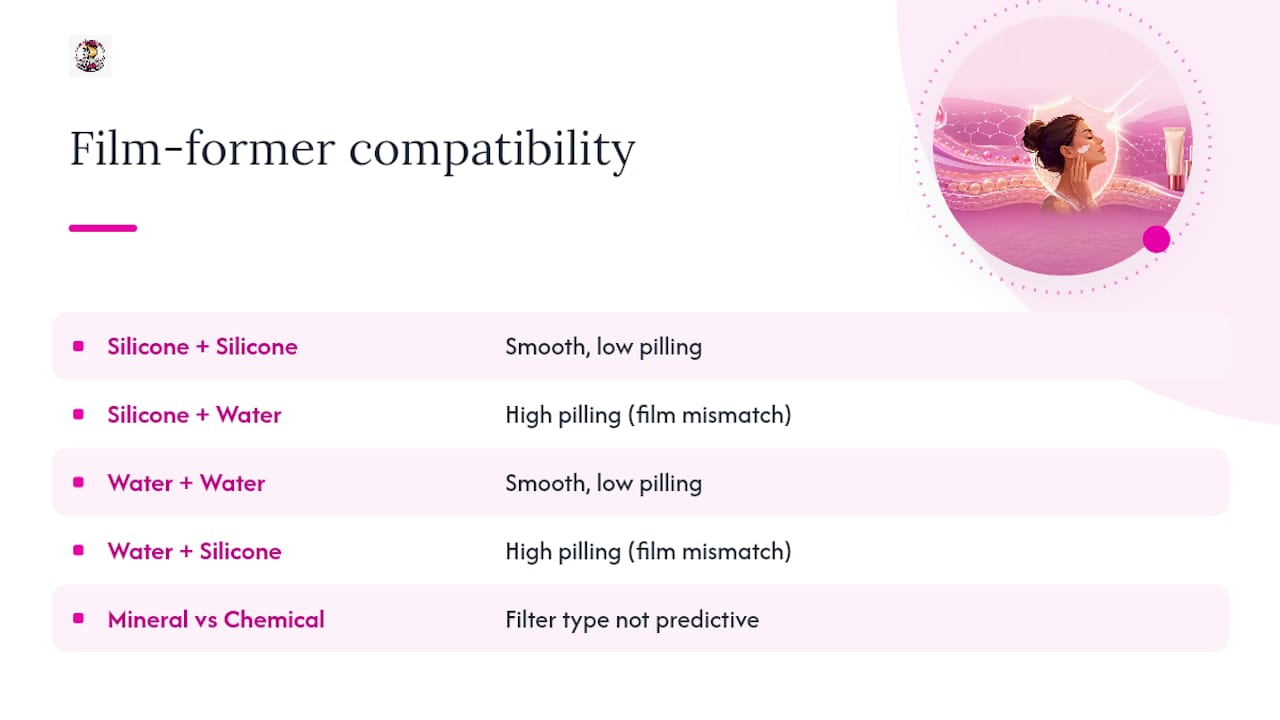
Pilling happens most often when two products use incompatible film-forming systems, typically a silicone-heavy sunscreen meeting a water-based foundation or vice versa. Research published in the Journal of the American Academy of Dermatology points to this vehicle mismatch as a primary driver of the rolling, flaking texture that ruins a base. Ingredient tolerability matters too. A peer-reviewed analysis of sunscreen formulations and tolerability found that the vehicle a sunscreen is built on, not just its active ingredients, shapes how well skin accepts it and how it wears through the day.
Match finish to finish
Think of finish as a language your skincare and makeup need to speak in common. A matte sunscreen under a dewy foundation can look flat and chalky by midday. A dewy, glow-boosting sunscreen under a full-coverage matte foundation can slide and separate within a few hours. Pair like with like where you can, or let one product do double duty, such as a glow-boosting sunscreen standing in as your primer.
Signposts by skin type
-
Sensitive or reactive skin: look for zinc oxide or titanium dioxide as the active, plus ceramides or oat extract in the ingredient list.
-
Acne-prone or oily skin: scan for “oil-free,” “non-comedogenic,” and niacinamide; avoid heavy occlusive oils near the top of the list.
-
Normal to dry skin: lightweight chemical blends (avobenzone, octocrylene combinations) tend to feel less drying than dense mineral pastes.
-
Combination skin: gel-fluids and gel-creams usually split the difference better than lotions or milks.
Pro Tip: Check the second and third ingredients, not just the active filter. A sunscreen with dimethicone high on the list is more likely to clash with a silicone-free, water-based foundation, and that mismatch is where most pilling starts.
Before you buy, run any candidate through QueenCompares’ Ingredient Library or check your current SPF against the primer you already own with the Ingredient Checker. It’s a faster way to catch a silicone or oil-content clash than guessing after a bad application. For a refresher on what SPF numbers and broad-spectrum labeling actually promise, our SPF explainer breaks it down without the marketing spin.
The Right Order for Applying Sunscreen and Makeup
Getting the sequence wrong undoes even the best product choice. Here’s the order that actually protects your skin and your makeup:
-
Cleanse your face so sunscreen has clean skin to bond to, not a layer of oil or last night’s residue.
-
Apply any treatments (retinoids, acids, vitamin C) first, since sunscreen should sit closest to the surface, not underneath actives.
-
Moisturize if your skin needs it, but let it fully absorb, roughly 60 seconds, before moving on.
-
Apply sunscreen as your final skincare step, using enough to cover your face and neck (about a nickel-sized amount for most fluids).
-
Wait. Gel and fluid formulas need 60 to 90 seconds; milks and richer lotions need closer to 3 minutes. Mineral formulas often need the longer end of that range to stop looking wet or gray.
-
Apply primer, if you use one, in thin layers, pressing rather than swiping.
-
Apply foundation using a press-and-dab motion, not a dragging rub. Dermatologist guidance from Eucerin’s application notes specifically recommends pressing motions because rubbing disturbs the sunscreen film underneath and drags it, along with your foundation, into pill formation.
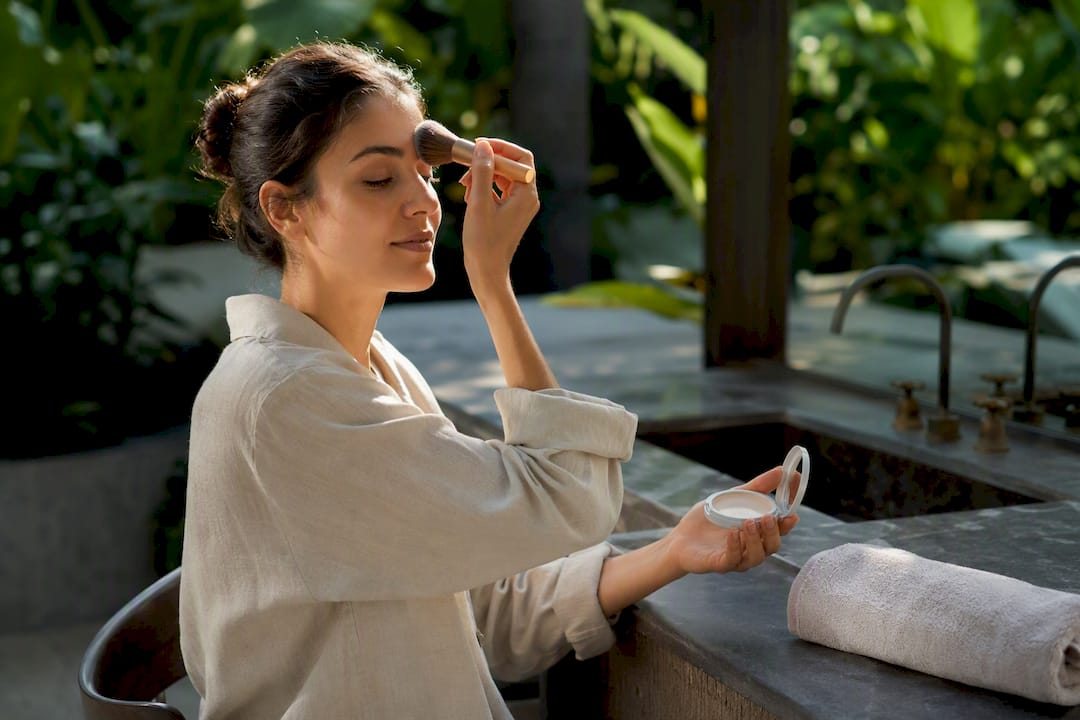
A damp makeup sponge tends to distribute product more evenly than dry fingers, which can grab and roll product instead of pressing it flat. Stiff brushes are the riskiest tool for freshly applied SPF because bristles create friction exactly where you don’t want it.
For reapplication over a finished face, you have three real options: a mineral powder sunscreen tapped on with a brush, a spray sunscreen misted from six inches away and patted in (never rubbed), or a small dab of your original fluid sunscreen pressed gently into high-touch zones like the nose and cheekbones. Outdoors and sweating, EPA guidance still calls for reapplication every two hours; powder and spray formats exist precisely to make that realistic without ruining your look.
Why Foundation Pills and How to Fix It Today
Pilling almost always traces back to one of three causes: too much product stacked in too little time, incompatible film-formers between two steps, or skipping the wait time between sunscreen and the next layer. You can diagnose which one is happening by process of elimination.
-
Test for overload first. Strip back to a single thin layer of sunscreen and a thin layer of foundation. If pilling stops, you were simply using too much product.
-
Test for chemistry conflict next. Swap your primer or sunscreen for a different formula (silicone to water-based, or the reverse) and see if the problem disappears.
-
Test for timing last. Extend your wait time to a full 3 minutes and reapply. If that solves it, your sunscreen just needed longer to set than you were giving it.
Once you know the cause, the fix is usually straightforward: switch to a lighter sunscreen texture, drop a step (skip the separate primer if your sunscreen already doubles as one), or change your foundation’s base chemistry. If pilling has already happened, blot with a clean sponge and press a small amount of fresh product back in rather than rubbing, which only recirculates the flaking bits.
Pro Tip: If the same combination pills repeatedly despite every fix, stop troubleshooting and replace one product. Life’s too short to fight the same formula every morning.
If instead of pilling you’re seeing redness, stinging, or breakouts that don’t resolve, that’s a different problem entirely, and it’s worth a dermatologist visit rather than more product swapping.
Dermatologist and Editor Picks by Skin Type and Finish
Dermatologists tend to gravitate toward the same handful of formulas for a reason: predictability. EltaMD UV Clear shows up in more dermatologist recommendations than almost any other sunscreen because it was built for reactive, post-procedure skin and rarely causes a reaction, which matters when you’re also layering actives underneath it. For oily or acne-prone patients, dermatologists more often point toward gel-fluids like Isdin Fusion Water from our skincare collection for hormonal skin, since heavier lotions tend to feel suffocating by midafternoon.
Editors, meanwhile, tend to weigh finish and wearability over medical pedigree, which is why roundups from outlets like WhoWhatWear frequently favor Supergoop! Glowscreen and Summer Fridays ShadeDrops for their double duty as makeup steps rather than separate ones. If your priority is minimal steps and a natural finish, those editorial picks are worth trying first. If your priority is a formula that won’t irritate skin already dealing with retinoids or acne treatments, the dermatologist-favored options are the safer starting point. Both groups agree on one thing: lightweight, fast-absorbing vehicles beat heavy, slow-drying ones almost every time foundation goes on top.
Does Layering Multiple SPF Products Add Up to More Protection?
No, and this is one of the most persistent myths in the sunscreen and makeup conversation. Wearing an SPF 30 moisturizer, then an SPF 30 primer, then an SPF 15 foundation doesn’t stack into SPF 75 of protection. SPF numbers describe how a product performed on its own, in a specific tested amount, under laboratory conditions. Layering products together doesn’t combine those ratings mathematically.
What layering multiple SPF products can do is extend your margin of error. If your base sunscreen application was slightly thin, an SPF-containing primer or setting powder on top adds a bit of buffer, but you should never rely on that math to justify skipping a full, standalone application of sunscreen underneath. The Skin Cancer Foundation is direct about this: a dedicated facial sunscreen applied at full strength should always be your foundation of protection, with any SPF-containing makeup treated as a nice-to-have on top, not a replacement. The practical takeaway is simple: apply one sunscreen properly rather than counting on three half-measures to add up.
Building Sunscreen Into Your Skincare Routine Without Pilling
The sequencing question isn’t really about sunscreen in isolation, it’s about how many steps come before it. Every product you layer underneath sunscreen adds another surface for potential incompatibility, so simplicity pays off. If you use a hydrating serum or moisturizer, let it fully sink in, ideally a full 60 seconds of absorption time, before sunscreen goes on. Applying sunscreen onto skin that’s still slick with unabsorbed moisturizer is one of the most common causes of that greasy, unblendable mess right before foundation.
Choosing a moisturizer and sunscreen from a similar texture family also helps. A gel moisturizer paired with a gel-fluid sunscreen tends to layer more predictably than a rich cream moisturizer paired with a thin, fast-drying sunscreen, because the drydown speeds don’t match. If you use a primer, treat it as an additional layer with its own wait time rather than something to apply the instant sunscreen feels dry to the touch. Giving each step, moisturizer, sunscreen, primer, its own brief pause is a small habit that prevents most cascading layering failures before they start.
Adjusting Your Makeup Routine for Different Finishes
A dewy finish and a full-coverage matte finish need almost opposite strategies when sunscreen is involved. For a dewy look, lean into sunscreens that are already glow-forward, like Supergoop! Glowscreen or Beauty of Joseon Dayscreen, and use minimal powder afterward so you don’t cancel out the shine you built in. For full-coverage matte foundation, a mattifying, oil-absorbing sunscreen like Isdin Fusion Water gives your foundation a stable base to grip instead of sliding on residual shine.
Natural, minimal makeup days are the most forgiving, since a tinted SPF serum can function as your entire base, cutting out layering risk almost entirely. Full-coverage days demand the most discipline: apply sunscreen in a thin, even layer, wait the full recommended window, and use a damp sponge rather than a brush to avoid disturbing that layer as you build coverage. If you’re using a heavy, long-wear foundation, consider a setting powder step directly over your sunscreen and primer before foundation goes on, since it can help lock down the layers underneath and reduce the friction that a brush or sponge introduces.
Heat, Humidity, and Sweat Change How Sunscreen Performs
Sunscreen behaves differently in July than it does in January, and your under-makeup routine should account for that. Heat and humidity both accelerate how fast sunscreen and makeup break down, which means the two-hour reapplication window from EPA guidance becomes more urgent, not less, in hot, humid conditions or during heavy sweating. Sweat physically carries sunscreen and foundation off the skin’s surface, and it can also reactivate silicone-based products, causing them to slide rather than stay set.
In hot climates, favor fluid, fast-absorbing sunscreens like La Roche-Posay Anthelios over milks or creams, since thinner formulas resist breakdown better under sweat. Powder sunscreens and setting sprays become essential rather than optional tools once temperatures climb, because full reapplication with a fluid sunscreen midday, over finished makeup, is nearly impossible without disturbing everything underneath. If you know you’re heading into heat or a workout, apply a slightly thinner layer of makeup overall; less product on the skin’s surface means less to slide, smear, or pill when sweat gets involved.
Key Takeaways
Sunscreen under makeup works when the formula is lightweight, the wait time is respected, and reapplication happens through powder or spray rather than a full redo.
| Point | Details |
|---|---|
| Apply sunscreen first, always | Sunscreen goes on after moisturizer and before primer or foundation, never skipped for SPF makeup alone. |
| Respect the wait time | Give fluids and gels 60 to 90 seconds and milks or mineral formulas up to 3 minutes before foundation. |
| Vehicle matters more than filter type | Film-formers and texture predict pilling risk better than whether a sunscreen is mineral or chemical. |
| Reapply without a full redo | Use powder sunscreen, spray mist, or gentle dabbing to maintain protection over finished makeup. |
| Match finish to finish | Pair dewy sunscreens with dewy makeup and matte, oil-absorbing formulas with full-coverage matte looks. |
What Actually Matters When You’re Choosing Sunscreen for Under Makeup
The conventional advice on this topic spends too much time on mineral versus chemical and not nearly enough on vehicle and finish, which is the variable that actually predicts whether your foundation survives lunch. I’d go further and say the mineral/chemical debate has become a distraction dressed up as expertise, when the ingredient list’s film-formers tell you far more about how a sunscreen will behave under a brush or sponge.
What the research and editorial testing both point toward is uncomfortably simple: fewer, better-matched steps beat more, mismatched ones. A glow sunscreen doubling as your primer will almost always outperform three separate products fighting for the same five minutes on your face. Readers should prioritize matching texture and finish across their whole routine before they worry about brand names or SPF numbers past 30, and they should use a tool like QueenCompares’ Ingredient Checker to confirm compatibility before buying, not after a ruined application. That’s the shift that actually changes outcomes, not another product roundup.
— Magdalena Kapuscinska
Sources
FAQ
Does Sunscreen Go Under Makeup or Mixed Into It?
Sunscreen goes under makeup as its own step, applied after moisturizer and before primer or foundation, never mixed into foundation to save time.
How Long Should I Wait Between Sunscreen and Foundation?
Wait 60 to 90 seconds for gels and fluids, and up to 3 minutes for milks or mineral formulas, before applying primer or foundation.
Can I Use Foundation With SPF Instead of a Separate Sunscreen?
You can, but most people apply too little foundation to reach its labeled SPF, so dermatologists recommend a dedicated facial sunscreen underneath rather than relying on SPF makeup alone.
What Causes Foundation to Pill Over Sunscreen?
Pilling usually comes from too much product, incompatible film-formers like silicone meeting water-based formulas, or not waiting long enough for sunscreen to fully absorb.
How Do I Reapply Sunscreen Without Ruining My Makeup?
Use a mineral powder sunscreen tapped on with a brush, a spray sunscreen misted and patted in, or a small dab of fluid sunscreen pressed gently into high-touch areas.