The best beauty review sites combine three things at once: named editorial reviewers, dermatologist or clinician literature oversight, and cross-checkable ingredient data. QueenCompares brings all three together in one place, pairing editorial vetting with AI-driven tools like the Ingredient Checker and Label Scanner so you can verify a claim instead of just trusting it. You’ll learn what separates a credible review from a paid placement, and how to stack multiple sources into one confident purchase decision.
TL;DR:
Valid reviews disclose the reviewer’s identity, testing duration, and whether they received payment, reducing the risk of biased or superficial evaluations.
Cross-checking ingredient safety scores with databases like EWG and verifying formulation changes over time help prevent reliance on outdated or incomplete information.
Using tools like QueenCompares’ Ingredient Checker and Label Scanner enables consumers to identify allergens and questionable actives before purchasing, fostering evidence-based decisions.
Spotting fake reviews involves detecting patterns such as identical wording, overly positive bias, or accounts that review only one brand with no negatives.
Filtering reviews by skin type, concern, or demographic details improves accuracy, especially for sensitive or specific skin conditions, avoiding misleading overall ratings.
Table of Contents
What Makes a Beauty Review Site Trustworthy
A trustworthy site tells you who wrote the review, how long they tested the product, and whether anyone paid for the placement. That sounds basic, but most beauty content skips at least one of those disclosures.
Start with the byline. Sites like Byrdie run reviews past a Beauty & Wellness Review Board of more than 45 experts, including dermatologists and nutritionists, before publishing. That kind of structured oversight catches errors a single writer might miss, whether they are a misstated concentration or an outdated claim about an ingredient.
Testing transparency matters just as much. Skincare Mana reports dermatologists sign off on reviews after extended testing periods sufficient to catch delayed irritation or purging, a duration long enough to catch delayed irritation or purging that a three-day trial would never reveal.
Look for these signals before you trust a verdict:
-
A named reviewer or credentialed panel, not “our team”
-
Ingredient scoring you can cross-check against a database like EWG Skin Deep
-
A stated testing window and sample size, not just “we tried it”
-
Clear disclosure of affiliate links or brand sponsorships
-
A visible volume of user reviews with some indication of who left them
Here’s a fact that trips up even careful shoppers: some independent sites publish a “thin evidence” note when a specific formulation hasn’t been clinically studied, even though its individual ingredients are well documented elsewhere. That gap between ingredient-level and formula-level evidence is exactly why one review type is never enough.
The Five Types of Beauty Review Resources Worth Bookmarking
No single review site does everything well, so smart shoppers rotate between five categories depending on what they need to know.
-
Editorial magazines give you trend context and curated picks. Outlets like Allure publish editor-approved roundups such as “Products We Love,” useful for narrowing a category before you dig deeper, though the picks still reflect one team’s taste rather than a clinical standard.
-
Dermatologist and clinician-reviewed sites add scrutiny that pure editorial coverage can’t. The Derm Review builds its writeups around clinical claims and formulation transparency, which matters most for actives like retinoids or acids where misuse causes real irritation.
-
Ingredient databases and verification registries score safety and transparency at the molecule level. EWG Skin Deep pulls from nearly 60 integrated toxicity and regulatory databases to generate its ratings, and its EWG VERIFIED® mark signals a product met stricter transparency standards.
-
Community and user-review platforms give you volume and lived experience, the texture complaints and packaging gripes that never show up in a lab report. Watch for moderation quality here; a platform with no fake-review filtering is only as useful as its weakest reviewer.
-
Price-comparison aggregators earn their keep after you’ve already decided. Cosmetify tracks listings across thousands of brands with price-alert tools, which is genuinely useful once you know what you’re buying and just need the best deal.
Editorial vetting paired with named clinical reviewers tends to strike the best balance between staying current on trends and holding up to clinical scrutiny, which is exactly the gap ingredient-focused platforms are built to close.
Why QueenCompares Checks Every Trust Box
QueenCompares was built around the same criteria this guide just laid out, not as an afterthought but as the actual product design.
The Ingredient Checker flags allergens and questionable actives the moment you scan a label, turning a static ingredient list into a traceable safety report you can save and compare later. The Label Scanner does the reading for you when a product’s packaging buries its formula in six-point type. Pair that with the Ingredient Library for background on individual compounds, and side-by-side comparison tools that put two products’ formulas next to each other, and you get evidence instead of adjectives.
What sets this apart from a database alone:
-
AI-driven scans generate a report you can revisit, screenshot, or share
-
Side-by-side comparisons surface formula differences a marketing page won’t mention
-
User reviews sit next to ingredient data instead of living on a separate site
-
Community-driven dupe finding helps you compare a pricier formula against a cheaper match
Pro Tip: Save your scan reports every time you check a new product. When a brand reformulates six months later, you’ll have a record of exactly what changed instead of relying on memory.
None of this replaces a dermatologist’s clinical judgment or a database like EWG Skin Deep. It sits between them, translating raw ingredient data into a comparison you can actually act on before you check out.
How to Spot a Fake or Biased Beauty Review
Fake reviews cluster in patterns once you know what to look for. A sudden spike of five-star reviews posted within a few days of each other, all using similar phrasing, is one of the clearest tells. So is a review that reads like ad copy, heavy on adjectives, light on specifics about texture, scent, or how the product performed over time.
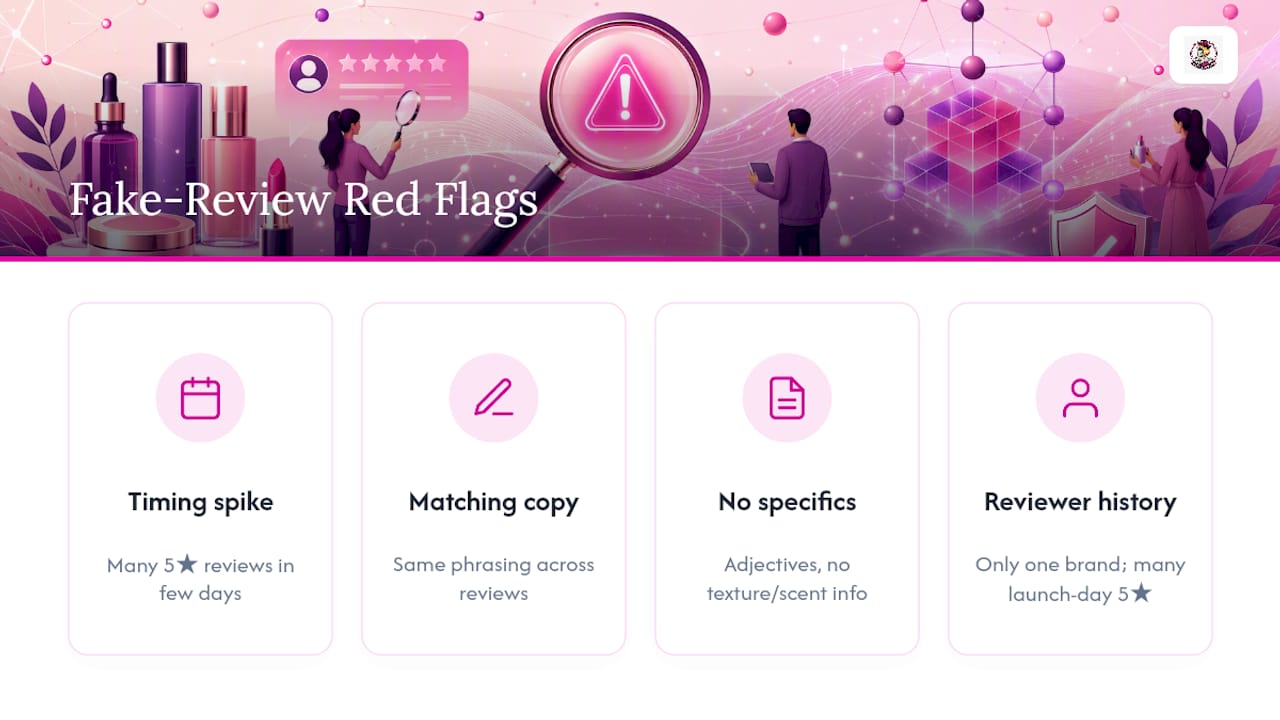
Check the reviewer’s history when the platform allows it. An account that only ever reviews products from one brand, or that posted a dozen five-star reviews on launch day, is a weak signal no matter how detailed the write-up sounds. Genuine reviewers usually mention a mix of positives and minor gripes; a review with zero criticism of anything, including packaging or scent, deserves a second look.
Bias shows up more subtly than outright fakery. Watch for language that echoes a brand’s own marketing copy almost word for word, or a “review” that spends more time describing the brand’s story than the product’s actual performance. Sites that disclose affiliate relationships upfront tend to be more careful about separating a genuine critique from a sales pitch, since they know their credibility is the thing being tested. When a site never mentions a single drawback across dozens of five-star reviews, that consistency is itself the red flag.
Why Your Demographics Change What a Review Means for You
A five-star review from someone with oily, acne-prone skin tells you almost nothing about how a product will behave on dry, sensitive skin, and vice versa. Skin type, age, ethnicity, and even climate all shape how an ingredient performs, which is why the most useful reviews include that context upfront.
Look for platforms that let you filter reviews by skin type or concern rather than showing you an unsorted average. A 4.5-star rating built from a mix of skin types can hide the fact that the product performs at 4.9 stars for combination skin and 2.1 stars for rosacea-prone skin. That gap disappears the moment you average everything into one number.
This matters even more for ingredient sensitivity. A fragrance or essential oil that scores fine on a broad safety database might still trigger a reaction in someone with a specific allergy history, something no aggregate score can predict for your exact profile. Reading a handful of reviews from people who share your skin concern, age range, or known sensitivities gives you a far more accurate preview than the star average ever will.
How Review Sites Track Reformulations and Product Updates
Beauty brands change formulas more often than most shoppers realize, sometimes to cut costs, sometimes to comply with new regulations, sometimes to respond to complaints. The problem: a five-star review written two years ago might be describing a formula that no longer exists on shelves.
The strongest review sites timestamp their content and flag when a product has been reformulated, updating the ingredient list and, ideally, the verdict along with it. Sites built around a repeatable scoring rubric, the kind that scores efficacy, formulation, tolerability, and value separately, tend to handle this better because they can update one component of the score without rewriting the whole review from scratch. That structure makes stale information easier to catch and correct.
This is where ingredient-tracking tools earn their keep. A scan saved from a previous purchase becomes a reference point. If you run the current version of a product through an ingredient analysis tool and the formula doesn’t match your saved record, you know something changed even if the brand never announced it publicly. Community reviews help here too. A wave of comments noting “this doesn’t feel the same as it used to” is often the first public sign of a quiet reformulation, well before any official brand statement.
Does Affiliate Marketing Compromise a Beauty Review?
Affiliate links pay a site a small commission when you buy through them, and that arrangement alone doesn’t make a review dishonest. Nearly every beauty publication runs on some mix of affiliate revenue and sponsored content, including the well-regarded ones. What matters is whether the incentive shapes the verdict.
The clearest sign of a compromised review is a site that never publishes a negative or mixed verdict. If every product reviewed earns four or five stars, and every “worst of” list somehow excludes any brand the site partners with, the affiliate relationship is likely steering the coverage. A site confident in its own credibility will tell you when a product underperforms, even if that costs a commission.
Transparent disclosure is the baseline test. Reputable sites state plainly, near the top of the review or in a visible policy page, when a link is affiliated or when a brand paid for placement. Some editorial frameworks explicitly disclose a no-paid-placement policy for their core scoring, a detail worth checking before you weight a review too heavily. Price-comparison aggregators face a related but different pressure. Their revenue depends on click-throughs, not necessarily on steering you toward one brand, so the risk there is upselling rather than dishonest scoring. Either way, the question to ask is simple: does this site ever tell me not to buy something?
Why Transparency Beats Hype in Beauty Reviews
The beauty industry rewards confident language. “Clinically proven,” “dermatologist-approved,” “game-changing formula.” Almost none of that language means what it sounds like, and the sites that lean hardest on it are usually the ones with the least to show underneath.
My rule of thumb: if a product’s ingredient score varies wildly across two or three sources, that inconsistency tells you more than any single glowing review. It usually means the formulation sits in a gray area, well-studied ingredients combined in an untested way, and no site has actually tested the finished product long enough to know how it behaves.
Cross-check before you buy, and save your scans. A record of what you checked and when is worth more than any five-star average.
— Magdalena Kapuscinska
Try QueenCompares’ Ingredient Checker Before Your Next Purchase
You’ve just read what separates a credible beauty review from marketing copy: named reviewers, disclosed testing periods, and ingredient data you can actually verify. QueenCompares builds all of that into one workflow instead of asking you to hop between five different tabs. Scan a label, compare two products side by side, and see how a formula stacks up against known allergens and questionable actives before it ever reaches your cart.
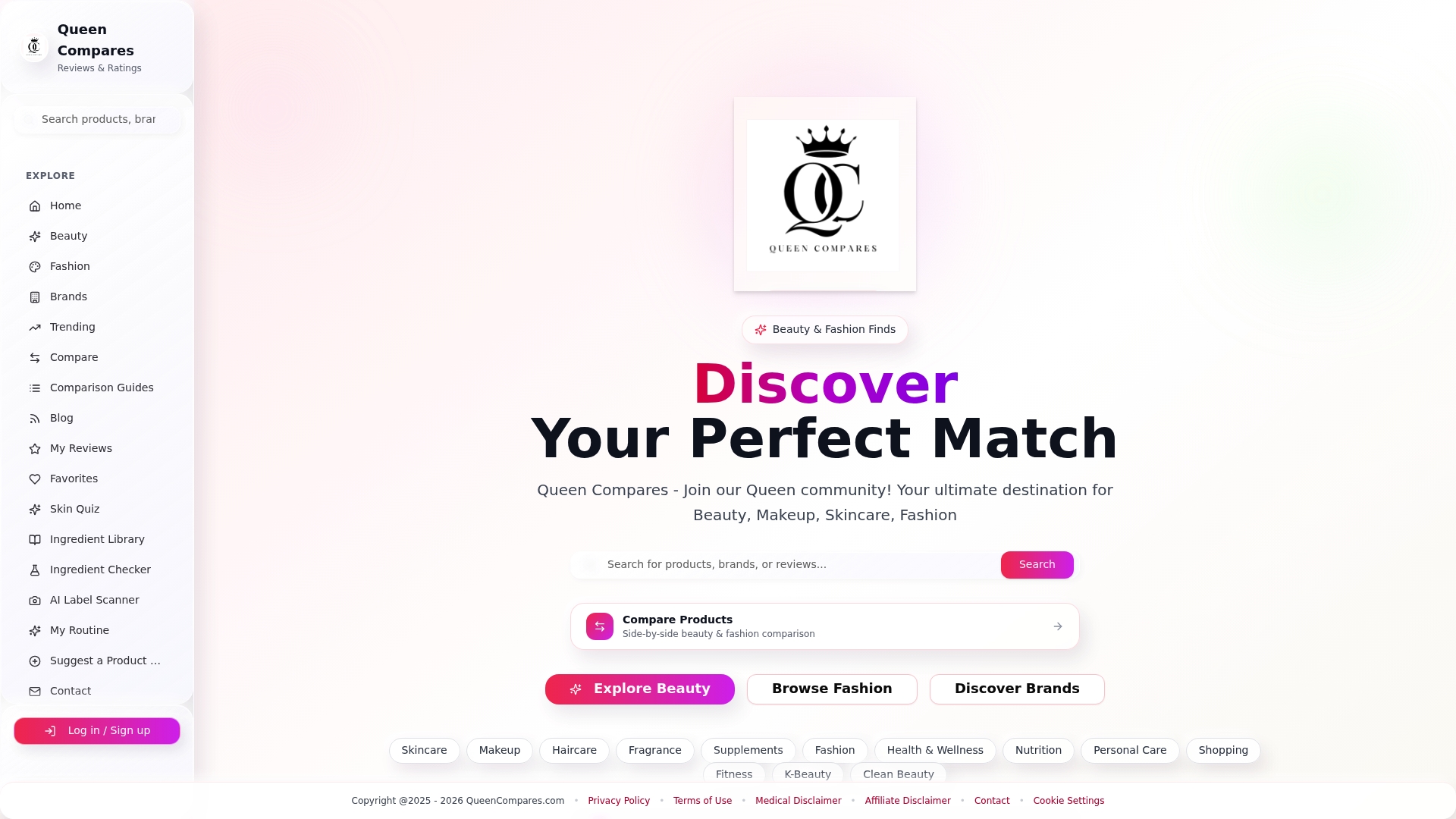
The Ingredient Checker turns a confusing label into a plain-language safety report in seconds, and your saved scan history means you’ll catch it fast if a brand quietly reformulates a product you already trust. If you’ve spotted a product QueenCompares hasn’t covered yet, you can suggest it for review and help build out coverage for the next shopper searching for the same answer. Head to the product comparison page and run your next potential purchase through it before you buy, not after.
Sources
Treat each type of review site as one input, not the final word, and you’ll make fewer regretted purchases.
Pro Tip: If an ingredient scores well on a safety database but user reviews consistently mention breakouts or texture problems, trust the user pattern. Toxicity scores measure hazard, not how your skin barrier will actually react.
FAQ
What Is the Most Trusted Beauty Product Review Site?
No single site covers every trust signal perfectly, which is why the most reliable approach combines an editorially vetted platform like QueenCompares with an ingredient database such as EWG Skin Deep for cross-checking safety scores.
What Are the Top Types of Beauty Review Resources?
The five worth bookmarking are editorial magazines, dermatologist or clinician-reviewed sites, ingredient databases, community/user-review platforms, and price-comparison aggregators, each serving a different stage of your decision.
Which Beauty Website Is the Best for Ingredient Transparency?
QueenCompares pairs an AI-powered Ingredient Checker and Label Scanner with side-by-side product comparisons, giving you a traceable safety report rather than a single trust score.
Is There a Reliable Skincare Rating Scale Out of 100?
Rating scales vary by platform and none is universally standardized, but frameworks that score efficacy, formulation, tolerability, and value separately tend to give you a more honest breakdown than one blended number.
How Do I Know If a Beauty Review Is Biased by Sponsorship?
Check whether the site ever publishes negative or mixed verdicts. A site that rates every product four or five stars while burying affiliate disclosures is a stronger warning sign than the presence of affiliate links itself.