Here’s the quick answer: trust Leaping Bunny or PETA for cruelty-free claims, COSMOS or NSF/ANSI 305 for organic and natural claims, and EWG Verified for ingredient transparency. That’s it. Everything else is just verification homework.
Before you toss that “certified” serum in your cart, run these checks:
-
Read the full ingredient list (INCI) on the label, not just the marketing side
-
Look for the certifier’s actual name and a certificate or license number, not just a logo
-
Search that certifier’s public directory for the brand or product
-
Scan a QR code or ask the brand directly for a Certificate of Analysis (COA)
Pro Tip: If a “certified organic” claim shows a logo but no certifier name or number anywhere on the packaging, treat it as a red flag until you find that info online. Real certifiers want to be found.
Queens, this is exactly the kind of label detective work our Label Scanner was built for.
We also built up AI Safety Ingredient analysis Tool and build up a dedicated page - Clean Beauty for Skincare and makeup products whose AI ingredient safety analysis scored 80/100 or higher — cleaner formulations, fewer concerns.
Key Takeaways
Certifications tell you what a specific process, ingredient threshold, or supply-chain practice was audited for, but no single seal verifies every safety or ethics claim at once.
| Point | Details |
|---|---|
| Match the seal to your priority | Use Leaping Bunny or PETA for cruelty-free, COSMOS or NSF/ANSI 305 for organic claims. |
| Verify the number, not the logo | Look up the certifier’s name and license number in their public directory before trusting a badge. |
| Know the scope gaps | A cruelty-free seal says nothing about organic content, and vice versa. |
| Escalate for high-stakes buys | Request a COA for allergy concerns, pregnancy, or professional use. |
| Use QueenCompares as your shortcut | The Label Scanner and Ingredient Checker cross-reference certifications and ingredient safety in seconds. |
Table of Contents
What Do Beauty Certifications Actually Mean?
Every seal on a bottle promises something different, and that’s where a lot of shoppers get tripped up. Some certifications test what’s in the product. Others test how it was made. A few only test whether animals were involved anywhere in the process. None of them test everything at once, and knowing which lane each seal stays in saves you from assuming more protection than you’re actually getting.
Leaping Bunny is the toughest cruelty-free standard in the game. It requires brands to monitor their entire supplier network, recommit annually, and pass independent audits covering the full supply chain, not just the finished bottle. Limitation: it says nothing about ingredient safety or organic content. It’s a no-animal-testing promise, full stop.
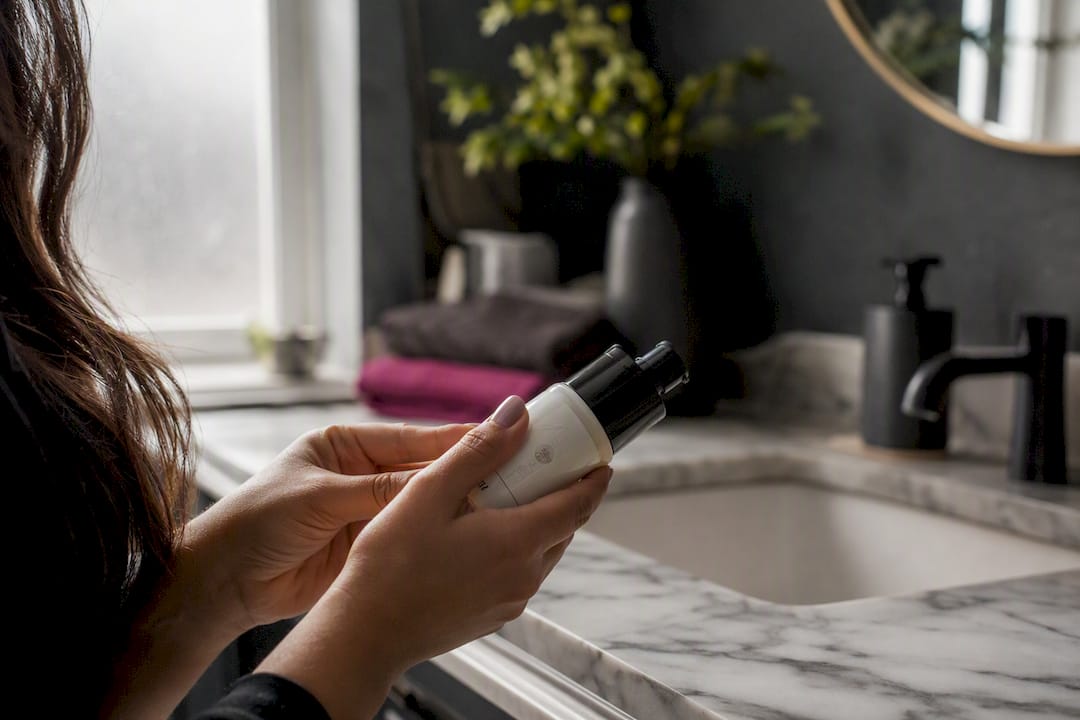
PETA Cruelty-Free works similarly but relies more on brand-submitted statements of assurance than the on-site audits Leaping Bunny requires. It’s a solid signal, but less rigorous than Leaping Bunny’s supply-chain checks.
NSF runs several distinct programs, and shoppers often lump them together when they shouldn’t:
-
NSF/ANSI 305 covers organic personal care and requires at least 70% organic ingredients by weight, with annual on-site audits.
-
NSF/ANSI 455 focuses on good manufacturing practices (GMP), not ingredient percentages.
-
NSF 527 verifies that formulas and label claims actually match what’s inside the container.
-
NSF Certified for Sport (NSF 306) screens for more than 290 banned substances, critical for athletes subject to doping tests.
Limitation: each NSF mark tests a specific thing. A product certified under NSF 527 for label accuracy isn’t automatically screened for banned substances.
COSMOS issues two separate signatures: COSMOS Organic and COSMOS Natural. The label discloses the percentage of organic content when relevant, and certifiers audit both finished products and raw material suppliers. Limitation: it’s a formulation standard, not a cruelty-free or safety guarantee.
EWG Verified screens for transparency and banned or restricted ingredients rather than organic content or animal testing. Limitation: it’s a hazard and disclosure screen, not proof the product is organic or vegan.
Certified Vegan (through Vegan Action or similar trademark holders) confirms no animal-derived ingredients and no animal testing during development. Limitation: vegan doesn’t mean organic, clean, or hypoallergenic.
| Seal | What It Guarantees | Who Enforces It | Best Use Case |
|---|---|---|---|
| Leaping Bunny | No animal testing, full supply chain | Independent audits, annual recommitment | Strict cruelty-free shoppers |
| NSF/ANSI 305 | 70%+ organic by weight | Annual on-site inspections | Organic personal care |
| COSMOS | Organic/natural ingredient thresholds | Supply chain and raw material audits | Natural formulation preference |
| EWG Verified | Ingredient transparency, hazard screening | Document review against EWG standards | Ingredient-safety-focused shoppers |
Our wellness and ingredient safety guide breaks down how these categories overlap with broader clean-beauty claims if you want more context.
How Do You Verify a Certification Is Real?
You don’t need a chemistry degree for this. You need about five minutes and a search bar.
-
Check the label first. Look for the certifier’s actual name (not just a generic icon) plus a certificate or license number printed near the seal.
-
Search the certifier’s public directory. Leaping Bunny, COSMOS, and NSF all maintain searchable databases where you can look up a brand or product by name.
-
Match the SKU, not just the brand. A brand can be Leaping Bunny certified while one specific product line isn’t, so confirm the exact item.
-
Request a Certificate of Analysis (COA) or batch report if you have allergy concerns or the product touches broken skin, mucous membranes, or is meant for a baby.
-
Cross-reference the INCI list against what the certification claims to cover.
If a logo appears on the package but you can’t find a certifier name, a number, or a directory match, that’s your cue to dig further rather than accept it at face value.
Pro Tip: On your phone in the store aisle, scanning a barcode or QR code with a tool like QueenCompares’s Label Scanner is faster than typing brand names into three different certifier websites.
-
Leaping Bunny’s directory is searchable by brand
-
COSMOS certifier pages list approved products by name
-
NSF maintains public listings of certified formulas and facilities
Where Certifications Fall Short
No seal covers everything, and pretending otherwise sets you up for disappointment. A cruelty-free logo says nothing about organic content. An organic certification says nothing about whether animals were involved in testing. Treating any single badge as a full safety guarantee is where shoppers get burned.
Common gaps and red flags to watch for:
-
Scope mismatches: a certification might apply to ingredients but not the manufacturing process, or vice versa
-
Brand-level vs. SKU-level certification: one flagship product is certified while a newer line item isn’t yet
-
Geographic differences: a seal recognized in one country may not carry the same enforcement standard elsewhere
-
Missing certifier names or registry entries: a logo with no verifiable source behind it
-
Vague language: words like “natural” or “clean” used in marketing copy with no certifier attached at all
Certification methodology also isn’t uniform. Some certifiers run full audits and lab testing, while others rely on submitted paperwork or a signed affidavit, which means two products with similar-looking seals can carry very different levels of scrutiny behind them.
Certification also costs money, and that shapes what you see on shelves. Smaller indie brands sometimes skip formal certification because of the fee and audit burden, even when their formulas would pass. A missing seal isn’t proof of a problem. It just means you’ll need to do a bit more digging, and our guide on clean makeup claims walks through exactly that gray area.
Your Pre-Purchase Verification Checklist
Run through this before checkout, whether you’re standing in the aisle or scrolling a product page:
-
Pull up the full INCI ingredient list
-
Find the certifier’s name and license or certificate number
-
Search that certifier’s public directory for the exact product or SKU
-
Request a COA or batch report if you have allergies, are pregnant, or the product is for a baby
-
Cross-check flagged ingredients using a tool like our Ingredient Checker
Escalate your scrutiny for higher-stakes situations: allergen concerns, pregnancy, professional or clinical use, and athletes who need NSF Certified for Sport screening for banned substances. In those cases, a quick label glance isn’t enough. Pull the COA.
Pro Tip: Save time by scanning instead of searching manually. QueenCompares’s tools cross-reference ingredient databases so you’re not opening five browser tabs mid-shopping trip.
Why We Still Trust Certifications (With Eyes Open)
Certifications earn their keep when you treat them as one data point, not the whole verdict. A Leaping Bunny logo paired with a visible license number and a directory match tells you far more than the logo alone. That’s the gap between marketing and proof, and it’s a real gap. Regulatory backstops like FDA guidance under MoCRA add another layer, requiring facility registration and documentation that supports what a certification claims. QueenCompares built the Ingredient Checker and Label Scanner because verification shouldn’t require a research degree. Pair a real certification with a quick ingredient check, and you’re shopping smarter than most.
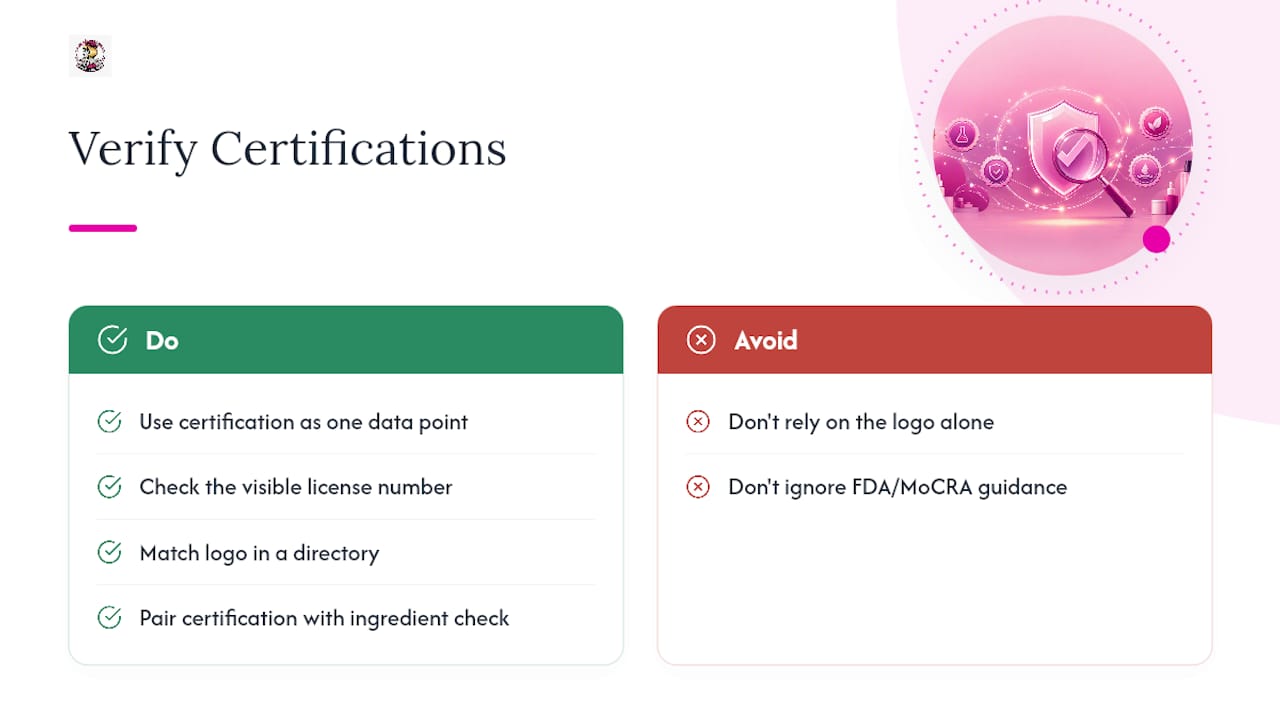
Skip the Guesswork: Verify Before You Buy
QueenCompares gives you the tools other beauty sites skip. Instead of squinting at a logo and hoping it’s legitimate, you can cross-check ingredients and certification claims in one place.
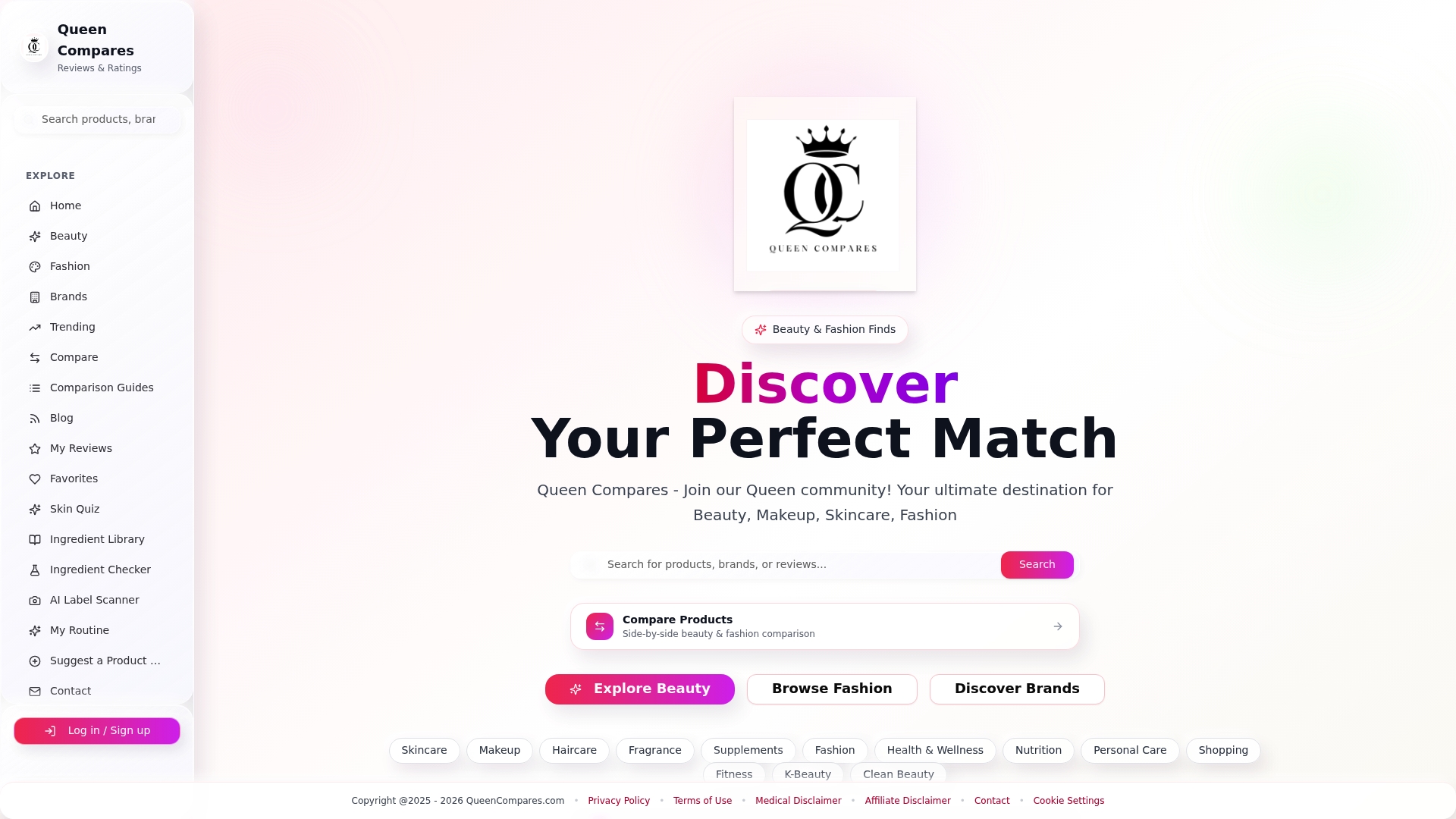
Our Ingredient Checker flags potential allergens and cross-references safety data instantly, and the Label Scanner lets you scan a product in-store and see what’s actually behind the claims on the front of the bottle. Want to go deeper? Browse our Ingredient Library for plain-language breakdowns of what’s in your routine, or check our Clean Beauty page so you can compare products later without starting from scratch. If a brand or product isn’t in our database yet, you can suggest it for review. Start with your next skincare purchase: scan the label before it hits your cart.
Where to Verify Certifications Yourself
Go straight to the source rather than relying on secondhand lists:
-
Leaping Bunny/CCIC directory: searchable database of certified cruelty-free brands
-
COSMOS certifier pages: list certified products and their organic percentage
-
NSF certification pages: cover NSF/ANSI 305, 455, 527, and NSF Certified for Sport listings
-
EWG Verified: searchable product database with hazard screening scores
-
FDA guidance on cosmetic GMP: outlines documentation manufacturers must maintain under MoCRA
NSF/ANSI 305 alone requires at least 70% organic content by weight plus annual audits, a threshold worth remembering next time a product simply says “organic” with no number attached.
Sources
-
COSMOS CERTIFICATION | ORGANIC AND NATURAL | Cosmetic product & ingredient certification
-
FDA - Guidance for Industry - Cosmetic Good Manufacturing Practices
FAQ
What Is the Most Trustworthy Cruelty-Free Certification?
Leaping Bunny is widely considered the strictest, since it requires full supply-chain audits and annual recommitment, not just a brand’s self-reported statement.
Does NSF Certification Mean a Product Is Organic?
Other NSF marks like NSF 527 or NSF Certified for Sport test different things entirely.
How Can I Check If a Certification Is Real?
Search the certifier’s public directory for the exact brand or SKU, and look for a certificate or license number printed on the packaging rather than trusting the logo alone.
Can QueenCompares Help Me Verify Ingredients and Certifications?
Yes. The Label Scanner and Ingredient Checker let you cross-reference ingredient lists and certification claims in seconds instead of searching multiple certifier websites.
Is a Missing Certification a Red Flag?
Not necessarily. Certification costs money and requires audits, so smaller brands sometimes skip the formal process even when their formulas would qualify.