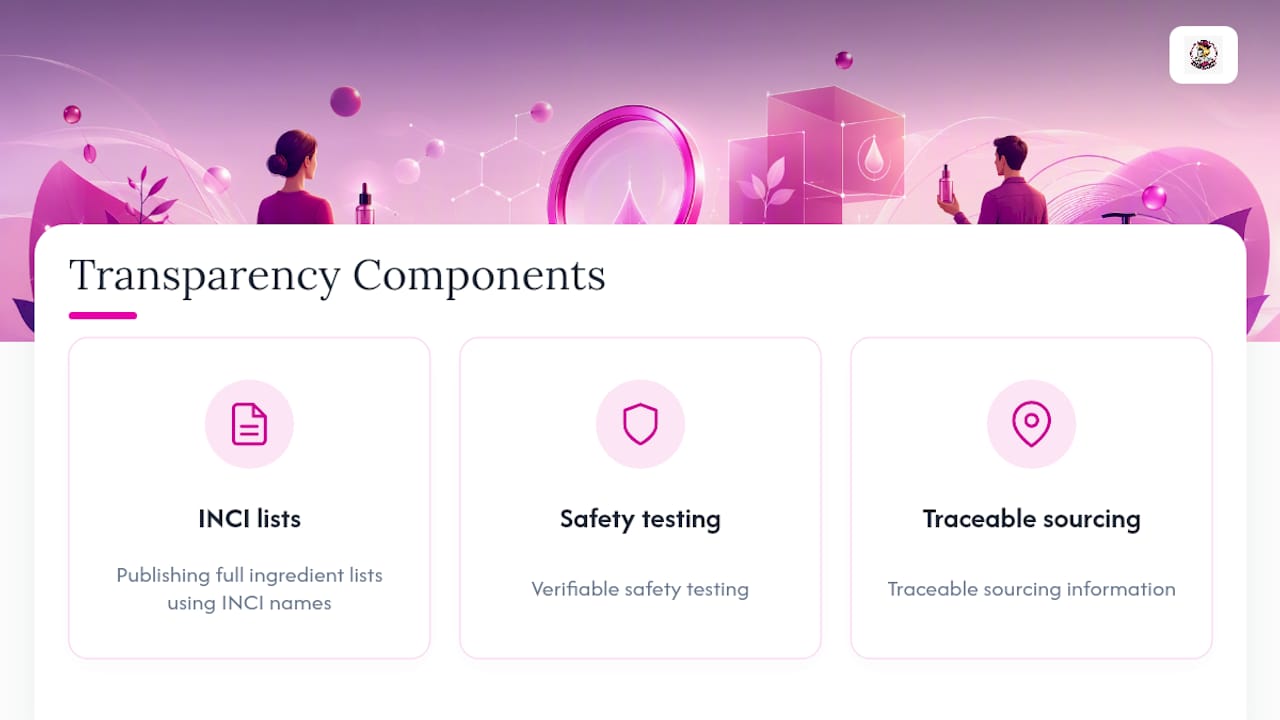
Beauty brand transparency means three things, and only three: the brand publishes its full ingredient list using standardized INCI names, it backs safety claims with testing you can actually see, and it can trace a product back to where it came from. That’s it. Everything else, badges, buzzwords, “clean” labels, is decoration until those three boxes are checked.
Here’s what you can do in the next five minutes:
-
Pull up the product page and look for a full INCI list. If you see marketing terms instead of ingredient names, that’s a gap, not a feature.
-
Search for testing evidence. Certificates of analysis (COAs), named labs, or a published safety methodology beat a vague “dermatologist tested” sticker every time.
-
Check for batch or lot traceability. A QR code or lookup tool that ties a bottle to a specific production run is a strong signal the brand has nothing to hide.
The stakes are real. The clean beauty market is on track to hit $11 billion by 2027, yet there’s still no legal definition of “clean” governing what brands can print on a label. That gap is exactly why you, the shopper, have to do the verification work brands aren’t required to do for you.
We continually build the Clean Beauty space where we feature skincare and makeup products whose AI ingredient safety analysis scored 80/100 or higher — cleaner formulations, fewer concerns.
Key Takeaways
Beauty brand transparency comes down to three verifiable proofs: a published INCI list, testing evidence you can inspect, and traceable sourcing you can confirm.
| Point | Details |
|---|---|
| Transparency has three pillars | Full INCI disclosure, verifiable testing, and traceable sourcing, not just a “clean” label. |
| “Clean” has no legal definition | The clean beauty market is projected to reach $11 billion by 2027 with no standardized rules behind the term. |
| Fragrance is the biggest blind spot | A single word, “fragrance”, can legally hide dozens of undisclosed ingredients. |
| Batch traceability signals real accountability | QR codes or lot lookups tied to lab certificates show a brand can prove, not just claim, authenticity. |
| QueenCompares fits the verification workflow | Use the Ingredient Checker and Label Scanner to confirm INCI lists and cross-check safety flags before buying. |
Table of Contents
What Does Beauty Brand Transparency Actually Cover?
Transparency isn’t one thing. It’s a stack of separate disclosures, and a brand can ace one while completely skipping another. Here’s what a genuinely transparent brand publishes:
-
Ingredient disclosure. The full formula, listed by INCI name, not trade names or marketing shorthand.
-
Claim substantiation. If a brand says “reduces redness in two weeks,” there should be a testing method behind that sentence.
-
Sourcing and supply-chain traceability. Where raw materials come from, and who processes them.
-
Animal-testing and sourcing policy. Clearly stated, not implied by a bunny logo alone.
-
Packaging and sustainability claims. Backed by specifics, not just “eco-friendly” on the box.
-
Anti-counterfeit and authenticity measures. Batch codes, serial lookups, or verification tools.
INCI names matter because they’re standardized worldwide. “Sodium laureth sulfate” means the same thing on every label, in every country. A brand that lists “gentle cleansing agents” instead is hiding behind ambiguity, intentionally or not. The same logic applies to testing: a specific human repeat insult patch test (HRIPT) summary tells you something. “Clinically proven” tells you nothing. Credo Beauty’s reporting makes this point directly: ingredient safety is rarely black and white, and full INCI disclosure is what moves a claim from marketing to something you can actually verify.
Pro Tip: If a brand’s “About” page talks more about its founder’s story than its formulas, that’s often a sign the substantive disclosures live somewhere else on the site, or nowhere at all.
How Do You Verify a Brand’s Transparency Claims?
Run these seven checks on any product page before you buy. Each one takes under a minute once you know what you’re looking for.
-
Find the full INCI list. A good disclosure lists every ingredient in descending order of concentration. A weak one buries ingredients under a “key ingredients” tab and calls it complete.
-
Look for published safety-testing methods or COAs. Good: a linked lab report with a batch number and test date. Weak: “tested for safety and efficacy” with no source.
-
Search for third-party certifications, and click the badge. Good: the badge links to a live certification page (think COSMOS-standard or a registry listing). Weak: an image with no link at all.
-
Inspect the fragrance disclosure. Good: “fragrance (linalool, limonene, citral).” Weak: “fragrance” with nothing else, hiding dozens of undisclosed compounds behind one word.
-
Review sourcing and supplier transparency. Good: named farms, cooperatives, or regions. Weak: “responsibly sourced” with no supplier named anywhere.
-
Confirm batch or lot traceability. Good: a QR code or serial lookup tied to your exact bottle. Weak: no lot number printed on the packaging at all.
-
Read independent reviews and lab reports, not just the brand’s own claims. Watch for brands that cite one favorable study while ignoring contradicting data.
When a brand fails a check, you have options. Contact the brand directly and ask the question you couldn’t answer from the label, run the ingredients through an ingredient checker to see what the formula actually contains, or decode the label yourself using standard INCI conventions. None of these take more than a few minutes, and together they tell you far more than a single “clean” label ever will.
Which Tools Help You Check Ingredient Safety?
You don’t need a chemistry degree to verify a formula. You need the right tools and a sense of what each one actually tells you.
-
Ingredient databases and lookups translate INCI names into plain-language safety notes and flag known allergens or irritants.
-
Label scanners read a product photo or barcode and pull the formula automatically, saving you from squinting at tiny print in a store aisle.
-
COA readers and certification registries let you confirm that a badge on a bottle corresponds to a real, current certification rather than an expired or fabricated one.
QueenCompares’ Ingredient Checker and Label Scanner fit directly into this workflow: paste an ingredient list or scan a label, and you get a readable breakdown instead of a wall of chemical names. Cross-reference what the tool returns against the brand’s own published testing or its listing in the Ingredient Library for a second opinion before you trust either source alone.
When you use a checker, paste the entire INCI list, not just the “highlighted” ingredients a brand chooses to promote on the front of the package. If a result surprises you, a high irritancy flag on something marketed as “gentle”, request the brand’s COA directly. Pro Tip: Run the same product through two different verification sources. If an ingredient checker and a brand’s own safety claim disagree, that disagreement is more informative than either result alone.
What Do Truly Transparent Brands Publish?
The brands that take transparency seriously don’t just say they’re honest, they hand you the receipts. A few concrete examples of what that looks like in practice:
-
Full INCI lists with concentration ranges, not just an alphabetical dump of names.
-
Published testing summaries, including methodology details like HRIPT results, rather than a single “hypoallergenic” claim.
-
Batch-level traceability, sometimes through QR codes or serial lookups that tie a specific bottle to its production lot and even its lab certificate, an approach Shreesavaa has built into its packaging.
-
Linked certification pages that let you verify a badge is current, rather than a static image with no destination.
Retailer standards raise the floor here too. The Credo Standard requires the brands it carries to disclose full ingredient lists using INCI names, submit supplier documentation, categorize fragrance components, and prove traceability, turning “trust us” into a documented checklist. These aren’t the only paths to credible transparency, but they show what a rigorous bar looks like.
Eight Questions To Ask Before You Buy
Keep this list handy for your next chat with a brand’s customer service or your next scroll through their FAQ page.
-
Do you publish the full INCI list for every product? A credible brand says yes and links you straight to it.
-
Where is the COA or testing lab listed? Look for a named lab and a document, not a generic claim.
-
Can you provide a batch or lot lookup for this specific bottle? A real answer includes a code or QR tool.
-
Which ingredients are intentionally excluded, and why? Credible brands explain the reasoning, not just the list.
-
What does “fragrance” mean on this label? A good answer names the actual components.
-
Who are your suppliers, and where are raw materials sourced? Vague geography (“globally sourced”) is a soft no.
-
What third-party certifications do you hold, and where can I verify them? A working link is the test.
-
How do you handle a formula change, and will the label update? Transparent brands have a clear process.
If a brand dodges, deflects, or goes silent, treat that as an answer. Flag it, skip the purchase, or raise it with the retailer selling the product.
Why This Matters More Than It Looks
I’ve come to think the real value of ingredient transparency isn’t catching bad actors, it’s the confidence you get from checking and finding nothing to worry about. Running the INCI list, the COA, and the batch lookup takes minutes, and it turns a guess into a decision you can stand behind.
Skip the Guesswork With QueenCompares’ Verification Tools
QueenCompares gets you past the marketing copy and straight to the formula, without spending an hour cross-referencing five different websites. Where brand pages hand you a badge and a slogan, our Ingredient Checker and Label Scanner pull the actual INCI list and flag what matters, side by side with how other shoppers rated the same product.
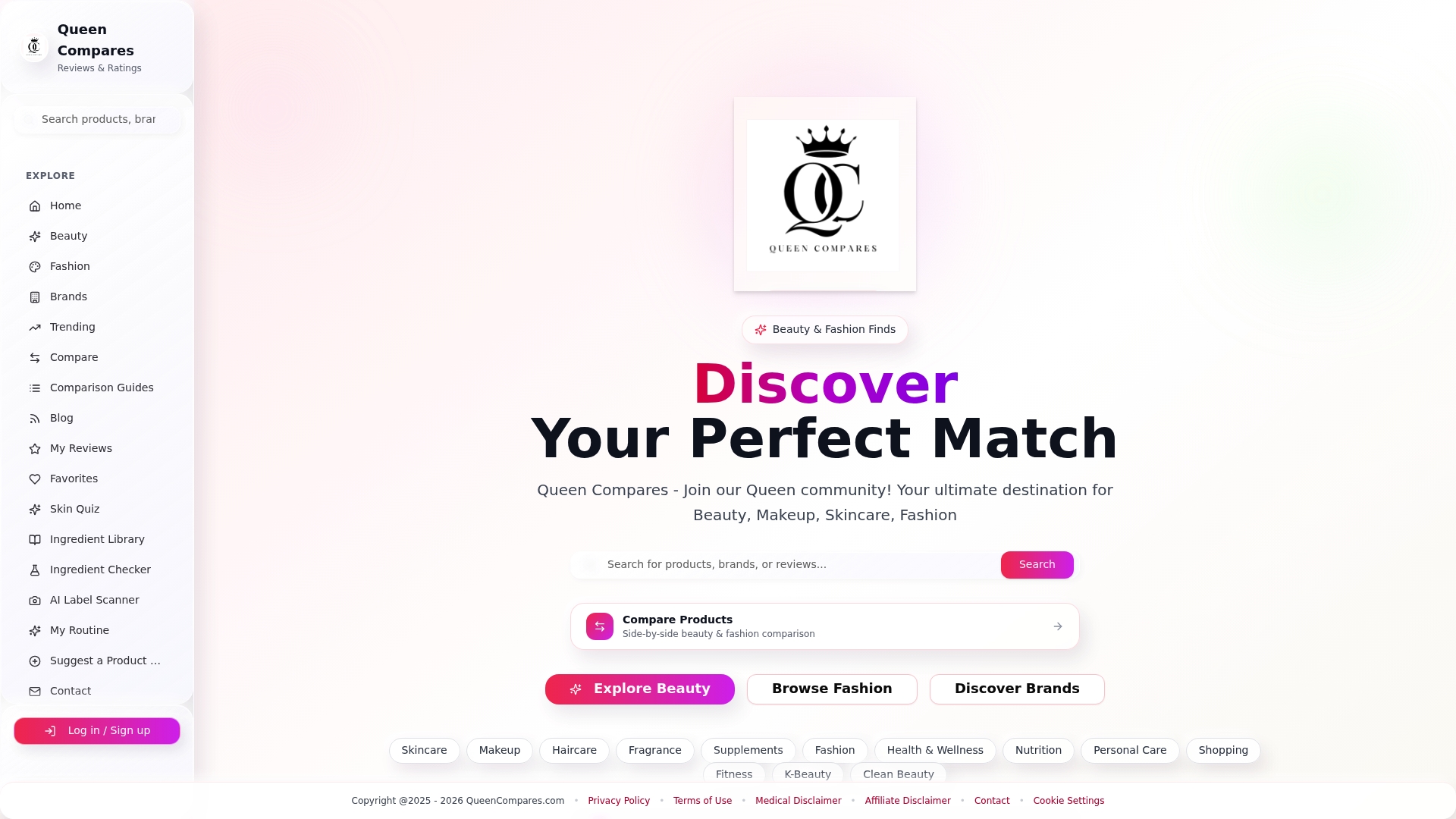
Browse brand profiles to see how a company’s disclosures stack up before you add anything to your cart, or head to our product pages to compare formulas directly. Don’t see a brand you’re curious about? Suggest it and our community will dig into the formula. Every scan you run gets saved to your reports, so the next time you’re standing in an aisle wondering if you checked this exact serum before, you’ll already know.
Sources
FAQ
What Is Beauty Brand Transparency?
It’s the practice of publishing full ingredient lists using INCI names, verifiable safety testing, and traceable sourcing information, rather than relying on vague marketing claims.
Why Doesn’t “Clean Beauty” Have One Definition?
Retailers, brands, and researchers each use different exclusion lists and standards, which has left “clean” fragmented rather than regulated, as an integrative review of Korean clean beauty standards documents.
How Do I Know If a Certification Badge Is Real?
Click it. A legitimate certification links to a live registry or certifying body’s page; a static image with no link is a red flag.
What Should I Do If a Brand Won’t Share Its INCI List?
Treat it as a missing answer, not an oversight, and consider running the product through an ingredient checker or choosing a brand that discloses fully.
Does QueenCompares Verify Ingredient Claims?
QueenCompares’ Ingredient Checker and Label Scanner let you cross-reference a brand’s stated formula against ingredient safety data, and its brand pages let you compare transparency signals across companies.