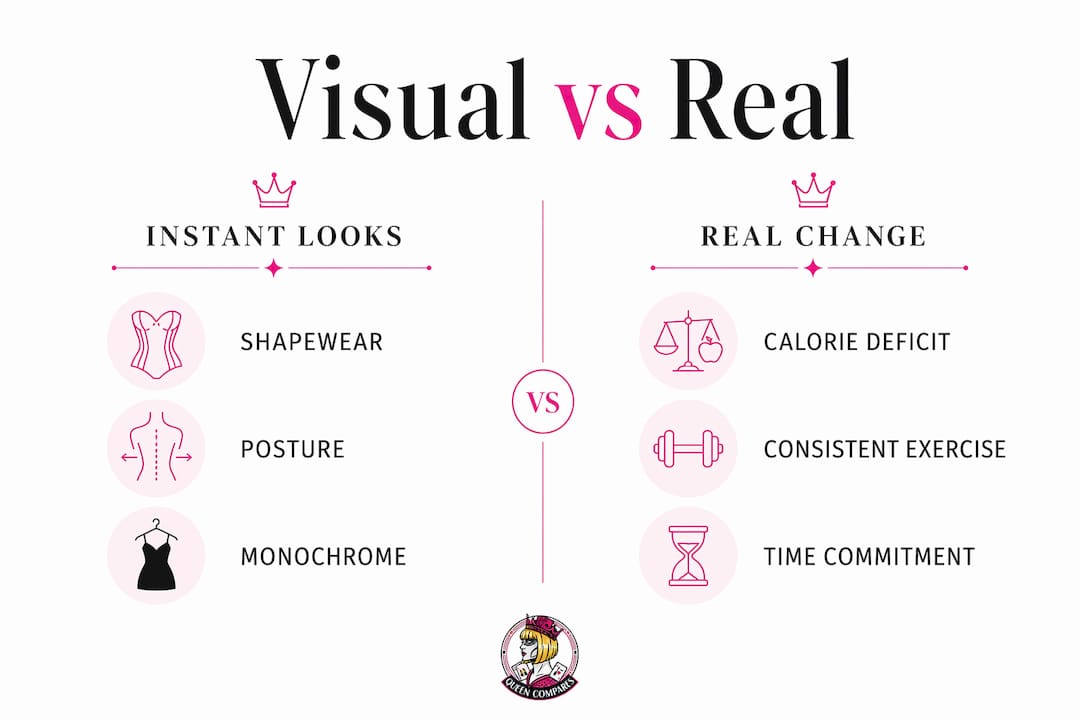
For an instant slimmer appearance, reach for shapewear, contouring techniques, and smart garment choices. For lasting weight-loss, the evidence consistently points to a moderate calorie deficit paired with resistance training. The CDC recommends losing 1–2 pounds per week through sustainable lifestyle habits, and Harvard Health puts the ideal daily deficit at 500–750 calories to hit that pace safely. Before buying any topical or device-based product, run it through QueenCompares’ Ingredient Checker to verify what you’re actually putting on your skin.
Quick comparison at a glance:
-
Shapewear / styling tricks: Visual impact is immediate, duration is temporary, safety risk is low, evidence is strong (visual perception), cost is $20–$100+
-
Topical firming creams: Mild temporary tightening, lasts hours to days, low-to-moderate safety risk, limited clinical evidence, cost is $15–$80
-
At-home RF/EMS devices: Modest skin-tone improvement, weeks of consistent use, moderate safety risk, limited at-home evidence, cost is $80–$500+
-
Calorie deficit + resistance training: Real fat loss and body recomposition, lasting results, low risk when done gradually, strong clinical evidence, cost is low to moderate
Table of Contents
-
At-home devices vs. professional treatments: what’s worth it?
-
The appearance-first approach deserves more credit than it gets
-
QueenCompares helps you pick safe, effective products faster
What makes you look slimmer right now?
You don’t need a new body to look like you have one. A few styling moves deliver a noticeably slimmer silhouette before you leave the house.
-
Structured shapewear: Compression garments smooth and redistribute soft tissue. Choose the right size — too tight restricts circulation and creates visible lines.
-
High-waist silhouettes: High-waisted pants and skirts visually lengthen the legs and define the waist without any compression.
-
Vertical seams and lines: Vertical stripes, seam placement, and long open cardigans draw the eye up and down rather than across.
-
Monochromatic outfits: One color head-to-toe creates an unbroken vertical line that reads as taller and leaner.
-
Neckline and proportion rules: V-necks elongate the neck and chest; avoiding boxy cuts at the hip keeps the silhouette clean.
-
Heel choice: Even a modest heel shifts posture, lengthens the leg line, and changes how weight is distributed visually.
-
Posture and pose: Shoulders back, chin slightly forward, and one foot slightly in front of the other — this alone changes how the body reads in photos and in person.
Pro Tip: For photos, position the camera slightly above eye level and angle your body 45 degrees to the lens. Good lighting from the front eliminates shadows that add visual bulk. A seamless nude undergarment under fitted clothing removes texture lines that shapewear alone can miss.
Check out our beauty tips guide for more styling moves that work across body types.
Do firming creams and serums actually slim your skin?
Short answer: topical products can temporarily improve how skin looks and feels, but they don’t remove fat. What they can do is worth understanding.
Certain ingredients produce real, if modest, effects on skin texture and firmness:
-
Caffeine: Temporarily constricts blood vessels and reduces fluid retention under the skin, which can make the surface look smoother for several hours.
-
Retinoids (retinol, retinal): With consistent use over weeks, they stimulate collagen production and improve skin thickness. They also cause photosensitivity, so always apply SPF the next morning. Patch-test first.
-
Peptides: Signal proteins that support collagen synthesis; effects are cumulative and subtle over 4–8 weeks.
-
Niacinamide: Improves skin barrier function and reduces the appearance of uneven texture; well-tolerated by most skin types.
-
Humectants (hyaluronic acid, glycerin): Plump the skin surface by drawing in moisture, creating a temporarily smoother look that lasts as long as the product is on the skin.
Safety matters here. Retinoids can cause irritation, peeling, and increased sun sensitivity, especially when layered with exfoliating acids. Understanding skincare pH balance helps you avoid ingredient combinations that compromise your skin barrier.
Statistic to know: Topical products work at the surface level only. No over-the-counter cream is cleared by the FDA to reduce subcutaneous fat.
QueenCompares’ Ingredient Library lets you look up any active ingredient, see its safety rating, and check for known allergens before you buy. The Ingredient Checker goes a step further: paste in a full ingredient list and it flags irritants, unsupported claims, and potential interactions.
Pro Tip: Cumulative improvement from actives like retinoids and peptides takes 6–12 weeks of consistent use. Day-to-day variation is normal. Take a photo in the same lighting every two weeks rather than judging daily.
At-home devices vs. professional treatments: what’s worth it?
The technology landscape here ranges from genuinely evidence-backed professional treatments to consumer gadgets with mostly anecdotal support.
Common technologies and what they claim:
-
Radiofrequency (RF): Uses heat to stimulate collagen in the dermis. Professional RF has clinical trial support for skin tightening. Consumer RF devices use lower energy levels with more limited evidence.
-
EMS/microcurrent: Low-level electrical current that stimulates muscle contractions. Used professionally for facial toning; at-home versions show modest, temporary results.
-
Cryolipolysis: Controlled cooling to reduce localized fat cells. Professional-grade only; not replicable safely at home.
-
Ultrasound (HIFU): High-intensity focused ultrasound targets deeper tissue layers. Clinically studied at professional settings; consumer versions operate at much lower intensities.
-
Low-level laser/LED: Primarily used for skin rejuvenation; fat-reduction claims at consumer level are largely unsupported.
| Category | Visual Impact | Duration | Safety Risk | Evidence Level | Typical Cost | Time to Result |
|---|---|---|---|---|---|---|
| Professional RF/HIFU | Moderate–high | Months | Low with trained provider | Clinical trials | — | 4–12 weeks |
| Pro-level at-home RF | Mild–moderate | Weeks | Moderate (burns if misused) | Limited studies | $80–$500+ | 6–12 weeks |
| Consumer at-home EMS | Mild | Days–weeks | Low | Mostly anecdotal | $15–$80 | 4–8 weeks |
| Consumer LED/laser | Minimal | Days | Very low | Weak | $20–$100+ | 8+ weeks |
FDA-cleared vs. FDA-approved: FDA-cleared means a device is substantially equivalent to a legally marketed device — it does not mean the FDA has independently verified the efficacy claims. “FDA-approved” requires clinical trials proving safety and effectiveness. Most consumer beauty devices are neither; they are cosmetic devices sold without FDA review. Check the FDA’s 510(k) database if a brand makes clearance claims.
When to see a clinician: if you have a skin condition, are pregnant, have a pacemaker, or are considering cryolipolysis, skip the at-home aisle entirely. A dermatologist or licensed aesthetician can assess whether a treatment is appropriate for your skin type and health history.
A gua sha and lymphatic drainage set is a low-risk, accessible option for facial contouring and circulation support at home.
What habits actually change your body composition?
Cosmetic fixes are real tools, but they don’t change what’s underneath. Here’s what the evidence says actually works.
Harvard Health explains that resting metabolic rate accounts for roughly 60–70% of total daily calories burned, which is why combining eating less with movement matters more than either alone. Johns Hopkins Medicine highlights that resistance training largely prevents muscle loss during calorie restriction, protecting your metabolic rate long-term.
Week-by-week reality check:
-
Week 1: The scale often drops fast. Most of that is water and glycogen loss, not fat. Normal and expected.
-
Weeks 2–6: Actual fat loss begins. Progress slows to 1–2 lb/week with a consistent deficit.
-
Weeks 6–12: Body composition shifts become visible. Muscle preservation from resistance training starts to show in how clothes fit.
-
Plateaus: As you lose weight, your body needs fewer calories. Recalculate your deficit and adjust portions rather than cutting dramatically.
Your weekly habit checklist:
-
Set a daily calorie target using a 500–750 calorie deficit from your maintenance level.
-
Center each meal around a protein source (eggs, Greek yogurt, chicken, fish, beans).
-
Fill half your plate with high-fiber vegetables to stay full on fewer calories.
-
Complete at least two resistance training sessions targeting all major muscle groups.
-
Aim for 150 minutes of moderate aerobic activity across the week.
-
Plan one or two higher-calorie days for social flexibility without abandoning your weekly average.
-
Prioritize 7–9 hours of sleep; poor sleep increases hunger and cravings the next day.
How lifestyle habits connect directly to how your skin looks and responds to products is covered in our guide on lifestyle and skincare efficacy.
How do you choose slimming products safely?
Red flags are everywhere in this category. A five-step check takes under two minutes and protects you from wasted money and real harm.
-
Read the active ingredients in QueenCompares’ Ingredient Library before you buy anything.
-
Run the full ingredient list through the Ingredient Checker or Label Scanner to flag allergens, irritants, and unsupported claims.
-
Look for clinical evidence and any FDA-clearance statements. If a brand claims FDA approval for a cosmetic, verify it.
-
Check contraindications and side-effect notes, especially for devices and retinoid-containing creams.
-
Verify the return policy and warranty before purchasing devices over $100.
Red flags to walk away from:
-
“Lose inches in 7 days” or similar timelines with no clinical citation
-
Before/after photos with no methodology or clinical context
-
Ingredient lists that list “proprietary blend” without disclosure
-
Celebrity-only endorsements with zero independent reviews
Pro Tip: On QueenCompares, save products to your comparison list as you browse. Side-by-side ingredient views make it easy to spot which formula has the actives you want and which is mostly filler.
The skincare routine checklist for beginners is a great companion resource if you’re building a new routine around these products.
When should you see a doctor instead?
Some situations call for a clinician, not a product. Seek medical evaluation if you experience any of the following:
-
Rapid, unintended weight change of more than 5 lb in a week without a dietary change
-
Dizziness, fainting, or rapid heart rate during or after a diet or device use
-
Severe GI symptoms: nausea, vomiting, or upper-right abdominal pain (possible gallstone signs)
-
New skin reactions after using a topical or device, especially blistering or lasting redness
-
Extreme fatigue that doesn’t improve with rest
Rapid weight loss also increases the likelihood of regaining the weight, because extreme deficits lower metabolic rate and deplete lean mass. Prescription options and bariatric surgery exist for appropriate candidates, but both require clinician supervision and ongoing follow-up.
What to bring to your appointment:
-
A list of all supplements, topicals, and devices you’re currently using (bring the labels)
-
A symptom timeline noting when issues started
-
Your current eating and activity patterns
-
Any before/after photos or scale records
This article is general information, not medical advice. Confirm any clinical approach with your healthcare provider or a registered dietitian for your specific situation.
Key Takeaways
Cosmetic fixes deliver an immediate slimmer look; lasting body-composition change requires a consistent calorie deficit, resistance training, and safe product choices verified with reliable tools.
| Point | Details |
|---|---|
| Instant visual fixes | Shapewear, monochromatic outfits, and posture changes deliver an immediate slimmer silhouette with no health risk. |
| Safe weight-loss rate | A 500–750 calorie daily deficit targets the CDC- and Harvard-recommended pace of about 1 to 2 pounds per week. |
| Resistance training is non-optional | At least two sessions per week preserves lean muscle and protects your resting metabolic rate during a deficit. |
| Topical products have limits | Firming creams improve texture temporarily; no OTC cream is FDA-cleared to reduce subcutaneous fat. |
| QueenCompares tools | Use the Ingredient Checker and Ingredient Library to verify actives, flag allergens, and compare formulas before buying any slimming product or device. |
The appearance-first approach deserves more credit than it gets
The beauty industry often frames cosmetic fixes as shallow shortcuts, and the wellness space treats every topical product with suspicion. Both miss the point. Looking good today is a legitimate goal, and there’s nothing wrong with using shapewear, a great contour, or a caffeine serum to feel confident right now. The problem isn’t the cosmetic approach. It’s when those tools get marketed as replacements for the habits that actually change body composition.
What I find most useful is treating these two tracks as genuinely complementary. A well-chosen firming serum can make your skin look and feel better while you’re building the habits that produce lasting results. The key is knowing what each tool actually does. That’s where ingredient transparency matters so much. A product with retinoids and peptides is doing something real. A product with a “slimming complex” and no disclosed actives is doing almost nothing.
QueenCompares exists precisely for this moment: when you’re standing in front of a product and want to know if it’s worth your money and safe for your skin. The Ingredient Checker and Label Scanner cut through the marketing in under two minutes. That’s the kind of informed confidence our community is built on.
QueenCompares helps you pick safe, effective products faster
Before you spend another dollar on a firming cream or at-home device, know exactly what’s in it. QueenCompares gives you side-by-side product comparisons, AI-powered ingredient analysis, and real user reviews in one place — so you can skip the guesswork and shop with confidence.

-
Ingredient Checker: Paste any ingredient list and get instant safety ratings, allergen flags, and evidence notes on every active.
-
Ingredient Library: Browse thousands of ingredients with plain-language explanations of what each one does and what the evidence actually supports.
Ready to check a product you already own or one you’re considering? Head to the Ingredient Checker and run it now. QueenCompares also maintains a Medical Disclaimer so you always know where editorial guidance ends and clinical advice begins.
Useful sources
-
CDC: Steps for Losing Weight — clinical guidance on safe rates and lifestyle framing
-
Harvard Health: Healthy Rate of Weight Loss — deficit targets and muscle-preservation rationale
-
Harvard Health: Calorie Deficit Explained — metabolic rate breakdown and first-week expectations
-
Johns Hopkins Medicine: 8 Ways to Lose Belly Fat — resistance training and high-fiber diet evidence
-
MedlinePlus: Diet for Rapid Weight Loss — VLCD risks and medical supervision guidance
-
Healthline: Is It Bad to Lose Weight Too Quickly? — risk summary for rapid loss
-
NIDDK: Eating & Physical Activity to Lose Weight — dietary guidelines and activity recommendations
-
QueenCompares Ingredient Checker — AI tool for ingredient safety analysis
-
QueenCompares Ingredient Library — ingredient reference and safety ratings
-
QueenCompares Medical Disclaimer — editorial vs. clinical guidance boundaries
FAQ
What’s the fastest safe rate of weight loss?
CDC and Harvard Health both recommend 1–2 pounds per week as the fastest pace that preserves muscle and is sustainable long-term, achieved through a 500–750 calorie daily deficit.
Do topical slimming creams actually work?
Topical creams with caffeine, retinoids, or peptides can temporarily improve skin texture and firmness, but no over-the-counter product is FDA-cleared to reduce subcutaneous fat.
How can I check if a firming product is safe before buying?
Run the full ingredient list through QueenCompares’ Ingredient Checker, which flags allergens, irritants, and unsupported claims in under two minutes, then cross-reference actives in the Ingredient Library.
Why did I lose so much weight in the first week?
The initial drop is mostly water and glycogen loss, not fat. Actual fat loss typically begins in week two and progresses at about 1 to 2 pounds per week with a consistent calorie deficit.
When should rapid weight loss prompt a doctor visit?
Seek medical evaluation if you lose more than 5 pounds in a week without a dietary change, or if you experience dizziness, severe GI symptoms, or extreme fatigue — these can signal nutrient deficiency, gallstones, or other conditions requiring clinical care.