TL;DR:
- Fermented ingredients in skincare produce new bioactive compounds that enhance absorption and support the skin microbiome. They are most effective when specific, well-concentrated, and properly formulated, especially beneficial for sensitive or dehydrated skin. These actives complement traditional treatments like retinol and vitamin C but should not replace them.
Fermented ingredients in skincare are biologically transformed materials that deliver increased potency, enhanced absorption, and skin microbiome support. Fermentation is a controlled microbial process that breaks down raw materials into smaller molecules and generates entirely new bioactive compounds, including peptides, organic acids, and antioxidants. These compounds do not exist in the original ingredient before fermentation occurs. The result is a category of actives that works especially well for sensitive, dehydrated, or dull skin because the metabolites are gentler and more bioavailable than their unfermented counterparts. Knowing which fermented ingredient does what, and at what concentration, separates genuinely effective products from those riding a marketing trend.
What do fermented ingredients in skincare actually do chemically?
Fermentation creates new bioactive compounds that simply do not exist in raw ingredients. When microbes like yeast or bacteria digest a substrate, they produce organic acids, peptides, and antioxidants as metabolic byproducts. These compounds can nourish, protect, and repair skin in ways the original material cannot.
One widely cited benefit is molecular size reduction. Smaller molecules penetrate the skin barrier more easily than larger ones. The catch is that molecular weight reduction is ingredient-specific. Not every molecule becomes more absorbable through fermentation, so blanket claims about "better penetration" deserve scrutiny.
Two ingredients illustrate the real value well. Galactomyces ferment filtrate, derived from yeast fermentation, upregulates skin-barrier genes and reduces oxidative stress. Fermented rice bran delivers antioxidants and mild brightening compounds that the unfermented grain does not contain in the same form. Both show that the substrate and the microbe together determine the outcome.
Effectiveness depends entirely on the ferment-substrate pairing and the concentration used in the final formula. A product listing "fermented extract" without naming the microbe or substrate tells you almost nothing about what it actually does.
- Check the INCI name for specificity: "Saccharomyces/Rice Ferment Filtrate" is more informative than "fermented complex."
- Look for the fermented ingredient in the first half of the ingredient list, which signals a meaningful concentration.
- Avoid products that use "fermented" as a descriptor without naming the organism or substrate.
Pro Tip: Search the INCI name of any fermented ingredient on a skincare ingredient checker to confirm what the ferment actually contains and whether clinical evidence supports the brand's claims.
What are the main fermented ingredients used in skincare?
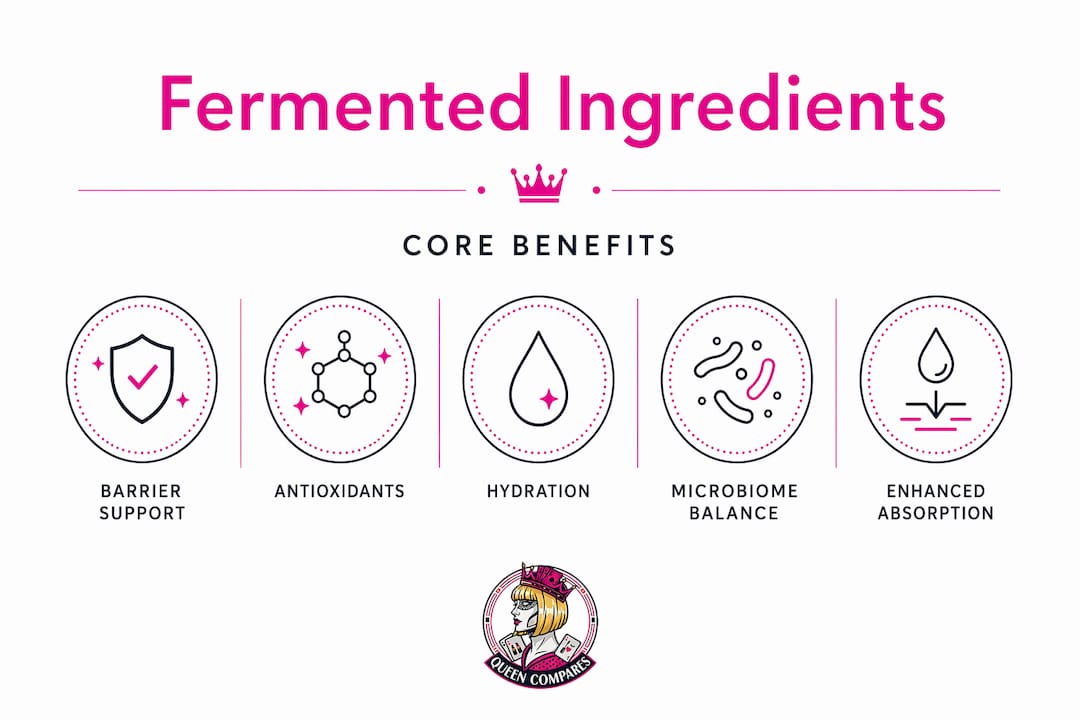
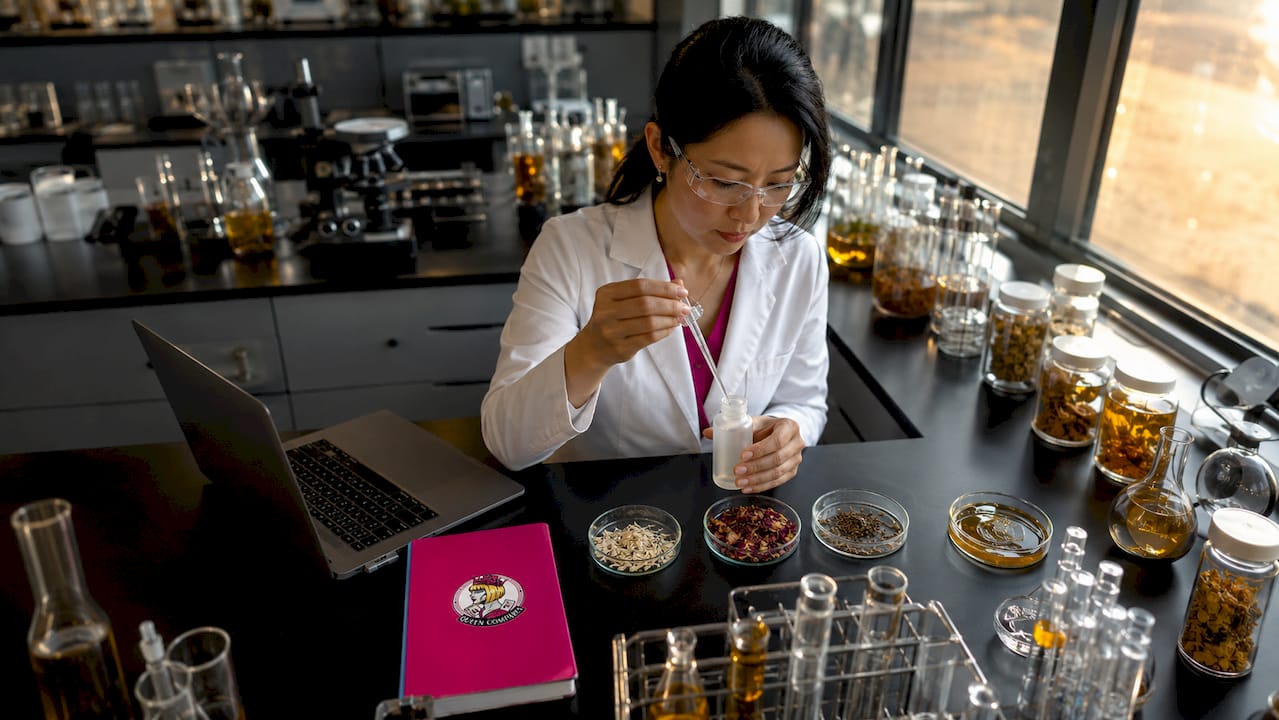
Four fermented ingredients appear most consistently in well-formulated products, each with a distinct mechanism and target benefit.
| Fermented Ingredient | Primary Skin Benefit |
|---|---|
| Galactomyces ferment filtrate | Barrier support, antioxidant protection, mild brightening |
| Bifida ferment lysate | Barrier repair, reduced sensitivity, anti-inflammatory |
| Lactobacillus ferment | Hydration, gentle exfoliation, microbiome balance |
| Fermented rice extract | Hydration, antioxidant action, light brightening |
| Fermented centella asiatica | Anti-inflammatory, improved bioavailability of active compounds |
| Fermented hyaluronic acid | Enhanced skin penetration versus standard hyaluronic acid |
| Fermented niacinamide | Improved bioavailability versus standard niacinamide |
Galactomyces ferment filtrate is the most studied of the group. It supports the skin barrier and delivers antioxidant effects that help defend against environmental stressors. Bifida ferment lysate targets barrier repair and is particularly useful for skin that reacts easily to actives or environmental triggers.
Lactobacillus ferment works on two fronts. It hydrates the skin while also providing mild exfoliation through lactic acid production. This dual action makes it a practical choice for people who want smoother texture without the irritation risk of stronger chemical exfoliants.
Fermented centella asiatica is a newer addition to the category. Fermentation improves the bioavailability of centella's active compounds, including asiaticoside and madecassoside, making the anti-inflammatory effect more pronounced than in standard centella extracts. Fermented niacinamide shows similar logic: studies point to improved skin penetration compared to its unfermented form.
Pro Tip: When a product lists a fermented ingredient near the bottom of the INCI list, the concentration is likely too low to deliver the claimed benefit. Use QueenCompares' Label Scanner to assess ingredient placement and formula transparency before buying.
How do fermented ingredients support the skin microbiome?
The skin microbiome is the community of bacteria, fungi, and other microorganisms that live on the skin's surface. A balanced microbiome supports barrier function, controls inflammation, and protects against pathogens. Disrupting it, even unintentionally, can trigger sensitivity, breakouts, or dryness.
Fermented ingredients support this ecosystem by delivering postbiotics that nourish microbial diversity without killing beneficial bacteria. Postbiotics are the metabolic byproducts of fermentation, including short-chain fatty acids, peptides, and enzymes. They feed and stabilize the microbiome rather than altering it aggressively.
This is a meaningful contrast to some conventional actives. Strong preservatives, high-concentration acids, and certain surfactants can reduce microbial diversity on the skin. Fermented lysates take the opposite approach. Research shows that fermented lysates shift bacterial populations, reduce inflammation, and improve both skin hydration and texture over time.
The benefits for sensitive or compromised skin barriers are particularly relevant here:
- Fermented ingredients do not require a low pH to activate, unlike AHAs or BHAs, so they are less likely to disrupt the skin's acid mantle.
- Postbiotics from fermentation can calm reactive skin without the rebound irritation that some actives cause.
- Bifida ferment lysate specifically has shown results in reducing sensitivity markers in clinical settings.
Formulation stability is the main challenge in this category. Fermented ingredients contain live metabolites that can degrade if the formula is not properly preserved. Stability and preservation are ongoing challenges for formulators, and products that do not disclose preservation methods leave consumers guessing about whether the active compounds are still intact at the time of use.
How to choose and use fermented skincare products effectively
Choosing a fermented skincare product starts with reading the ingredient list critically. The INCI name should identify both the microorganism and the substrate. A label that reads "Saccharomyces/Rice Ferment Filtrate" gives you something to research. A label that reads "fermented complex" gives you nothing useful.
Vague fermented complex labels without transparent formulation details do not guarantee uniform ingredient profiles or efficacy. This is one of the most common ways marketing outpaces the actual science in this category.
Fermented actives are supportive layers in a routine, not replacements for proven actives. Fermented ingredients complement retinoids and vitamin C rather than substituting for them. Think of fermented ingredients as the hydration and antioxidant foundation that helps your stronger actives work better and with less irritation.
Here is a practical sequence for adding fermented skincare to your daily routine:
- Cleanse with a gentle, pH-balanced cleanser to preserve the skin's acid mantle.
- Apply a fermented toner or essence while skin is still slightly damp to maximize absorption of the bioactive metabolites.
- Layer your targeted actives such as retinol, vitamin C, or niacinamide on top of the fermented base.
- Follow with a moisturizer that contains a fermented ingredient like Bifida ferment lysate or Lactobacillus ferment for barrier reinforcement.
- Patch test any new fermented product for 48 hours before full application, especially if your skin is reactive, since ferment profiles vary between batches and brands.
- Store fermented products away from direct sunlight and heat to protect metabolite integrity.
- Check the expiration date more carefully than you would with standard formulas, since fermented actives degrade faster once opened.
The biggest misconception in this category is that fermentation automatically makes a product better. Formula quality, concentration, and the specific ferment-substrate pair matter far more than the word "fermented" on the label. For deeper guidance on reading labels, the article on skincare ingredient labels covers how to interpret INCI names and spot underdosed actives.
Key Takeaways
Fermented skincare works best when you choose products with named ferment-substrate pairs, meaningful concentrations, and transparent preservation disclosures.
| Point | Details |
|---|---|
| Fermentation creates new compounds | Bioactive peptides, acids, and antioxidants form during fermentation and are not present in raw ingredients. |
| Ingredient specificity matters | INCI names like "Saccharomyces/Rice Ferment Filtrate" are more reliable than vague "fermented complex" labels. |
| Microbiome support is a real benefit | Postbiotics from fermentation nourish microbial diversity and reduce inflammation without disrupting the skin barrier. |
| Fermented actives are supportive, not standalone | They work best layered under or alongside retinoids and vitamin C, not as replacements for them. |
| Stability affects efficacy | Store fermented products correctly and check expiration dates, since metabolites degrade faster than standard actives. |
What I've learned from years of watching the fermented skincare trend evolve
The fermented skincare category has matured significantly, but the marketing still runs ahead of the science in too many cases. What I've observed consistently is that consumers who see results from fermented products are almost always using them as part of a well-structured routine, not as a single hero product.
The microbiome angle is where I think the real story lies. Most people focus on absorption and bioavailability, which are valid benefits. But the postbiotic effect on microbial balance is what makes fermented ingredients genuinely different from other hydrating actives. That distinction gets lost when brands lead with "better penetration" as the headline claim.
One thing I'd push back on is the idea that any fermented product is automatically gentle. Fermentation can concentrate certain acids or produce compounds that some skin types react to. Patch testing is not optional for reactive skin.
The consumer literacy around this category is improving in 2026, and that's a good thing. More people are asking for INCI transparency and clinical evidence rather than accepting "fermented" as a quality signal on its own. That shift toward evidence-based purchasing is exactly what the category needs to separate genuinely effective products from those coasting on a trend.
— Magdalena Kapuscinska
QueenCompares makes finding the right fermented skincare easier
Sorting through fermented skincare claims on your own takes time and a lot of label reading. QueenCompares brings the research to you.

The QueenCompares ingredient library covers fermented actives with scientific context, so you can look up Galactomyces ferment filtrate or Bifida ferment lysate and understand exactly what the evidence says. The AI-powered Ingredient Checker and Label Scanner let you paste or scan a product's ingredient list and get an instant breakdown of what's in it, how it's concentrated, and whether the formula holds up. You can also browse skincare products by ingredient to find options that feature specific fermented actives at meaningful concentrations. If you've found a fermented product you love and want to share it with our community, suggest it here and help other skincare enthusiasts make better choices.
FAQ
What are fermented ingredients in skincare?
Fermented ingredients are raw materials transformed by controlled microbial activity into new bioactive compounds, including peptides, organic acids, and antioxidants. The fermentation process can also reduce molecular size, which may improve how well certain ingredients absorb into the skin.
Are fermented skincare products good for sensitive skin?
Fermented ingredients are well-suited for sensitive skin because their metabolites are gentler and more bioavailable than unfermented actives. Bifida ferment lysate and Lactobacillus ferment are particularly effective for barrier repair and reducing reactivity.
Is fermented niacinamide better than regular niacinamide?
Fermented niacinamide shows improved skin penetration compared to standard niacinamide, based on multiple studies. The fermentation process reduces molecular size and increases bioavailability, making the active more potent at the same concentration.
How do I know if a fermented skincare product is actually effective?
Look for a specific INCI name that identifies both the microorganism and the substrate, and check that the fermented ingredient appears in the first half of the ingredient list. Vague labels like "fermented complex" without further detail are a sign that the formulation may not deliver meaningful results.
Can fermented ingredients replace retinol or vitamin C in a routine?
Fermented ingredients are supportive actives, not substitutes for retinoids or vitamin C. They provide hydration, antioxidant protection, and microbiome support, but they do not drive the structural skin changes that retinol and vitamin C produce.