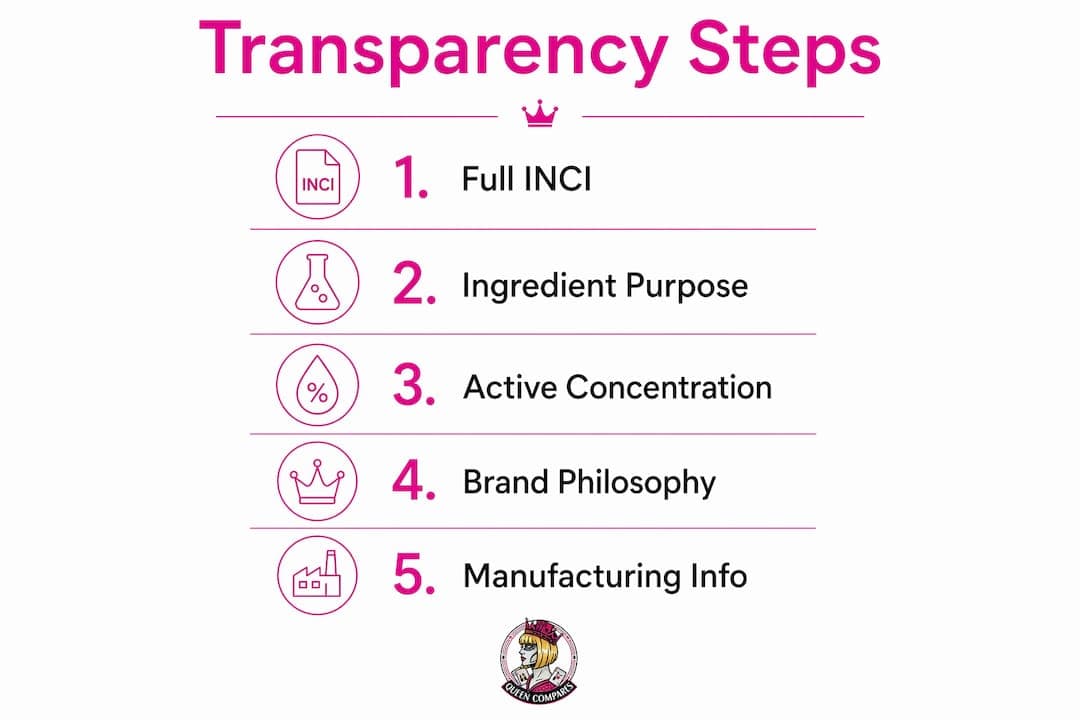
TL;DR:
Skincare formula transparency involves full ingredient disclosure, including each active’s function and safety evidence.
Reading the INCI list and ingredient order helps consumers assess product content and prevent misleading marketing claims.
Skincare formula transparency is defined as the full disclosure of a product’s ingredients, including each active’s function, concentration, and evidence of safety testing. When you evaluate skincare formula transparency, you move past marketing language and look directly at what a formula contains and why. The International Nomenclature of Cosmetic Ingredients (INCI) system provides the standardized naming framework that makes this kind of analysis possible. Transparent brands enable better consumer choices, leading to safer and more effective skincare routines. Knowing how to read and audit a label is one of the most practical skills you can build for your skin health.
How to evaluate skincare formula transparency by reading ingredient labels
The INCI list is your primary source of truth on any skincare label. INCI names are standardized identifiers recognized globally, so “Retinol” and “Niacinamide” mean the same thing regardless of which brand prints them. Learning to read these names removes the guesswork that marketing copy creates.

Ingredient order matters more than most people realize. The top five ingredients on a label typically make up the majority of the formula by weight and largely determine how the product performs on your skin. A moisturizer that lists water, glycerin, and shea butter in the first three positions is genuinely hydrating. One that lists those same ingredients near the bottom is mostly something else.
Ingredient order follows a descending concentration rule down to 1%. Below that 1% threshold, ordering becomes flexible, which is why a brand can legally place a trendy active near the top of the “below 1%” cluster without it being present in a meaningful amount. This is the most common trick in label design.
-
Top 5 ingredients: These define the formula’s base, texture, and primary function. Read them first.
-
Active ingredients: Look for actives like retinol, vitamin C, or AHAs. Their position signals their actual concentration.
-
Support ingredients: Emulsifiers, thickeners, and humectants make the formula stable and pleasant to use. They matter but do not drive results.
-
Fragrance and colorants: Listed at the end. Even small amounts can cause irritation for sensitive skin.
-
“Hero” ingredients in marketing: A brand may feature an ingredient prominently on packaging while it sits at position 22 on the INCI list. That is a red flag, not a feature.
Pro Tip: Scan the first five ingredients before reading any marketing copy. If the formula’s base does not match the product’s claims, the rest of the label will not save it.
What key components signal real formula transparency?
Genuine formula transparency goes beyond printing an INCI list. True transparency includes explaining each active’s role, disclosing concentrations where possible, and providing evidence of stability or clinical testing. Brands that do this are easier to trust and easier to audit.
Here are the components that separate genuinely transparent formulas from well-packaged guesses:
-
Active ingredient concentrations. A brand that lists “Niacinamide 10%” is giving you something testable. One that simply says “Niacinamide” is not. Disclosing exact concentrations alongside testing information strengthens product credibility significantly.
-
Preservative system disclosure. Every water-based formula needs a preservative to prevent microbial growth. Vague or missing preservative information is a safety concern, not just a transparency gap. Look for named preservatives like phenoxyethanol, sodium benzoate, or ethylhexylglycerin.
-
Stability and safety testing references. Brands with nothing to hide will mention dermatologist testing, patch testing, or stability data. This does not need to be a full clinical study. Even a clear statement about testing protocol signals that the brand takes formulation seriously.
-
Absence of vague proprietary terms. Phrases like “botanical complex,” “youth matrix,” or “advanced peptide blend” without further explanation are marketing-driven labels rather than formulation facts. They hide what is actually in the product and at what level.
-
Usage guidance tied to formula design. A transparent brand explains why you apply a product in a specific order, at a specific frequency, or at a specific pH. That kind of guidance reflects real formulation knowledge, not just sales copy.
Pro Tip: Search the brand’s website for a “formulation philosophy” or “ingredient glossary” page. Brands that publish this content are usually the ones worth trusting.
How to audit a skincare product for ingredient transparency
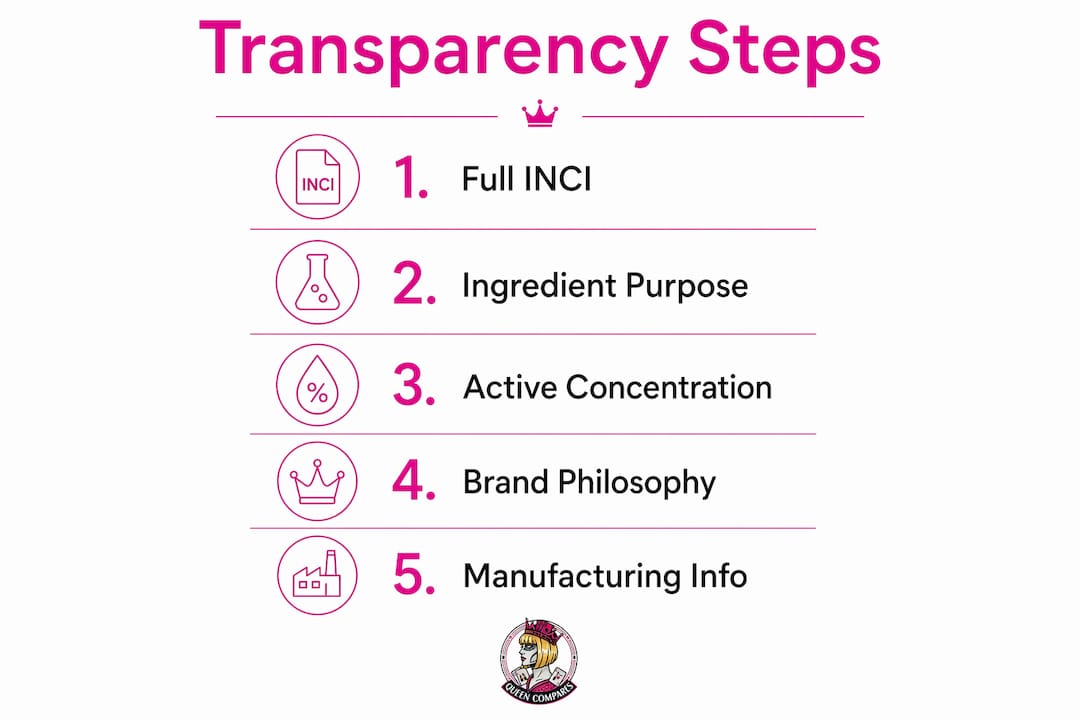
A systematic audit checklist helps you separate quality from marketing hype every time. Use the steps below on any product before you buy.
| Audit step | What to check | Pass or flag |
|---|---|---|
| Full INCI list available | Complete ingredient list printed or published online | Pass if full list is accessible |
| Top 5 ingredients match claims | Base ingredients align with product’s stated purpose | Flag if base contradicts claims |
| Active concentrations listed | Percentages given for key actives | Flag if concentrations are absent |
| Preservative system named | Specific preservatives identified | Flag if “preservative system” only |
| Testing or safety data referenced | Dermatologist or stability testing mentioned | Flag if no testing info exists |
| No proprietary blend language | No vague complex or matrix terms | Flag if undefined blends appear |
Start with the INCI list itself. If a brand does not publish the full ingredient list online or on the packaging, that alone is a reason to pause. The FDA requires ingredient disclosure on cosmetic labels sold in the United States, so a missing list is both a transparency failure and a regulatory concern.
Next, cross-reference the ingredient list using third-party ingredient databases. These tools let you identify potentially irritating ingredients, verify ingredient functions, and separate real actives from filler. Learning to read labels confidently takes practice, but the database step removes most of the guesswork. You can use our Ingredient Checker and AI Label Scanner to check full ingredients list including with Full AI-powered breakdown — actives, emollients, peptides, carcinogens, endocrine disruptors & more in your beauty product. You can also check Ingredient Library that is packed with information sourced from professional dermatology & cosmetology literature.
Finally, research the brand’s manufacturing and formulation background. Brands that work with certified labs, publish formulator credentials, or reference Good Manufacturing Practice (GMP) standards are showing their work. That level of openness is rare and worth rewarding with your purchase.
What red flags reveal a lack of skincare transparency?
Misleading labels follow predictable patterns. Once you know the patterns, they are easy to spot.
-
Proprietary blends without breakdowns. “Proprietary blends” obscure true ingredient amounts and should always be approached with caution. If a brand cannot name what is in its signature complex, you cannot evaluate whether it works.
-
Vague botanical terms. “Botanical extract complex” tells you nothing about which plant, which part, which extraction method, or what concentration. It is filler language dressed up as science.
-
Hero actives buried in the list. A serum marketed around vitamin C that lists ascorbic acid at position 18 is not a vitamin C serum in any meaningful sense. The position tells the real story.
-
No mention of preservatives. Water-based products without a named preservative system raise real safety questions about shelf stability and microbial risk.
-
Claims without evidence. Phrases like “clinically proven” or “dermatologist tested” without any supporting detail are marketing claims, not scientific ones. Ask what was tested, on whom, and by whom.
-
pH-sensitive actives with no pH guidance. Vitamin C and AHAs only work within specific pH ranges. A brand that does not address this either does not know or does not want you to know.
Brands that prioritize marketing momentum over product quality consistently use these tactics. Recognizing them protects both your skin and your wallet. Building a safe skincare routine depends on filtering out these signals before a product ever reaches your bathroom shelf.
Key Takeaways
Assessing skincare ingredient transparency requires reading INCI lists critically, checking active concentrations, verifying preservative systems, and auditing brand claims against independent ingredient data.
| Point | Details |
|---|---|
| INCI list is the foundation | Always read the full standardized ingredient list before trusting any marketing claim. |
| Top 5 ingredients define the formula | The first five ingredients by weight determine texture, function, and real performance. |
| Concentrations reveal honesty | Brands that disclose exact active percentages are easier to trust and verify. |
| Preservative disclosure matters | Named preservatives signal safety awareness; vague terms signal a gap worth flagging. |
| Proprietary blends are a red flag | Undefined ingredient complexes hide functional concentrations and reduce accountability. |
What I’ve learned from years of reading skincare labels
I used to buy products based on the ingredient highlighted on the front of the bottle. Retinol. Hyaluronic acid. Vitamin C. It took me an embarrassingly long time to flip the bottle over and actually read the list.
The shift happened when I started treating the INCI list like a nutrition label. The first few ingredients are the meal. Everything else is seasoning. Once I internalized that, I stopped being impressed by brands that led with a single hero ingredient while burying it at position 15.
What I find genuinely trustworthy now is a brand that explains its preservative choice. That sounds boring, but it is actually the clearest signal of formulation competence I know. A brand that tells you it uses phenoxyethanol at 0.5% because it is effective and well-tolerated at that level is showing real knowledge. A brand that says “preserved with a gentle system” is hiding something or does not know.
The other thing I have learned is that less complexity usually means more transparency. Short ingredient lists with named, functional ingredients are easier to audit than 40-ingredient formulas full of botanical extracts. Simplicity is not a limitation. It is often a sign of confidence.
My honest advice: spend five minutes with the INCI list before you spend money on the product. That five minutes will save you from more bad purchases than any review ever will. I've built tools that asses that with a full potential - QueenCompares Ingredient Checker and AI Label Scanner helped me explore the full ingredients list, including detailed AI-powered insights — such as active ingredients, emollients, peptides, potential carcinogens, endocrine disruptors, and more in your beauty products. You can also visit the Ingredient Library, which is full of helpful information from professional dermatology and cosmetology sources.
Now I can confidently choose products that are safe for me.
— Magdalena Kapuscinska - QueenCompares.com Founder
QueenCompares makes ingredient analysis easier
Knowing what to look for is only half the work. Having the right tools makes the other half much faster.
QueenCompares gives you an Ingredient Library that breaks down individual cosmetic ingredients by function, safety profile, and common use. When you find an unfamiliar name on a label, you can look it up instantly instead of guessing. The Ingredient Checker goes further, letting you paste a full INCI list and get a safety and efficacy analysis in seconds. You can also use the Label Scanner to scan a product barcode and pull up ingredient ratings on the spot. These tools put real formulation knowledge in your hands, right at the moment you need it most. Browse products and brands on QueenCompares to see ingredient ratings and community reviews side by side before you buy in Queencompares Comparison Tool.
FAQ
What does skincare formula transparency mean?
Skincare formula transparency means a brand fully discloses its ingredient list, including each active’s function, concentration, and any safety or stability testing. It goes beyond printing an INCI list to explaining why each ingredient is in the formula.
Why does ingredient order on a label matter?
Ingredients are listed in descending concentration down to 1%, so the first ingredients are present in the largest amounts. The top five ingredients typically define the formula’s base, texture, and primary performance.
What is an INCI name?
An INCI name is a standardized international identifier for a cosmetic ingredient, used consistently across brands and countries. It allows consumers and professionals to identify the same ingredient regardless of how a brand markets it.
How do I spot a misleading skincare label?
Look for proprietary blend language, hero actives listed near the bottom of the INCI list, missing preservative information, and claims like “clinically proven” with no supporting detail. These patterns consistently signal a gap between marketing and formula reality.
Are proprietary blends always a problem?
Proprietary blends are not automatically unsafe, but they reduce your ability to evaluate what you are putting on your skin. A brand that cannot or will not disclose what is in its signature complex is asking you to trust marketing over formulation facts.