Gua sha is a traditional East Asian scraping massage that uses a smooth-edged tool to stroke lubricated skin in one direction. This temporarily boosts local microcirculation and supports lymphatic drainage. When done correctly, it can ease muscle tension, reduce facial puffiness, and promote relaxation. It is not a medical treatment, and it will not permanently reshape your face or cure chronic conditions.
-
What it does: Temporarily increases local blood flow and lymphatic drainage, which can reduce puffiness and ease muscle tension.
-
Its limits: Puffiness relief is temporary. Gua sha does not permanently remove fat, eliminate a double chin, or treat underlying medical conditions.
-
Safety bottom line: Skip it on broken skin, active rashes, sunburn, or if you take blood thinners. Consult a clinician before starting if you have a bleeding disorder, uncontrolled diabetes, or are undergoing chemotherapy.
If none of those cautions apply to you, read on for step-by-step technique. If you have significant health conditions, check with your doctor first.
Pro Tip: First-timers often press too hard. Think of gua sha as a gentle sweep, not a scrub. If your skin turns red beyond a light flush on your face, ease up immediately.
Key Takeaways
Gua sha offers real but temporary benefits when technique is correct, skin is healthy, and expectations are grounded in what the evidence actually supports.
| Point | Details |
|---|---|
| Best-supported benefit | Temporary microcirculation boost and lymphatic drainage, reducing puffiness for hours to a day. |
| Not a permanent fix | Gua sha does not remove fat, permanently contour the face, or treat underlying medical conditions. |
| Safety first | Avoid broken skin, blood thinners, and active skin conditions; consult a clinician if in doubt. |
| Frequency guidance | Facial gua sha works well at 1–3 times per week; start once a week and watch skin response for 48 hours. |
| QueenCompares | Use the Ingredient Checker and Label Scanner to vet facial oils and serums before pairing them with gua sha. |
Table of Contents
How to perform gua sha safely on your face and body
The core technique is straightforward: hold a smooth-edged tool at roughly 30–45 degrees against well-lubricated skin and glide it in one direction with consistent, light-to-moderate pressure. Direction and angle matter more than speed.
Before you start
-
Wash your face (or the body area) with a gentle cleanser and pat dry.
-
Clean your gua sha tool with soap and warm water, then let it air dry.
-
Apply a facial oil or serum generously. Dry skin and a tool do not mix well.
-
Warm the tool between your palms for 30 seconds if it feels cold.
Facial gua sha routine (step by step)
Work from the center outward and from the neck upward. This follows the direction of lymphatic flow.
-
Neck: Start at the base of your neck. Glide the long flat edge upward from collarbone to jawline, 3–5 strokes per side.
-
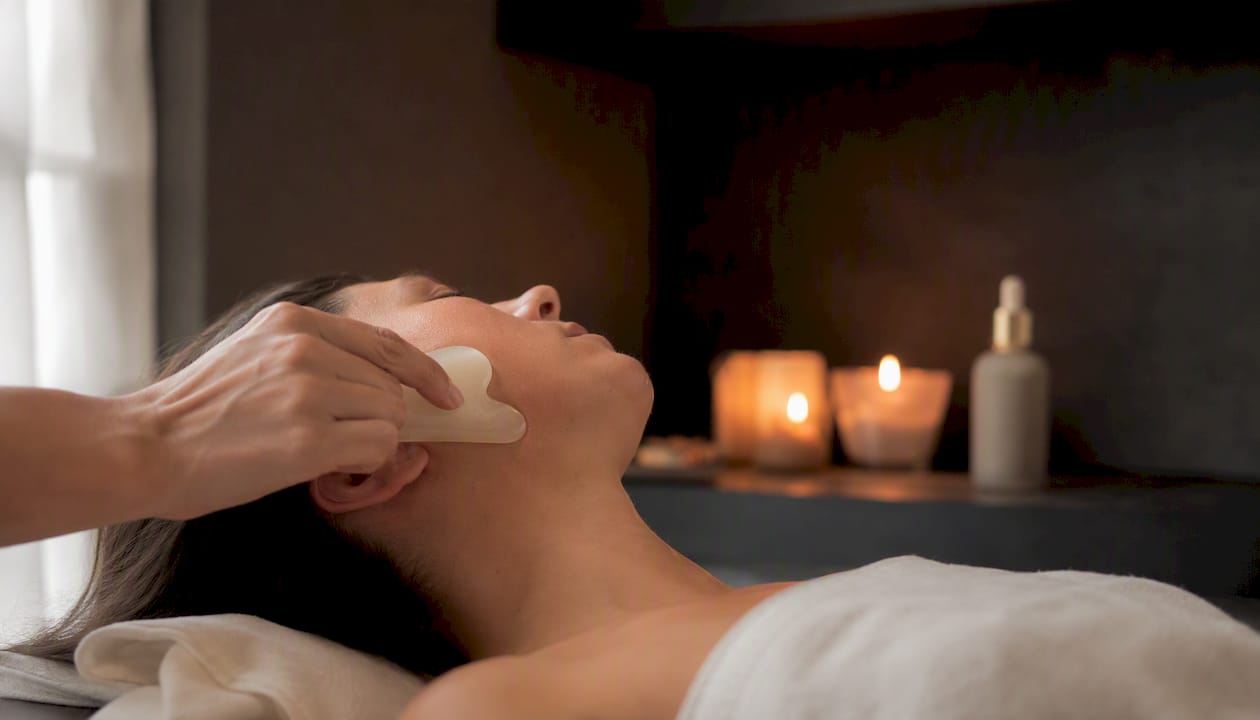
Jawline: Use the notched or curved edge. Glide from chin to earlobe along the jawline, 3–5 strokes per side.
-
Cheeks: Sweep from the nose outward toward the ear, 3–5 strokes per side.
-
Under-eye area: Use the smallest edge or the notch. Glide very gently from the inner corner outward toward the temple. Two or three strokes only, almost no pressure.
-
Brow and forehead: Glide from between the brows outward to the temple, then from the hairline downward toward the ear.
Keep the tool at 30–45 degrees throughout. Flatter angles reduce skin drag and move fluid more effectively. Facial gua sha should never produce petechiae (the small red dots common in body work). If you see them, you are pressing too hard.
Body gua sha
Body work uses more pressure and longer strokes. Glide along the muscle, not across it, working from the center of the body outward. Expect some redness and occasional petechiae on the back or shoulders. That is a normal physiological response in therapeutic bodywork, not a sign of injury, though it should fade within a few days.
Stop immediately if you feel sharp pain, notice broken skin, or see bruising that spreads beyond the stroke area.
-
Do not perform gua sha over bony prominences, varicose veins, or areas with active inflammation.
-
Avoid recent injection sites (Botox, fillers) for at least two weeks.
-
Never share tools without full sterilization between uses.
Pro Tip: For body work, adjust stroke length to the muscle. Longer strokes with medium pressure suit the back and shoulders. Shorter, lighter strokes work better for the neck and face, where skin is thinner.
Choosing the right gua sha tools for your skin
Material matters less than marketing suggests. Traditional practitioners used ceramic spoons, coins, and water buffalo horn. The edge smoothness and the pressure you apply predict results far more than whether the stone is jade or rose quartz.
Quick verdict: For hygiene and durability, stainless steel is the most practical choice. For aesthetics and a cooling sensation, jade or rose quartz work well, but they require more careful cleaning because stone is porous.
-
Jade and rose quartz: Popular, aesthetically pleasing, and naturally cool to the touch. Porous surfaces can harbor bacteria if not cleaned properly after every use. Seal or replace cracked stones immediately.
-
Stainless steel: Non-porous, easy to sterilize, and durable. Stays cool longer than stone. Less traditional in appearance but the most hygienic option for home use.
-
Bian stone: Historically significant in traditional Chinese medicine. Modern bian stone tools vary widely in quality. Claims about unique therapeutic properties beyond edge smoothness are not supported by clinical evidence.
-
DIY alternatives: A clean, polished ceramic spoon works in a pinch. Avoid anything with rough edges or chips.
Shape and edge guide
-
Long flat edge: Best for cheeks, neck, and back.
-
Curved or notched edge: Fits the jawline, collarbone, and under-eye area.
-
Small rounded tip: Useful for brow bone and tight areas around the nose.
Buying checklist
-
Smooth, polished edges with no chips or cracks
-
Non-porous material or a sealed stone surface
-
Size appropriate for face (smaller, lighter) vs. body (larger, heavier)
-
Comes with cleaning instructions and a return policy
-
Avoid tools with sharp points or uneven grinding
Pro Tip: Run your fingernail lightly along every edge before your first use. Any rough spot that catches your nail will catch your skin too. Return it.
To clean stone tools, wash with mild soap and warm water after every session. Never soak stone tools in alcohol or bleach solutions, which can degrade the surface.
What gua sha may actually help with
The best-supported benefits are temporary, not permanent. Cleveland Clinic clinicians describe gua sha as a complementary technique that can ease muscle tension and reduce facial puffiness through lymphatic drainage. They are clear that it should not replace medical evaluation.
-
Local microcirculation (moderate evidence): Scraping increases blood flow to the treated area. A PMC-archived review discusses plausible physiological mechanisms, including microcirculation changes and possible local anti-inflammatory responses following scraping therapies.
-
Short-term musculoskeletal pain relief (limited to moderate): Small trials suggest some benefit for neck and lower back pain, though sample sizes are small and study designs vary considerably.
-
Facial puffiness reduction (limited but plausible): The visible de-puffing effect comes from moving lymphatic fluid, not from fat loss. This is temporary and typically lasts hours to a day.
-
Muscle tension and relaxation (moderate, anecdotal support): Consistent with how any massage-type technique works on soft tissue.
-
Chronic disease treatment (insufficient evidence): Claims that gua sha treats systemic conditions are not supported by current clinical literature.
Gua sha is unlikely to permanently contour your face, eliminate a double chin, or produce lasting structural changes. Any visible slimming effect after a session is fluid movement, not tissue change.
Side effects, risks, and when to stop
Gua sha is generally safe when performed correctly on healthy skin, but it carries real risks when misapplied. WebMD notes that people on blood-thinning medication, those with circulation issues, and those with uncontrolled diabetes should avoid it or get clinician clearance first.
Do not use gua sha on or near:
-
Broken skin, open wounds, or active acne lesions
-
Sunburned or severely irritated skin
-
Active rashes or eczema flares
-
Recent Botox, filler, or cosmetic surgery sites (wait at least two weeks, or follow your provider’s guidance)
-
Varicose veins or areas with known blood clots
Who should consult a clinician before trying gua sha:
-
People taking anticoagulants (warfarin, heparin, newer blood thinners)
-
Those with bleeding disorders or clotting conditions
-
People with uncontrolled diabetes
-
Anyone undergoing active chemotherapy or radiation
When to call a clinician: If you notice spreading redness beyond the treated area, fever, severe or worsening pain, or any sign of skin infection (warmth, swelling, pus) after a session, stop and seek medical attention.
Aftercare
-
Cleanse gently with lukewarm water after a session.
-
Apply a fragrance-free moisturizer while skin is still slightly damp.
-
Avoid direct sun exposure for 24–48 hours after treatment.
-
Skip chemical peels, retinoids, or laser treatments on the same day.
-
Drink water to support lymphatic clearance.
Pro Tip: Never share your gua sha tool without sterilizing it between users. Stone tools that are not fully cleaned between uses can transfer bacteria and, in rare cases, blood-borne pathogens if the skin was broken during treatment.
How often to do gua sha and a simple 5-minute facial routine
Healthline recommends facial gua sha about once or twice a week for most people. Body gua sha frequency depends on the condition being addressed and should follow practitioner guidance for therapeutic use.
For a simple at-home five-minute skincare routine, here is a timed facial sequence:
-
Neck (30 seconds): 3–5 upward strokes per side.
-
Jawline (45 seconds): 3–5 strokes chin to ear per side.
-
Cheeks (60 seconds): 3–5 outward strokes per side.
-
Under-eye area (30 seconds): 2–3 very gentle strokes per side.
-
Forehead (30 seconds): 3–5 strokes outward from center to temple per side.
-
Finish (45 seconds): Light upward neck strokes to encourage lymphatic drainage downward toward the collarbone.
Morning vs. evening: Morning sessions work well for de-puffing and moving overnight fluid buildup. Evening sessions lean more toward muscle relaxation and winding down. Either works. If your skin is sensitive, start with once a week and watch for any reaction over 48 hours before increasing frequency.
What the research and dermatologists actually say
Clinical evidence for gua sha is suggestive but limited. A PMC-archived review found some evidence of short-term pain relief and improved microcirculation across scraping therapy trials, but flagged small sample sizes and inconsistent study designs as significant limitations. A separate PMC study adds supporting data on physiological responses, including microcirculation changes in specific clinical contexts.
Small PubMed-indexed trials have reported short-term symptom improvement for conditions like neck pain and lower back pain. These results are real but narrow. They do not generalize to all uses of gua sha, and none of the trials were large enough to draw firm conclusions.
Cleveland Clinic clinicians advise: Gua sha can be a useful complementary technique for temporary muscle tension and puffiness, but it should support, not replace, professional medical evaluation for any underlying condition.
Dermatologists generally view facial gua sha as low-risk when technique is correct and skin is healthy. The main clinical concerns are improper pressure causing bruising, using tools on compromised skin, and unrealistic expectations about permanent results. The Cleveland Clinic and similar institutions frame it as a supportive wellness practice, not a clinical intervention.
Evidence summary by benefit:
-
Microcirculation increase: moderate, mechanism plausible
-
Short-term musculoskeletal pain relief: limited to moderate, condition-specific
-
Facial puffiness reduction via lymphatic drainage: limited but physiologically plausible
-
Permanent fat loss or facial contouring: no supporting evidence
A practical take on fitting gua sha into your routine
Gua sha earns its place in a skincare routine when you treat it for what it actually is: a gentle, consistent self-care practice with real but modest and temporary benefits. The readers who get the most from it are those who use it regularly, keep pressure light on the face, and pair it with a well-chosen facial oil.
Start with one or two light sessions per week. Watch how your skin responds over 48 hours. If you see no irritation and you enjoy the ritual, build from there. The technique itself is simple once you stop overthinking the tool material and focus on angle and pressure instead.
One practical step worth taking before you commit to a facial oil or serum to use alongside your tool: check the ingredient list. Some oils contain fragrance compounds or sensitizing botanicals that can irritate skin right after gua sha, when your skin barrier is temporarily more permeable. Use the Ingredient Checker at QueenCompares to flag anything that might not suit your skin type before your first session.
Find the right gua sha products with QueenCompares
Picking a gua sha tool is only half the decision. The facial oil or serum you use underneath it matters just as much, and ingredient labels can be harder to read than they look.

QueenCompares gives you side-by-side product comparisons for gua sha tools and the skincare products you pair with them, plus AI-powered tools that flag allergens, irritants, and ingredient conflicts before they reach your skin. Use the Label Scanner to scan any facial oil or serum in seconds, or browse the Ingredient Library to look up specific compounds. You get the information you need to choose confidently, without guesswork. Head to QueenCompares now and check the products already in your routine.
Sources
FAQ
What does gua sha actually do to your skin?
Gua sha temporarily increases local blood flow and encourages lymphatic drainage, which can reduce puffiness and ease muscle tension. These effects are real but short-lived, typically lasting hours rather than days.
What do dermatologists say about gua sha?
Most dermatologists view facial gua sha as low-risk when technique is gentle and skin is healthy. The Cleveland Clinic frames it as a complementary wellness practice that can support relaxation and temporary puffiness reduction, not a clinical treatment.
What are the main disadvantages of gua sha?
The main drawbacks are bruising or petechiae from too much pressure, irritation on sensitive or compromised skin, and the temporary nature of its benefits. It also carries infection risk if tools are not cleaned properly between uses.
Can gua sha get rid of a double chin?
No. The visible slimming effect some people notice after a session comes from moving lymphatic fluid, not from reducing fat tissue. Cleveland Clinic clinicians confirm that facial contouring from gua sha is temporary and not a substitute for medical or cosmetic interventions.