
Start low and slow: a low-strength, over-the-counter retinol, applied at night in a pea-sized amount, once or twice a week initially. Layer it with moisturizer to buffer irritation, and never skip broad-spectrum SPF the next morning. Follow that sequence and you’ll avoid the flaking, redness, and frustration that send most beginners running back to their old routine within a month.
We feature a curated index of Retinol ingredients from our cosmetic glossary — including safety ratings, comedogenic and irritancy scores, cosmetic functions, and the products that contain each one.
TL;DR:
Starting retinol slowly with a once or twice weekly application helps prevent irritation and builds skin tolerance over several weeks.
Applying retinol on dry skin after 10-15 minutes post-cleansing and avoiding sensitive areas minimizes discomfort and enhances safety.
Avoid layering retinol with AHAs, BHAs, or benzoyl peroxide in the same routine to reduce skin damage and irritation.
Use a gentle baseline routine, strictly wear broad-spectrum SPF daily, and patch test products before full face application.
Visible improvements in skin texture and breakouts can take two to three months, with significant results in fine lines and pigmentation appearing after six to twelve months.
Table of Contents
What Retinol and Retinoids Actually Do for Your Skin
Retinol is a vitamin A derivative that speeds up cell turnover, which is the biological engine behind its reputation as a skincare workhorse. That faster turnover clears out dead skin cells more efficiently, unclogs pores, and encourages fresh collagen production over time. According to Cleveland Clinic, retinol is used to treat acne and reduce signs of aging, and it works gradually rather than overnight.
There’s a strength spectrum worth understanding before you buy anything. Over-the-counter retinol is milder and slower acting. Prescription retinoids, like cretinoid, are converted directly to retinoic acid in the skin and hit harder, faster, with a steeper irritation curve attached.
Retinol tends to help with:
-
Acne breakouts and clogged pores
-
Rough texture and enlarged-looking pores
-
Fine lines, uneven tone, and early sun damage
It’s not for everyone, though. Anyone pregnant or breastfeeding should avoid retinol entirely, and people with severe eczema, rosacea, or active dermatitis usually need to calm their skin barrier first before introducing any active ingredient this potent.
How to Prepare Your Skin Before Introducing Retinol
Jumping straight into nightly retinol without any groundwork is the number one reason beginners give up on it. Your skin barrier needs to be stable first, and that takes a little prep work.
-
Build a gentle baseline routine. Swap foaming cleansers for a non-foaming, hydrating one, and add a moisturizer with ceramides or squalane to reinforce your barrier before you add anything stronger.
-
Wear SPF every single morning, rain or shine, for at least a week before you start. This establishes a habit you’ll need anyway once retinol makes your skin more sun-sensitive.
-
Patch test the actual product. Dab a small amount behind your ear or on your inner forearm and wait 24 to 48 hours to check for redness, itching, or breakouts, a step Doctor Rogers Skin Care recommends before any new topical active touches your face.
-
Pause other exfoliants. Stop using AHAs, BHAs, and physical scrubs for about a week before your first retinol application so your barrier isn’t fighting two battles at once.
-
Mind your procedure calendar. Skip waxing, laser treatments, or microdermabrasion in the days immediately before and after starting retinol, since Wirecutter notes thinner, more reactive skin during this window.
If you’re still assembling the rest of your lineup, a beginner routine guide walks through building that gentle baseline step by step.
What’s the Best Way to Start Using Retinol?
The best way to use retinol as a beginner is to follow a conservative, weekly ramp instead of jumping to nightly use. Dermatology-aligned guides consistently point to an 8 to 12-week pacing window before you’re using it every night, and that patience is what separates people who stick with retinol from people who quit after one bad flare-up.
Here’s a starter schedule that works for most beginners:
-
Weeks 1 to 2: Apply retinol one night, then skip two nights. That’s roughly twice a week.
-
Weeks 3 to 4: Move to every other night if your skin looks calm, no persistent redness or flaking.
-
Weeks 5 to 8: If tolerance is good, increase to four or five nights a week.
-
Week 9 onward: Nightly use, if your skin has shown no irritation for at least two consecutive weeks at the previous frequency.
You may have seen the “1/2/3 rule” floating around: apply retinol on 1 night in week one, 2 nights in week two, and 3 nights in week three, adding a night each week until you reach nightly use. It’s a faster ramp than the schedule above, and it works fine for people with resilient, non-sensitive skin. If you’re prone to redness, rosacea, or eczema, the slower four-week version gives your barrier more room to adjust.
Moisturizer strategy matters just as much as frequency. Two techniques handle irritation differently:
The sandwich method: Apply a thin layer of moisturizer first, wait a few minutes, apply your pea-sized retinol, then follow with another layer of moisturizer on top. Research on this “open sandwich” approach found that moisturizing before and after retinol does not reduce the product’s bioactivity, meaning you’re not sacrificing results by buffering the irritation.
Buffering: Mix your retinol directly into your moisturizer in your palm before applying, diluting the concentration slightly on contact. This works well for very reactive skin types or during your first two weeks.
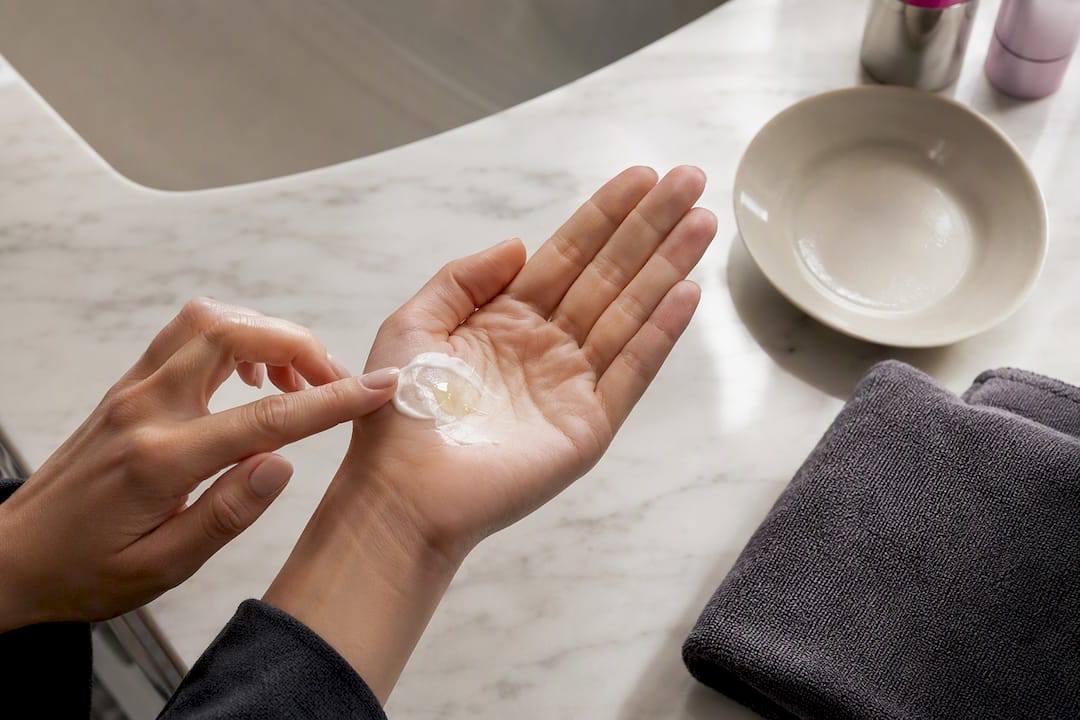
Pro Tip: If your face feels tight or looks shiny-red the morning after a retinol night, that’s your skin telling you to skip the sandwich and buffer instead for the next week. Dial the technique down before you dial the frequency down.
Watch for these signs that you’re moving too fast: persistent stinging that doesn’t fade within an hour, visible peeling that looks raw rather than flaky, or breakouts that keep multiplying rather than settling within two to three weeks. Any of those mean it’s time to drop back a step in frequency, not push through.
How Do You Apply Retinol Correctly Each Night?
The application sequence itself is simple once you’ve got the schedule figured out. Cleanse with a gentle, non-foaming cleanser and pat your face fully dry, since applying retinol to damp skin increases absorption and irritation risk. Some product labels recommend waiting 10 to 15 minutes after cleansing before applying; follow that instruction if it’s on your bottle.
From there:
-
Use a pea-sized amount for your entire face. That’s it, more product does not mean better results, only more irritation.
-
Dot it on your forehead, cheeks, chin, and nose, then blend outward and downward in thin layers.
-
Avoid the eye area, lips, and the creases around your nostrils, where skin is thinner and more reactive.
-
Follow immediately with moisturizer, either sandwiched or on top, depending on how your skin is tolerating things that week.
-
If you want to treat your neck and chest, wait until your face has adjusted for several weeks first, and use a lower-strength formula there since skin in that area is thinner and shows irritation faster.
Formulation and packaging matter more than people realize. Retinol degrades with light and air exposure, so opaque, airless pump packaging preserves potency far longer than a jar you dip your fingers into daily. If a label lists retinal (retinaldehyde) instead of retinol, know that it’s a faster-converting, generally more potent form, and it may call for a slower starter schedule than a standard retinol.
What Should You Never Mix With Retinol?
Combining too many active ingredients in one application is the fastest route to a damaged, over-exfoliated barrier. Skip these pairings in the same routine, same night:
-
AHAs and BHAs (glycolic acid, lactic acid, salicylic acid): layering these with retinol in one sitting significantly raises irritation risk, according to Schweiger Dermatology.
-
Benzoyl peroxide: it can actually destabilize retinol’s effectiveness while adding its own drying effect on top.
-
Strong chemical peels or in-office resurfacing treatments: these compound skin sensitivity and should not overlap with active retinol use.
The fix isn’t cutting these ingredients from your life, it’s spacing them out. Use vitamin C or exfoliating acids in the morning and retinol at night, or alternate nights entirely (acids on off-nights, retinol on retinol-nights) if your skin is sensitive to both.
If you’re pregnant, trying to conceive, or breastfeeding, avoid retinol and retinoids altogether and talk to your healthcare provider about safer alternatives; this is one of the few genuinely non-negotiable rules in skincare. And regardless of your skin type or goals, daily broad-spectrum sunscreen isn’t optional once retinol is in your routine, as it thins the outer skin layer and raises photosensitivity substantially.
How Do You Handle Retinol Irritation?
Mild peeling, occasional tightness, and light pink tones for an hour after application are typical and expected, especially in your first month. Painful burning, blistering, oozing, or swelling is not normal and means you’ve overdone it.
If irritation crosses into “not normal” territory:
-
Pause retinol completely for 3 to 7 days, no exceptions.
-
Focus on barrier repair: simple moisturizers with ceramides, petrolatum, or panthenol, and cut out every other active ingredient temporarily.
-
Skip hot showers and any scrubbing on your face until skin calms down.
-
Restart at a lower frequency than where you left off, not where you stopped.
Some purging in the first few weeks, a temporary uptick in small breakouts, is common and different from irritation; Women’s Health notes this typically resolves within a few weeks as turnover normalizes.
Pro Tip: Keep a plain, fragrance-free moisturizer on standby specifically for “retinol recovery” weeks. Don’t experiment with new products while your barrier is already compromised.
See a dermatologist if you notice signs of infection, pigment changes that don’t fade after weeks of pausing, or pain that doesn’t improve with a week off.
When Will You Actually See Results From Retinol?
Patience is the whole game here. In the first few weeks, expect some flaking and possibly a short purge, not visible improvement yet. By two to three months, texture smooths out and active breakouts typically start calming down. Fine lines, uneven tone, and deeper pigment issues take the longest, usually six to twelve months of consistent use before you see meaningful change.
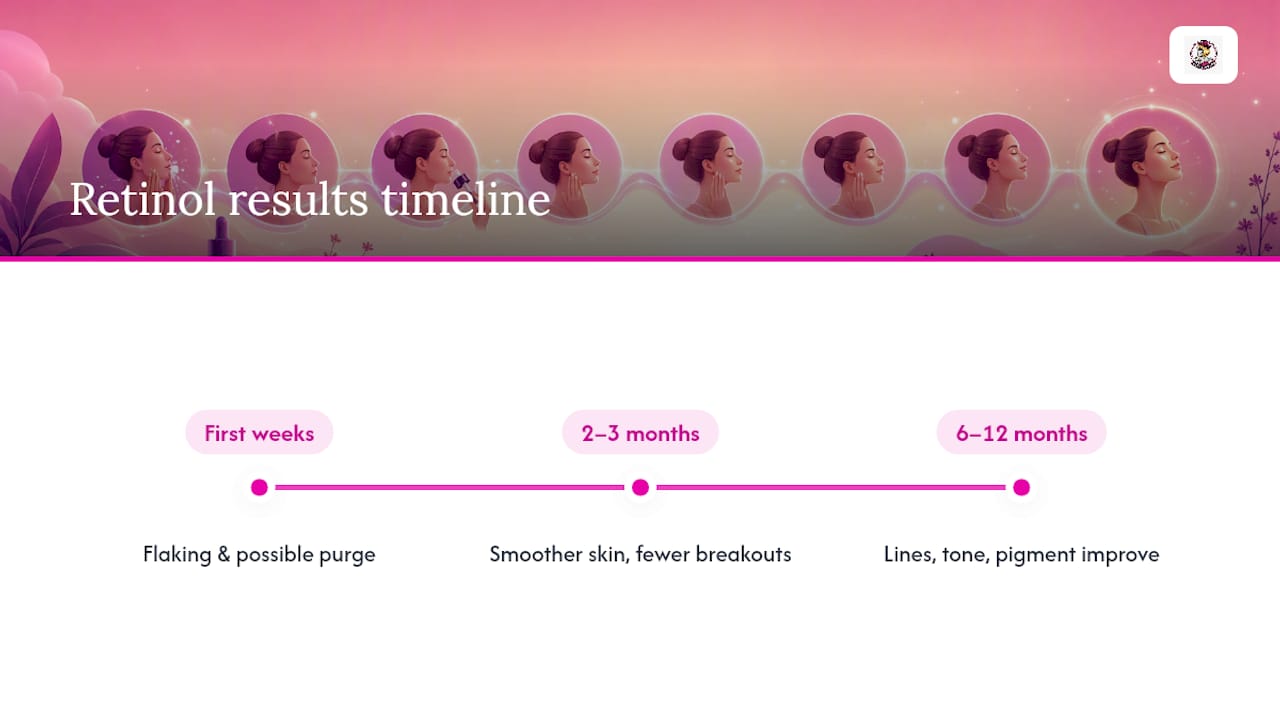
Take a photo in the same lighting every two weeks rather than relying on memory, and tracking your routine this way helps you tell a temporary purge from a genuine bad reaction before you panic and switch products too early.
Where QueenCompares Fits Into Your Retinol Research
Picking the right formula is half the battle, and that’s where a side-by-side comparison earns its keep. Ingredient Checker and Ingredient Library tools help you spot sensitizing additives, fragrance, or drying alcohols hiding in a retinol formula before you commit to it. Guidance from contributors covers routine-building topics regularly, and pairing that with the tools gives you a practical checklist: verify the formula, patch test, then track your ramp-up week by week.
A Beginner’s Honest Note on Starting Retinol
Slow feels boring when you want results now, but boring is exactly what protects your skin barrier long enough for retinol to actually work. I’d rather see someone stall at twice a week for six months than burn through their skin barrier chasing nightly use in three weeks. Track your progress somewhere consistent, whether that’s a note on your phone or a dedicated routine tracker, because memory lies and photos don’t.
— Magdalena Kapuscinska
Not Sure Which Retinol Formula Is Right for You?
Every retinol bottle on the shelf claims to be gentle, effective, and beginner-friendly. Most don’t tell you what’s actually in the base formula, and that’s the detail that decides whether your skin tolerates it or revolts against it. QueenCompares is built for exactly that gap: instead of guessing from marketing copy, you can run a product through the Ingredient Checker to flag sensitizers, or browse the Ingredient Library to understand what a listed compound actually does to your skin before you spend a cent.

If you’ve already got a few contenders in mind, compare their full formulas side by side on our Product comparison pages to see which packaging, concentration, and supporting ingredients fit your starter schedule best. Can’t find the exact product you’re eyeing? Suggest it and we’ll add it to the library. Either way, check your formula before your first patch test, not after your third breakout.
Sources
For deeper clinical grounding, Cleveland Clinic covers retinol’s medical basics, Doctor Rogers Skin Care breaks down starter pacing, and Glamour offers dermatologist perspective on timing your start by age and goal.
This article is general information, not a substitute for advice from a qualified doctor. Consult a qualified healthcare professional about your own circumstances before acting on anything here.
-
When should you start using retinol? — Schweiger Dermatology
-
Step-by-step guide to starting a retinoid — Doctor Rogers Skin Care
FAQ
How Should You Introduce Retinol Into Your Skincare Routine?
Start with a low-strength, over-the-counter retinol at night, one to two times a week, using a pea-sized amount and always following with SPF the next morning. Increase frequency gradually over 8 to 12 weeks as your skin tolerates it.
What Is the 1/2/3 Rule for Retinol?
The 1/2/3 rule means applying retinol one night in week one, two nights in week two, and three nights in week three, adding a night each subsequent week until you reach nightly use. It’s a faster ramp than the four-week conservative schedule and works best on resilient, non-sensitive skin.
What Should You Never Mix With Retinol?
Avoid combining retinol with AHAs, BHAs, or benzoyl peroxide in the same application, since layering these actives significantly raises irritation risk. Space them across different nights or use acids in the morning and retinol at night instead.
What Do Koreans Use Instead of Retinol?
Many Korean skincare routines lean on gentler actives like bakuchiol, niacinamide, snail mucin and fermented ingredients such as Lactobacillus Ferment , Galactomyces Ferment Filtrate, Bifida Ferment Lysate, alongside gradual techniques rather than dropping retinol into an already active-heavy routine. QueenCompares’ K-beauty routine guide breaks down how those steps sequence together for beginners.
How Long Does It Take to See Results From Retinol?
Texture and active breakouts typically improve within two to three months of consistent use, while fine lines and pigment changes usually take six to twelve months. Track your progress with photos taken in consistent lighting every couple of weeks rather than judging results day to day.