INCI stands for International Nomenclature of Cosmetic Ingredients, the standardized naming system maintained by the Personal Care Products Council (PCPC) through its International Nomenclature Committee (INC). Here’s the fast version: read the list top to bottom, because ingredients above 1% appear in descending order by weight, while anything at or below 1% can be listed in whatever order the brand likes.
A few quick signals to scan for the moment you flip a bottle around:
-
“Aqua” first — most formulas are water-based, so water usually leads.
-
Preservatives like phenoxyethanol often mark roughly where the 1% line falls.
-
“Parfum” or “Fragrance” can be a single word hiding dozens of individual chemicals.
-
Check our Clean Beauty page where we feature skincare and makeup products whose AI ingredient safety analysis scored 80/100 or higher — cleaner formulations, fewer concerns.
Pro Tip: If you have known allergies, don’t trust words like “hypoallergenic” on the front of the package. Memorize the exact INCI name of your allergen and search for it directly in the ingredient list every time.
- Check our Clean Beauty page where we feature skincare and makeup products whose AI ingredient safety analysis scored 80/100 or higher — cleaner formulations, fewer concerns.
Key Takeaways
| Point | Details |
|---|---|
| Order signals concentration | Ingredients above 1% appear in descending order by weight; below 1%, order is discretionary. |
| Preservatives mark the threshold | Names like phenoxyethanol often sit near the 1% boundary, hinting at what follows. |
| “Fragrance” can hide allergens | Parfum and Fragrance may legally conceal multiple chemicals unless regional rules require naming them. |
| Colorants break the ordering rule | CI numbers often appear last regardless of actual concentration. |
| QueenCompares speeds up verification | The Ingredient Checker and Label Scanner let you flag allergens and unfamiliar names in seconds, in-store or online. |
Table of Contents
What Does INCI Mean and Who Controls It?
INCI names aren’t invented by individual brands. They come from the International Nomenclature Committee, which meets five times a year to review and assign new names, publishing updates through the PCPC’s wINCI database. The system has been running since 1973, and it’s built for one purpose: giving every cosmetic ingredient a single, consistent name that means the same thing whether you’re reading a label in Los Angeles, Lisbon, or Lagos.
The scale is bigger than most shoppers realize. The wINCI dictionary currently catalogs more than 29,000 ingredient names, covering everything from plant extracts to synthetic polymers.
Here’s the part people miss:
-
INCI is a naming system, not a safety stamp.
-
Getting an INCI name assigned means an ingredient can be identified consistently. It says nothing about whether it’s been evaluated as safe.
-
Actual safety review happens separately, through bodies like the Cosmetic Ingredient Review (CIR) in the U.S. and the Scientific Committee on Consumer Safety in the EU.
That distinction shows up in regulation, too. The EU’s Regulation 1223/2009 requires INCI labeling across member states, and in the U.S., the Fair Packaging and Labeling Act governs how ingredients get listed on retail products.
How Does Ingredient Order Reveal Concentration?
Once you know the rule, the whole label starts making sense: everything above 1% concentration must appear in descending order of predominance by weight, and everything at or below 1% can be listed in any order the manufacturer chooses.
That single fact is the closest thing to a decoder ring you’ll get. A practical way to use it: scan for a common preservative name, like phenoxyethanol, potassium sorbate, or sodium benzoate. Ingredients tend to cluster around the 1% mark right where preservatives sit, so everything listed after one is probably present in a smaller amount.
A few exceptions keep this from being a perfect science:
-
Colorants get special treatment. CI numbers (like CI 77891) are frequently appended at the end of a list regardless of actual concentration.
-
“May contain” disclosures for shade-range makeup products list every possible colorant used across a line, not just the ones in your specific shade.
-
Botanical extracts follow Latin naming conventions that can make a low-dose plant ingredient look more prominent than it is.
Position on the list tells you roughly how much of something is there. It does not tell you how well it works. A well-formulated active can sit near the bottom of a list at 0.5% and still outperform a filler ingredient sitting near the top.
What Do Common INCI Naming Patterns Mean?
Once you’ve spotted a handful of patterns, most ingredient lists stop looking like alphabet soup. Botanical ingredients follow a Latin binomial format, like Camellia Sinensis Leaf Extract (green tea) or Aloe Barbadensis Leaf Juice (aloe vera). Chemical actives usually carry recognizable roots: Niacinamide, Tocopherol, Retinol. Solvents and vehicles get their own INCI shorthand, with Aqua simply meaning water.
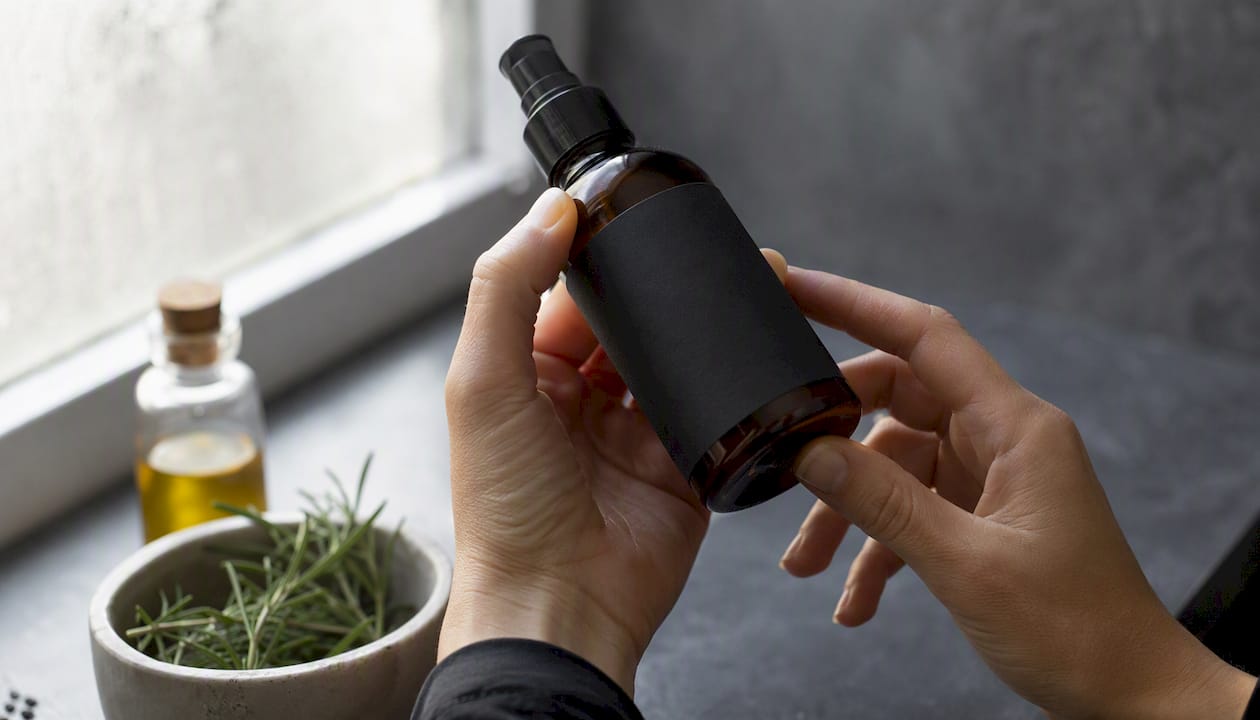
Suffixes carry meaning too. “-ate” often signals a salt form of an acid (Sodium Hyaluronate is the salt form of Hyaluronic Acid, and it behaves a bit differently on skin). “-ol” typically marks an alcohol, though that doesn’t automatically mean it’s drying. “-yl” combined with “acetate” usually points to an ester, a modified version of a parent compound built for better stability or absorption, as with Tocopheryl Acetate versus plain Tocopherol.
| INCI Name | Common Name | Typical Function |
|---|---|---|
| Aqua | Water | Solvent/base |
| Niacinamide | Vitamin B3 | Brightening, barrier support |
| Tocopherol | Vitamin E | Antioxidant |
| Sodium Hyaluronate | Hyaluronic acid salt | Hydration |
| Phenoxyethanol | Phenoxyethanol | Preservative |
| Cetearyl Alcohol | Fatty alcohol | Emulsifier/texture |
The gap between a parent ingredient and its derivative matters more than it looks. Tocopherol and Tocopheryl Acetate are related, but they don’t perform identically, and mixing them up when checking for a sensitivity can lead you to the wrong conclusion.
How Do You Spot Allergens Hiding in Fragrance?
This is where a lot of reactions start, and it’s the single biggest blind spot on any ingredient list. Brands are legally allowed to list “Parfum” or “Fragrance” as one catch-all term, and the FDA notes that this single word can represent a mixture of dozens of individual chemicals, most of which never get named on the label.
The EU has pushed back on that opacity somewhat by requiring specific fragrance allergens to be named individually once they cross a defined concentration threshold. Common names to watch for on EU-labeled products, and worth checking for regardless of where you shop:
-
Linalool
-
Limonene
-
Linalyl Acetate
-
Citral
-
Coumarin
-
Eugenol
-
Geraniol
-
Benzyl Alcohol
Disclosure rules vary by region and by concentration, which is exactly why relying on the front-of-pack claim “fragrance-free” isn’t reliable. A product can carry masking fragrance that’s technically not marketed as a scent and still trigger a reaction.
If you have a known fragrance sensitivity, there’s really one dependable method: search the full ingredient list for the exact INCI name of your allergen, every single time, on every new product. Marketing language cannot substitute for that check.
Your Step-by-Step Checklist for Reading a Label
Keep this sequence in your phone or memorize it before your next shopping trip:
-
Scan the top five ingredients. These tell you the base of the formula, usually water, oils, or silicones, and give you a sense of what the product is actually built around.
-
Locate the preservative. Names like phenoxyethanol, sodium benzoate, or potassium sorbate usually sit near the 1% threshold, giving you a rough dividing line for the rest of the list.
-
Search for your personal allergens by exact INCI name. Copy and paste the ingredient list into a search bar when shopping online, or use a scanning tool when you’re standing in a store aisle.
-
Flag “Parfum” if you’re fragrance-sensitive. Either skip the product or contact the manufacturer directly for a full breakdown, and patch test on your inner arm before applying anything new to your face.
-
Look up anything unfamiliar in wINCI or CosIng before you commit to a purchase, or run it through the Ingredient Checker for a faster read. Check also individual ingredients in Ingredient Library.
Pro Tip: Save the exact INCI spelling of any ingredient that’s ever caused you a reaction in your phone’s notes app. Searching for “fragrance” gets you nowhere. Searching for “Linalool” gets you an answer in seconds.
Which Databases Should You Trust for INCI Lookups?
Not every ingredient lookup tool is built the same way, and knowing which one to use for which question saves time. wINCI is the authoritative dictionary for INCI names themselves, complete with technical synonyms, CAS numbers, and links to safety reviews. CosIng is the European Commission’s database, best for checking EU regulatory status and Annex restrictions on a given ingredient.
For safety evaluations specifically, Cosmetic Ingredient Review (CIR) opinions dig into the toxicology behind an ingredient, while FDA labeling guidance explains what U.S. brands are required to disclose and how.
-
wINCI — technical dictionary and synonym lookup
-
CosIng — EU regulatory status and function
-
CIR — safety opinions and toxicology reviews
-
FDA guidance — U.S. labeling rules and allergen recommendations
-
QueenCompares’ Ingredient Checker and Label Scanner — fast, consumer-facing versions of the same lookup, built for real shopping moments rather than regulatory research
What Should You Do If You React to a Product?
Stop using the product immediately and rinse the affected area with cool water. Follow whatever aftercare the manufacturer lists, and get medical attention right away if you notice swelling, blistering, or difficulty breathing.
Once the reaction settles, take these steps:
-
Document the exact INCI name of every ingredient in the product before you throw it away.
-
Patch test before trying anything similar in the future, applying a small amount to your inner arm and waiting 48 hours.
-
See a dermatologist or allergist for formal patch testing if reactions keep happening across different products.
-
Contact the manufacturer directly if an ingredient name isn’t identifiable anywhere online, or run it through a tool like the Label Scanner to flag it for review.
Don’t assume “natural” means safe. Botanical extracts are just as capable of triggering an allergic reaction as synthetic compounds, and they deserve the same scrutiny on the ingredient list.
Why Decoding INCI Actually Changes How You Shop
Learning to read an INCI list isn’t an academic exercise. It’s the difference between guessing and knowing, especially once you’ve had a reaction and need to figure out why. The habit that actually sticks isn’t memorizing chemistry. It’s a five-second search for one name before you buy, whether that’s typing it into a database or running a quick scan. That small habit is what keeps repeat irritation from happening again.
Put Your Ingredient Knowledge to Work Instantly
Reading INCI lists manually gets easier with practice, but standing in a store aisle squinting at eight-point font isn’t anyone’s idea of a good time. QueenCompares built the Ingredient Checker and Label Scanner specifically for that moment: less time deciphering, more time deciding.
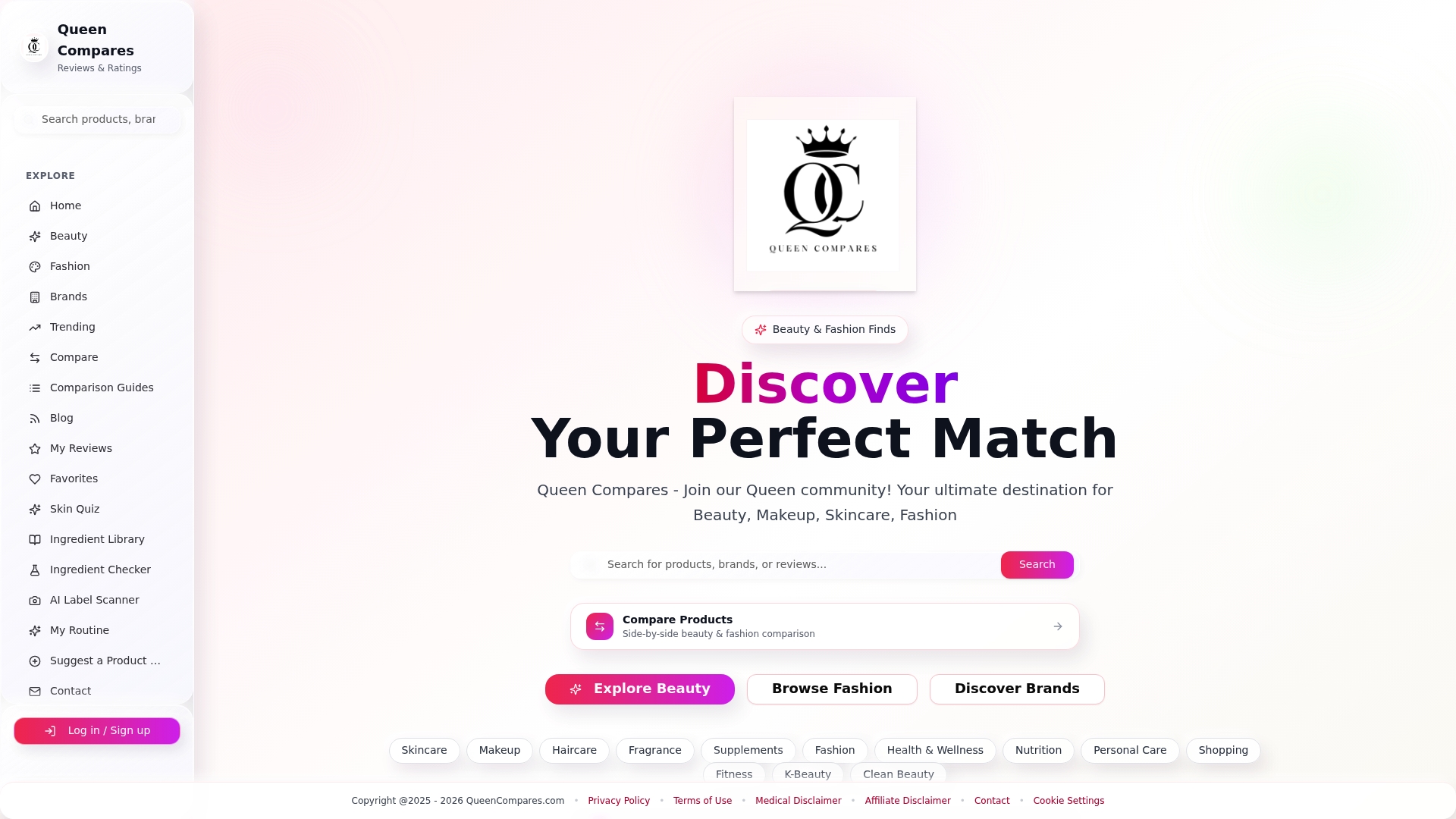
The Label Scanner reads a product’s ingredient panel through your phone’s camera and instantly flags anything that matches your saved allergens or sensitivities. The Ingredient Checker works the same way for online shopping. Copy and paste any ingredient list and get an immediate breakdown of what’s actually in the formula. Every scan gets saved to your reports, so you’re building a personal record instead of starting from scratch every time you shop. Pair either tool with the full Ingredient Library when you want more detail on a specific name than a quick scan provides.
If you’ve been relying on front-of-package claims to make decisions, try running your next new product through the Ingredient Checker before it touches your skin.
Sources
FAQ
What Does INCI Stand For?
INCI stands for International Nomenclature of Cosmetic Ingredients, a standardized naming system maintained by the Personal Care Products Council for identifying cosmetic ingredients consistently worldwide.
Does Ingredient Order on a Label Always Reflect Concentration?
Mostly, but not always. Ingredients above 1% must appear in descending order by weight, while colorants and ingredients at or below 1% can appear in any order.
Why Does “Fragrance” or “Parfum” Not List Specific Ingredients?
Regulations generally allow fragrance to be declared as one umbrella term, and it can legally represent dozens of unnamed chemicals unless a specific allergen crosses a labeling threshold.
How Can I Quickly Check an Unfamiliar INCI Name?
Search it in wINCI or CosIng for technical details, or run it through QueenCompares’ Ingredient Checker for a faster, consumer-friendly breakdown.
Does an INCI Listing Mean an Ingredient Is Safe?
No. INCI is a naming system, not a safety approval. Separate bodies like the Cosmetic Ingredient Review evaluate actual safety data.