TL;DR:
- Ingredient checkers evaluate skincare products in real-time by translating chemical names into safety ratings using regulatory data. They analyze ingredient lists through barcode scans, photos, or manual input, but interpreting results requires understanding ingredient order and limitations like OCR accuracy. These tools help shoppers make personalized, informed decisions but should be used alongside professional advice and personal skin knowledge.
An ingredient checker is a digital tool that evaluates the safety and function of every ingredient in a skincare or makeup product in real time. The formal industry term is “ingredient analysis tool,” and both names describe the same technology: AI-powered software that cross-references product formulas against regulatory databases from the FDA, EFSA, and WHO to produce clear safety ratings. If you have ever stared at a label full of chemical names and felt completely lost, this guide is for you. QueenCompares built its platform around exactly this problem, giving you the tools to check ingredient lists before you buy, not after a reaction.
How does an ingredient checker analyze skincare and makeup products?
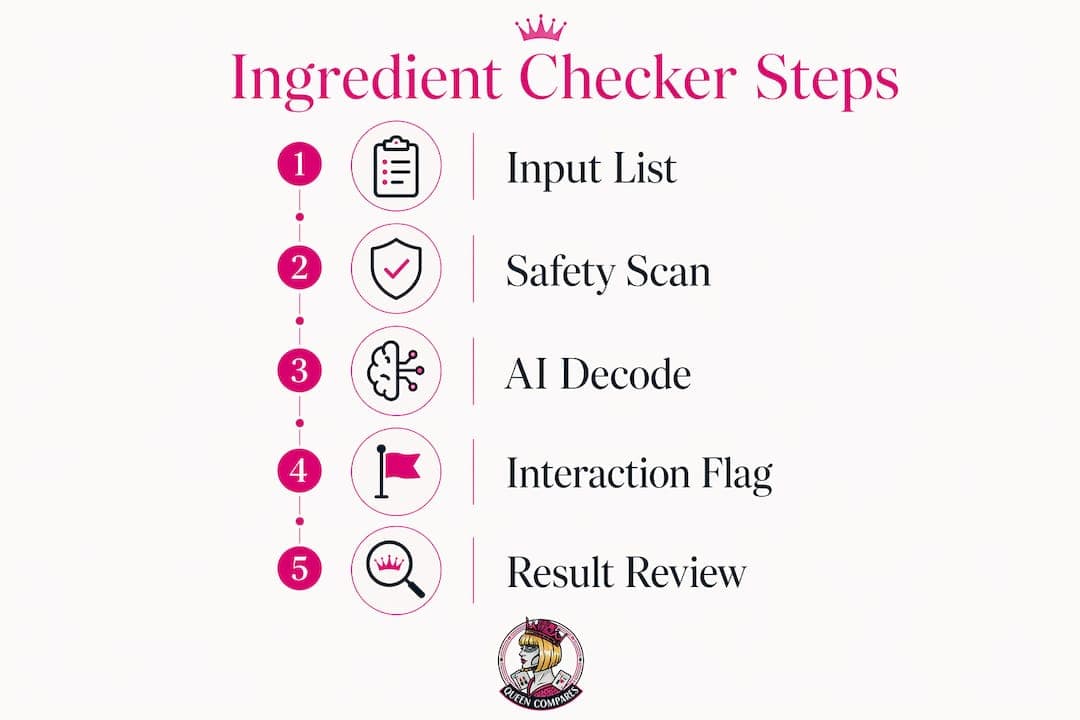
An ingredient checker works by taking a product’s ingredient list and running each entry against a database of safety classifications. The output is a rating for every ingredient, typically organized into categories like Safe, Generally Safe, Caution, and Avoid, based on FDA, EFSA, and WHO scientific consensus. That four-tier system gives you a fast, readable picture of what is actually in your moisturizer or foundation.

Input methods: how you get ingredients into the tool
Most ingredient analysis tools accept input in three ways: barcode scanning, photo upload, or manual text entry. Barcode scanning is the fastest option for packaged products. Photo upload uses Optical Character Recognition, known as OCR, to read the text directly from a label image. Thanks to AI Label Scanner you can do that.
OCR is powerful but not perfect. Advanced OCR technology can read most labels accurately, but curved packaging, glare, or low lighting all reduce accuracy. A blurry photo of a rounded serum bottle is a common source of errors. Manual text entry, where you copy and paste the ingredient list from a brand’s website, is the most reliable method for critical checks.
How AI decoding turns chemistry into plain English
The real value of an AI ingredient decoder is translation. A name like “tertiary butylhydroquinone” means nothing to most shoppers, but AI decoding reveals it is a synthetic antioxidant preservative with documented safety concerns at higher concentrations. That kind of plain-language explanation turns a confusing label into a real decision.
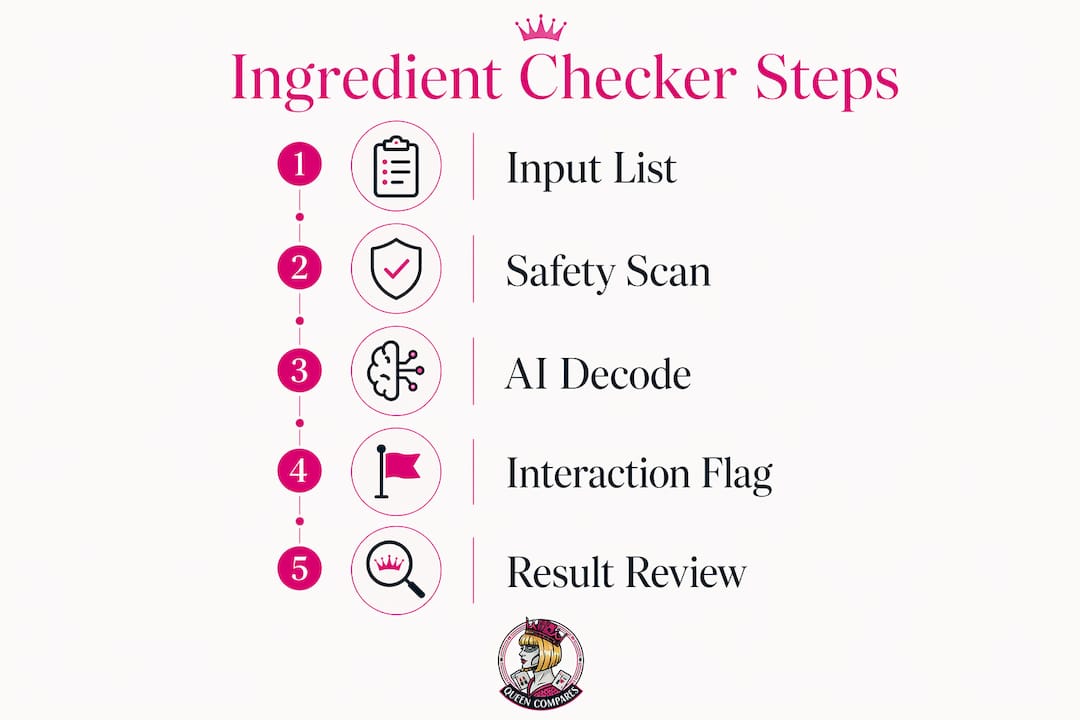
The AI layer also flags ingredient interactions and categories, such as known irritants, pore-cloggers, or allergens, so you get context beyond a single safety score.
Pro Tip: Copy the ingredient list directly from the brand’s official website and paste it into a text-input analyzer. You get cleaner data than a photo scan, and the result is faster and more accurate.
What are the common challenges when reading ingredient checker results?
Ingredient checker results are only as useful as your ability to interpret them correctly. The single most misunderstood concept is ingredient order. Ingredients are listed in descending order by weight, meaning the first ingredient makes up the largest share of the formula. That context changes everything about how you read a safety flag.
Here are the key nuances every shopper should know:
-
Ingredient order matters. A “Caution” ingredient listed first is far more significant than the same ingredient listed last.
-
Low-concentration ingredients still count. An ingredient in the final 5% of a formula can still trigger reactions in sensitive skin, even at trace levels.
-
Chemical names are not automatically dangerous. Water is listed as “Aqua.” Vitamin C appears as “Ascorbic Acid.” Unfamiliar names do not equal unsafe ingredients.
-
OCR errors happen. Curved labels, small fonts, and glare all cause misreads. Always verify flagged allergens manually before trusting a scan result.
-
Ingredient checkers are diagnostic aids, not medical tools. Practitioners consistently warn that scanner results should inform your decisions, not replace a dermatologist’s advice.
Pro Tip: When a tool flags an ingredient as “Caution,” search that specific ingredient name in a dedicated ingredient library before dismissing or panicking. Context and concentration both matter.
The intimidating wall of chemical names on a label is exactly why AI skincare recommendations have grown so fast. Shoppers do not need a chemistry degree. They need a reliable translator.
How to use ingredient checkers effectively for safer product choices
Getting real value from an ingredient analysis tool comes down to a consistent process. Follow these steps every time you evaluate a new product.
-
Get the full ingredient list. Copy it from the brand’s website or scan the physical label. The brand’s website version is always more accurate than a photo scan.
-
Run the analysis. Paste or scan the list into your chosen tool. Wait for the full report before drawing conclusions.
-
Read the safety ratings in order. Start from the top of the ingredient list. A “Caution” flag on ingredient number two is a bigger concern than the same flag on ingredient number thirty.
-
Check your personal triggers. Look specifically for known pore-cloggers if you are acne-prone, known allergens if you have sensitivities, and known irritants if your skin is reactive. Dedicated pore-clogging checkers analyze formulas specifically for comedogenicity, which is a level of detail general tools often skip.
-
Cross-reference with an ingredient library. A safety rating is a starting point. An ingredient library gives you the full picture: function, concentration norms, and known interactions.
-
Build your routine around the results. Products with mostly “Safe” and “Generally Safe” ratings, and no personal trigger ingredients, are your foundation. Use the safe skincare routine framework to layer products without creating conflicts.
The table below shows which ingredient categories to prioritize when scanning a new product, based on skin concern.
| Skin concern | Priority ingredient category to check |
|---|---|
| Acne-prone skin | Comedogenic (pore-clogging) ingredients |
| Sensitive or reactive skin | Known irritants, fragrances, alcohol |
| Allergy history | Specific allergens, preservatives like parabens |
| Dry or compromised barrier | Sulfates, harsh exfoliants |
| Hyperpigmentation | Photosensitizing ingredients |
Pairing an ingredient scanner with a solid ingredient library gives you a complete picture. The scanner flags problems fast. The library explains why they matter.
What types of ingredient analysis tools are available?
Not all ingredient analysis tools work the same way, and the right one depends on what you need to know. The main categories break down by input method and specialization.
By input method:
-
Text-input analyzers accept a pasted ingredient list and are the most accurate option for detailed research.
-
Barcode scanners pull product data from a database automatically, which is fast but limited to products already in the system.
-
Photo and label scanners use OCR to read physical packaging, which is convenient but prone to the accuracy issues described above.
By specialization:
-
General safety tools rate every ingredient against regulatory databases and produce an overall product score.
-
Allergen-focused tools let you configure personal allergy profiles so the tool flags only the ingredients relevant to your specific sensitivities.
-
Comedogenicity checkers focus entirely on pore-clogging potential, which is a narrow but genuinely useful function for acne-prone shoppers.
-
AI vision analyzers go further, using image recognition to assess the full label for harmful additives, excess concentrations, and health concern categories like “Healthy,” “Moderate,” or “Unhealthy.”
Privacy is worth considering when you use any of these tools. Tools that store your health profile and scan history hold sensitive personal data. Before entering allergy or medical information, check whether the platform stores that data, shares it with third parties, or allows you to delete it. A tool that personalizes alerts is more useful, but only if you trust how it handles your information.
Key Takeaways
An ingredient checker gives you the clearest, fastest way to evaluate skincare and makeup safety, but accurate interpretation requires understanding ingredient order, OCR limitations, and the difference between a diagnostic flag and a medical verdict.
| Point | Details |
|---|---|
| AI decodes chemical names | Tools translate complex ingredient names into plain-language safety ratings using FDA, EFSA, and WHO data. |
| Ingredient order changes meaning | An ingredient listed first makes up the largest share of the formula; a flag there matters more than one at the end. |
| OCR has accuracy limits | Photo scans can misread curved or poorly lit labels; paste text directly for critical allergen checks. |
| Specialization adds value | Comedogenicity checkers, allergen profilers, and general safety tools each serve different skin concerns. |
| Checkers are aids, not verdicts | Use ingredient analysis results alongside an ingredient library and professional advice for serious sensitivities. |
Why I think most shoppers are still using these tools wrong
I have spent years watching the ingredient transparency conversation evolve, and the honest truth is that most shoppers treat a single safety score like a final answer. They see one “Avoid” flag and put the product back on the shelf, or they see all green lights and assume the formula is perfect for their skin. Neither reaction is right.
The most useful shift I have seen is when shoppers stop asking “is this product safe?” and start asking “is this product safe for me?” Those are completely different questions. A fragrance ingredient rated “Caution” is irrelevant to someone with no fragrance sensitivity. The same ingredient is a real problem for someone with contact dermatitis. The tool cannot make that distinction for you. You have to bring your own context.
The other thing I keep coming back to is how much ingredient order gets ignored. Shoppers fixate on the ingredient name and forget to look at where it sits in the list. Reading skincare ingredient labels with ingredient order in mind is a skill that takes maybe ten minutes to learn and changes how you shop permanently.
AI-powered ingredient decoders are genuinely getting better every year. The databases are larger, the plain-language explanations are more accurate, and the personalization features are more useful. But the technology works best when the person using it understands its limits. Combine the tool with your own knowledge, and you have something genuinely powerful.
— Magdalena Kapuscinska
QueenCompares makes ingredient analysis personal
QueenCompares is built for shoppers who want more than a generic safety score. The platform’s Ingredient Checker analyzes skincare and makeup formulas with AI, translating every ingredient into plain English with safety ratings grounded in regulatory data.
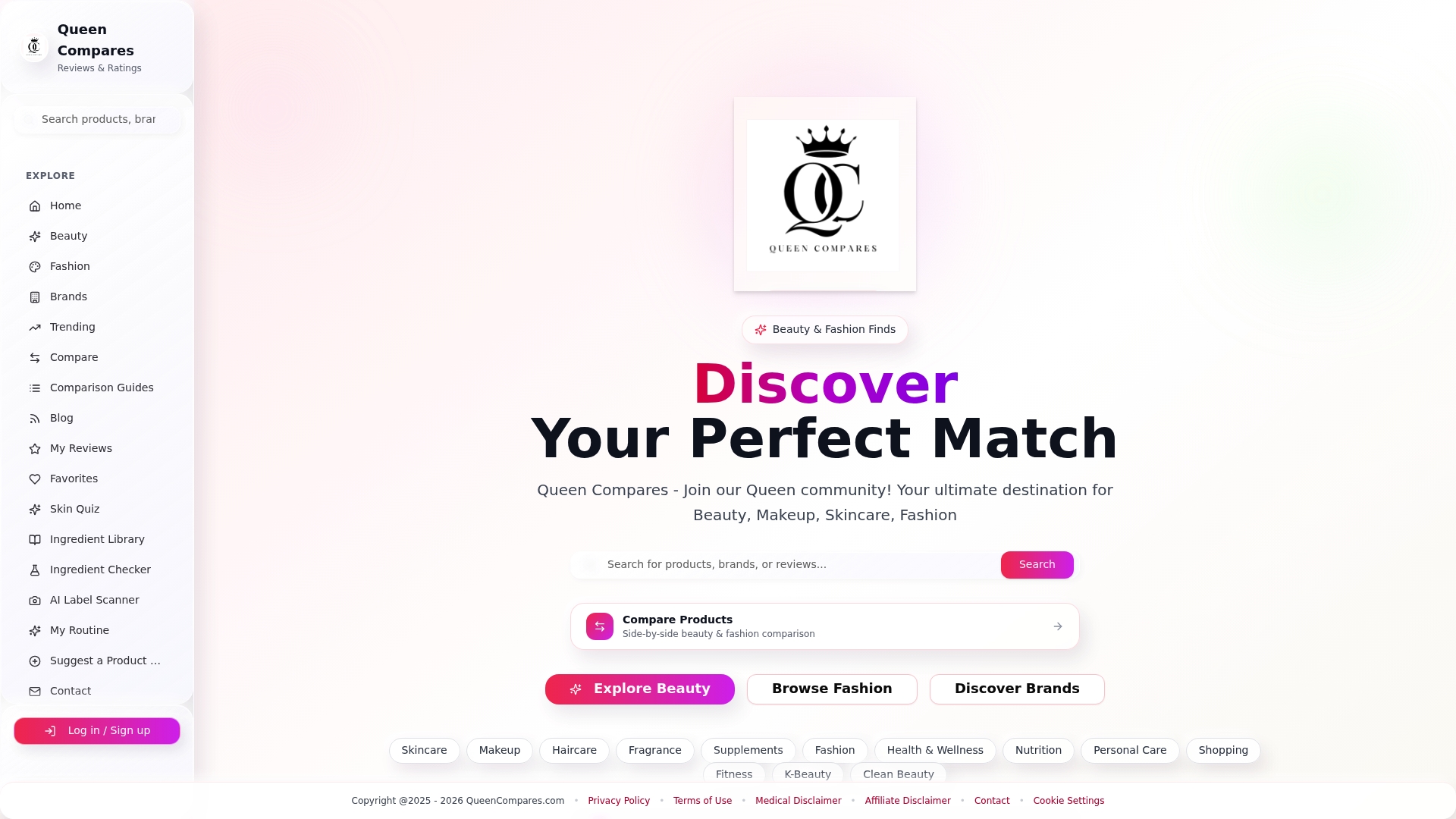
The Ingredient Library lets you go deeper on any flagged ingredient, with full function descriptions, concentration norms, and known interactions. You can also set personal sensitivity alerts so the tool flags only what matters to your skin. Browse products by brand, compare formulas side by side, and read community reviews from shoppers with similar skin concerns. The Queen community is here to help you shop with confidence, not guesswork.
FAQ
What is an ingredient checker?
An ingredient checker is a digital tool that analyzes a product’s ingredient list and assigns safety ratings based on regulatory and scientific data from bodies like the FDA, EFSA, and WHO. It translates complex chemical names into plain-language explanations so shoppers can make informed decisions.
How accurate are ingredient scanner results?
Accuracy depends on the input method. Text-input analysis is the most reliable, while photo-based OCR scanning can produce errors on curved or poorly lit labels. Always verify critical allergen flags manually rather than relying solely on a scan result.
Can an ingredient checker replace a dermatologist?
No. Ingredient checkers are diagnostic aids that help you identify potential concerns, but they do not account for your full medical history or skin condition. For serious sensitivities or allergic reactions, consult a dermatologist directly.
Why do ingredients have such complicated chemical names?
Cosmetic ingredients follow INCI (International Nomenclature of Cosmetic Ingredients) naming conventions, which use standardized scientific names regardless of how a brand markets the ingredient. “Ascorbic Acid” is Vitamin C. “Tocopherol” is Vitamin E. AI ingredient decoders exist specifically to close this gap between the label and the shopper.
What is a comedogenicity checker?
A comedogenicity checker is a specialized ingredient analysis tool that scans a product’s formula for ingredients known to clog pores. It is designed specifically for acne-prone shoppers who need to screen products before adding them to their routine.