TL;DR:
- PDRN is a DNA-based ingredient derived from salmon sperm that promotes skin repair and reduces inflammation. It activates skin cell receptors to stimulate collagen production, angiogenesis, and DNA repair, with strong evidence supporting wound healing and anti-aging benefits. Delivery methods like microneedling or injections affect its efficacy, and product quality relies on formulation and transparency.
PDRN, short for polydeoxyribonucleotide, is a purified mixture of DNA fragments most commonly derived from salmon sperm, used in dermatology for its ability to repair damaged skin, reduce inflammation, and stimulate collagen production. Approved by the Italian Medicines Agency for wound healing applications, PDRN has moved steadily from clinical medicine into mainstream skincare. Its mechanism centers on activating adenosine A2A receptors on skin cells, which triggers a cascade of regenerative effects. If you are researching skin rejuvenation options backed by real science, this ingredient deserves a close look.
How does PDRN work at the cellular level to benefit skin?
PDRN acts as a prodrug, releasing nucleotides that bind directly to adenosine A2A receptors on fibroblasts and endothelial cells. This binding triggers fibroblast proliferation, collagen synthesis, and new blood vessel formation. The result is accelerated tissue repair at the cellular level.
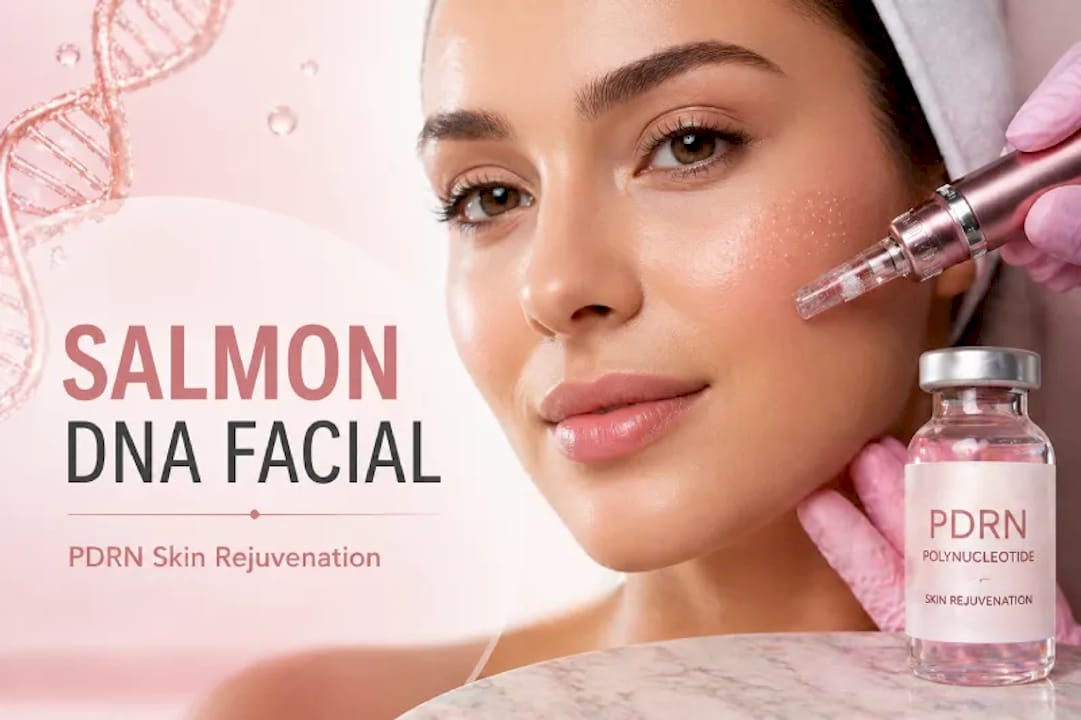
The molecular weight of PDRN matters significantly. Binding to A2A receptors requires molecules sized between 50 and 1,500 kDa. Fragments outside that range simply do not activate the pathway, which is why product quality and molecular specificity are non-negotiable.
PDRN also feeds what biochemists call the salvage pathway. Damaged skin cells need nucleotides to rebuild DNA and resume normal function. PDRN supplies those raw materials directly, speeding up repair in cells that are too stressed to synthesize nucleotides from scratch.
The anti-inflammatory effect is equally important. In vitro studies confirm that A2A receptor activation downregulates pro-inflammatory cytokines including NF-kB, TNF-α, and IL-6, while upregulating the anti-inflammatory cytokine IL-10. For people dealing with post-procedure redness or chronic skin sensitivity, that dual action is a meaningful advantage.
Pro Tip: PDRN and polynucleotides (PN) are related but distinct. PDRN delivers more targeted repair and anti-inflammatory effects, while PN provides longer-lasting structural collagen support. Knowing the difference helps you ask better questions when evaluating products or treatments.
-
Activates adenosine A2A receptors on fibroblasts and endothelial cells
-
Supplies nucleotides via the salvage pathway for DNA repair in damaged cells
-
Stimulates collagen and elastin production through fibroblast proliferation
-
Promotes angiogenesis, improving blood supply to healing tissue
-
Reduces pro-inflammatory cytokines while increasing IL-10
What are the scientifically supported skin benefits of PDRN?
The evidence for PDRN is not uniform across all claimed benefits. Wound healing and tissue regeneration carry the strongest clinical support. A 2021 randomized controlled trial showed topical PDRN significantly accelerated wound closure, with measurable increases in collagen deposition and angiogenesis in animal models. That level of evidence places wound healing in a different category from many other skincare ingredient claims.
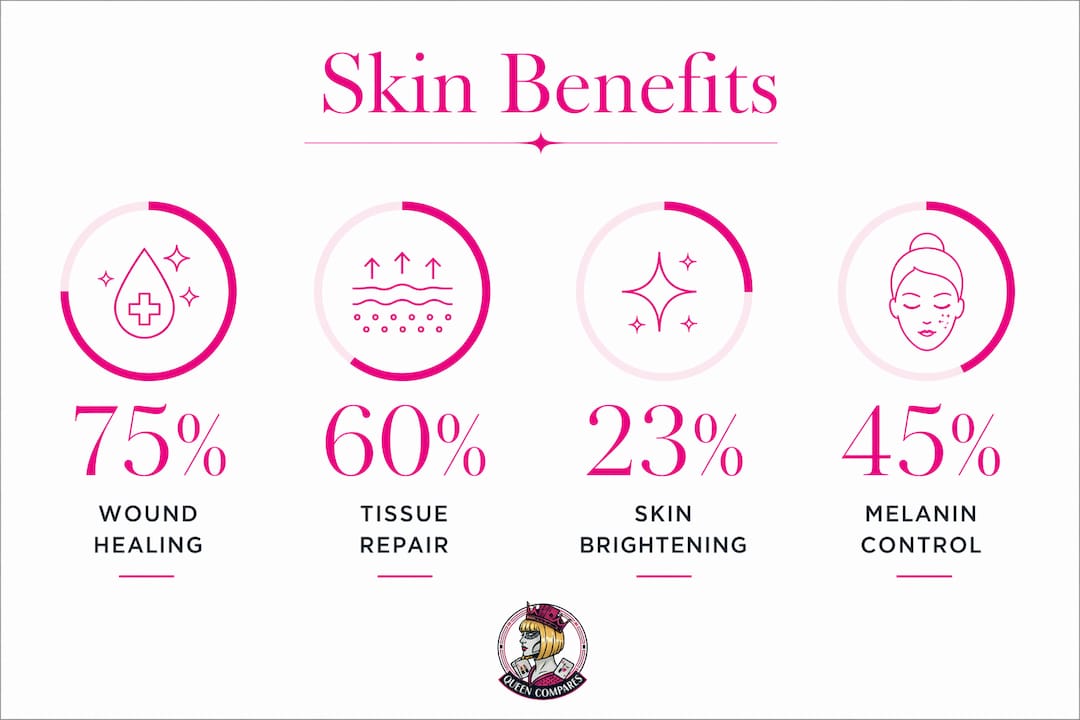
Anti-aging results are well-documented too. Clinical data shows PDRN improves skin elasticity by +18.3% and reduces wrinkle depth by 12.1%, outperforming hyaluronic acid in a head-to-head study. Patient satisfaction scored 4.2 out of 5 for PDRN versus 3.6 out of 5 for hyaluronic acid. Those numbers reflect a real and noticeable difference in outcomes.
Skin barrier repair is another area with solid data. PDRN reduces transepidermal water loss by up to 28% over four weeks, with barrier recovery improving by 17% at two weeks and reaching 28% at four weeks. For people with dry or compromised skin, that trajectory matters.
“Clinical results of PDRN treatments are typically gradual and natural-looking rather than immediate. Consistent application over weeks is what produces the measurable improvements seen in clinical studies, not a single session.”
Brightening and melanin regulation represent the most emerging area of research. In vitro studies show approximately 23% melanin reduction in B16 melanoma cells. That is a promising signal, but it has not yet been confirmed in large-scale human trials.
| Benefit | Evidence Level | Key Data |
|---|---|---|
| Wound healing and tissue repair | Strong (RCT) | Accelerated closure, increased collagen deposition |
| Anti-aging (elasticity, wrinkles) | Strong (clinical) | +18.3% elasticity, 12.1% wrinkle depth reduction |
| Skin barrier and hydration | Moderate to strong | 28% reduction in transepidermal water loss at 4 weeks |
| Anti-inflammatory effects | Moderate (in vitro) | Downregulation of NF-kB, TNF-α, IL-6 |
| Melanin regulation and brightening | Emerging (in vitro) | ~23% melanin reduction in cell models |
How is PDRN delivered in skincare and clinical treatments?
Delivery method determines how much of PDRN’s benefit you actually receive. The three main approaches differ in efficacy, cost, and regulatory status, so understanding each one helps you make a better decision.
-
Topical application with microneedling. This is the most accessible method for people in the United States. PDRN is not FDA-cleared for injectable aesthetic use in the U.S., so topical serums applied during microneedling sessions represent the regulatory-compliant path. Microneedling creates micro-channels in the skin that allow PDRN to penetrate past the surface barrier, which it cannot do effectively on its own.
-
Mesotherapy-style microinjections. These are the standard in South Korea, the UK, and Southeast Asia, where injectable PDRN products carry regulatory approval. Injections deliver PDRN directly to the dermis, bypassing the penetration problem entirely. Results tend to be faster and more pronounced compared to topical methods.
-
Adjunctive use with energy-based devices. Radiofrequency microneedling combined with PDRN is a growing clinical protocol. The thermal energy from RF devices enhances collagen remodeling, and PDRN supports the repair process simultaneously. This combination is typically offered in medical aesthetic clinics.
-
Standalone topical products. Serums, creams, and sheet masks containing PDRN are widely available for at-home use. Their effectiveness depends heavily on formulation quality, particularly how the brand addresses the penetration challenge.
-
Combination injectable protocols. In markets where injections are approved, PDRN is often combined with hyaluronic acid. PDRN combined with 1 mg/ml hyaluronic acid can increase its activity by up to 20%, making combination protocols the preferred approach in clinical settings.
Safety across all delivery methods is generally favorable. PDRN’s biocompatibility with human tissue is high due to its DNA-based structure, and adverse reactions are uncommon when products are properly formulated and sourced.
What should consumers know about PDRN skincare products?
The biggest challenge with topical PDRN is molecular size. The 500 Dalton rule in dermatology states that molecules larger than 500 Da struggle to penetrate intact skin. PDRN fragments are significantly larger than that threshold. This means a serum that simply lists PDRN on the label may deliver little to no active ingredient to the dermis without a delivery technology to help it along.
Liposomal encapsulation is the most common solution. Liposomes are tiny fat-based spheres that carry PDRN through the skin barrier more effectively than the raw molecule alone. When evaluating products, look for brands that explicitly mention delivery technology in their formulation details. Vague ingredient lists are a red flag.
-
Stability concerns. PDRN is temperature-sensitive and degrades faster than many synthetic actives. Products stored in clear packaging or exposed to heat lose potency quickly. Opaque, airtight packaging and refrigeration recommendations are signs of a brand that takes formulation seriously.
-
Synergistic ingredients. Hyaluronic acid and niacinamide pair well with PDRN. Hyaluronic acid enhances hydration alongside PDRN’s barrier repair effects, while niacinamide complements the brightening and anti-inflammatory actions.
-
Product transparency. Authentic PDRN products should disclose the source (salmon or trout), molecular weight range, and concentration. Brands that skip these details are harder to evaluate for quality.
-
Ingredient placement on the label. PDRN listed near the bottom of an ingredient list likely appears in a concentration too low to produce meaningful results. Prioritize products where it appears in the top half.
Pro Tip: Use QueenCompares’ Ingredient Checker to verify whether a product’s PDRN concentration and formulation details hold up to scrutiny before you buy. It takes seconds and saves you from wasting money on underdosed products.
Checking skincare ingredient guides can also help you understand how PDRN fits alongside other actives in your routine. Pairing it with harsh exfoliants or high-concentration acids in the same step can compromise its stability and reduce its effectiveness.
Key Takeaways
PDRN delivers its strongest, most clinically supported results in wound healing, skin barrier repair, and anti-aging applications, with gradual outcomes that reward consistent use over weeks rather than days.
| Point | Details |
|---|---|
| Mechanism of action | PDRN activates A2A receptors on skin cells, triggering collagen production and reducing inflammation. |
| Strongest evidence | Wound healing and tissue regeneration carry the most robust clinical support, including RCT data. |
| Anti-aging results | Clinical studies show +18.3% elasticity improvement and 12.1% wrinkle depth reduction versus hyaluronic acid. |
| Delivery method matters | In the U.S., topical PDRN with microneedling is the regulatory-compliant path; injections are standard in South Korea and the UK. |
| Product quality check | Look for liposomal delivery technology, opaque packaging, and disclosed molecular weight to confirm product authenticity. |
What I’ve learned from watching PDRN move from clinic to shelf
By Magdalena Kapuscinska
The speed at which PDRN moved from wound care medicine to beauty shelves has outpaced consumer education by a wide margin. Most people buying PDRN serums today have no idea that the molecule is too large to penetrate skin without help. That gap between marketing and formulation reality is where most of the disappointment happens.
What I find genuinely exciting about PDRN is not the hype. It is the mechanism. An ingredient that feeds the salvage pathway and activates A2A receptors is doing something fundamentally different from a peptide or a retinoid. It is working at the level of cellular energy and DNA repair, not just signaling. That specificity is rare in skincare.
My honest recommendation: treat PDRN as a repair and maintenance ingredient, not a quick fix. The gradual, natural-looking results documented in clinical studies are a feature, not a flaw. Skin that rebuilds itself properly looks better longer than skin that has been temporarily plumped. Pair it with a skin barrier-focused routine and give it at least four weeks before drawing conclusions.
The regulatory picture in the U.S. also deserves more attention than it gets. Injectable PDRN is not FDA-cleared for aesthetic use here, which means anyone offering PDRN injections in an American clinic is operating in a gray area. That does not mean topical PDRN is ineffective. It means you should ask hard questions about delivery method and formulation before spending money on a treatment.
— Magdalena Kapuscinska - Queencompares.com Founder
QueenCompares makes finding quality PDRN products easier
Sorting through PDRN products on your own is time-consuming. Labels are inconsistent, concentrations are rarely disclosed, and marketing language often obscures what is actually in the bottle.

QueenCompares gives you a faster path to the right product. The platform lets you compare PDRN skincare products side by side, check ingredient safety ratings, and read community reviews from people who have actually used them. The Label Scanner breaks down product formulas so you can see exactly where PDRN sits in the ingredient list and whether the formulation makes sense. Our community of beauty enthusiasts is already comparing and reviewing PDRN brands, so you do not have to start from zero.
FAQ
What is PDRN made from?
PDRN is a purified mixture of DNA fragments most commonly extracted from salmon sperm or trout testes. The salmon-derived version is the most widely used in both clinical and cosmetic applications due to its high biocompatibility with human tissue.
How long does it take to see results from PDRN treatment?
Results are typically gradual, with measurable improvements appearing over four to eight weeks of consistent use or treatment. Clinical studies show barrier recovery improving at two weeks and reaching peak improvement around four weeks.
Is PDRN safe for sensitive skin?
PDRN has a favorable safety profile and is well-tolerated by most skin types, including sensitive skin. Its anti-inflammatory mechanism, which downregulates TNF-α and IL-6, makes it particularly suitable for reactive or post-procedure skin.
Can you use PDRN with other skincare actives?
Yes. PDRN pairs well with hyaluronic acid and niacinamide. Combining PDRN with 1 mg/ml hyaluronic acid has been shown to increase its activity by up to 20%. Avoid layering it directly with high-concentration acids in the same step, as this can affect its stability.
Is PDRN the same as PRP?
No. PDRN and PRP (platelet-rich plasma) are different treatments. PRP uses growth factors from your own blood to stimulate repair, while PDRN is a synthetic or purified DNA-based compound that activates A2A receptors directly. Both support skin regeneration but through distinct biological pathways.