Retinol works: it reliably improves acne, fine lines, and rough texture when you use it correctly, and the clinical evidence behind it is genuinely strong. But weighing the pros and cons of retinol also means facing the flip side. It can irritate skin, it raises sun sensitivity, and it’s off the table if you’re pregnant. Our suggestion? Start slow, wear SPF every single day, and check with a dermatologist first if you’re pregnant, breastfeeding, or prone to reacting to everything you try.
What’s more, we also feature the Retinol codex characteristics in our Ingredient Library, providing comprehensive details such as safety ratings, comedogenic and irritancy scores, cosmetic functions, and a list of products that contain each ingredient. For example, you can learn about how retinol is highly effective for reducing wrinkles and improving skin texture, but also understand its potential for irritation in sensitive skin types. Our library includes ratings based on scientific studies and user reviews, helping you make informed choices. Additionally, we highlight products like serums, creams, and oils that feature retinol, along with their concentration levels and recommended usage tips, so you can select the best option tailored to your skincare needs.
TL;DR:
Retinol conversion to active retinoic acid triggers skin renewal, collagen production, and pigmentation normalization, offering real anti-aging and acne benefits within months.
Starting with low concentrations, using a gradual increase in frequency, and applying SPF 30+ daily are essential to minimize irritation and photosensitivity.
People with dark skin, reactive skin, or pregnant conditions should exercise caution or avoid retinol due to higher hyperpigmentation risk and safety concerns.
Alternatives like bakuchiol or retinaldehyde provide milder options for sensitive or pregnant skin, while prescription retinoids are reserved for severe cases under medical supervision.
Checking ingredient concentration and stability is crucial to ensure product efficacy, using tools like ingredient checkers before making a purchase.
Table of Contents
-
The Downsides: Irritation, Sun Sensitivity, and Who Should Skip It
-
Retinol Alternatives: Bakuchiol, Retinaldehyde, and Prescription Options
Pros and Cons of Retinol: How It Actually Works on Skin
Retinol is a vitamin A derivative, and your skin has to convert it before it can do anything useful. Once applied, retinol converts to retinaldehyde, then to retinoic acid, the active form that actually binds to skin cell receptors. This is the same active ingredient family found in prescription treatments, just weaker and slower to convert, which is exactly why OTC retinol is gentler and prescription retinoids hit harder and faster.
That conversion process is where both the benefits and the irritation come from. Once retinoic acid is active in the skin, it triggers a handful of changes at once:
-
Speeds up keratinocyte turnover, so dead skin cells shed faster and pores look less clogged
-
Stimulates fibroblasts to produce more collagen, which is what softens fine lines over time
-
Disrupts abnormal pigment production, fading dark spots and uneven tone gradually
-
Normalizes oil gland activity, which is part of why it helps acne beyond just exfoliating
Prescription retinoids like tretinoin skip a conversion step, going almost straight to retinoic acid. That’s why they work faster and stronger, and also why they tend to cause more irritation out of the gate. Retinol takes the scenic route, which is gentler on skin but means you’re playing a longer game.
The Benefits of Retinol, Backed by Real Studies
Here’s the good news, and it’s backed by more than just marketing claims. Clinical research on retinol’s anti-aging properties shows visible wrinkle improvement starting around 8 weeks of consistent use, with the fuller payoff, smoother texture, fainter dark spots, and firmer-looking skin showing up between 3 and 12 months.
Most people see meaningful improvement in fine lines within a few months, but bigger gains build over longer periods of steady use.
For acne, retinol earns its reputation by keeping pores clear before breakouts even start, rather than just treating them after the fact. It also plays a real role in three other areas skincare fans care about:
-
Fine lines and wrinkles: collagen stimulation smooths texture gradually, with Harvard Health confirming that consistent 3 to 12 month use delivers the best results
-
Hyperpigmentation: concentrations around 0.3% to 0.5% help even out dark spots and sun damage over time
-
Acne and pore congestion: faster cell turnover keeps follicles from clogging in the first place, reducing new breakouts
Worth knowing: prescription retinoids work faster and stronger than OTC retinol for severe acne or advanced photoaging. If your concerns are more moderate, retinol gets you real results without a prescription, just on a slower timeline.
The Downsides: Irritation, Sun Sensitivity, and Who Should Skip It
Retinol’s biggest drawback is also its most predictable one: irritation. Dryness, redness, flaking, and stinging are common in the first two to six weeks, especially if you go in at full strength on night one. Cleveland Clinic notes that gradual titration and consistent moisturizing cut down on these reactions significantly, which is really the whole game when it comes to using retinol without hating your skin for a month.
Some people also go through what’s sometimes called a “purge,” a temporary flare of breakouts as cell turnover speeds up. It’s frustrating, but research on retinol’s mechanisms frames it as a short, expected phase rather than a sign the product isn’t working.
The other non-negotiable: sun sensitivity. Retinol thins the outer skin layer slightly while it works, which makes UV damage easier to sustain. Clinical guidance from Ohio State Health & Discovery recommends SPF 30 or higher every single day you use it, reapplied every two hours if you’re outdoors.
A few groups need extra caution; for more details on who should avoid certain skin treatments, consult red light therapy contraindications.
-
Pregnant or trying to conceive: retinoids are contraindicated due to birth defect risk, and breastfeeding data is too limited to call it safe
-
Darker skin tones (Fitzpatrick V to VI): research on retinoid use in skin of color points to a higher risk of post-inflammatory hyperpigmentation, meaning irritation itself can leave dark marks behind
-
Reactive or compromised skin barriers: rosacea, eczema, or recent procedures all raise your irritation risk substantially
Pro Tip: If you have deeper skin tone, choose a stable, well-formulated retinol and introduce it slower than the label suggests, twice a week for the first month is a reasonable pace. Preventing irritation matters more than preventing dark spots after the fact.
How to Start Retinol Without Wrecking Your Skin Barrier
Getting retinol right comes down to patience more than product choice. Here’s a starter protocol that actually works for most skin types.
-
Pick a low concentration first. Start around 0.025% to 0.1% rather than jumping to 0.3% or 0.5%, even if a stronger product is sitting in your cart.
-
Apply two to three nights a week, not nightly. Give your skin recovery days between applications for at least the first month.
-
Use the sandwich method if you’re sensitive. Moisturizer first, then retinol, then another layer of moisturizer on top, or apply retinol to slightly damp skin to buffer the strength.
-
Wait 20 to 30 minutes after cleansing. Applying retinol to completely dry skin reduces the sting.
-
Keep vitamin C and exfoliating acids on separate nights. Combining actives multiplies irritation risk without multiplying results.
-
Increase frequency gradually. Once your skin tolerates every-other-night use with no flaking, move toward nightly application over several weeks.
-
Wear SPF 30+ every morning, no exceptions. This is the step people skip and regret most.
Pro Tip: Dermatologists at Cleveland Clinic point to alternate-night dosing as the single most effective way to prevent people from quitting retinol altogether. Most dropout happens in week two, right when frequency ramps up too fast.
If redness, burning, or peeling doesn’t calm down after a few weeks of conservative use, or if you notice dark marks forming, that’s your cue to stop and talk to a dermatologist rather than pushing through. For a broader framework on layering actives without conflict, building a safe skincare routine covers sequencing day and night products in more depth.
Retinol Alternatives: Bakuchiol, Retinaldehyde, and Prescription Options
Not everyone should stick with retinol, and that’s fine. Three real alternatives exist depending on what you need.
-
Bakuchiol is a plant-derived option that a 2019 trial found produced comparable anti-aging results to retinol with fewer adverse effects, making it a solid pick for reactive or pregnant skin (though always confirm with your doctor first).
-
Retinaldehyde sits one conversion step closer to active retinoic acid than retinol, so it’s more potent while remaining milder than tretinoin, a middle ground for people who’ve built up some tolerance.
-
Prescription retinoids like tretinoin belong in the conversation for severe acne or significant photoaging, but only under a dermatologist’s supervision given the stronger irritation profile.
Formulation stability matters here too. A lower concentration in a well-stabilized formula often outperforms a higher concentration that breaks down before it reaches your skin.
What to Check on a Retinol Label Before You Buy
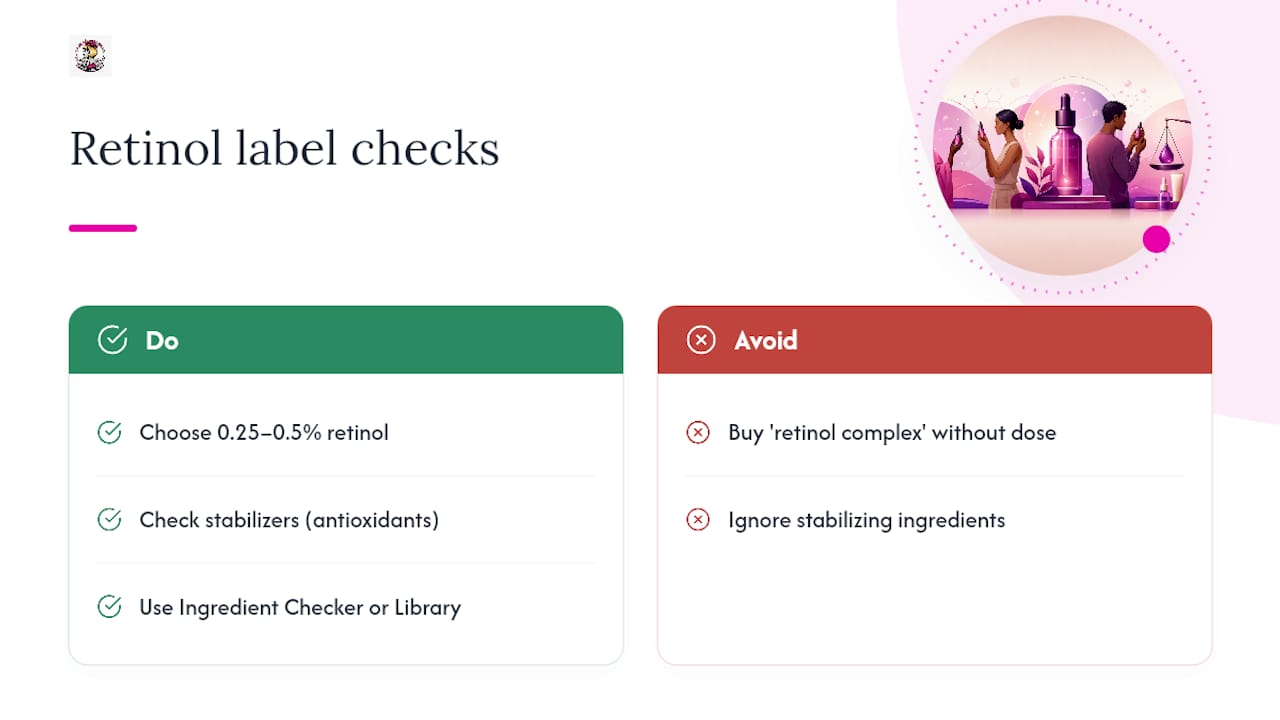
Concentration should be listed clearly, look for 0.25% to 0.5% ranges rather than vague “retinol complex” language that hides the actual dose. Stabilizing ingredients (like antioxidants) matter as much as the number itself. QueenCompares’s Ingredient Checker and Ingredient Library help you confirm both before spending a dime.
When Retinol Makes Sense, and When It Doesn’t
Retinol is a good choice if you want to treat normal aging signs or mild acne. Start slowly and carefully. Do not use it if you are pregnant, have very sensitive skin, or have stubborn dark spots. Talk to a dermatologist if you are unsure.
Compare Retinol Products Before You Commit
There are other ways to vet a retinol product: reading reviews, asking a dermatologist, or trusting whatever influencer sold you on it. None of those tell you what’s actually in the bottle. QueenCompares gives you a faster, clearer route: check the formula first, then decide.
Our AI Label Scanner scans a product’s label and flags potential irritants alongside the actual active concentration, so you’re not guessing whether that “0.5% retinol” claim holds up. Alternatively, you can use Ingredient Checker and paste full ingredient list from the Retinol product.
Pair it with the Ingredient Library to understand what stabilizers and supporting actives should be doing in the formula. We placed retinol in our Hero Ingredients in the Ingredient Library. Thanks to that our curated index of Retinol ingredients from our cosmetic glossary — put more light about Retinol and similar ingredients and alternatives to Retino, including safety ratings, comedogenic and irritancy scores, cosmetic functions, and the products that contain each one.
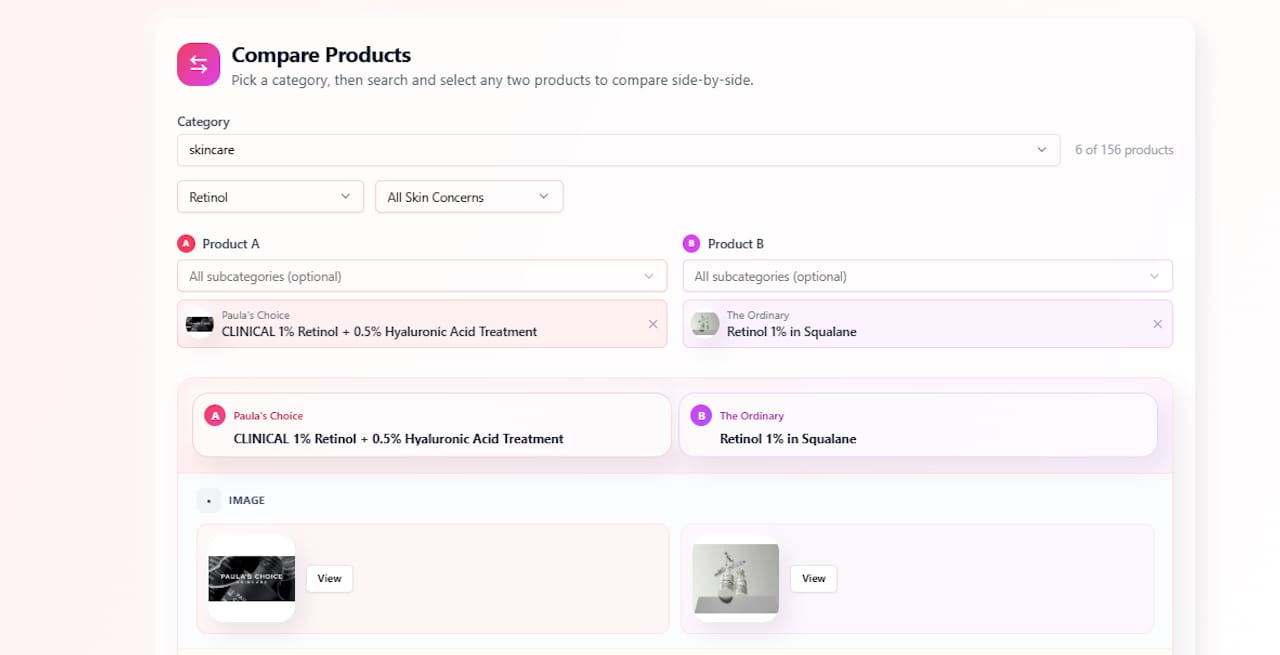
and browse the Product comparison page to see how different retinol products stack up side by side before you add anything to your cart. If your favorite brand isn’t listed yet, you can suggest a product for the community to review next.
This article is general information, not a substitute for advice from a qualified doctor. Consult a qualified healthcare professional about your own circumstances before acting on anything here.
Sources
FAQ
What Is the Downside to Retinol?
The main downsides are irritation (dryness, redness, peeling) in the first few weeks and increased sun sensitivity, which makes daily SPF non-negotiable. Darker skin tones also face a higher risk of post-inflammatory hyperpigmentation if irritation isn’t managed carefully.
What Do Koreans Use Instead of Retinol?
Many Korean skincare routines favor gentler exfoliating and brightening actives alongside or instead of retinol, plus barrier-focused hydration, though retinol and its derivatives still appear in many K-beauty anti-aging products.
At What Age Should You Start Retinol?
There’s no universal starting age, but many dermatologists suggest the mid to late 20s for preventive anti-aging use, or earlier if acne is the primary concern and other treatments haven’t worked.
Do Dermatologists Recommend Retinol?
Yes, retinol is widely recommended by dermatologists for acne, fine lines, and hyperpigmentation, provided it’s introduced gradually with proper sun protection. For severe concerns, they often recommend prescription retinoids instead.