A dermatologist-backed skincare routine for rosacea follows three non-negotiable pillars: gentle cleansing, barrier-repair moisturization, and daily photoprotection. In the morning, that means a soap-free cleanser with lukewarm water, any prescribed topical, a ceramide-rich moisturizer applied while skin is still slightly damp, then a mineral broad-spectrum SPF 30+. At night, repeat the cleanse, apply your evening prescription if scheduled, and moisturize again. That’s it. Most people with rosacea see fewer flares and noticeably calmer skin within several weeks of sticking to this consistently.
Start here today:
-
Switch to a fragrance-free, soap-free cleanser if you haven’t already
-
Apply moisturizer while your skin is still slightly damp after cleansing
-
Add a mineral sunscreen (zinc oxide or titanium dioxide) every single morning, year-round
-
Look for the National Rosacea Society Seal of Acceptance when shopping for new products
-
Book a dermatologist appointment if you have eye symptoms, visible thickening of skin, or rapid worsening
Skin comfort and reduced flushing often appear within a few weeks of consistent CMP. Meaningful changes in persistent redness or visible vessels typically require prescription or procedural treatment on top of your home routine.
Key Takeaways
A consistent three-step CMP routine (cleansing, moisturization, photoprotection) is the clinical foundation for managing rosacea at home, with most people seeing fewer flares within 4–8 weeks of daily practice.
| Point | Details |
|---|---|
| Follow the CMP framework | Gentle cleanser, barrier-repair moisturizer, and mineral SPF 30+ every day form the non-negotiable base. |
| Avoid key irritants | Fragrance, alcohol denat., witch hazel, menthol, and SLS are the most common product-related triggers to cut first. |
| Patch-test every new product | Apply to your jawline or behind your ear and wait 72 hours before full-face use to catch delayed reactions. |
| See a dermatologist for red flags | Eye symptoms, skin thickening, visible vessels, or rapid worsening need clinical evaluation, not more OTC products. |
| Use QueenCompares to check ingredients | The Ingredient Checker and Ingredient Library help you flag rosacea irritants before a product reaches your face. |
Table of Contents
-
What does a safe skincare routine for rosacea look like daily?
-
How do you choose the right products for rosacea-prone skin?
-
How should you apply and layer products to avoid irritation?
-
How do you introduce new products safely and when will you see results?
-
How should your nighttime routine differ from your morning routine?
-
QueenCompares makes finding rosacea-safe products much faster
What does a safe skincare routine for rosacea look like daily?
The goal is a short, repeatable routine that protects your barrier without triggering inflammation. Fewer steps, gentler products, and consistent timing matter more than any single hero ingredient.
Your AM routine (step by step)
-
Cleanse with lukewarm water and a soap-free syndet cleanser. Use only your fingertips. Rinse thoroughly, then pat (never rub) dry with a clean, soft cloth.
-
Apply prescription topical (if prescribed for morning use) to clean, dry skin. Wait 60–90 seconds before the next step.
-
Moisturize while skin is still slightly damp. Press the product in gently with your palms.
-
Apply mineral sunscreen (SPF 30+ with zinc oxide or titanium dioxide) as the final step. Reapply every two hours if you’re outdoors.
Your PM routine (step by step)
-
Cleanse again with the same gentle cleanser. Double-cleansing is unnecessary for most rosacea skin types.
-
Apply prescription topical if your dermatologist has scheduled it for evening use.
-
Moisturize generously. Evening is the best time to use a slightly richer barrier-repair formula if your skin tolerates it.
A few firm dos and don’ts:
-
Do cleanse twice daily, morning and night
-
Do moisturize 2–3 times daily when skin is particularly reactive, applying right after showering
-
Do use lukewarm water only; hot water causes immediate vascular dilation and flushing
-
Don’t scrub, use washcloths, or apply cleansing brushes; mechanical friction worsens inflammation
-
Don’t skip sunscreen on cloudy days or in winter — UV triggers rosacea regardless of season
How do you choose the right products for rosacea-prone skin?
Product selection is where most people with rosacea run into trouble. The label “hypoallergenic” is not regulated by the FDA, so it tells you almost nothing. “Fragrance-free” and “for sensitive skin” are more meaningful, and the National Rosacea Society Seal of Acceptance is the most reliable independent signal that a product has been reviewed for rosacea compatibility.
Ingredients to avoid
-
Fragrance (listed as “parfum” or “fragrance”) and essential oils
-
Alcohol denat. (denatured alcohol) and witch hazel
-
Menthol, eucalyptus, and peppermint
-
Sodium lauryl sulfate (SLS)
-
Strong AHAs and BHAs at high concentrations
-
Unbuffered retinoids (start low and slow if a dermatologist recommends retinoids)
-
Certain chemical UV filters (oxybenzone, avobenzone) if they cause stinging
Ingredients to look for
-
Ceramides — restore the lipid barrier that rosacea compromises
-
Glycerin and hyaluronic acid — humectants that draw moisture without irritating
-
Niacinamide — reduces redness and strengthens barrier function
-
Azelaic acid — anti-inflammatory and mildly brightening; useful for both rosacea redness and any associated dark spots
-
Zinc oxide and titanium dioxide — mineral UV filters that sit on the skin rather than absorbing into it, making them the go-to for sensitive skin
-
Green tea extract (EGCG) — antioxidant with mild anti-inflammatory properties
The Journal of Cosmetic Dermatology consensus review specifically recommends soap-free syndet cleansers and moisturizers containing humectants and ceramides as the evidence-backed standard for sensitive skin conditions including rosacea.
| Category | Purpose | Recommended ingredient types | Frequency/tips |
|---|---|---|---|
| Cleansers | Remove debris without stripping barrier | Soap-free syndets, glycerin, gentle surfactants | Twice daily, lukewarm water, fingertips only |
| Moisturizers | Repair barrier, reduce stinging and flares | Ceramides, glycerin, hyaluronic acid, niacinamide | 2–3 times daily; apply to damp skin |
| Sunscreens | Block UV triggers year-round | Zinc oxide, titanium dioxide (mineral/physical) | Every morning; reapply every 2 hours outdoors |
Pro Tip: Before buying any new product, run the ingredient list through an ingredient-check tool and patch-test on your jawline or behind your ear for 24–72 hours. The National Rosacea Society recommends this as the most reliable at-home method for catching delayed reactions.
How should you apply and layer products to avoid irritation?
Order and technique matter as much as the products themselves. Applying a heavy moisturizer before a lightweight serum, for example, blocks absorption and can trap irritants against the skin.
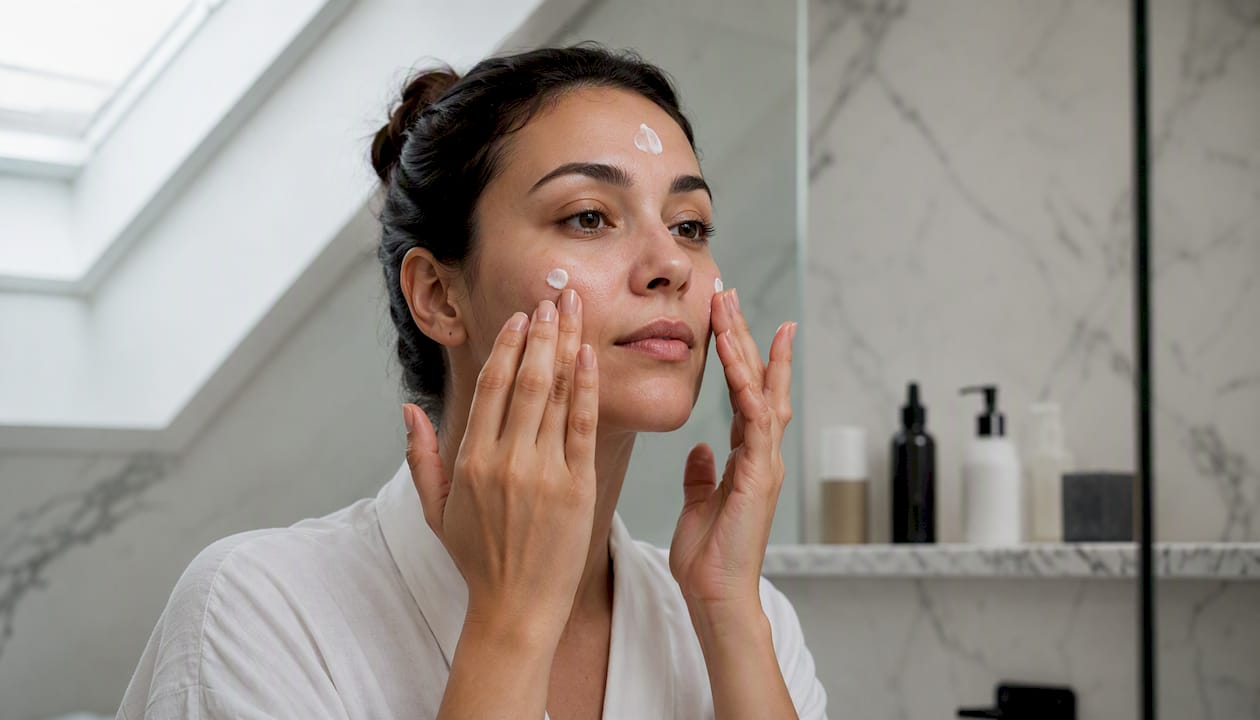
Layer thin to thick: lightweight serums or prescription topicals first, then moisturizer, then sunscreen as the final AM step.
Application technique rules:
-
Use only your fingertips — no brushes, sponges, or washcloths on active rosacea skin
-
Dispense product onto the back of your hand first, then warm it slightly between your fingers before pressing gently onto your face
-
Pat, never rub or drag; rubbing generates friction and heat, both of which trigger flushing
-
Pat skin dry after cleansing rather than wiping; a single gentle press with a clean towel is enough
-
Keep water temperature lukewarm throughout — hot water is a documented vascular trigger
Pro Tip: Apply prescription topicals to completely clean, dry skin and wait 60–90 seconds before layering moisturizer on top. This gives the active ingredient time to absorb and reduces the risk of diluting its concentration.
Pro Tip: Pre-measure your moisturizer dose (about a pea-sized amount per zone) so you’re not pressing the pump repeatedly against your face. Less contact means less friction and a more consistent application.
What triggers rosacea flares and how do you calm one fast?
Rosacea flares rarely come out of nowhere. UV exposure, heat, hot beverages, spicy food, alcohol, extreme cold, emotional stress, and certain skincare ingredients are the most commonly reported triggers. Identifying your personal pattern is more useful than memorizing a generic list.
Common triggers to track:
-
Sun exposure (the most universal trigger across all rosacea subtypes)
-
Heat sources: hot showers, saunas, hot drinks, spicy food
-
Alcohol, particularly red wine
-
Emotional stress and intense exercise
-
Fragranced or alcohol-based skincare products
-
Extreme cold and wind
What to do in the next 10 minutes during a flare
-
Move to a cool environment immediately
-
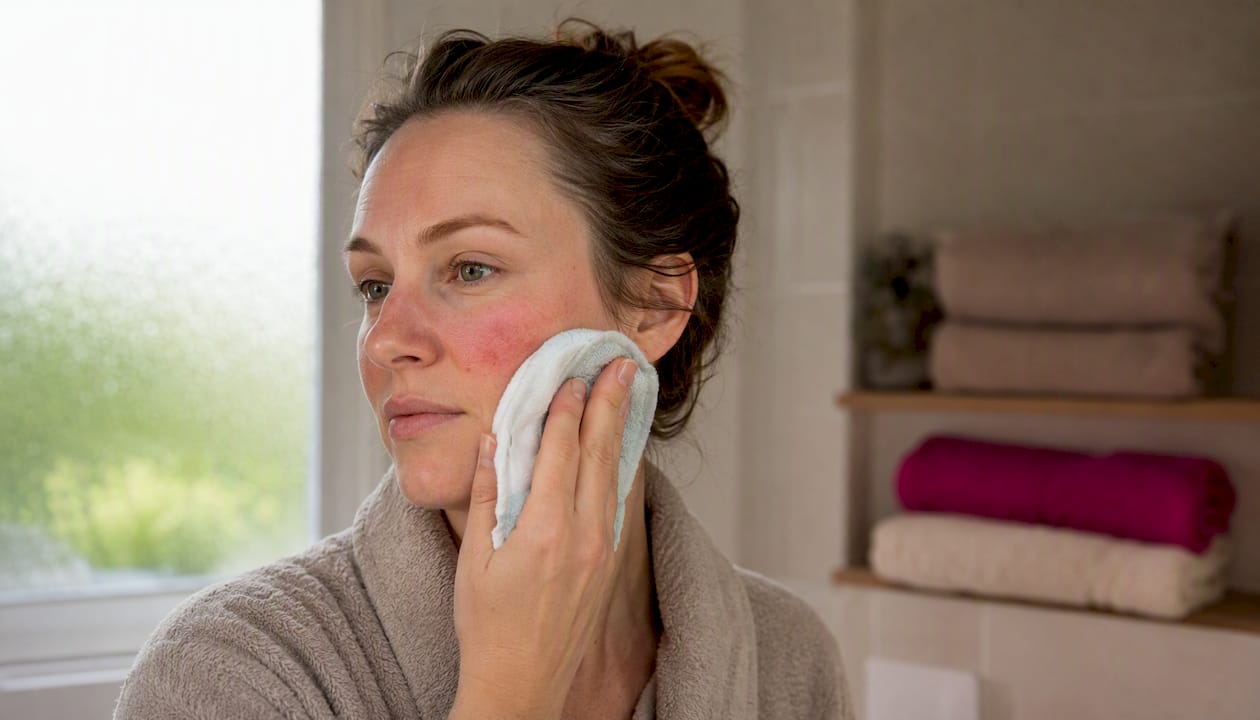
Apply a cool (not ice-cold) compress to the affected area for 5–10 minutes
-
Remove any product you applied in the last hour that might be the cause
-
Apply a thin layer of your barrier-repair moisturizer
-
Skip actives, exfoliants, and any new products until the flare settles
Red flags that need a dermatologist, not a compress: eye irritation, grittiness, or redness (ocular rosacea); visible thickening of the nose or chin (phymatous changes); sudden, rapid worsening of symptoms; or persistent visible blood vessels that don’t respond to any home care. These require clinical evaluation.
| Situation | Immediate action |
|---|---|
| Skin feels hot and flushed | Cool compress, move to cool room, skip actives |
| Stinging after applying a product | Rinse gently with lukewarm water, apply barrier moisturizer |
| Redness spreading or worsening | Stop all new products, contact dermatologist |
| Eye symptoms present | See a dermatologist or ophthalmologist promptly |
How do you introduce new products safely and when will you see results?
Rosacea skin reacts slowly and unpredictably. Introducing multiple products at once makes it impossible to identify what caused a reaction, and switching products every two weeks means you never give anything enough time to work.
Patch-test every new product before full-face use:
-
Apply a small amount to your jawline or behind one ear
-
Leave it on for the full intended wear time (don’t rinse early)
-
Check at 24 hours and again at 72 hours for redness, stinging, or bumps
-
If no reaction appears after 72 hours, introduce it to your full routine
-
Log the product name, date, and any reaction in a simple diary
Introduce one new product at a time and wait 2–4 weeks before adding another. This timeline gives your skin enough exposure to reveal delayed sensitization reactions, which are common with rosacea-prone skin. Prescription topicals follow a different timeline set by your dermatologist.
Realistic expectations:
-
Skin comfort, less stinging, and fewer flares: often noticeable within 4–8 weeks of consistent CMP
-
Reduction in background redness or visible vessels: typically requires prescription treatment and longer follow-up
-
Barrier improvement from moisturizers: daily moisturization reduces flares and symptoms like stinging and burning, with improvement building over weeks of consistent use
Cost orientation: Over-the-counter barrier products (cleansers, moisturizers, mineral sunscreens) are available across a wide price range, with many affordable options performing comparably. Dermatologist visits, prescription topicals, and in-office treatments may incur varying costs depending on individual circumstances.
When should you see a dermatologist about rosacea?
A consistent home routine handles a lot, but it has limits. Certain signs mean you need clinical evaluation rather than another product swap.
See a dermatologist if you notice:
-
Eye symptoms: redness, grittiness, light sensitivity, or blurred vision (ocular rosacea requires specialist care)
-
Skin thickening on the nose, chin, or forehead (phymatous rosacea)
-
Persistent visible blood vessels that don’t respond to trigger avoidance
-
Rapid or unexplained worsening of symptoms
-
Inflammatory papules or pustules that aren’t responding to OTC care
Common prescription and in-office options
Topical metronidazole, azelaic acid, and ivermectin are first-line prescription options for inflammatory rosacea. Alpha-adrenergic agonists (brimonidine, oxymetazoline) target persistent erythema by constricting blood vessels. Oral doxycycline at sub-antimicrobial doses is used for moderate inflammatory rosacea. In-office vascular laser and intense pulsed light (IPL) treatments address telangiectasia and persistent redness that topicals can’t reach.
Treatment is always matched to your rosacea subtype. What works for papulopustular rosacea differs significantly from what’s needed for erythematotelangiectatic or phymatous subtypes.
Bring to your dermatologist appointment: a list of every product currently in your routine (including sunscreen and makeup), a rosacea diary with trigger patterns and flare dates, and photos of your skin during a flare if possible. This information cuts diagnosis time and helps your dermatologist match treatment to your specific subtype.
What does clinical evidence say about the CMP routine?
The three-pillar approach of cleansing, moisturization, and photoprotection isn’t just conventional wisdom. It’s backed by clinical consensus from multiple professional bodies.
The Journal of Cosmetic Dermatology consensus review identifies CMP as core adjunctive measures for sensitive skin conditions including rosacea, recommending soap-free syndet cleansers and moisturizers with humectants and ceramides. The American Academy of Family Physicians’ review confirms that daily sunscreen, moisturizers, and mild cleansers are essential maintenance for rosacea, with mineral options (zinc oxide or titanium dioxide) at SPF 30+ specifically recommended. The American Academy of Dermatology’s patient guidance reinforces avoiding mechanical friction and temperature extremes. The National Rosacea Society adds the practical layer of product selection guidance and its Seal of Acceptance program.
What CMP can and can’t do:
-
CMP reduces flare frequency and severity, improves skin comfort, and supports the effectiveness of prescription treatments
-
CMP alone rarely eliminates persistent erythema or visible vessels; those typically need medical or procedural intervention
-
Consistent CMP improves patient quality of life when used alongside medical care, according to the clinical consensus review
The evidence strength for CMP is solid at the level of clinical consensus and multicenter observational data. It’s not a cure, but it’s the foundation every other treatment is built on.
What makeup tips actually work for rosacea-prone skin?
Makeup can either calm the appearance of rosacea or make it significantly worse, depending on what’s in the formula and how you apply it.
Stick to fragrance-free, mineral-based formulas whenever possible. Green-tinted color-correcting primers neutralize redness before foundation and reduce how much coverage you need overall, which means fewer layers and less potential irritation. Silicone-heavy formulas can feel occlusive and uncomfortable on reactive skin, so water-based or mineral foundations tend to work better.
Always patch-test new makeup on your jawline before applying it to your full face. This applies to setting powders, blushes, and primers too, not just foundation. Brushes and sponges create friction; clean fingertips or a damp, soft applicator are gentler options. Remove makeup with a micellar water or gentle oil cleanser that doesn’t require heavy rubbing. The AAD recommends avoiding physical scrubbing during any part of your routine, and makeup removal is no exception.
For a deeper look at layering makeup safely over skincare, the makeup layering guide on the QueenCompares blog walks through the correct order and technique step by step.
How should your nighttime routine differ from your morning routine?
The PM routine is your skin’s repair window, and it’s the right time to introduce any gentle actives your dermatologist has approved.
Azelaic acid is one of the most rosacea-compatible actives available. It reduces inflammatory papules, calms redness, and has a mild brightening effect on any post-inflammatory dark spots, making it useful for people managing both rosacea and hyperpigmentation concerns. Apply it after cleansing and before moisturizer, and start with every other night if your skin is reactive.
Retinoids are sometimes prescribed for rosacea, particularly the phymatous subtype, but they require a slow introduction. Start at a low concentration, apply sparingly, and always follow with a generous layer of barrier-repair moisturizer. Skip retinoids entirely during active flares and resume once skin has calmed.
The nighttime moisturizer can be slightly richer than your daytime formula since you don’t need to layer sunscreen over it. Look for the same ceramide and glycerin base, but a thicker texture is fine if your skin tolerates it. Skip any actives on nights when your skin feels particularly reactive, and return to basics: cleanse, moisturize, done.
How do diet and lifestyle affect rosacea symptoms?
Rosacea is a systemic inflammatory condition, and what happens inside your body shows up on your skin. Diet and lifestyle don’t replace topical care, but they’re meaningful levers.
Hot beverages are a well-documented trigger, and the mechanism is straightforward: the heat itself causes vascular dilation, not the caffeine. Switching to iced coffee or letting tea cool before drinking it can reduce flushing noticeably. Spicy foods, particularly those containing capsaicin, trigger the same vascular response. Alcohol, especially red wine, is one of the most commonly reported dietary triggers across rosacea subtypes.
Stress management deserves more attention than it usually gets in skincare discussions. Emotional stress activates the same neurogenic pathways that cause flushing, and chronic stress keeps baseline inflammation elevated. Regular moderate exercise is beneficial for overall health, but high-intensity workouts in hot environments can trigger flares. Exercising in a cool room, staying hydrated, and applying a cool compress immediately after a workout helps manage this.
Sleep quality and sun avoidance round out the lifestyle picture. UV exposure is the most universal rosacea trigger regardless of skin tone, and consistent daily sunscreen use is the single most impactful lifestyle habit you can build. For readers building a broader routine from scratch, the skincare routine guide for beginners on QueenCompares covers the foundational habits that support long-term skin health.
The routine that actually sticks
The most common mistake people with rosacea make isn’t choosing the wrong cleanser. It’s overcomplicating the routine until it becomes unsustainable, then abandoning it entirely during a flare when consistency matters most.
Keep a product diary. A simple notes app entry with the product name, date introduced, and any reaction is enough. When a flare happens, you’ll have a record to cross-reference instead of guessing. This habit has saved more skin than any single ingredient.
Store your sunscreen next to your toothbrush or coffee maker, somewhere you already go every morning without thinking. Pre-measure your moisturizer into your palm before you start so you’re not fumbling with packaging mid-routine. Keep a cold drink nearby if heat is a trigger for you; the internal temperature regulation helps as much as the topical cool compress.
When your skin is particularly reactive, pare back to three products: cleanser, moisturizer, sunscreen. That’s the whole routine. Resist the urge to add a calming serum or try a new product during a flare. Simplicity is the intervention.
Consulting a dermatologist for tailored care remains the most important step for anyone whose symptoms aren’t responding to consistent CMP. A home routine is the foundation, not the ceiling.
QueenCompares makes finding rosacea-safe products much faster
Scanning every ingredient list by hand is exhausting, and with rosacea, one overlooked irritant can set your skin back weeks. QueenCompares gives you a faster, smarter way to check what’s actually in your products before you commit to them.

The Ingredient Checker flags known rosacea irritants like fragrance, alcohol denat., and SLS instantly, so you can spot a problem ingredient in seconds rather than squinting at a label in a store aisle. The Ingredient Library goes deeper, giving you safety notes and function details for hundreds of ingredients so you understand why something is flagged, not just that it is. You can also compare products side by side to find the gentler formula between two options you’re considering. Start by scanning the ingredient list of a cleanser or moisturizer you’re already using. You might be surprised what’s in there.
Sources
This article is general information, not a substitute for advice from a qualified doctor. Consult a qualified healthcare professional about your own circumstances before acting on anything here.
FAQ
What calms rosacea quickly during a flare?
Move to a cool environment, apply a cool (not ice-cold) compress for 5–10 minutes, remove any recently applied product that may be the cause, and apply a fragrance-free barrier-repair moisturizer. Skip all actives until skin settles.
What should you never put on rosacea skin?
Avoid fragrance, alcohol denat., witch hazel, menthol, eucalyptus, sodium lauryl sulfate, and high-concentration AHAs or BHAs. The National Rosacea Society notes that many patients find certain skincare products aggravate their condition, making ingredient-checking a critical habit.
What skincare approach works best for rosacea?
A simple three-step routine of a gentle fragrance-free cleanser, a ceramide-rich moisturizer, and a mineral SPF 30+ sunscreen is the dermatologist-recommended foundation. Prescription topicals are added on top based on your specific subtype.
How do Japanese skincare practices relate to rosacea management?
Japanese skincare traditionally emphasizes gentle, minimal routines with a strong focus on hydration and barrier protection, which aligns closely with the CMP approach recommended for rosacea. The emphasis on patting products in rather than rubbing, using lightweight layered hydration, and avoiding harsh actives makes many Japanese skincare principles compatible with rosacea-prone skin.
How long before a rosacea skincare routine shows results?
Skin comfort, reduced stinging, and fewer flares are often noticeable within 4–8 weeks of consistent gentle CMP. Meaningful reduction in persistent redness or visible vessels typically requires prescription or procedural treatment alongside your home routine.