Cosmetic grade talc is not proven to cause cancer when used in facial products, and FDA testing in 2023 found no asbestiform fibers in the samples checked. Contamination risk and inhalation are the real concerns, not the mineral itself. Skip talc in the genital area, keep loose powder away from your face and lungs, and if you want to eliminate contamination risk entirely, go talc-free.
TL;DR:
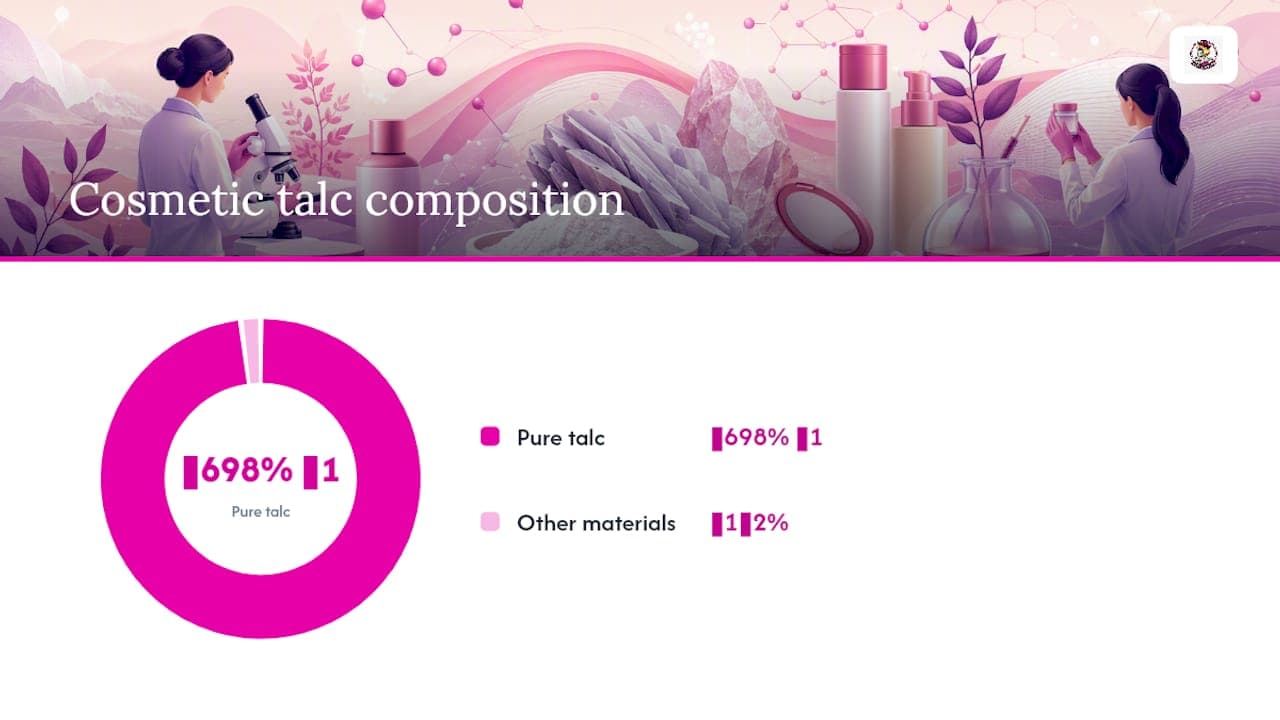
Most cosmetic-grade talc today is over 98% pure, significantly reducing asbestos contamination risks compared to historical industrial talc.
FDA testing in 2023 found no asbestiform fibers in products sampled, but testing standards remain evolving due to lack of a unified detection method.
The main health concerns are inhalation of airborne talc particles and contamination, not direct evidence linking uncontaminated facial talc to cancer.
Using pressed powders daily lowers inhalation risk compared to loose powders, and avoiding talc in genital products further minimizes potential exposure.
Buying talc-free makeup using mica, silica, or starches is the most effective way to eliminate contamination concerns entirely.
Table of Contents
-
How Asbestos Contamination Happens and What Testing Has Found
-
How Ingredient Tools Take the Guesswork Out of Label Reading
What Talc Is and Why It Raises Eyebrows
Talc is a naturally occurring mineral made of magnesium, silicon, and oxygen, mined from the earth and ground into a soft, silky powder. It’s been a cosmetic workhorse for over a century because it absorbs oil, softens texture, and helps pigments glide on evenly. You’ll find it in:
-
Loose and pressed setting powders
-
Blush, bronzer, and eyeshadow formulas
-
Baby powder and body powder
-
Some foundation and concealer formulas that use it as a bulking agent
Talc-free Makeup Brands:
ILIA BEAUTY is a renowned cosmetics brand known for its commitment to clean, sustainable, and high-performance makeup and skincare products. Founded with the mission to create products that are good for both the skin and the environment, ILIA emphasizes transparency in ingredients and ethical sourcing. Their range includes versatile foundations, vibrant lipsticks, nourishing skincare, and innovative formulations that cater to a variety of skin tones and types. For example, their True Skin Serum Foundation provides a natural, dewy finish while offering buildable coverage, and their Multi-Stick can be used on cheeks, lips, and eyes for a seamless, multi-dimensional look. Whether you’re aiming for a subtle everyday glow or a bold, statement look, ILIA Beauty offers products that combine efficacy with a conscious approach to beauty.
KOSAS COSMETICS, a renowned brand in the beauty industry, is celebrated for its innovative approach to skincare and makeup products. Known for their clean, cruelty-free formulations, KOSAS offers a wide range of items including foundations, lipsticks, and skincare essentials that cater to diverse skin tones and types. For example, their popular “Revealer Supercream” foundation provides buildable coverage with a natural finish, suitable for both everyday wear and special occasions. Additionally, their “LipFuel” lip balms are infused with nourishing ingredients like shea butter and antioxidants, ensuring lips stay hydrated and protected throughout the day. With a commitment to sustainability and transparency, KOSAS continues to set a standard for ethical beauty products that combine efficacy with eco-conscious values.
Haus Labs is a innovative cosmetics brand founded by renowned artist Lady Gaga, dedicated to creating high-quality, cruelty-free, and inclusive beauty products. The brand emphasizes sustainability, ethical sourcing, and empowering individuals to express their unique style. Examples of their popular products include the Le Riot Lip Gloss, a vibrant and long-lasting lip color, and the Bio-Radiant Gel Powder Highlighter, which provides a luminous glow suitable for all skin tones. Haus Labs aims to revolutionize the beauty industry by combining cutting-edge technology with a commitment to social responsibility, making beauty accessible and empowering for everyone.
100% Pure is a well-known brand that specializes in natural and organic skincare products, offering a wide range of items such as cleansers, moisturizers, serums, and sunscreens. Their products are formulated with high-quality, ethically sourced ingredients that are free from harmful chemicals, artificial fragrances, and synthetic dyes. Many customers appreciate their commitment to transparency and sustainability, often citing the effectiveness of their products in improving skin health and appearance. For example, their popular Coffee Bean Caffeine Eye Cream is praised for reducing puffiness and dark circles, while their Rose Hydrating Facial Mist provides a refreshing boost of moisture throughout the day. Whether you’re looking for gentle options for sensitive skin or targeted treatments for specific skin concerns, 100% Pure offers a trustworthy choice for clean, cruelty-free skincare.
bareMinerals is a well-known cosmetics brand renowned for its mineral-based makeup products that emphasize natural beauty and skin health. Their product line includes foundations, blushes, eyeshadows, and skincare items, all formulated with pure, crushed minerals free from harsh chemicals, parabens, and synthetic fragrances. For example, their popular Original Foundation provides a lightweight, breathable coverage suitable for sensitive skin, while their Mineral Veil setting powder helps to set makeup and reduce shine. Many users appreciate the brand’s commitment to clean beauty and the ability to achieve a flawless look with products that are gentle on the skin.
The concern isn’t talc’s chemistry. It’s geology. Talc deposits sometimes form near asbestos deposits underground, and decades ago, mining practices weren’t always careful about keeping the two separate. That’s the root of every talc scare you’ve heard about, from lawsuits to recalls.
Modern mining has changed that picture considerably. Cosmetic manufacturers now select ore sources specifically screened for low asbestos content, and reporting indicates that cosmetic-grade talc today typically runs more than 98% pure. That’s a meaningfully different starting point than the raw industrial talc used in mid-20th-century products. Purity standards don’t eliminate every risk, but they’ve narrowed it considerably.
How Asbestos Contamination Happens and What Testing Has Found
Asbestos gets into talc through the ground, not the factory. When a talc deposit sits close to an asbestos vein, mining equipment can pull both minerals up together. If a company doesn’t screen thoroughly, trace asbestos fibers can end up in the finished powder. That’s the entire contamination pathway: geological proximity plus inadequate screening.
Regulators test for this using two main methods:
-
Polarized light microscopy (PLM), a faster screening method that identifies mineral fibers by how they bend light
-
Transmission electron microscopy (TEM), a more sensitive method capable of detecting smaller, harder-to-spot fibers that PLM can miss
Here’s the number that matters most right now: in its most recent testing round, the FDA sampled facial and hair products containing talc in 2023 and found no asbestiform fibers in any of the products tested. That’s a genuinely reassuring data point, though it reflects a snapshot of specific products rather than a guarantee about every talc-containing item on shelves.
The bigger issue is that testing itself is still being standardized. The Modernization of Cosmetics Regulation Act (MoCRA) now requires cosmetic manufacturers to test talc-containing products for asbestos, but the FDA hasn’t finalized one single validated method every lab must use. A Federal Register notice published in late 2024 opened public comment specifically on testing methods for detecting asbestos in talc products, which tells you the rulemaking is active but incomplete. Without a locked-in standard, results from different labs using different protocols can be harder to compare directly, and that gap is the real reason “is talc safe in cosmetics” doesn’t have a single tidy answer yet.
What the Research Says About Cancer Risk
This is where things get nuanced, and where a lot of headlines flatten a genuinely complicated picture into something scarier or safer than the evidence supports.
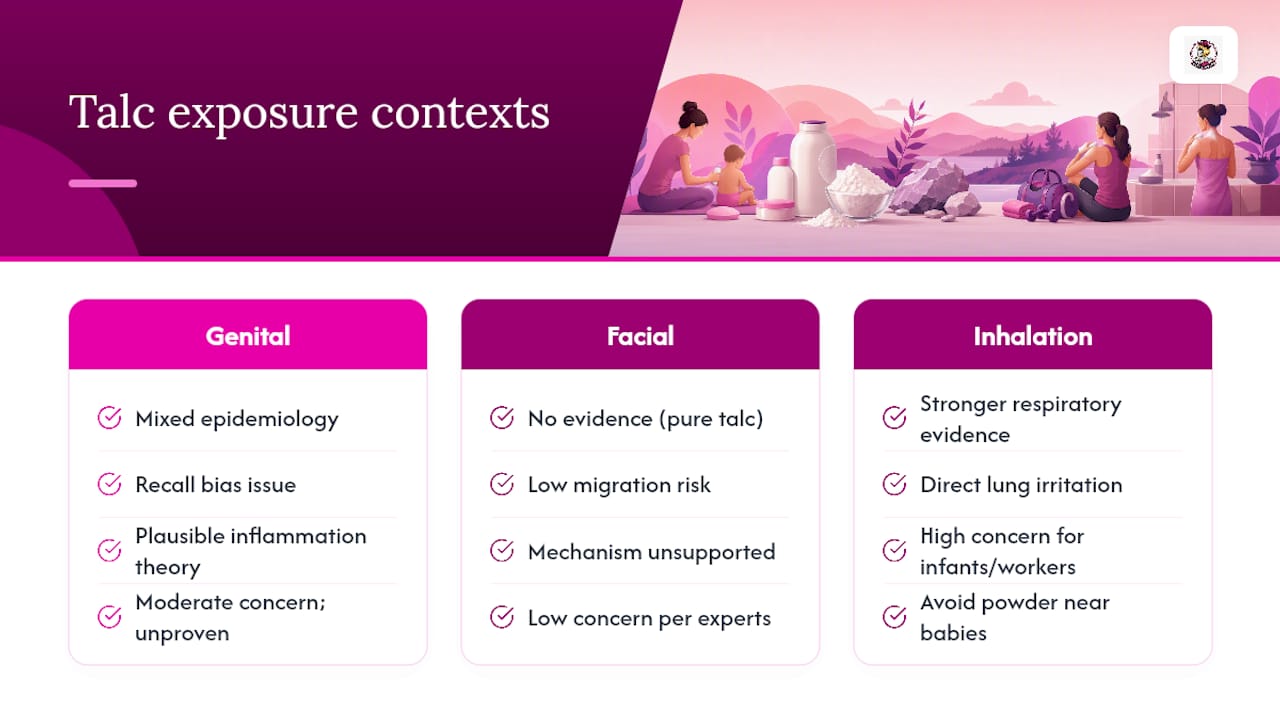
Ovarian cancer research on talc has produced mixed results for decades. Some case-control studies (where researchers compare women who have ovarian cancer to women who don’t and ask about past habits) have found a modest association with genital talc use. Other cohort studies, which track large groups over time and tend to be less prone to memory bias, haven’t found the same signal. A peer-reviewed review of the epidemiological literature points to a consistent problem: recall bias. Women recalling their powder habits from ten or twenty years earlier, especially after a cancer diagnosis, don’t always remember accurately, and that muddies every study built on self-reported exposure.
The mechanistic theory behind the concern is plausible but unproven. The idea is that talc particles applied near the genital area could travel upward through the reproductive tract and cause chronic, low-grade inflammation, which over years might contribute to cellular changes. It’s a reasonable hypothesis. It is not the same as demonstrated cause and effect, and talc is not classified as a human carcinogen the way asbestos itself is by IARC and the World Health Organization. That distinction gets lost constantly in casual conversation, and it shouldn’t.
Facial cosmetics sit in a different category entirely. Medical experts at MD Anderson Cancer Center state plainly that there’s no evidence linking facial cosmetics containing pure, uncontaminated talc to cancer. Their guidance draws a clear line: avoid talc where it can migrate into the reproductive tract, but facial application doesn’t carry the same documented concern.
Respiratory risk is a separate conversation from cancer risk, and it’s better established. Fine talc particles, when inhaled repeatedly, can irritate lung tissue, and health agencies have flagged inhalation as a genuine concern, especially for infants. Health Canada specifically warns against letting loose powder near a baby’s face, because infant lungs are more vulnerable to airborne particles and babies can’t move away from a powder cloud the way an adult can. Occupational exposure, like miners or factory workers handling raw talc daily for years, carries a different and higher risk profile than a woman lightly dusting setting powder on her cheeks once a day.
Pro Tip: If a study result sounds alarming in a headline, check whether it’s measuring genital application, occupational exposure, or facial cosmetic use. Those three categories produce very different risk pictures, and conflating them is the single biggest source of talc confusion online.
Who Faces the Highest Risk and Which Habits Matter Most
Your actual risk depends less on whether a product contains talc and more on how, where, and how often you use it.
-
Loose powder versus pressed powder. Loose powders create a visible cloud when you tap the applicator, which means more airborne particles near your nose and mouth. Pressed powders release far less airborne product because the formula is compacted with binders, making them the lower-inhalation choice for daily face makeup.
-
Application area. Facial use and genital or perineal use are not comparable risk categories. The ovarian cancer research specifically concerns talc applied near the reproductive tract, not powder brushed on cheekbones or under eyes.
-
Frequency and accumulation. Someone using a setting powder once a day faces a very different cumulative exposure than someone dusting a product multiple times daily for years, or someone working around loose talc professionally.
-
Vulnerable groups. Infants and young children, people with asthma or existing respiratory conditions, and workers in mining or manufacturing settings all warrant extra caution around any airborne powder, talc included.
If none of those higher-risk categories apply to you, and you’re using a pressed facial powder occasionally, your exposure profile looks quite different from someone applying loose body powder to sensitive areas daily.
Where Regulators Stand and What’s Still Changing
The FDA has walked a careful line on talc for years: acknowledging the contamination pathway is real while stopping short of banning the ingredient outright, because pure, uncontaminated talc itself isn’t classified as carcinogenic. The agency’s approach has shifted from periodic spot testing toward the more systematic requirements built into MoCRA, which formally gave the FDA authority to mandate testing that didn’t exist in the same enforceable way before.
A few things are worth tracking if you want to stay current:
-
The Federal Register docket on standardized testing methods remains open, meaning the exact protocol labs must follow hasn’t been permanently locked in.
-
IARC and WHO classify asbestos itself as a known human carcinogen, a very different regulatory tier than talc, which isn’t grouped the same way.
-
The EPA separately regulates asbestos under the Toxic Substances Control Act, covering industrial and building-material exposure rather than cosmetics specifically, which is a different regulatory lane than the FDA’s cosmetics oversight.
-
Manufacturer testing records under MoCRA are still being phased into standard industry practice, so compliance maturity varies by brand.
None of this means the rules are broken. It means the science of detecting trace contamination is still catching up to the regulatory ambition, and that gap is exactly why “talc-free” remains the only way to categorically rule out contamination risk rather than manage it.
How to Shop Smarter and Reduce Your Exposure
Reading a label for talc is straightforward once you know what you’re scanning for. It appears by its own name, “talc,” on ingredient lists, sometimes listed as “talcum” or “hydrous magnesium silicate.” There’s no clever alias hiding it, which makes ingredient list scanning one of the fastest ways to make an informed choice.
A few concrete habits make a real difference:
-
Choose pressed powders over loose ones for everyday face makeup to cut down airborne exposure.
-
Never apply any talc-containing product, powder or otherwise, in the genital or perineal area.
-
Keep loose powders away from your face when applying, and never let a child use loose powder unsupervised near their face.
-
Look for talc-free formulas built with mica, silica, or plant-based starches like rice or corn starch, which deliver similar oil-absorbing texture without the contamination pathway.
-
Check for a specific “talc-free” claim rather than assuming a product lacks it just because talc isn’t the first listed ingredient.
Pro Tip: Mica and talc get confused constantly because they’re both shimmery mineral powders used in similar products, but they’re geologically unrelated. Mica in makeup carries none of the asbestos co-location risk that makes talc’s supply chain worth scrutinizing.
How Ingredient Tools Take the Guesswork Out of Label Reading
Standing in an aisle trying to parse “hydrous magnesium silicate” isn’t anyone’s idea of a good time. That’s exactly the gap QueenCompares’ Ingredient Checker is built to close: scan a label, and it flags talc immediately along with any other ingredients worth a second look.
The Label Scanner tool works the same way for products you already own, so you’re not stuck guessing whether that powder sitting in your bag contains talc. Once you’ve scanned something, it’s saved:
-
The Ingredient Library gives you plain-language breakdowns of what talc, mica, and other cosmetic minerals actually are.
-
My Scan Reports keeps a running record of everything you’ve checked, so you’re not rescanning the same foundation every few months.
-
Talc-free alternatives surface automatically when a flagged ingredient shows up, so you’re not left with a warning and no next step.
None of this replaces a doctor’s advice on personal cancer risk. It just means the label-reading part of your decision takes seconds instead of a squint-and-guess session under store lighting.
The Bottom Line on Talc and Makeup
The verdict hasn’t changed from where we started: talc in facial cosmetics isn’t proven to cause cancer, and the FDA’s own 2023 sampling backs that up. The risk that deserves your attention is contamination and inhalation, not the mineral’s basic chemistry. Three actions matter more than any other advice in this guide. Skip talc-containing products in the genital area entirely. Choose pressed over loose powders to cut inhalation exposure. And if you want to remove contamination risk from the equation altogether, buy talc-free.
If you have personal risk factors, a family history of ovarian cancer, or ongoing respiratory concerns, talk to a clinician before making decisions based on general guidance alone. Regulatory testing standards are still evolving, so it’s worth checking the FDA’s talc page periodically for updates. Scanning your own products with an ingredient tool is a fast, practical way to turn this whole article into action rather than just information you read once and forgot.
Why I Trust the Evidence Over the Headlines
The loudest talc coverage online treats every study as equally damning, and that’s where most consumer confusion starts. A small case-control study with recall bias gets the same breathless treatment as a large FDA sampling program, and readers walk away more scared than informed. I don’t think that serves anyone.
What actually holds up: facial use and genital use are different risk categories, full stop, and conflating them is where the panic comes from. Inhalation risk for loose powders is real and worth acting on regardless of the cancer debate. And the contamination question is genuinely unresolved at the standardization level, which is a legitimate reason to prefer talc-free if certainty matters to you.
Tools that let you check a label in seconds don’t replace medical judgment, but they replace guesswork with information you can actually act on.
— Magdalena Kapuscinska
Scan Before You Buy, Not After You Worry
There are other ways to research a product before buying it: reading brand websites, scrolling through reviews, or just trusting a label claim at face value. All of them take time, and none of them tell you definitively whether a specific tube or compact contains talc versus a talc-free alternative.
QueenCompares’ Ingredient Checker and Label Scanner do that work in seconds instead of minutes. Scan a product’s ingredient list, and it flags talc immediately, then surfaces talc-free options with similar texture and finish so you’re not left comparing formulas from scratch. The Ingredient Library backs every scan with plain-language explanations of what you’re looking at, so a flagged ingredient comes with context, not just a red flag and no answer.
If you’ve got a setting powder or foundation sitting in your bag right now, that’s the fastest way to find out where it stands. Head to the Ingredient Checker, run your first scan, and see what’s actually in your makeup bag.
This article is general information, not a substitute for advice from a qualified doctor. Consult a qualified healthcare professional about your own circumstances before acting on anything here.
Sources
-
FDA releases data from the agency’s 2023 testing of talc-containing cosmetic products for asbestos
-
Talc in Makeup: Should You Be Worried About Asbestos Exposure? | Everyday Health
FAQ
Should I Worry About Talc in Makeup?
Not for facial cosmetics used occasionally. Focus your caution on genital application, inhalation from loose powders, and choosing talc-free if you want to eliminate contamination risk entirely.
Which Makeup Brands Still Use Talc?
Many mainstream setting powders, pressed powders, and eyeshadows across drugstore and prestige brands still list talc as an ingredient. Checking the specific product’s label with a tool like QueenCompares’ Ingredient Checker is more reliable than assuming based on brand reputation alone.
What Is the Safest Makeup Brand to Use?
There’s no single brand that guarantees zero risk, since safety depends on the specific formula and ingredient sourcing rather than the brand name alone. Look for talc-free formulations using mica or silica, and verify claims against the actual ingredient list rather than marketing copy.
Does Johnson’s Baby Powder Still Have Talc in It?
Johnson & Johnson discontinued talc-based baby powder in North America, shifting its baby powder line to a cornstarch formula. Always check the current package label, since formulas and sourcing can change over time.