TL;DR:
- Exomes represent a small but crucial part of the human genome, containing most disease-causing genetic variants. Whole exome sequencing reveals variations in about 20,000 genes, informing personalized skincare and health insights. AI tools help translate genetic data into practical product choices based on individual biology.
What are exomes and why do they matter?
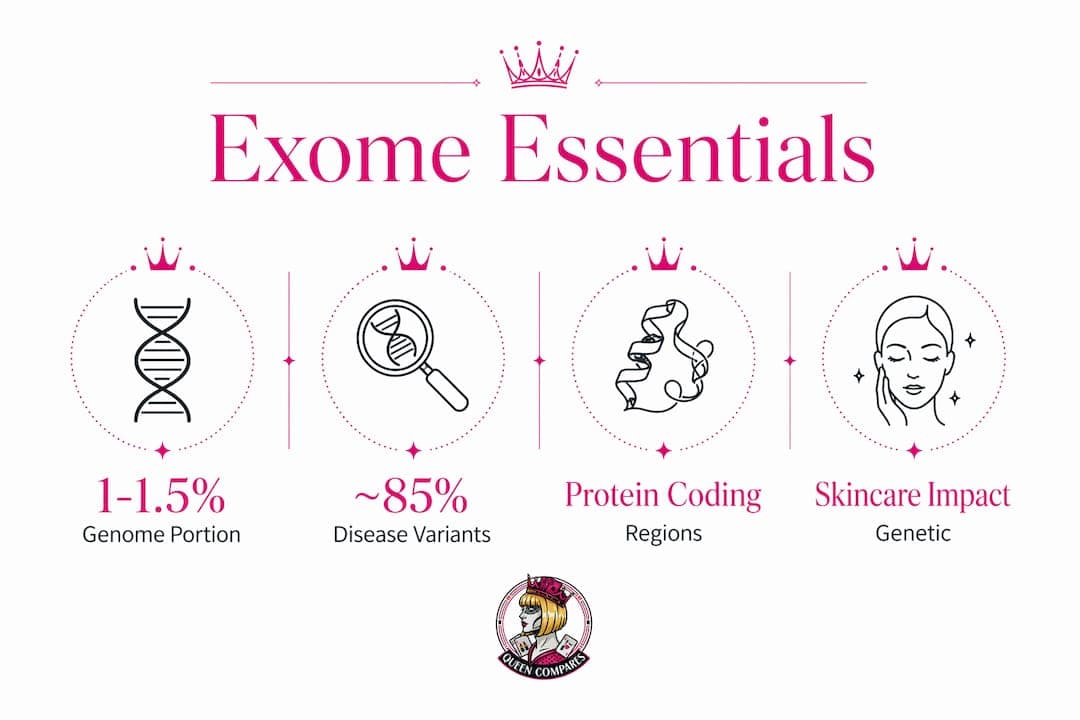
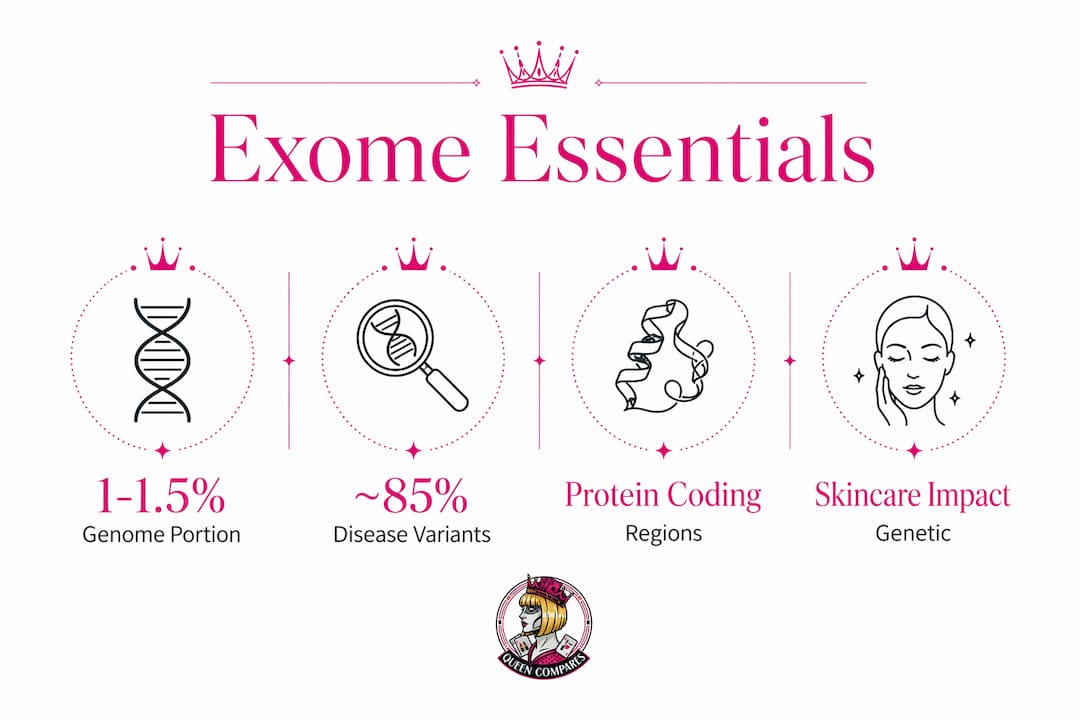
Your DNA holds about 3 billion “letters,” but only a tiny slice of it actually builds proteins. That slice is the exome. Exomes represent roughly 1%–1.5% of the human genome, yet they contain approximately 85% of disease-causing genetic variants. For beauty consumers curious about why certain ingredients work differently on different people, this is where the story starts.
Here is what makes exomes so relevant:
-
Protein coding: Exomes contain all the exons, the DNA segments that get translated into proteins your body actually uses.
-
Disease concentration: The vast majority of mutations linked to health conditions live here, not in the rest of the genome.
-
Skin biology: Proteins built from exomic instructions control everything from collagen production to how your skin responds to retinol.
-
Personalized relevance: Variations in your exome can explain why a moisturizer that works for your friend does nothing for you.
How whole exome sequencing reveals your genetic blueprint
Whole exome sequencing (WES) reads the coding regions of approximately 20,000 genes in one test. Clinicians use it when standard diagnostics fail, particularly for rare or complex conditions with a genetic root.
Key facts about WES:
-
Turnaround: Results typically arrive within three months, reflecting the complexity of sequencing and interpretation.
-
Bioinformatics: Variant interpretation requires specialized pipelines that align, filter, and prioritize thousands of genetic changes.
-
Selective use: Clinicians order WES strategically for unresolved cases or patients with relevant family history, not as a first-line test.
-
Cost vs. coverage: WES is more cost-effective than whole genome sequencing because it focuses only on protein-coding regions, allowing deeper sequencing at lower cost.
-
Limitations: WES misses non-coding mutations and structural variants. Whole genome sequencing is expected to eventually replace it as prices drop.
A negative WES result does not rule out a genetic condition. Non-coding regions can still influence how genes behave, which is why the field continues to evolve.
Why your exome is the secret behind skincare ingredient response
Genetic variants within the exome directly affect skin structure, aging speed, and how your body metabolizes cosmetic ingredients. Two people using the same collagen support formula can get completely different results, and their exomes are a big reason why.
-
Skin barrier proteins: Variants in genes like FLG (filaggrin) affect skin barrier integrity, influencing sensitivity and moisture retention.
-
Enzyme activity: Exomic mutations can alter enzymes that break down active ingredients, changing how effective or irritating a product feels.
-
Aging pathways: Genetic differences in collagen and elastin production pathways show up in how skin ages and responds to anti-aging actives.
-
Skin conditions: Conditions like eczema and psoriasis have strong exomic links, affecting which ingredients soothe versus aggravate.
-
Ethical considerations: Secondary findings from exome data can reveal predispositions to unrelated diseases, raising real privacy and psychological concerns for anyone pursuing genetic testing.
Understanding gut health and skin adds another layer here. Biological factors rarely work in isolation, and your exome is one piece of a larger picture.
Pro Tip: Before investing in a premium active ingredient like niacinamide or vitamin C serum, check whether your skin type and known sensitivities align with the ingredient’s biological mechanism. Genetic context makes that evaluation sharper.

Tools that help you act on biological and genetic insights
You do not need a lab coat to put exome science to work in your routine. AI-powered platforms now translate biological and genetic research into practical product guidance.
-
Ingredient Checker: QueenCompares’ Ingredient Checker cross-references formulas against safety data and biological compatibility signals, flagging ingredients that may not suit your skin profile.
-
Label Scanner: The Label Scanner lets you scan a product in seconds and get an instant breakdown of what each ingredient does biologically.
-
Ingredient Library: QueenCompares maintains a detailed ingredient library connecting cosmetic compounds to their biological functions.
-
Personalized routines: Genetic insights inform personalized skincare routines by matching ingredient profiles to individual biology rather than generic skin types.
-
Product comparisons: Side-by-side comparisons on QueenCompares let you evaluate formulas using biological data, not just marketing claims.
Pro Tip: Use QueenCompares’ Ingredient Checker alongside any new product before buying. Cross-referencing ingredient safety with your known skin sensitivities takes less than a minute and saves you from costly trial and error.
Key Takeaways
Exomes are the protein-coding 1%–1.5% of your genome that contain roughly 85% of known disease-related variants, making them the most relevant part of your DNA for understanding skin biology and ingredient response.
| Point | Details |
|---|---|
| Exomes are small but powerful | They make up 1%–1.5% of the genome but hold ~85% of disease-linked variants. |
| WES reads 20,000 genes at once | Results take up to three months due to complex bioinformatics interpretation. |
| Genetic variants shape skin response | Exomic differences affect barrier proteins, enzyme activity, and aging pathways. |
| Secondary findings carry ethical weight | Exome data can reveal unrelated disease risks, requiring informed consent decisions. |
| AI tools bridge genetics and shopping | QueenCompares’ Ingredient Checker and Label Scanner apply biological insights to real product choices. |
FAQ
What exactly are exomes?
Exomes are the collection of all protein-coding DNA segments (exons) in your genome, representing about 1%–1.5% of your total DNA while containing roughly 85% of known disease-causing variants.
How does exome sequencing differ from whole genome sequencing?
Whole exome sequencing focuses only on protein-coding regions, making it faster and more affordable, while whole genome sequencing covers all DNA including non-coding regions that can also influence health.
Can my exome affect how skincare ingredients work on my skin?
Yes. Genetic variants in your exome influence proteins that control skin barrier function, collagen production, and enzyme activity, all of which determine how your skin responds to specific cosmetic ingredients.
What are secondary findings in exome testing?
Secondary findings are genetic variants discovered during exome analysis that are unrelated to the original reason for testing, potentially revealing predispositions to other conditions like cancer or heart disease.
How can I use genetic insights for better skincare choices?
Tools like QueenCompares’ Ingredient Checker and Label Scanner translate biological and ingredient safety data into practical guidance, helping you choose products that align with your skin’s unique biology.