Gua sha massage is a tool-assisted scraping technique rooted in Traditional Chinese Medicine (TCM) that uses a smooth-edged tool to stroke the skin, promoting local circulation and lymphatic drainage. Done correctly, it's generally safe and may offer real benefits for puffiness, muscle tension, and skin tone. Before you start, keep these three points in mind:
- Face vs. body pressure: Facial gua sha uses feather-light strokes with no intentional bruising; body gua sha uses firmer pressure and may produce petechiae (tiny red spots), which is normal for that context.
- Skip it on broken skin: Avoid gua sha over open wounds, active breakouts, or irritated skin.
- Check with a clinician first if you take blood thinners, have a clotting disorder, or have had recent facial injectables.
Step-by-step technique, evidence, and safety details follow below.
Key Takeaways
Gua sha massage is safe and effective for most people when performed with correct angle, light pressure, and proper lymphatic sequencing, starting at the neck and collarbone.
| Point | Details |
|---|---|
| Start at the neck | Always clear the collarbone and neck lymph nodes first to prevent fluid from backing up. |
| Use 30–45° tool angle | A shallow angle prevents skin traction and reduces risk of tissue damage. |
| Facial vs. body pressure | Facial gua sha requires feather-light strokes; body gua sha uses firmer pressure and may produce petechiae. |
| Frequency: 1–3× weekly | Start at once a week for the face, monitor skin response, and increase gradually. |
| Know your contraindications | Avoid gua sha with clotting disorders, blood thinners, open wounds, or recent facial injectables. |
This article is general information, not a substitute for advice from a qualified doctor. Consult a qualified healthcare professional about your own circumstances before acting on anything here.
Table of Contents
- What is gua sha and how does it differ from facial massage?
- How to perform a gua sha massage step by step
- What are the potential benefits of gua sha?
- Side effects and who should avoid gua sha
- How to choose and care for your gua sha tools
- How often should you use gua sha and what to do after?
- When should you see a professional instead of doing it yourself?
- What does the research actually say about gua sha?
- A note on fitting gua sha into your routine
- Sources
- FAQ
What is gua sha and how does it differ from facial massage?
Gua sha (pronounced "gwah-shah") is a TCM practice in which a practitioner or individual uses a flat, smooth tool to scrape the skin in short, firm strokes. The word "sha" refers to the petechiae, the tiny red or purple spots that appear when capillaries near the skin's surface break during firmer body work. That outcome is expected and intentional in traditional body gua sha but should never happen during facial gua sha.
The practical split between the two is significant. Facial gua sha uses extremely gentle, unidirectional strokes aimed at moving lymphatic fluid and reducing puffiness, with no intentional bruising. Body gua sha, by contrast, applies firmer pressure to muscles and connective tissue, often producing petechiae as part of the therapeutic process for musculoskeletal complaints.
Gua sha differs from a standard facial massage primarily in the tool. Where a facial massage uses fingers or hands to knead and press, gua sha uses a rigid edge to glide along the skin's surface, creating a different kind of mechanical stimulus on the tissue beneath.
How to perform a gua sha massage step by step
Prep your skin and tool
Start with a clean face and a clean tool. Apply a generous layer of facial oil or serum as your slip medium. This step matters more than most beginners realize: without enough glide, the tool drags and tugs at delicate skin rather than gliding over it. If you have acne-prone or sensitive skin, choose a non-comedogenic oil like squalane or a lightweight serum rather than a heavy botanical oil.
Hold the tool at the right angle
Hold your gua sha tool at a 30–45° angle against the skin. Flatter is better for beginners. A steeper angle digs into the tissue and increases the risk of skin traction damage; a shallower angle lets the edge glide smoothly. Use your free hand to hold the skin gently taut.
Follow this facial sequence
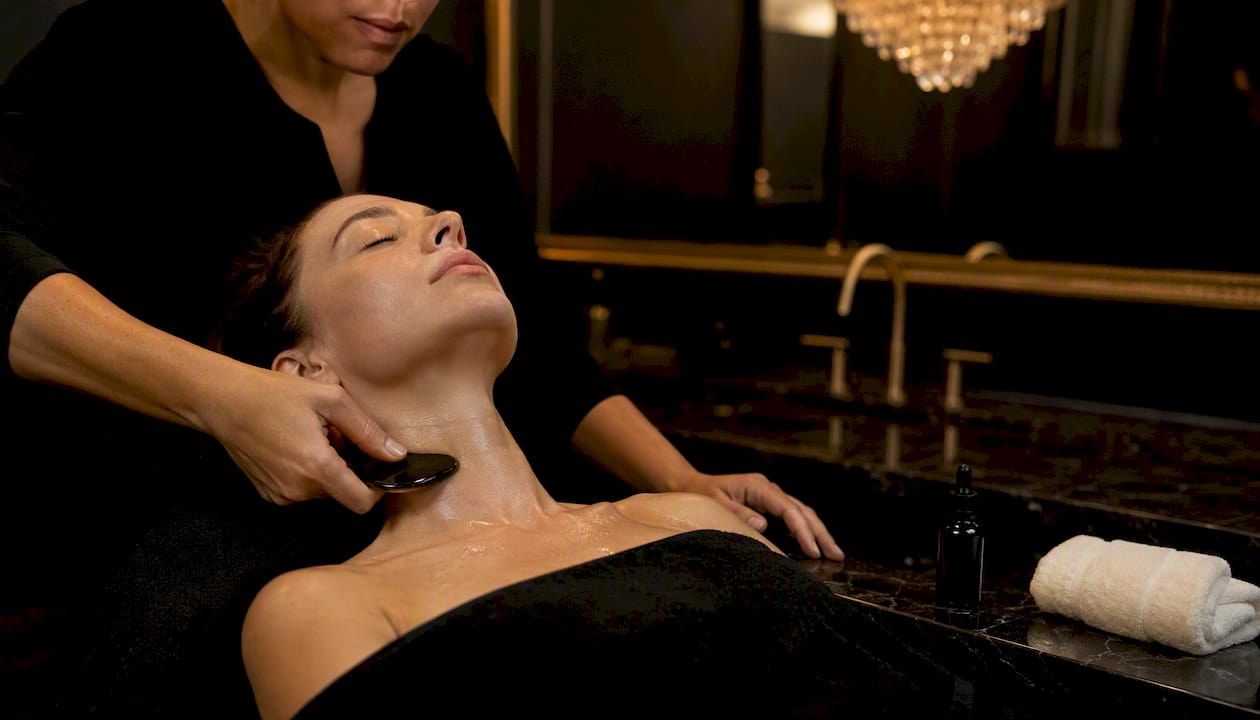
- Collarbone and neck first. Use the long curved edge to make 3–5 slow, downward strokes along each side of the neck toward the collarbone. This "opens the drain" by clearing the lymph nodes at the base of the neck before you move fluid down from the face.
- Jawline. Starting at the chin, stroke outward along the jawline toward the ear. Repeat several times per side.
- Cheeks. From the corner of the mouth, stroke outward and slightly upward toward the top of the ear. Keep pressure light. Repeat several times.
- Under-eye area. Switch to the small notched or curved edge. Stroke very gently from the inner corner of the eye outward toward the temple. Use almost no pressure here; the skin is thin and fragile.
- Brow bone. Stroke outward from the center of the brow toward the temple, following the bone. Repeat several times.
- Forehead. Stroke upward from the brow to the hairline, then sweep outward toward the temples. Repeat several times per side.
Always work outward from the center of the face and downward along the neck. Fluid moves toward the primary lymph nodes at the neck and collarbone, as Cleveland Clinic practitioners describe.
Pro Tip: Never skip the neck and collarbone step. Opening lymphatic drainage first prevents you from pushing fluid into a blocked pathway, which can actually increase temporary puffiness rather than reduce it.
Body gua sha: key differences
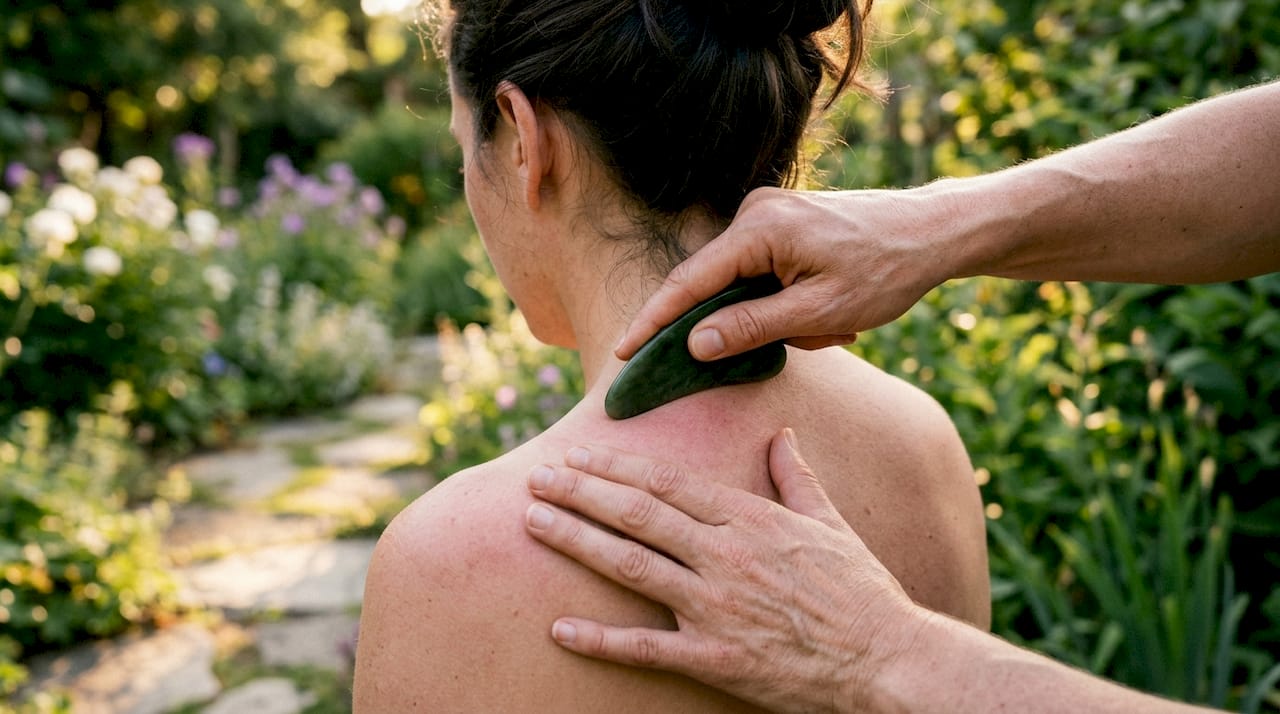
Body gua sha uses significantly more pressure and covers larger zones like the upper back, shoulders, and thighs. A trained practitioner typically performs it. The strokes are longer and firmer, and petechiae are an expected result. If you're dealing with chronic muscle tension or pain, this is where a licensed professional adds real value over DIY. Avoid applying body-level pressure to your face under any circumstances.
What are the potential benefits of gua sha?
The primary physiologic actions researchers have studied are increased local microcirculation and short-term modulation of inflammatory markers. Small clinical and physiologic studies report these effects after gua sha sessions, though the research base is limited and often small-scale.
What you can reasonably expect from regular facial gua sha: a temporary reduction in morning puffiness, a short-term improvement in skin tone from increased blood flow, and some relaxation of facial muscle tension. These effects are real but modest and transient. Gua sha is sometimes marketed on social media as a natural "facelift," but experts are clear that its realistic benefits are inflammation control, lymphatic movement, and temporary contouring. It does not replace professional dermatologic procedures.
For body gua sha, short-term pain relief for musculoskeletal conditions is the most consistently reported benefit in the literature, particularly when used alongside other therapies. Think of it as a complementary tool, not a standalone treatment.
Side effects and who should avoid gua sha
Most people tolerate facial gua sha well. Common mild effects include:
- Temporary redness at the treatment site, usually resolving within a few hours
- Petechiae (tiny red or purple spots) if too much pressure is used on the face; these can take days to fade
- Mild soreness in the treated area, especially after body gua sha
According to WebMD, gua sha generally carries low risk when done correctly. However, you should avoid it entirely if you have:
- Bleeding or clotting disorders (hemophilia, von Willebrand disease, etc.)
- Active skin infections, rashes, or open wounds in the treatment area
- Recent facial injectables (Botox, fillers): wait until your provider clears you
- Blood-thinning medications (warfarin, aspirin therapy, newer anticoagulants)
- Sunburned or severely inflamed skin
Stop a session immediately if you feel sharp pain, notice unusual bruising, or see skin breakdown. Rinse the area gently with cool water and apply a fragrance-free moisturizer. If skin breaks or an area looks infected in the days after, see a clinician.
How to choose and care for your gua sha tools
Materials at a glance
The most common gua sha tool materials each have real trade-offs.
| Material | Pros | Best For | Hygiene Note |
|---|---|---|---|
| Jade | Traditional, cool to the touch, widely available | Face | Porous; harder to sanitize fully |
| Rose quartz | Stays cool longer, popular for facial use | Face | Porous; same hygiene limits as jade |
| Stainless steel | Nonporous, easy to sanitize, durable | Face and body | Easiest to clean; ideal for shared use |
| Ceramic | Smooth glide, nonporous | Face | Fragile; replace if chipped |
| Bian stone | Traditional TCM material, dense | Body | Less common; verify sourcing |
Nonporous materials like stainless steel are preferable when hygiene is a priority. Natural stones feel luxurious but are harder to sanitize thoroughly, which matters if you share tools or have acne-prone skin.
Shape and size tips
- Long curved edge: best for cheeks, jawline, and neck
- Small notched or concave edge: designed for under-eye and brow contour
- Flat broad edge: suits the forehead and upper back in body work
- Comb edge: used along the scalp for tension relief
Cleaning checklist
- Wipe the tool with a gentle soap and warm water after every use.
- For stainless steel or ceramic, a 70% isopropyl alcohol wipe adds an extra layer of sanitization.
- Dry completely before storing; moisture encourages bacterial growth on stone tools.
- Inspect for chips or cracks before each session. A chipped edge can cut skin. Replace immediately if damaged.
- Store in a clean pouch or case, away from other hard objects that could chip the edges.
Before buying, use the QueenCompares Ingredient Checker to vet the oils and serums you plan to use as slip media, especially if your skin is reactive.
How often should you use gua sha and what to do after?
Facial gua sha: 1–3 times per week is a reasonable starting point for most people. Daily use is possible for some, but starting less frequently lets you monitor how your skin responds. More is not always better; overdoing any technique can stress the skin.
Body gua sha: Less frequent, and often better managed by a trained practitioner. Self-administered body work once a week or less is typical for maintenance.
After your session
- Drink water. Gua sha is thought to support lymphatic movement, and hydration supports that process.
- Avoid direct sun exposure on any area showing redness or petechiae. Apply SPF if you go outside.
- Apply a gentle, hydrating moisturizer or serum to the treated skin.
- Skip active ingredients (retinoids, strong acids) on the same skin immediately after a session; the skin barrier may be temporarily more sensitive.
- Redness typically fades within a few hours. Petechiae from body work can take 3–5 days to resolve.
When should you see a professional instead of doing it yourself?
DIY facial gua sha is appropriate for most healthy adults. But there are clear signs to hand this off to a trained practitioner or clinician:
- Persistent or worsening pain after sessions, rather than temporary soreness
- Large bruising, skin breakdown, or signs of infection at the treatment site
- Complex musculoskeletal issues (herniated discs, nerve pain, post-surgical areas) where body gua sha could cause harm
How to choose a qualified practitioner
Look for these credentials when booking:
- Licensed Acupuncturist (L.Ac.) with NCCAOM board certification for traditional body gua sha
- Licensed Massage Therapist (LMT) with documented gua sha training
- Esthetician with specific facial gua sha certification for cosmetic facial work
Ask before booking: "What training do you have specifically in gua sha?" "Do you use single-use or sterilized tools?" "What contraindications do you screen for?" Walk away from any provider who cannot answer these clearly, uses visibly unclean tools, or applies pressure that causes sharp pain.
Healthline's clinical guidance recommends consulting your primary care provider before gua sha if you have any of the contraindications listed above.
What does the research actually say about gua sha?
The honest picture: the evidence base is promising but limited. Most studies are small, and large randomized controlled trials are still scarce.
| Study / Review | Type | Main Finding |
|---|---|---|
| Nielsen et al. (PMC8483130) | Physiologic and clinical review | Increased local microcirculation and short-term inflammatory modulation reported |
| PMC11221773 systematic review | Systematic review of RCTs | Short-term pain relief in musculoskeletal conditions when used alongside other therapies; results not definitive for broad clinical use |
| Traditional body gua sha trials | Mixed RCT and observational | Petechiae are a normal outcome of body work; facial gua sha evidence is largely practitioner-based |
Systematic reviews confirm that the literature includes a mix of randomized and observational studies with promising but not definitive results. The practical takeaway from integrative health experts: gua sha works best as an adjunctive therapy for pain, inflammation, and lymphatic support, not as a primary medical treatment.
A note on fitting gua sha into your routine
By Magdalena Kapuscinska
Gua sha is one of those practices that social media has both popularized and slightly distorted. The technique itself is genuinely useful as a complement to a solid skincare routine, but the "10-minute facelift" framing sets people up for disappointment. The realistic wins are real: reduced morning puffiness, a moment of intentional self-care, and some measurable short-term circulation benefit. Those are worth having.
If you're just starting out, prioritize the lymphatic opening sequence at the neck and collarbone before anything else, use less pressure than you think you need, and track how your skin responds over two to three weeks. Pair it with products you've already vetted for your skin type. For ingredient guidance, QueenCompares's skincare ingredient library is a practical place to cross-check your slip medium before committing to it.
Ready to find the right gua sha tools and slip media for your skin? 
QueenCompares makes it easy to compare products side by side, check ingredient safety, and find community-reviewed picks. Use the Label Scanner to scan any oil or serum before it touches your skin, or browse gua sha-friendly products curated for every skin type.
Sources
- Gua Sha: What It Is and How To Do It
- Gua Sha - Benefits, Risks and Techniques
- Pmc
- Gua Sha: How to, Benefits, and Side Effects
FAQ
What is gua sha massage good for?
Gua sha massage may help reduce temporary puffiness, support lymphatic drainage, improve local circulation, and relieve short-term muscle tension.
Is there a downside to gua sha?
Common downsides include temporary redness and petechiae (tiny red spots), especially if too much pressure is used on the face. People with clotting disorders, blood-thinning medications, or open wounds should avoid it entirely.
Where does the fluid go when you do gua sha?
The strokes direct lymphatic fluid outward from the center of the face and downward along the neck toward the lymph nodes at the collarbone. That's why starting at the neck and collarbone is the correct first step, not the last.
What do dermatologists say about gua sha?
Most dermatologists view facial gua sha as a low-risk complementary practice with modest, temporary benefits for puffiness and circulation. They consistently caution against using it as a substitute for clinical skincare treatments and recommend avoiding it near recent injectables or on compromised skin.