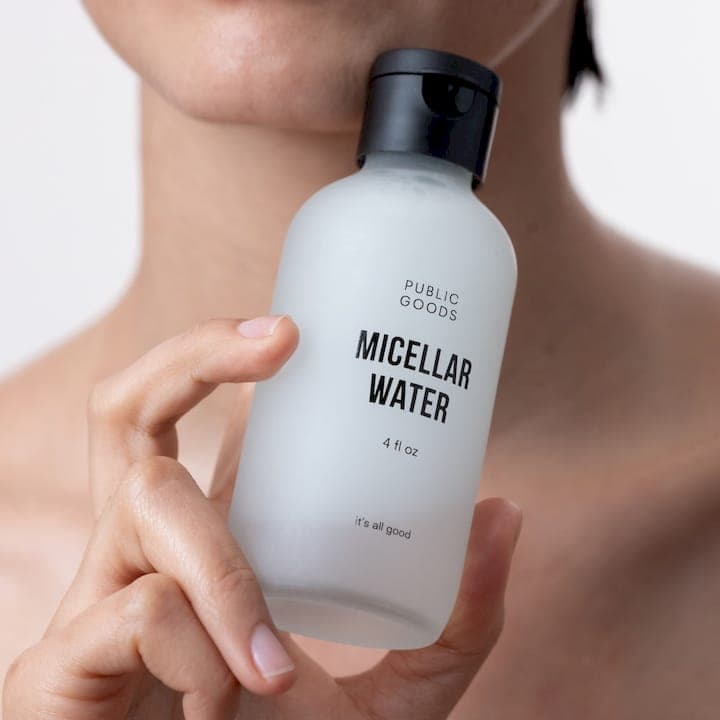
Micellar water is a gentle, no-rinse light cleanser that works well for mornings, travel, and as step one in a double cleanse, but it usually shouldn’t replace a full water-based cleanser after heavy makeup or waterproof sunscreen. Think of it as your skin’s quick refresh button, not its deep clean. Save the traditional cleanser for nights when your face has actually been through something.
TL;DR:
Micellar water is gentle and mainly suitable for quick refreshes or light cleansing, but it is less effective than traditional cleansers for heavy makeup or waterproof sunscreen.
Using micellar water alone may leave surfactant residue on the skin, which can interfere with the absorption of active skincare ingredients when not rinsed off.
For oily, acne-prone, or heavily processed skin, a follow-up water-based or medicated cleanser enhances cleaning effectiveness and pore clearing.
Sensitive and dry skin types benefit from fragrance-free formulas with humectants like glycerin and should avoid aggressive foaming cleansers to protect the skin barrier.
Pairing micellar water with a proper cleanser during double cleansing is recommended for thorough removal of makeup and sunscreen, especially at night.
Table of Contents
Micellar Water vs Cleanser: What’s Actually Different
Micellar water works through tiny clusters called micelles, spherical structures with water-loving exteriors and oil-loving interiors that grab onto dirt, oil, and light makeup and lift it away without a rinse. Purified water, mild surfactants, and often glycerin make up the formula, and that glycerin is doing real work. It’s a humectant, meaning it pulls moisture into the skin while the micelles are busy cleaning, which explains why micellar water tends to feel less stripping than a foaming face wash.
Traditional cleansers work differently depending on the category. Foaming and gel cleansers rely on stronger surfactants that create lather and emulsify oil more aggressively. Cream and oil cleansers use fats and emollients to dissolve makeup and sebum, then get rinsed away with water. Each method trades some gentleness for cleansing power, or vice versa.
Here’s how they stack up in practice:
-
Gentleness: Micellar water is usually milder on the skin barrier than foaming cleansers, which can strip natural oils.
-
Cleansing power: Traditional water-based cleansers and oil cleansers tend to outperform micellar water on heavy or waterproof makeup, often requiring fewer repeated passes.
-
Convenience: No-rinse application makes micellar water the clear winner for speed and travel.
-
Residue risk: Micellar water can leave behind surfactant residue that a splash of water would otherwise remove.
-
Formula flags: Watch for denatured alcohol and added fragrance in either category. Both can irritate sensitive skin regardless of which cleansing method you choose.
Neither format is universally “better.” They’re built for different jobs.
When to Use Each One (And When to Combine Them)
Matching the cleanser to the moment matters more than picking a permanent favorite. Here’s a practical breakdown:
-
Morning: A quick micellar water swipe is often enough to remove overnight sweat and product buildup without waking up your skin barrier.
-
Travel, gym, or anywhere without a sink: Micellar water doesn’t require running water, which makes it the practical pick when you’re mid-workout or stuck on a plane.
-
Evening with makeup or sunscreen: Use micellar water as your first pass to dissolve the surface layer, then follow with a water-based cleanser. A 2017 study on micellar water’s cleansing performance while maintaining hydration supports pairing it with a proper double cleanse rather than relying on it alone.
-
Post-procedure or compromised barrier: If your skin is freshly treated, irritated, or recovering from a procedure, micellar water’s low-friction application can be the gentler temporary option until your barrier settles.
If you’re building a simple two-step evening habit, our skincare routine simplification checklist walks through exactly where each step fits.
How Your Skin Type Changes the Right Choice
Your skin type decides whether micellar water can stand alone or needs backup, and getting this wrong is the fastest way to end up either stripped or greasy by lunchtime.
-
Dry and sensitive skin: Favor fragrance-free micellar waters with humectants like glycerin, and skip foaming cleansers that leave your face feeling tight; for gentle cleansing options, consider trying the Pure + Simple Sensitive Cleansing Milk. The American Academy of Dermatology’s face-washing guidance emphasizes protecting the skin barrier over aggressive cleansing.
-
Oily and acne-prone skin: Micellar water can handle the first pass, but dermatologists often recommend following it with a medicated or traditional cleanser to actually clear pores instead of just moving oil around.
-
Combination skin: Try a split approach. Micellar water on drier cheeks, a clarifying cleanser on the T-zone.
-
Mature skin: Prioritize barrier-friendly, low-surfactant formulas and resist the urge to over-cleanse, since mature skin recovers moisture more slowly.
Pro Tip: If you’re not sure whether your skin qualifies as “sensitive,” patch test any new micellar water on your inner forearm for 24 hours before it touches your face.
How to Use Micellar Water the Right Way
Technique matters almost as much as formula choice, and most people rush this step.
-
Saturate a cotton pad or reusable cloth so it’s damp but not dripping.
-
Press it against your skin for a few seconds to let the micelles start breaking down makeup and oil before you wipe.
-
Swipe gently, without dragging or scrubbing, then flip to a clean section of the pad.
-
Repeat until the pad comes away clean, which usually takes two or three passes on a full face of makeup.
-
Rinse with water if you’re about to apply retinoids, AHAs, or BHAs, since leftover surfactant residue can interfere with how well actives absorb.
For a simplified evening routine, try micellar water first, followed by a water-based cleanser, which mirrors the double-cleanse method many skincare guides recommend for makeup and sunscreen days. Morning routines can often stop after step four. When shopping for a bottle, check the label for glycerin or another humectant near the top of the ingredient list, and steer clear of denatured alcohol if your skin leans sensitive. Our guide to choosing cleansing balm or oil by skin type covers the oil-based alternative if micellar water isn’t cutting it for your makeup routine.
What Dermatologists and Studies Actually Say
Dermatologists tend to land in a consistent place on this debate: micellar water is a useful, gentle tool, not a universal substitute for cleansing.
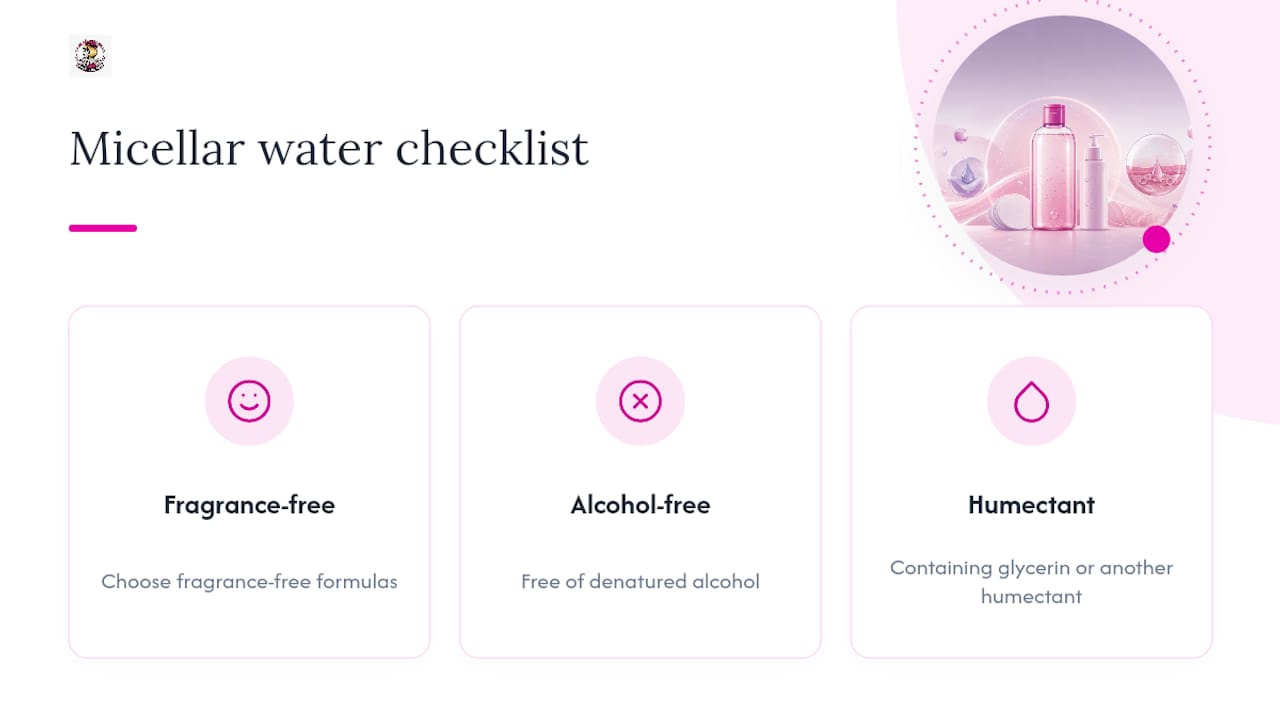
That guidance, echoed across dermatology-reviewed sources, reflects a broader pattern in the clinical literature. Micellar water often preserves hydration better than harsher cleansers, but it isn’t designed to replace a thorough rinse when your skin needs one. Clinic guidance from the Cleveland Clinic recommends rinsing before applying actives specifically because leftover surfactant film can throw off absorption. When you’re shopping, a quick formula checklist helps: fragrance-free, free of denatured alcohol, and ideally containing glycerin or another humectant to offset any residue concerns.
Our Take: Why the Right Answer Isn’t One or the Other
The “micellar water versus cleanser” debate treats this like a competition, but the more useful question is what your skin did that day. Some platforms offer an Ingredient Checker and Label Scanner tools designed to flag irritants like denatured alcohol and confirm whether a formula contains the humectants it advertises. Run a side-by-side comparison before committing to a bottle, prioritize no-rinse convenience against real ingredient safety, and always patch test first. Community reviews on real-world performance tend to catch what a label alone won’t tell you.
— Magdalena Kapuscinska
Compare Micellar Waters Before You Commit to One
Some services provide a faster way to check what’s actually in a product before it touches your face, instead of guessing from marketing copy on the front label. Skip the trial-and-error approach that leaves you with three half-used bottles under your sink.
[Image removed due to lack of supporting source]
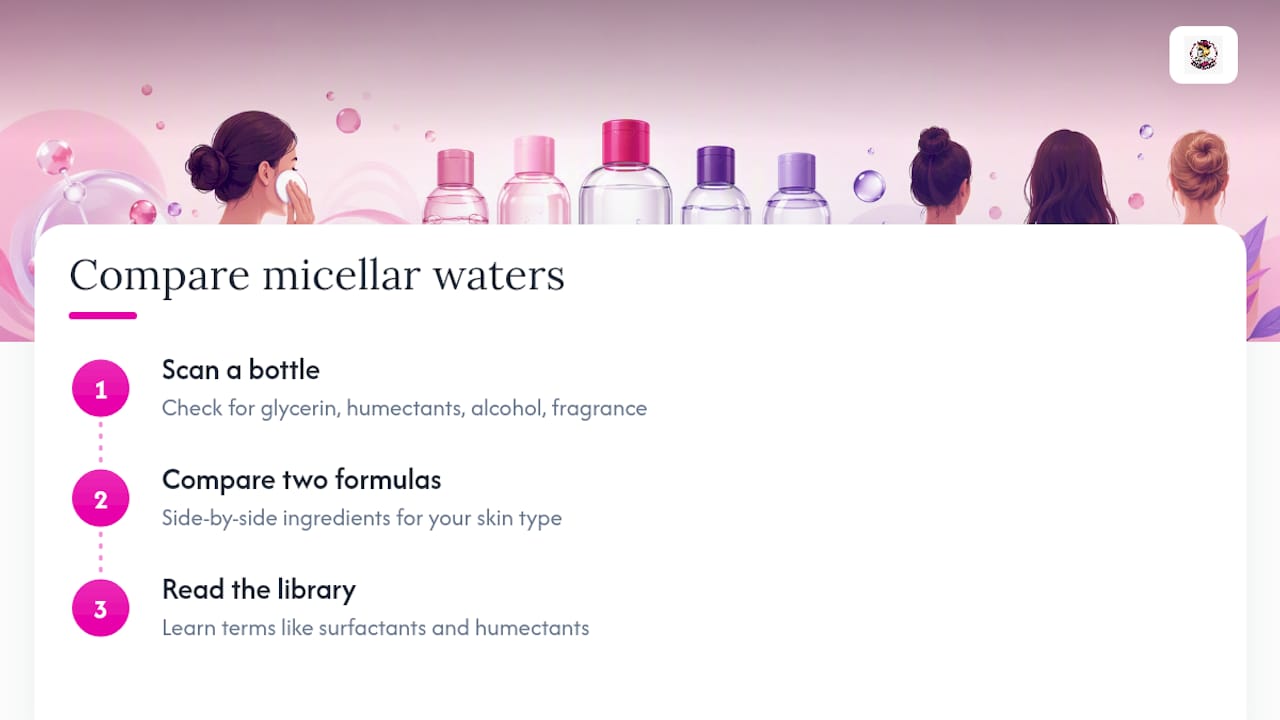
Start by running a favorite micellar water or cleanser through our Ingredient Checker to see whether it actually contains the glycerin or humectants it claims, and whether denatured alcohol or fragrance is hiding lower on the list. If you’re torn between two formulas, our product comparison pages let you check them side by side on the ingredients that matter for your skin type. For a deeper dive into what specific ingredients do, the Ingredient Library breaks down terms like nonionic surfactants and humectants in plain language. Scan a bottle you already own, or compare two you’re considering, and see what you’re really putting on your face.
Sources
-
Can You Use Micellar Water As a Cleanser? 11 Qs on Benefits, Use, More
-
Micellar Water: Benefits, Uses, and How It Works for Skin Care
-
Skin Care Ingredient Focus: Micellar Water - Westlake Dermatology
FAQ
What do dermatologists think of micellar water?
Dermatologists generally view it as a gentle, useful supplement to a skincare routine rather than a full replacement, especially recommending a follow-up cleanser for oily or acne-prone skin.
What are the downsides of micellar water?
It can leave surfactant residue behind, may require several passes on waterproof makeup, and often isn’t strong enough alone for deep pore cleansing.
Is micellar water good for older skin?
Yes, mature skin often benefits from micellar water’s lower-friction application and hydrating humectants, though barrier-friendly formulas and avoiding over-cleansing still matter most.
Can I clean my face with just micellar water?
For a light morning refresh or travel day, yes. For evenings with makeup or sunscreen, dermatology guidance points toward pairing it with a water-based cleanser instead of relying on it alone.