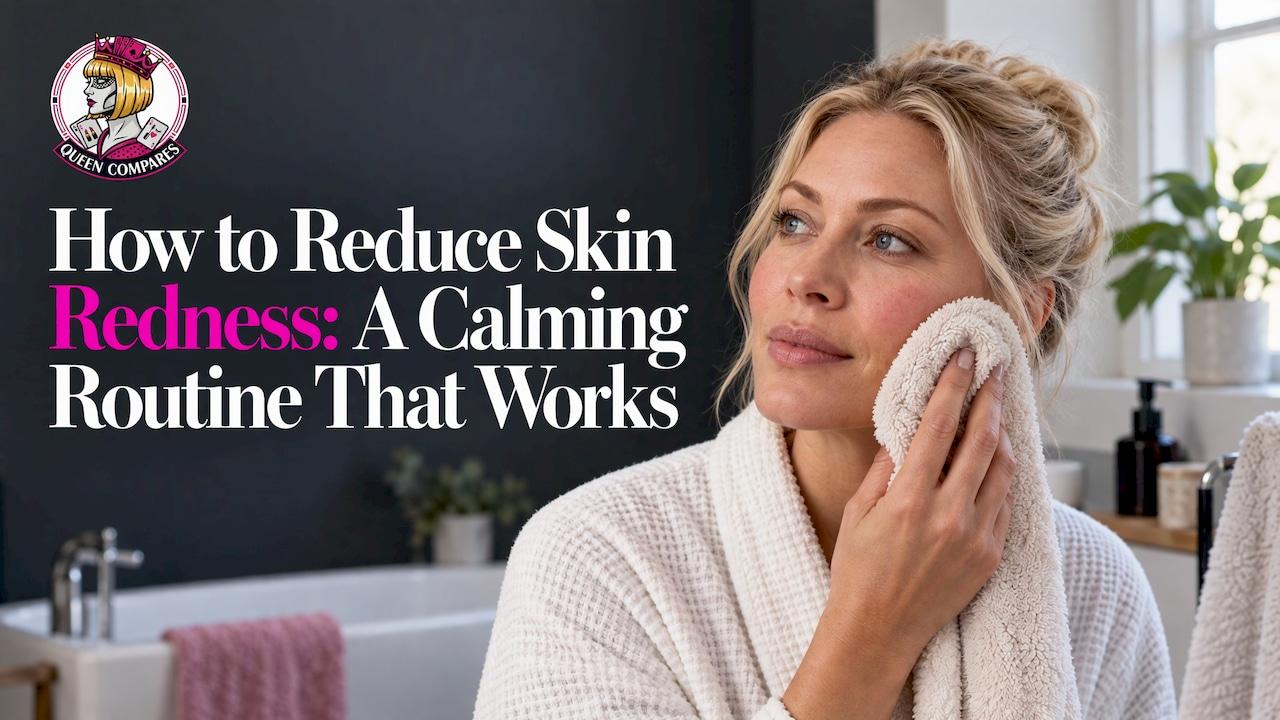
The fastest way to reduce skin redness is to work out why your face is red, then calm the skin with a short, fragrance-free routine: gentle cleanser, barrier-repairing moisturizer and daily SPF 30 or higher. Ingredients such as azelaic acid, niacinamide and green tea extract may help, and a green-tinted concealer or a tinted moisturizer can cover what is left. Checking every label for hidden irritants is what keeps the plan working, and the Ingredient Checker and Label Scanner at Queen Compares are built for that job.
Key Takeaways
-
Redness has many causes, from rosacea and seborrheic dermatitis to contact dermatitis, so see a board-certified dermatologist if it lasts more than 2 weeks.
-
A gentle routine of mild cleansing, moisturizer and broad-spectrum SPF 30 or higher is the base of every redness plan.
-
Azelaic acid, niacinamide and green tea extract are the topical ingredients most often named for visibly calmer skin, and ceramides, glycerin and hyaluronic acid support the barrier.
-
Fragrance-free, non-comedogenic products made for sensitive skin are the safest place to start, and new products should be tested before they go on your whole face.
-
Green-tinted concealers, tinted moisturizers, BB creams and CC creams can neutralize visible redness while you wait for your skin to settle.
Table of Contents
What actually makes your face red
Facial redness is a symptom, not a diagnosis. Dermatologists explain that facial erythema comes from dilated blood vessels and increased blood flow to the skin. Sometimes that is harmless: the same source notes that brief flushing is often a normal nerve-driven response to strong emotion, exercise or heat. If your cheeks go pink after a run or a hot shower and fade within minutes, you are not dealing with a skin problem.
Redness that stays is a different story. The American Academy of Dermatology lists seborrheic dermatitis, rosacea, contact dermatitis, medication reactions, atopic dermatitis and psoriasis among the common causes. Each one is treated differently, which is why a random “redness serum” can work beautifully for one person and do nothing for another.
A quick way to sort your own situation:
| What you notice | What it may point to | Where to start |
|---|---|---|
| Pink or red after heat, exercise or stress, gone within minutes | Normal flushing | Cool down, no treatment needed |
| Red patches after a new product | Contact irritation or allergy | Stop the new product, simplify your routine |
| Persistent central-face redness, visible vessels, bumps | Possible rosacea | Gentle routine plus a dermatologist visit |
| Red, flaky skin around the nose or brows | Possible seborrheic dermatitis | Dermatologist, as it often needs treatment to clear |
| Red, dry, itchy patches | Possible atopic dermatitis | Barrier repair and professional advice |
This table is a guide for sorting your observations, not a diagnosis. Only an exam can confirm the cause.
When to see a dermatologist
The AAD advises that redness lasting more than 2 weeks should be looked at by a board-certified dermatologist. Book sooner if the redness is painful, getting worse, or comes with bumps or swelling. Skin thickening or physical discomfort calls for immediate medical attention. If the diagnosis is unclear or a rash does not respond to first treatment, a skin biopsy can help.
Rosacea deserves a mention of its own. It is common, and it can significantly affect emotional health and quality of life. The good news is that it responds well to a consistent plan.
Calm the skin in the first 24 hours
When your face is hot and red right now, start with the basics:
-
Stop adding products. Pause exfoliating acids, scrubs, retinoids and anything new. Keep only a gentle cleanser, a moisturizer and sunscreen.
-
Use a cool compress. A cold pack or damp washcloth wrapped in a soft towel, held on the skin for 10 to 15 minutes, can constrict blood vessels and ease inflammation and discomfort. Never put ice directly on the skin.
-
Skip heat and friction. Hot water, saunas and rubbing with a towel all push more blood to the surface.
-
Remove likely triggers. Treatments depend on the cause and may include avoiding irritants or allergens. Think fragrance, alcohol-heavy toners, and harsh scrubs.
If you want a fuller reset after a flare, our guide to calming irritated skin walks through the days that follow.
A gentle routine for facial redness
A comprehensive regimen that repairs the barrier, replenishes antioxidants and provides UV protection is considered paramount for managing chronic facial erythema. In plain terms: calm, repair, protect. The AAD’s rosacea guidance gives the structure.
Step 1: Cleanse once or twice a day, softly
Dermatologists recommend cleansing twice daily with a mild, soap-free cleanser. Use lukewarm water and your fingertips. Avoid scrubbing, massaging, washcloths and facial sponges, which create friction. Pat dry with a clean towel.
Where it goes wrong: foaming cleansers with strong surfactants, fragranced formulas and “deep cleaning” devices. A cleanser that leaves your skin feeling squeaky is stripping the barrier.
Step 2: Treat with one targeted serum
A serum for redness should do one or two jobs, not ten. Pick from the ingredients below, introduce it alone, and give it several weeks before judging. More on choosing in the next section.
Step 3: Moisturize to repair the barrier
Moisturize right after cleansing. Barrier-repairing ingredients to look for include ceramides, glycerin, dimethicone and hyaluronic acid. If you want to understand why ceramides matter so much, read our explainer on ceramides for skin, and our skin barrier repair routine for the full sequence.
Step 4: Wear sunscreen every morning
Sun exposure is a classic trigger. The AAD recommends a daily broad-spectrum, water-resistant SPF 30 or higher. Choose one formulated for sensitive skin. A tinted version can double as base makeup, which brings us to the cosmetic side below.
If you want this in a shorter form, our 3-step sensitive skin routine and the five-minute routine keep it simple for busy mornings. If rosacea is the likely cause, see our dermatologist-backed rosacea routine.
Ingredients that may help reduce redness
Mayo Clinic lists azelaic acid, niacinamide and green tea extract as topical ingredients that may help reduce redness. Here is how to think about each one, along with the barrier supporters that make them easier to tolerate.
| Ingredient | What it is used for | Good to know |
|---|---|---|
| Azelaic acid | Visible redness and bumps | Over-the-counter strengths exist, and a 15% gel is a prescription first-line option for rosacea with papules and pustules |
| Niacinamide | Calming and barrier support | Start with a modest percentage and use it every other day at first |
| Green tea extract | Soothing antioxidant | Often found in lightweight serums and creams |
| Ceramides | Barrier repair | Pair with glycerin for comfort |
| Glycerin and hyaluronic acid | Hydration | Layer under a moisturizer |
| Centella asiatica | Soothing botanical common in K-beauty | See our centella asiatica guide |
For rosacea with papules and pustules, the American Academy of Family Physicians names ivermectin 1% cream, metronidazole 0.75% gel and azelaic acid 15% gel as first-line topical treatments. The same source lists low-dose doxycycline as a first-line oral option for moderate to severe cases. These are prescription decisions, so they belong in a conversation with your dermatologist.
For a plain-language look at how barrier-supporting and redness-soothing ingredients such as ceramides, glycerin, azelaic acid and niacinamide fit together, this ingredient overview is a helpful companion.
How to read a label for a redness serum
Whether you are shopping for a serum for red, sensitive skin or a cream, the label checks are the same:
-
Fragrance-free. The AAD advises choosing fragrance-free products made for sensitive skin and labeled non-comedogenic.
-
Short ingredient list. Fewer ingredients means fewer chances of a reaction.
-
Barrier support. Look for ceramides, glycerin or hyaluronic acid on the list.
-
No obvious irritants. Alcohol-heavy formulas, strong scrubs and essential oils are common offenders. A guide to what makes skincare hypoallergenic can help you spot them.
This is the part most people find tedious, and it is where Queen Compares helps most. Our Ingredient Checker and Label Scanner are AI-powered tools that let you check a product’s formula, with safety and allergen alerts, before you buy. Our Products By Ingredient page lets you start from the ingredient you want, such as niacinamide or azelaic acid, and see products that contain it.
How to introduce a new product safely
The AAD advises you to test skin-care products and makeup before applying them to your face. A practical approach:
-
Apply a small amount on the inner forearm or just under the jawline once a day for several days.
-
If there is no stinging, itching or new redness, start on the face every other day.
-
Add only one new product at a time and wait a few weeks before adding another.
-
Keep a short note of what you add and when. If redness flares, you will know the likely cause.
Skincare for facial redness: a sample plan
Here is what a simple day can look like for red, sensitive skin. Adjust it to your dermatologist’s advice.
Morning
-
Rinse with lukewarm water, or use a mild soap-free cleanser.
-
Calming serum (for example, niacinamide or green tea extract).
-
Barrier-repair moisturizer with ceramides and glycerin.
-
Broad-spectrum, water-resistant SPF 30 or higher, fragrance-free. A tinted formula adds coverage.
Evening
-
Mild, soap-free cleanser, patted dry.
-
Targeted treatment, such as azelaic acid, introduced slowly and used as directed.
-
Rich moisturizer for barrier repair.
For a general guide to how steps stack, especially if you also use retinoids, see our routine order guide. If your cheeks react differently from your T-zone, the zone-based combination routine is a useful model. A broader overview lives in our skincare tips for every skin type.
What do Koreans use for redness?
Korean routines tend to focus on barrier comfort rather than aggressive correction. The common approach is layers of light hydration, soothing botanicals and daily sunscreen. Centella asiatica, often labeled “cica”, is the best-known soothing ingredient in K-beauty, and ceramide moisturizers and gentle gel cleansers are staples for sensitive skin. If you are new to the style, start with one soothing product, not a ten-step routine. Our centella asiatica guide covers benefits, safety and how to use it.

Cover redness with makeup while skin heals
Makeup is a legitimate part of a redness plan, as long as it does not become the irritant. Dermatologists note that green-tinted concealer can camouflage redness, and water-based or powder makeup is less likely to irritate sensitive skin.
Green sits opposite red on the color wheel, so it cancels the red tone before your base goes on. Here is how to use the main product types:
-
Green-tinted concealer or primer. Tap a small amount only on the red areas (cheeks, around the nose, chin) and blend with clean fingertips, not a rough sponge.
-
Tinted moisturizer. The lightest option. It evens tone and keeps your routine simple, ideal for mild redness.
-
BB cream. A step up in coverage, often with built-in sun protection. Check that the formula is fragrance-free and suits sensitive skin.
-
CC cream. Designed for color correction, so it suits people whose main concern is redness rather than blemishes.
-
Light foundation. If you need full coverage, choose a water-based or mineral formula and build it in thin layers.
-
Setting powder. A light dusting on the center of the face helps makeup last.
Remove makeup gently each evening with your regular mild cleanser. Never sleep in it. Our Clean Beauty Catalogue is a good starting point for finding tinted moisturizers, BB creams and CC creams with cleaner formulas, and you can scan any label with the Label Scanner before it goes on your face.
Perspective: why the label matters more than the promise
Most people with red skin do not have a shortage of products. They have a shortage of information about what is inside the ones they already own. A serum may promise calm, then sit beside a fragrance, a drying alcohol or a rough scrub that undoes its work.
That is why we built Queen Compares around ingredient-level analysis. When you can see a formula, check it for safety and allergen alerts, and compare it side by side with another product, you stop buying on hope. Our community reviews add the experience of people with skin like yours.
Our approach to redness is simple: identify triggers, keep the routine short, support the barrier and protect from the sun. Tools such as the Ingredient Checker, the Label Scanner and the Skincare Routine Builder are designed to make each of those steps easier to follow.
Magdalena
Build your redness routine with Queen Compares
If you want help turning this article into a routine you will actually follow, Queen Compares has tools for each step. The Ingredient Checker and Label Scanner show what is in a product and flag allergens before you buy. The Skincare Routine Builder creates a personalized routine, and Skincare Routine Progress helps you follow how your skin responds. Each feature is included in the Premium Plan and costs only €7 per month.

Premium Access is €7 per month. For redness-prone skin, the Clean Beauty Catalogue is a quick way to browse cleaner picks, from calming moisturizers to tinted bases.
Mistakes that keep skin red
-
Changing too much at once. Three new actives in one week make it impossible to know what helped or hurt.
-
Over-exfoliating. Scrubs and strong acids damage the barrier. A soothing effect from a gentle BHA is sometimes suggested, but only use one if your skin tolerates it and introduce it slowly.
-
Skipping sunscreen. Sun exposure undoes weeks of calming work.
-
Chasing a quick fix. Barrier repair takes weeks, so judge a new product over several weeks, not several days.
-
Treating a medical condition as a cosmetic one. Persistent redness, bumps or discomfort need a diagnosis. Skincare supports treatment and does not replace it.
Sensitive skin tolerates routine better than novelty. For a fuller guide to choosing mild products, this overview on gentle sensitive-skin steps covers cleansing, moisturizing and protecting red or sensitive skin.
FAQ
What makes skin redness go away?
It depends on the cause. Avoiding irritants and allergens, using a gentle routine and a cool compress can settle mild irritation. Rosacea, seborrheic dermatitis and other conditions often need treatment from a dermatologist, so see one if redness lasts more than 2 weeks.
What is the best cream for redness?
Look for a fragrance-free, non-comedogenic moisturizer made for sensitive skin with ceramides, glycerin, hyaluronic acid or dimethicone. These ingredients repair the barrier, which in turn reduces sensitivity. You can compare formulas side by side on Queen Compares before choosing.
Which serum works for red, sensitive skin?
Serums with niacinamide, azelaic acid or green tea extract are the ones most often named for calming visible redness. Choose a fragrance-free formula, patch test it, and introduce it alone. Prescription-strength azelaic acid is a decision for your dermatologist.
Can makeup help with facial redness?
Yes. A green-tinted concealer cancels red tones, and water-based or powder formulas are less likely to irritate sensitive skin. Tinted moisturizers, BB creams and CC creams give light, even coverage on top of sunscreen.
What do Koreans use for redness?
Korean routines lean on soothing ingredients such as centella asiatica, ceramide moisturizers, gentle cleansers and daily sunscreen. The idea is to calm the barrier first and keep the routine light.
Sources
-
10 reasons your face is red, American Academy of Dermatology
-
7 rosacea skin care tips dermatologists recommend, American Academy of Dermatology
-
Rosacea: Common Questions and Answers, American Family Physician
-
Updates and Best Practices in the Management of Facial Erythema, PubMed Central
-
Red in the face: approach to diagnosis of red rashes, Australian Journal of General Practice
Recommended
General Entertainment & Information Purposes Only At QueenCompares.com we share content for general entertainment and information. It’s not medical, dermatological, nutritional, or fitness advice and shouldn’t replace guidance from a licensed professional. If you’re making health-related decisions, please check with a qualified expert — and know that using this site and its information is at your own discretion.