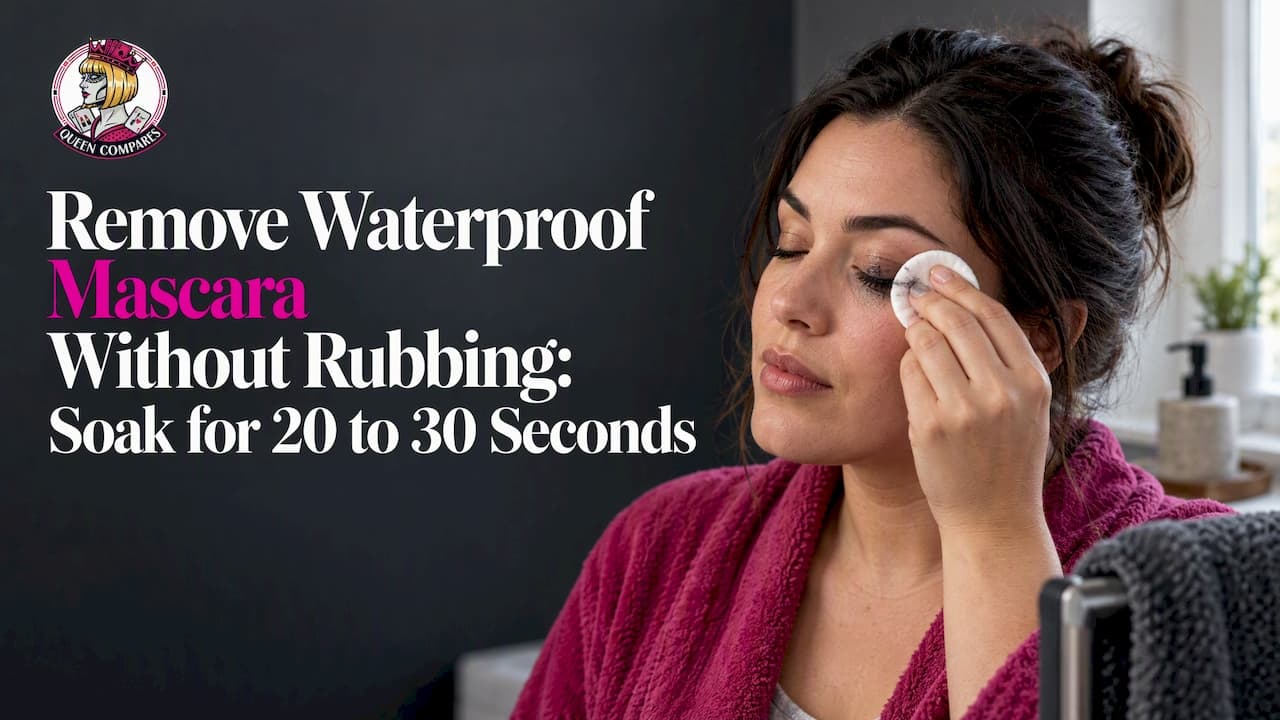
A gentle way to remove waterproof mascara is to dissolve it with an oil-based or bi-phase remover using the soak technique: hold a saturated pad over your closed eye, then swipe gently once. Never rub. If any residue is left, follow with a water-based cleanser. If you have an active eye infection, skip makeup and check in with an eye doctor.
Key Takeaways
Removing waterproof mascara effectively requires using oil-based or bi-phase removers with the soak technique to dissolve the product gently without rubbing.
| Point | Details |
|---|---|
| Use the soak technique | Hold a saturated cotton pad over your closed eye for 20-30 seconds to dissolve mascara before wiping gently. |
| Choose the right remover | Select ophthalmologist-tested, fragrance-free oil-based or bi-phase removers that rinse off cleanly and contain gentle oils. |
| Double cleanse for stubborn formulas | Follow with a water-based cleanser or micellar water to fully remove residue, especially for heavy waterproof mascara. |
| Avoid harsh alternatives | Baby oil and household oils can work but may leave residues or clog pores; use eye-specific removers for safety. |
| Queen Compares offers ingredient comparison tools | We provide resources to choose gentle, irritation-free removers by analyzing ingredient lists. |
Table of Contents
A quick 3-step routine to remove waterproof mascara tonight
Short on time? This is the whole method, and the sections below explain why each step works.
-
Saturate a soft cotton pad with an oil-based or bi-phase remover, close your eye, and press the pad over your lashes for 20 to 30 seconds.
-
Swipe once, gently, downward. Repeat with a fresh pad until it comes away mostly clean, without ever scrubbing back and forth.
-
Double cleanse: finish with a gentle water-based cleanser. If your eyes are very sensitive, a pass of micellar water works instead.
Pro Tip: Give the remover time to dissolve the mascara before you gently wipe it away.
Once your eyes are clean, a lightweight tinted moisturizer, BB cream or CC cream is a nice way to even out your skin tone for the next morning without piling on heavy product around the eye area.
Why do oil-based and bi-phase removers work so well?
It comes down to “like dissolves like.” Traditional waterproof mascaras use waxes, silicones or anhydrous formulas to build a film that resists water, which is why removal needs oil-based removers rather than aggressive rubbing. Water alone slides right over that film. Oil gets under it and breaks it down so it lifts away.
Bi-phase removers pair an oil layer with a water layer, so you shake the bottle and get both in one. Here is what to look for when you shop:
-
Ophthalmologist-tested on the label, which signals the formula was designed with eyes in mind.
-
Fragrance-free, since scent is a common source of stinging.
-
Gentle oils such as jojoba, camellia or rice bran near the top of the ingredient list.
-
A formula that rinses or wipes off cleanly rather than leaving a heavy film.
Not sure what is in your current bottle? Paste the ingredient list into our AI Ingredient Analysis tool to spot fragrance and other common irritants before they touch your eyes.
Pro Tip: Shake bi-phase formulas well before every use. The two layers separate in the bottle, and a pad soaked mostly in the water layer will not dissolve much.

Cleansing balms and oils: how double cleansing handles stubborn formulas
Cleansing balms and oils are great at lifting waterproof mascara while also caring for the skin around it. For very heavy or waterproof makeup, a double cleanse is recommended: an oil-based cleanser or balm first, then a water-based cleanser. If you want a walkthrough of the logic, our guide to double cleansing covers when it helps and when you can skip it.
-
Apply the balm or oil to dry skin, keeping it away from your waterline, and massage it around the lash area softly.
-
Emulsify with a little water until it turns milky, then rinse.
-
Follow with a gentle water-based cleanser to clear leftover residue.
-
Oily or breakout-prone skin often does better with a balm that rinses clean, while dry skin can handle a richer oil. Our balm vs oil comparison helps you choose.
For a product-type reference, the Epicutis Oil Cleanser is an example of a non-greasy oil formula.
When is micellar water enough?
Micellar water is a gentle option, especially for sensitive eyes. It removes dirt and makeup by binding oil to micelles, so it picks up product without needing a rinse. It is a good fit for light days, regular mascara, and tired evenings.
-
Soak a pad, hold it on your closed eye for a few seconds, then wipe softly.
-
Use a cotton swab dipped in micellar water for corners and stubborn clumps at the lash base.
-
With very heavy waterproof formulas, micellar water alone may leave residue. That is your cue to upgrade to an oil or bi-phase remover, or add a double cleanse.
Wondering whether it should replace your cleanser entirely? Our micellar water vs cleanser guide breaks it down by skin type.
Are wipes and kitchen oils safe for waterproof mascara?
They can work in a pinch, but treat them as backup, not your nightly habit.
-
Makeup wipes: fine for travel or an occasional late night. Follow with a cleanser, and watch for strong fragrance or harsh surfactants.
-
Household oils such as coconut or olive: they can break mascara down, but they are not formulated for the eye area and may leave a residue that clouds vision. Use them cautiously, if at all.
-
On the go: saturate the wipe or pad, hold it on the lashes, make one gentle sweep in a single direction, and rinse as soon as you can.
If you wear contacts, read our contact lens safe makeup rules first.
The soak technique, step by step, with troubleshooting
Patience beats friction every time. Here is the exact method:
-
Saturate a cotton pad with your oil-based or bi-phase remover, then fold it so it fits over your lashes.
-
Close your eye and rest the pad against your lid.
-
Hold for 20 to 30 seconds without pressing hard.
-
Swipe gently in one direction, away from the lash roots.
-
Repeat with a fresh pad until it comes away clean.
If clumps cling to the base of your lashes, dab a cotton swab with micellar water instead of scrubbing. Avoid rubbing, tugging and aggressive back-and-forth swipes. The thin skin around your eyes and your lashes themselves pay the price for every rushed shortcut.
What should you know about sensitive eyes and blepharitis?
The eyelid is delicate, and rubbing it raises the odds of irritation and lash breakage. If you live with blepharitis or sensitive eyes, a few extra habits matter:
-
Choose gentle, ophthalmologist-tested products and avoid rubbing or tugging at the eyes.
-
Eyelid hygiene is part of care. The American Academy of Ophthalmology guidance describes warm compresses and eyelid cleansing, with regimens tailored to each person.
-
Skip eye makeup during an active flare or infection, and talk to an eye care professional if symptoms persist.
-
Replace your eye makeup after an infection clears.
How often should you replace mascara and clean your tools?
Mascara should be replaced every three months. Past that point it often harbors bacteria such as Staph aureus, which is the last thing you want near your eyes.
-
Toss mascara after any eye infection, even if it is newer than three months.
-
Clean brushes and tools regularly. The same dermatologist source suggests every 7–10 days.
-
For brushes, rinse under lukewarm water, lather with gentle shampoo, rinse until the water runs clear, then lay flat to dry.
-
Wash reusable pads after each use, and keep makeup out of hot cars and steamy bathrooms.
How can you make future removal easier?
A little planning at application time saves effort at night.
-
Try a tubing mascara, or layer a non-waterproof formula under your waterproof one.
-
Run a dry spoolie through your lashes right after applying to lift clumps before they set.
-
Never sleep in mascara. Make removal part of your nightly routine, and add a lash conditioner if you like.
Pro Tip: Save waterproof mascara for days that truly need it, like weddings, beach trips or rain. Everyday wear rarely calls for the hardest formula to remove.
A note from me, Magdalena
I don't think waterproof mascara needs to be used every day. But if you do use it, pick cleaner formulas from trusted brands. What matters most to me is choosing mascara and remover carefully based on their ingredients. Sensitive eyes often react to fragrance and harsh surfactants before they react to the mascara itself. That’s why I created ingredient tools at Queen Compares—to help you check product labels before they touch your eyes.
— Magdalena Kapuscinska QueenCompares.com Founder
Pick a gentler remover by ingredient with Queen Compares
Choosing a remover should not feel like guesswork. At Queen Compares, we give you the tools to compare formulas by what they contain, so you can avoid fragrance and irritating surfactants before you buy.
-
Run any label through our AI Ingredient Analysis to flag likely irritants.
-
Browse Products By Ingredient to compare removers side by side.
-
Read our guide to ingredients to avoid in makeup for a safer beauty bag.

Ready to find your match? Explore our Products By Ingredient page and start comparing gentle removers today.
This article is general information, not a substitute for advice from a qualified doctor. Consult a qualified healthcare professional about your own circumstances before acting on anything here.
FAQ
Can I use baby oil as makeup remover?
Baby oil can dissolve mascara, but it is not made for the eye area. It may leave an oily film that blurs vision or clogs pores, so an eye-specific oil-based or bi-phase remover is the safer pick, especially for sensitive eyes.
Why has Gen Z stopped wearing mascara?
There is no single verified reason we can point to, and trends vary from person to person. Many people simply prefer lower-effort, natural-looking routines, and skipping mascara also skips the nightly removal step.
Can I wear mascara if I have blepharitis?
It is best to avoid eye makeup during an active flare, and to choose gentle, ophthalmologist-tested products when you do wear it. Check in with your eye doctor about what is right for your case, and replace your mascara after an infection.
What are the disadvantages of waterproof mascara?
Waterproof formulas are harder to remove, and that raises the risk of lash loss when people rub or tug. Using the soak technique with an oil-based or bi-phase remover keeps removal gentle.
Sources
Recommended
General Entertainment & Information Purposes Only At QueenCompares.com we share content for general entertainment and information. It’s not medical, dermatological, nutritional, or fitness advice and shouldn’t replace guidance from a licensed professional. If you’re making health-related decisions, please check with a qualified expert — and know that using this site and its information is at your own discretion.