Zinc oxide and titanium dioxide are the two active ingredients the FDA fully recognizes as generally recognized as safe and effective (GRASE) for sunscreen use, and as of June 2026, bemotrizinol joined the approved list, the first new sunscreen filter cleared for the US market in two decades. Among the organic (chemical) filters that fill most drugstore shelves, oxybenzone deserves real caution, octocrylene sits in a gray zone, and avobenzone is fine when it’s properly stabilized in the formula.
Here’s your quick decision framework:
-
Zinc oxide and titanium dioxide: Strong safety track record, GRASE-recognized, low absorption risk.
-
Bemotrizinol: Newly approved, broad-spectrum, expands your options beyond the mineral basics.
-
Oxybenzone: Detectable in human blood and urine after use, with in vitro data on endocrine and neural-cell effects. Worth avoiding if you have alternatives.
-
Octocrylene: Effective stabilizer for other filters, but photoallergy reports and stability concerns keep it under regulatory watch.
-
Avobenzone: Good UVA protection, generally acceptable, but degrades in sunlight unless the formula stabilizes it (often with octocrylene).
What ingredients you use matters, the sames as correct sunscreen application or frequency. QueenCompares built its entire ingredient-safety approach around one blunt fact: the biggest risks are using skincare ingredients that can affect you as well as skipping sunscreen or applying too little of it, too rarely.
Key Takeaways
Consistent use of a broad-spectrum, GRASE-recognized mineral sunscreen provides more reliable protection against UV-induced skin cancer than chemical sunscreens, which may carry potential risks associated with specific ingredients.
| Point | Details |
|---|---|
| Mineral filters lead on safety data | Zinc oxide and titanium dioxide carry the FDA’s full GRASE recognition and the lowest absorption concerns. |
| Bemotrizinol expands your options | The FDA’s June 2026 approval adds a new broad-spectrum filter without oxybenzone’s absorption profile. |
| Oxybenzone deserves caution | It’s measurable in human blood and shows in vitro endocrine effects, plus it’s a reef-ban target. |
| Application form changes risk | Sprays add an inhalation pathway that creams and lotions avoid, especially for kids’ faces. |
| Consistency beats ingredient perfection | Dermatology guidance emphasizes that the sunscreen you’ll actually reapply matters more than chasing a flawless formula. |
Table of Contents
Sunscreen Ingredient Safety Cheat Sheet You Can Screenshot
You’re standing in the sunscreen aisle, flipping bottles over, and the ingredient list reads like a chemistry exam. Here’s the shortcut.
Mineral filters (zinc oxide, titanium dioxide): These sit on top of your skin and physically deflect UV rays instead of absorbing into it. They’re the default “preferred” pick for babies, pregnant women, and anyone with reactive or acne-prone skin, largely because their systemic absorption is minimal compared to organic filters.
Chemical filter quick labels:
-
Oxybenzone — Caution! Detected in blood at levels above FDA’s testing threshold; also the filter most targeted by reef-safety bans.
-
Octinoxate — Caution! Similar absorption profile to oxybenzone and flagged in the same environmental bans.
-
Octocrylene — Caution! Works well as a stabilizer, but watch for skin sensitivity if you have a history of photoallergic reactions.
-
Avobenzone — Generally fine. Needs a stabilizing partner ingredient to stay effective in sunlight.
-
Homasalate — Caution! dose-dependent. Regulatory reviews flag it for further data at higher exposure levels.
Special notes: If you’re pregnant or shopping for a baby’s skin, choose mineral non-nano zinc oxide.
Recommended Mineral sunscreens:
If you’re deciding between a spray and a cream, choose the cream for your face, since aerosolized particles carry an inhalation risk creams simply don’t have. Kids squirm during application, which makes overspray around the face even more likely with sprays.
For a deeper walk-through on reading these labels yourself, QueenCompares put together a practical guide to evaluating sunscreen ingredients that pairs well with this cheat sheet.
Are Sunscreen Ingredients Safe? A Deep Dive by Filter
Sunscreen ingredient safety isn’t a yes-or-no question. It’s a spectrum, and where each ingredient lands depends on how much of it enters your body, what it does once it’s there, and how strong the evidence actually is. Let’s go filter by filter.
1. Oxybenzone
Oxybenzone is the most studied and most debated organic filter on the market. A systematic literature review found it shows measurable endocrine and neural-cell effects in vitro, and it’s detectable in human blood and urine after topical use. That doesn’t mean it’s been proven to cause harm in real-world use at typical concentrations. It means the signal is strong enough that regulators and researchers keep watching it closely, and it’s reasonable for you to choose an alternative filter if one’s available.
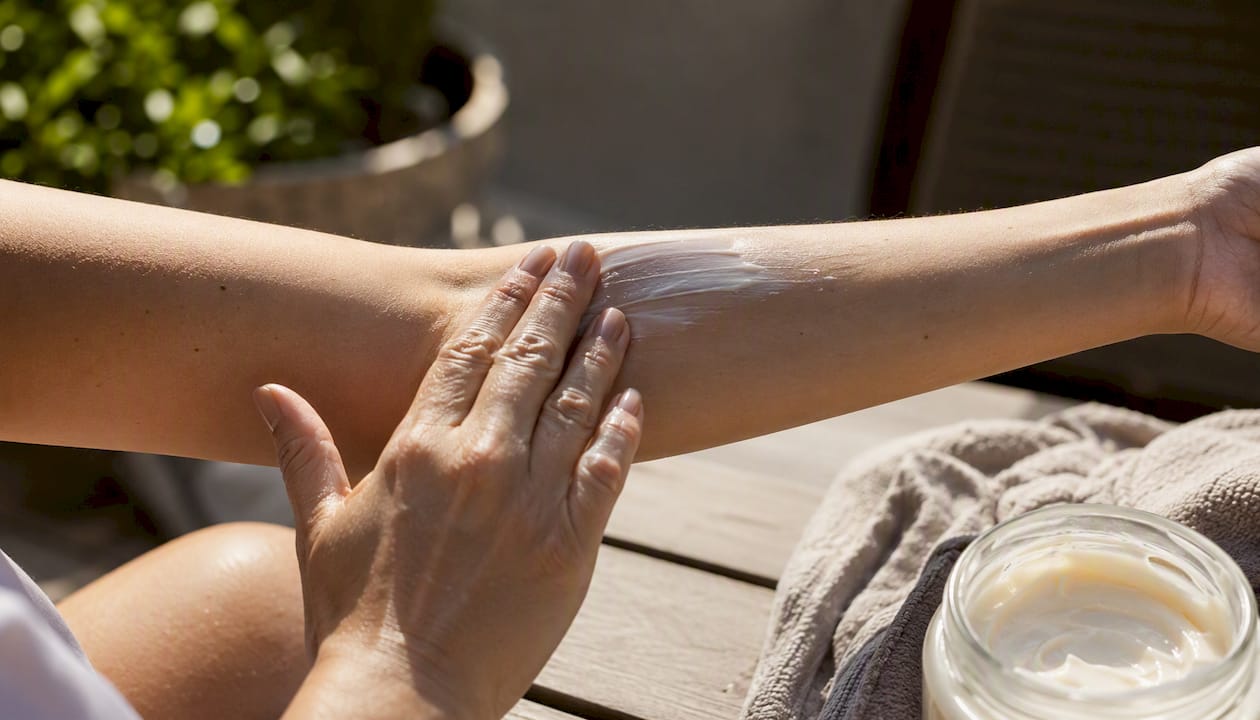
Pro Tip: Check the “Drug Facts” panel, not the marketing copy on the front of the bottle. Oxybenzone is often listed by its chemical name, “benzophenone-3,” which is easy to miss if you’re only scanning for the word “oxybenzone.”
2. Octinoxate
Octinoxate (octyl methoxycinnamate) shares oxybenzone’s absorption profile. It shows up in systemic circulation after use, and it’s one of the filters named in reef-protection bans in places like Hawaii and Key West. The environmental data is stronger than the human-health data here. Most of the caution around octinoxate is precautionary rather than a settled verdict on personal risk.
3. Octocrylene
Octocrylene plays a supporting role in most formulas. It stabilizes avobenzone, which would otherwise break down quickly in sunlight and lose effectiveness. A safety review published in the Journal of the European Academy of Dermatology and Venereology found that photoallergy and sensitization reactions are documented but rare, and regulatory bodies continue routine reassessment rather than flagging it as a priority concern. If your skin tends to react to fragrance or preservatives, octocrylene is worth patch-testing before you commit to a full-face product.
4. Avobenzone
Avobenzone is your primary UVA filter in most chemical formulas sold in the US, since it covers wavelengths that other filters miss. Its main weakness isn’t toxicology, it’s chemistry: unstabilized avobenzone degrades within an hour of UV exposure. That’s why it’s almost always paired with octocrylene or encapsulated in newer delivery systems. A well-formulated avobenzone product holds up; a poorly stabilized one just stops protecting you partway through your day at the beach.
5. Homosalate and the “additional data needed” ingredients
Homosalate, along with several other older organic filters, falls into a category where regulators want more human exposure data before issuing a full safety verdict. The TGA’s safety review of seven active ingredients used a Margin of Safety calculation and found some ingredients low risk under typical use, while recommending tighter concentration limits or use restrictions for others, homosalate and oxybenzone included, depending on the exposure scenario modeled. That’s a nuanced, conditional finding, not a blanket “unsafe” label.
Statistic Callout: The TGA’s Margin of Safety approach shows that ingredient safety depends on use context, with some ingredients acceptable at realistic exposure levels.
6. Zinc oxide and titanium dioxide
These two inorganic filters have the most reassuring topical-use data of any active ingredient on the market, according to the same peer-reviewed review that flagged concerns with oxybenzone. Their dermal absorption is minimal, which is why they’re the default recommendation for infants, pregnant women, and people with reactive skin. The one caveat: nanoparticle formulations, common in modern mineral sunscreens because they reduce the white cast, raise separate questions about inhalation if you’re using a loose powder or spray version rather than a cream or lotion.
7. Bemotrizinol
Bemotrizinol’s June 2026 FDA approval matters more than a single new ingredient normally would. It’s been used safely in European and Asian sunscreen formulas for years, and its addition to the US approved list gives American formulators a broad-spectrum option that doesn’t carry oxybenzone’s absorption profile. Expect to see it show up in new product launches over the next couple of years as brands reformulate.
What Do the FDA and TGA Actually Say About Sunscreen Safety?
Regulatory language around sunscreen can sound alarming if you don’t know how to read it. Here’s the translation.
-
GRASE means “cleared.” The FDA only fully recognizes zinc oxide, titanium dioxide, and now bemotrizinol as GRASE for sunscreen use. That’s a narrow list, but it doesn’t mean everything else is dangerous.
-
MUsT studies are about data, not danger. The FDA’s Maximal Usage Trial process measures how much of an active ingredient enters your bloodstream under maximum real-world use. Many organic filters haven’t completed this process, which is why they’re categorized as needing more data rather than approved outright, according to FDA guidance on sunscreen use.
-
“Additional data needed” is not the same as “unsafe.” It typically reflects an incomplete evidence file, not a documented harm.
-
The TGA uses Margin of Safety math. Australia’s regulator models exposure scenarios and sets concentration limits accordingly, which is why some ingredients get restricted for certain uses but not banned outright.
-
Both agencies agree on one thing: unprotected UV exposure carries a well-documented cancer risk, and that risk outweighs the theoretical concerns tied to most active ingredients on the market.
Do Sunscreen Chemicals Really Harm Coral Reefs?
Yes, but the picture is messier than the ban headlines suggest. Laboratory studies have shown that oxybenzone and octocrylene can be toxic to coral at certain concentrations, and that research is real. What’s less settled is whether the concentrations used in those lab studies reflect what actually accumulates in ocean water near popular beaches.
A critical review of the oxybenzone evidence points out that field concentrations and lab-test concentrations don’t always match, which is part of why bans in places like Hawaii, Key West, and Palau are framed as precautionary rather than definitively proven. Regulators would rather restrict a suspected pollutant before the field data fully catches up than wait and risk reef damage in the meantime.
Here’s how you can protect both your skin and the water you’re swimming in:
-
Choose a mineral (zinc oxide or titanium dioxide) sunscreen for beach and ocean days.
-
Rub sunscreen in fully before you get in the water instead of applying it poolside or on the sand right at the shoreline.
-
Never spray sunscreen directly over open water. It drifts, and a chunk of it lands on the surface instead of your skin.
Pro Tip: Apply sunscreen 15 to 20 minutes before you head into the water. It gives mineral formulas time to set, so less of it washes off in the first few minutes of swimming.
How Does Spray vs. Cream Sunscreen Change Your Risk?
The active ingredient on the label is only half the safety equation. How you apply it changes your exposure just as much.
-
Inhalation is a real pathway for sprays. Research on aerosolized sunscreen found that inhaling sprayed particles is a plausible exposure route, with potential for the particles to linger in the upper airway rather than settling entirely on skin.
-
Systemic absorption isn’t unique to sprays. MUsT studies measuring blood levels of active ingredients after topical use show that dermal absorption happens regardless of format. Sprays simply add an extra inhalation pathway on top of that.
-
Ventilation and application site matter. Applying spray sunscreen in an open, outdoor area rather than an enclosed bathroom reduces how much aerosolized product you breathe in.
Statistic Callout: Researchers studying inhaled sunscreen note that creams and lotions carry meaningfully lower inhalation risk than sprays for facial application, which is a big part of why pediatricians steer parents toward creams for kids’ faces specifically.
Practical takeaway: keep sprays for large body areas outdoors, and switch to a cream or lotion for your face and for any child under your care.
How Do You Choose a Sunscreen That Fits Your Life?
The most effective sunscreen is the one you’ll actually reach for every single day, according to dermatology guidance that consistently emphasizes adherence over any single ingredient debate. A theoretically perfect formula does nothing sitting in a drawer.
Run through this checklist before you buy:
-
Active ingredient: Zinc oxide, titanium dioxide, or bemotrizinol if you want the strongest safety data. Avobenzone-based formulas are a reasonable middle ground if the texture suits you better.
-
Broad spectrum: Confirms the product blocks both UVA and UVB rays, not just one.
-
SPF value: SPF 30 minimum for daily wear, SPF 50 for extended outdoor time.
-
Water resistance: Look for “water resistant (40 minutes)” or “(80 minutes)” on the label if you’re swimming or sweating.
-
Application form: Cream or lotion for your face and for kids; spray is acceptable for large areas like legs and arms, applied outdoors.
Match it to your day. A tinted mineral formula works well under makeup for daily wear. A sport-specific water-resistant formula matters more for a beach day or a long run. Sensitive or acne-prone skin usually tolerates mineral filters better than heavier chemical blends.
If you’re pregnant, nursing, or shopping for an infant, mineral filters are the conventional first choice given their minimal systemic absorption, though QueenCompares’ complete pregnancy sunscreen guide walks through the specifics in more depth. If you’re managing a chronic skin condition or take medications with photosensitivity warnings, loop in your dermatologist before switching formulas, since some interactions are still under active study rather than fully ruled out.
Pro Tip: Buy a smaller size before committing to a full bottle of anything new. A patch test on your inner arm for 48 hours catches most reactions before they show up across your entire face.
Sunscreen doesn’t work in isolation from the rest of your routine, either. If you’re building out your full daytime lineup, QueenCompares’ guide to a safe skincare routine covers how sunscreen should layer with your other products.
How QueenCompares Helps You Check Sunscreen Ingredients
You shouldn’t need a chemistry degree to figure out if the bottle in your cart is one you actually want to use. That’s the entire reason QueenCompares built its ingredient tools the way we did.
-
Ingredient Checker: Scan or search a sunscreen’s label and get an instant breakdown of each active ingredient against current FDA GRASE status, TGA safety findings, and the peer-reviewed research we track.
-
Ingredient Library: A searchable reference for every filter mentioned in this article, plus thousands of other skincare ingredients, written in plain language instead of regulatory jargon.
-
Community feedback layer: Real user reviews and reactions sit alongside the regulatory data, so you can see how a formula performs for skin types like yours, not just what a lab report says.
We built this because “additional data needed” shouldn’t mean “figure it out yourself.” Scan a bottle with our Ingredient Checker before your next purchase, or browse the Ingredient Library if you want to understand a specific filter before it’s even in your hand.
Ready to check your current sunscreen? Head to the QueenCompares Ingredient Checker and scan the label. If your favorite sunscreen isn’t in our database yet, you can also suggest it for review.
Why the Sunscreen Safety Debate Misses the Point
The conventional advice on sunscreen safety spends too much energy litigating oxybenzone and not enough energy on the fact that most people apply a quarter of the sunscreen they need and reapply it half as often as they should. The research supports a clear judgment: mineral filters and bemotrizinol have the strongest safety profiles, oxybenzone warrants real caution, and everything else lives in a gray zone that regulators are still actively studying rather than ignoring.
Where the popular narrative falls short is treating “chemical vs. mineral” as the whole story. It isn’t. Application form, reapplication habits, and formula stability change your actual exposure and your actual protection more than the ingredient list alone. A stabilized avobenzone cream you’ll use every day beats a “perfectly clean” mineral sunscreen sitting unused in your bag.
Start with the ingredient list, but don’t stop there. Check the formula against a tool built for that job, then build the habit around it.
— Magdalena Kapuscinska
This article is general information, not a substitute for advice from a qualified doctor. Consult a qualified healthcare professional about your own circumstances before acting on anything here.
Sources
-
FDA expands sunscreen options for the first time in 20 years
-
Aerosolized sunscreen inhalation and related risks (study/review)
FAQ
What Ingredients Should I Avoid in Sunscreen?
Oxybenzone carries the most consistent caution flags due to its absorption and in vitro endocrine effects, with octinoxate close behind for similar reasons. Octocrylene and homosalate warrant a closer look if you have sensitive skin or prefer to minimize exposure, though neither is classified as unsafe.
What Sunscreen Has the Least Toxic Ingredients?
Formulas built around zinc oxide, titanium dioxide, or the newly approved bemotrizinol have the strongest safety data available, largely because of their minimal systemic absorption and full or emerging FDA recognition.
Which Sunscreen Has No Carcinogens?
No FDA-approved active sunscreen ingredient is classified as a carcinogen; the debate centers on absorption and endocrine signals, not cancer-causing potential. Skipping sunscreen entirely carries a far better documented cancer risk than any ingredient on the approved list.
Do Dermatologists Prefer Chemical or Mineral Sunscreen?
Dermatology guidance generally favors mineral sunscreens for sensitive skin, pregnancy, and children, but most dermatologists agree the best sunscreen is whichever one a person will actually wear and reapply consistently.