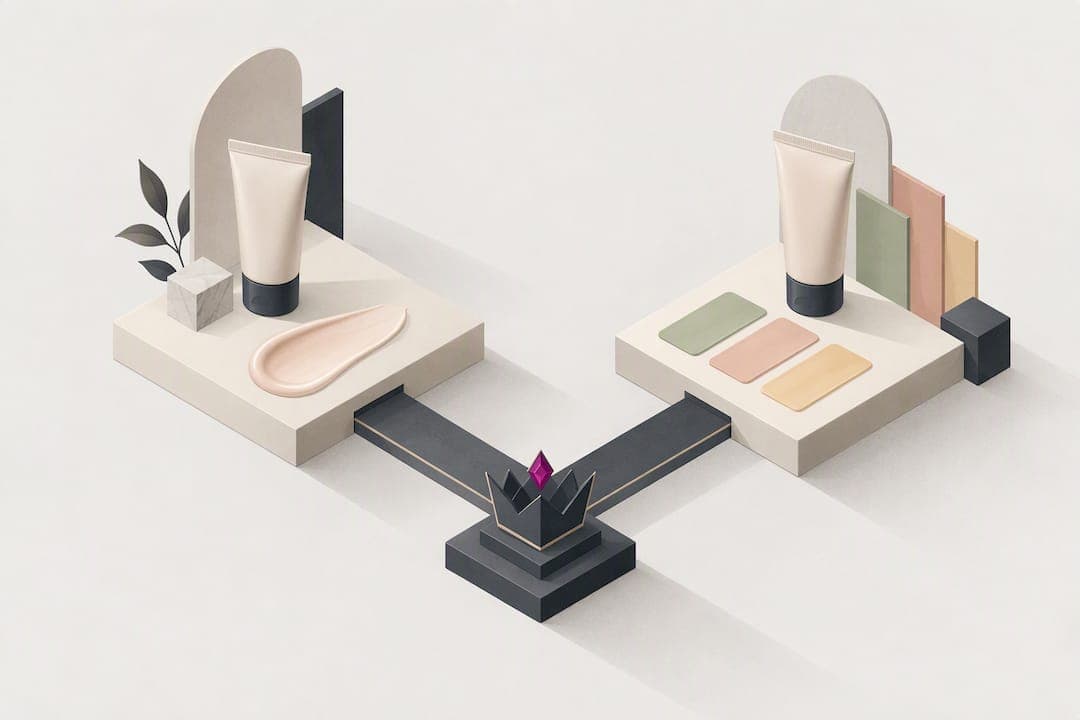
BB cream is your pick for hydration and a soft, natural glow, especially on dry or normal skin. CC cream wins when uneven tone, redness, or dark spots are your main concern, since its pigments correct color rather than just blur texture. If you want both, spot-treat problem areas with CC cream first, then blend a sheer BB cream over the rest of your face.
TL;DR:
BB cream offers hydrating, dewy coverage ideal for dry or normal skin, with ingredients like hyaluronic acid and antioxidants, but it provides only sheer to light coverage.
CC cream contains targeted pigments to neutralize redness or dark spots, with a satin or matte finish and buildable light to medium coverage.
Proper product choice depends on skin type and primary concern; choose BB for hydration and glow or CC for visible correction of discoloration.
Applying a separate broad-spectrum SPF 30+ sunscreen is essential, as the SPF in tinted creams is rarely sufficient on its own.
Dermatologists recommend patch-testing and avoiding fragranced or active-exfoliant formulas on reactive skin, treating CC as cosmetic correction rather than therapy.
Table of Contents
BB Cream vs CC Cream: What Is BB Cream, Exactly?
BB stands for “beauty balm” or “blemish balm,” and it started as a lightweight tinted moisturizer with skincare benefits baked in. Think of it as a hybrid: part serum, part concealer, part sunscreen, all in one tube.
Coverage stays sheer to light, and the finish leans dewy or naturally luminous rather than flat. That’s the whole point of a BB cream: it should look like your skin on a good day, not a face full of makeup.
You’ll typically find hyaluronic acid, glycerin, ceramides, niacinamide, and antioxidants in the ingredient list. These support hydration and barrier repair while the tint evens out minor discoloration. Many formulas also include SPF, though how much protection you actually get depends on how thick you apply it (more on that later).
One quirk worth knowing before you shop: BB creams often come in fewer shades than foundations or CC creams. Because the coverage is sheer, brands assume it will adapt to a wider range of skin tones without needing ten variations. That works well for some people and less well for deeper or lighter ends of the spectrum, so swatching in daylight still matters.
-
Best texture match: dry, normal, or dehydrated skin craving a dewy look
-
Typical finish: natural, glowy, “your skin but better”
-
Common actives: hyaluronic acid, ceramides, niacinamide, antioxidants
-
Coverage level: sheer to light
What Does CC Cream Actually Correct?
CC stands for “color corrector” or “complexion corrector,” and that name is doing real work. Instead of just tinting your skin, CC cream layers in targeted pigments engineered to cancel out specific discoloration using basic color theory: green neutralizes redness, peach or orange corrects blue and purple tones under the eyes, and yellow tones down dullness or sallow patches.
Coverage runs light to medium, noticeably more buildable than most BB creams, and the finish tends toward satin or matte rather than dewy. That makes CC cream the better choice when you want visible correction, not just a soft-focus filter. According to The Strategist’s comparison of BB and CC creams, CC formulas emphasize neutralizing discoloration while BB formulas prioritize hydration and glow.
Common actives include niacinamide, brightening agents, and antioxidants, and CC creams often carry higher or more consistently tested SPF labeling than their BB counterparts. That’s not universal, but it’s a pattern worth checking on the label.
-
Best texture match: redness, hyperpigmentation, post-acne marks, uneven tone
-
Typical finish: satin or matte, more “corrected” than “glowy”
-
Common actives: niacinamide, brighteners, antioxidants
-
Coverage level: light to medium, buildable
BB Cream or CC Cream: How Do They Really Compare?
Once you line up the two side by side, the split becomes obvious: BB cream is skincare-first with a tint, and CC cream is correction-first with skincare benefits attached. Neither is objectively better. They’re built to solve different problems.
| Feature | BB Cream | CC Cream |
|---|---|---|
| Coverage | Sheer to light | Light to medium |
| Primary purpose | Hydration and glow | Color correction |
| Typical finish | Dewy, natural | Satin or matte |
| Common ingredients | Hyaluronic acid, ceramides, niacinamide | Niacinamide, brighteners, antioxidants |
| SPF considerations | Often present, variable protection | Often higher or more consistent labeling |
| Best for | Dry, normal, minimal-makeup days | Redness, hyperpigmentation, uneven tone |
Makeup artists and beauty editors consistently describe BB cream as the more hydrating, glowy option and CC cream as the one delivering more visible, targeted correction, according to Women’s Health’s breakdown of BB versus CC cream. Both products cut down your morning routine compared to layering separate moisturizer, sunscreen, and foundation.
The SPF numbers on either product deserve a healthy dose of skepticism. Sunscreen testing for labeling purposes uses a specific application density, and most people apply far less than that in real life, which means the SPF on your BB or CC cream rarely delivers what the label promises.
Pro Tip: Don’t choose between BB and CC cream based on SPF number alone. Treat any SPF on a tinted product as a bonus, not your primary sun protection.
How Do You Choose Between BB and CC Cream?
Your skin type and your biggest visible concern should drive this decision more than trends or packaging claims. Here’s a simple way to sort it out.
-
Start with your skin type. Dry or normal skin generally does better with BB cream’s hydrating base. Oily or acne-prone skin often needs a mattifying CC formula, or a CC cream layered over a mattifying primer to control shine.
-
Identify your dominant concern. If redness, rosacea flare-ups, or hyperpigmentation are your main frustration, CC cream’s color-correcting pigments will do more visible work. If you just want smoother, hydrated-looking skin without heavy correction, BB cream covers it.
-
Match shade and undertone in natural light. Both products can misread on camera-lit bathroom mirrors, so check your shade near a window or with your phone’s daylight setting before committing.
-
Patch-test before full application. Watch for fragrance, strong exfoliating acids, or ingredients you know irritate your skin. If you have reactive skin or diagnosed rosacea, a dermatologist-backed routine is worth reviewing before adding a new tinted product.
How Do You Apply BB or CC Cream the Right Way?
Less is more with both products. Start with a pea-sized amount for your whole face, applying it with clean fingers for a sheer, blended look or a damp makeup sponge for a slightly more polished finish.

Build coverage in thin layers rather than piling on product at once, which is what causes that heavy, cakey look nobody wants. If you only have redness around your nose or dark spots on your cheeks, spot-apply a bit more CC cream there instead of coating your entire face in a thicker layer.
Sunscreen is where most people quietly fail. Because BB and CC creams are tested for SPF at roughly 2 mg per square centimeter of skin, a far thicker layer than most people apply, relying on it as your only sun protection leaves you under covered.
-
Apply a dedicated broad-spectrum SPF 30+ sunscreen underneath your BB or CC cream
-
Reapply sunscreen separately if you’re outdoors for extended periods
-
Use a brush or sponge for more even coverage on textured skin
Pro Tip: If you’re only going to buy one extra product this month, make it a real sunscreen. Your tinted cream is a bonus layer, not a substitute.
RECOMMENDED BB AND CC CREAMS:
100% Pure BB Cream - The 100% Pure BB Cream is a luxurious, multi-tasking complexion product that bridges the gap between skincare and makeup. Formulated with a rich blend of superfruit extracts, nourishing plant oils, and light-reflective mineral pigments, it delivers a smooth, buildable light-to-medium coverage while leaving the skin with a radiant, incandescent glow.
puroBIO Cosmetics Sublime BB Cream - puroBIO Cosmetics Sublime BB Cream is a masterclass in balancing natural, organic formulation with high-performance wear. Designed to offer a radiant, soft-matte finish, this Italian-made BB cream acts as a second skin, smoothing the complexion and minimizing the appearance of pores and blemishes.
Madara CITY CC Anti-Pollution CC Cream - The Mádara CITY CC Anti-Pollution CC Cream SPF 15 is a multi-tasking complexion perfector designed to shield your skin from the harsh realities of urban environments. Formulated with a silky texture, it aims to correct imperfections like dullness, redness, and dark spots while delivering a natural, radiant finish.
MISSHA M Perfect Cover Serum BB Cream - it is a sophisticated evolution of the brand’s cult-favorite original, designed to bridge the gap between high-performance makeup and deeply nourishing skincare. This serum-infused formula glides onto the skin with a luxurious, silky slip, instantly blurring imperfections while delivering a radiant, skin-like finish.
What Do Dermatologists Say About BB and CC Creams?
Dermatologists generally welcome BB and CC creams as convenient multitaskers, but they draw a clear line around reactive or compromised skin. Products packed with fragrance or active exfoliants can aggravate conditions like rosacea, eczema, or active acne, even when the marketing calls them “gentle.”
Dermatologists caution against relying on multitasking BB and CC products when a patient has reactive skin, and instead recommend prioritizing a simple moisturizer paired with a dedicated broad-spectrum sunscreen for genuine skin-health management, according to the American Academy of Dermatology’s skincare guidance.
Color-correcting pigments in CC cream are a cosmetic fix, not a treatment. If you’re dealing with persistent rosacea, melasma, or cystic acne, a dermatologist visit will get you further than any tinted cream ever will.
What’s the Real Takeaway on BB vs CC Cream?
The decision really comes down to one question: are you trying to hydrate and soften your look, or actively correct visible discoloration? Answer that honestly and the product choice follows almost automatically.
Makeup can smooth over a rough morning, but it won’t fix rosacea, melasma, or chronic breakouts. Treat BB and CC creams as the finishing step, not the treatment plan. Patch-test new formulas, wear real sunscreen underneath, and see a dermatologist if a skin concern isn’t budging no matter what you put over it.
— Magdalena Kapuscinska Queencompares.com Founder
Let QueenCompares Match You to the Right Formula
Scrolling through ingredient lists to figure out whether a BB cream has enough niacinamide, or whether that CC cream’s SPF claim can actually be trusted, gets old fast. QueenCompares was built for exactly this moment: our Ingredient Checker and Label Scanner break down actives, irritants, and SPF details in seconds, and our side-by-side comparison tool lets you weigh two products by finish, coverage, and skin-type fit before you spend a cent.

If you know your skin leans dry and reactive, or you’re specifically hunting for a CC cream strong enough to cancel out redness, filtering options can help you narrow the field quickly instead of guessing between numerous similar product pages. Head to our Beauty Products hub, filter by your skin concern and finish preference, and pull up a shortlist matched to what your skin actually needs.
Sources
-
What’s the Difference Between BB Creams and CC Creams? | The Strategist
-
Dermatologist guide to skincare | American Academy of Dermatology (AAD)
-
OTC Monograph M020 — Sunscreen drug products for OTC human use | FDA
FAQ
Should Mature Skin Use BB or CC Cream?
Mature skin generally does better with BB cream since its hydrating, dewy finish sits more naturally on drier or crepey texture than a matte CC formula. If uneven tone or age spots are the bigger concern, a CC cream with hydrating actives layered under a rich moisturizer can work too; our guide to makeup for mature skin covers specific formula picks.
Which Is Better for Skin, BB or CC Cream?
Neither is universally better. BB cream suits dry, normal skin that wants hydration and a natural glow, while CC cream suits anyone dealing with redness, hyperpigmentation, or uneven tone that needs visible correction.
How Do I Know if I Need a BB or CC Cream?
Start with your dominant skin concern: if it’s dryness or dullness, reach for BB cream, and if it’s discoloration or redness, choose CC cream. Checking the ingredient list for actives that match your skin type, rather than the product name alone, gives you a more reliable answer.
What Are the Disadvantages of BB Cream?
BB cream’s sheer coverage means it won’t hide significant redness, dark spots, or blemishes the way a CC cream or foundation can. It also tends to come in fewer shade options, and its labeled SPF is rarely reliable at the thin layer most people apply, so a dedicated sunscreen still matters.
Recommended
General Entertainment & Information Purposes Only At QueenCompares.com we share content for general entertainment and information. It’s not medical, dermatological, nutritional, or fitness advice and shouldn’t replace guidance from a licensed professional. If you’re making health-related decisions, please check with a qualified expert — and know that using this site and its information is at your own discretion.