Hypoallergenic means “less likely to cause an allergic reaction,” not “guaranteed safe” or “allergy free” — and no U.S. agency verifies that claim before it lands on a bottle. The FDA has no federal definition for the word, so your real safety check happens after you flip the bottle over: read the ingredient list, and patch-test before you commit your whole face to it.
TL;DR:
Hypoallergenic products are not regulated and only imply a lower likelihood of causing allergies, not guaranteed safety or allergy-free results.
The term’s meaning varies across categories, requiring consumers to check ingredient lists or materials rather than relying solely on the label.
Many hypoallergenic claims lack verification, especially for skincare and pets, making independent research and patch testing essential.
Combining hypoallergenic claims with specific labels like fragrance-free or nickel-free provides stronger evidence of safety.
Trust hypoallergenic labels as a soft indication, always verify content details, and consider professional testing for diagnosed allergies.
Table of Contents
What Does Hypoallergenic Actually Mean?
The prefix “hypo” comes from Greek and means “under” or “less than,” so hypoallergenic literally translates to “less allergenic,” not “non-allergenic.” The Cambridge Dictionary defines it as describing products “designed to be less likely to cause an allergic reaction” than standard versions of that product. That’s a comparative claim, not an absolute one. A hypoallergenic moisturizer is supposed to be gentler than a typical moisturizer. It’s not promising your skin will never react.
You’ll see the word stamped on a wide range of goods, each with its own quirks:
-
Cosmetics and skincare: foundations, moisturizers, and cleansers that claim to skip common irritants.
-
Jewelry: earrings and necklaces marketed toward people with metal sensitivities, particularly nickel.
-
Pet breeds: dogs and cats advertised as producing fewer allergy triggers.
-
Textiles and bedding: pillows, sheets, and mattress covers positioned for people with dust or dye sensitivities.
Here’s where it gets useful for you as a shopper: terms like fragrance-free, non-comedogenic, and nickel-free are more specific and testable than hypoallergenic alone. When a product carries both a hypoallergenic claim and one of these narrower labels, you’re getting more information to act on.
Is Hypoallergenic a Regulated Claim?
No. The FDA confirms there are no federal standards or definitions governing the use of “hypoallergenic,” and manufacturers face no requirement to prove the claim before printing it on packaging.
The regulatory reality: zero enforcement, zero verification. The FDA once tried to formalize rules around the term back in the 1970s, but a court struck down that regulation, and no replacement standard ever took its place. Since then, “hypoallergenic” has functioned as an unregulated marketing term. Any company can apply it based on internal testing standards that vary wildly, or no testing at all.
What does that mean for you practically? The label tells you a company intended the product to be gentle. It does not tell you the product was tested against your specific sensitivities, or against any standardized panel of allergens. Treat the word as a starting point for research, never as the finish line.
Where You’ll See Hypoallergenic Claims (and What to Check)
Each product category carries its own version of this claim, and each demands a slightly different verification step.
-
Skincare and cosmetics: Look past the hypoallergenic label toward ingredient transparency. Companion claims like fragrance-free or dye-free tell you more about what’s actually missing.
-
Jewelry: Check the metal composition directly. “Hypoallergenic” jewelry can still contain trace nickel; look for explicit nickel-free statements or stated alloy content instead of trusting the general claim.
-
Pets: So-called hypoallergenic breeds still produce dander, saliva proteins, and skin cells that trigger reactions. No dog or cat breed eliminates allergens entirely, despite how breeders market certain poodles or hairless cats.
-
Textiles and household goods: Dyes, flame retardants, and fabric finishes can irritate skin even when a pillow or sheet set carries a hypoallergenic tag. The fabric itself might be fine while the treatment applied to it causes the reaction.
The pattern across every category is the same. The label signals intent. Verification requires you to look one layer deeper, at the actual materials and ingredients involved.
How Do You Evaluate a Hypoallergenic Product?
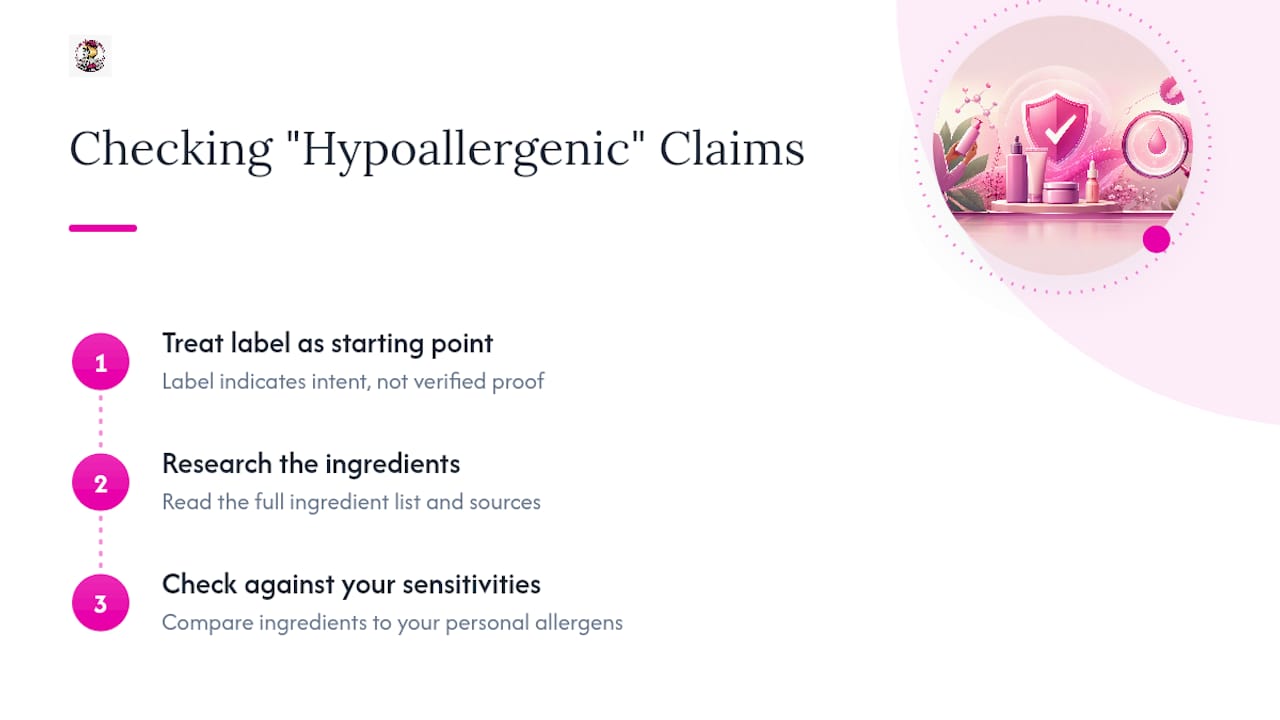
You don’t need a lab coat to do this well; for a practical guide, see Your Sensitive Skin Care Checklist for Calm, Happy Skin to choose gentle products and routines. A short, disciplined process gets you most of the way there.
-
Read the full ingredient list. For cosmetics, that means the INCI list. Running it through an ingredient checker flags known irritants faster than scanning names yourself, and our guide on reading skincare labels walks through what those long chemical names actually mean.
-
Prioritize specific claims over general ones. Fragrance-free, dye-free, and non-comedogenic are testable and narrower than hypoallergenic. A product carrying two or three of these specific labels gives you far more confidence than one carrying the vague term alone.
-
Run a patch test before full use. Apply a small amount to your inner forearm or behind your ear, wait a couple of days, and log any redness, itching, or swelling. This window matters because some reactions take a full day or two to show up.
-
Look for third-party substantiation. Brands that publish clinical testing data or dermatologist reviews back their hypoallergenic claims with something beyond marketing language. That’s worth more than the word itself.
-
Consult an allergist for diagnosed conditions. If you already know you have a specific allergy, clinical patch testing performed by a professional beats label reading every time.
Pro Tip: Keep a simple log on your phone of every new product you try and any reaction that follows, even mild ones. Patterns that seem random in the moment often become obvious once you see three months of entries side by side.
Does Research Back Up Hypoallergenic Claims?
Not consistently, and that’s the uncomfortable part. A 2017 JAMA Dermatology study examined top-selling moisturizers marketed as hypoallergenic and found that many contained at least one ingredient known to cause allergic contact dermatitis. NPR’s coverage of that research summarized it bluntly: fragrance-free and hypoallergenic claims are often unreliable in practice.
The FDA itself states plainly that manufacturers are not required to substantiate a hypoallergenic claim before using it, and no standard testing protocol exists to define what qualifies.
Two myths deserve a direct correction. First, hypoallergenic does not mean allergy-free. It means reduced likelihood, which still leaves room for reactions in sensitive people. Second, a hypoallergenic pet does not mean an allergen-free pet. Dander and proteins still circulate; certain breeds simply tend to shed less or produce comparatively lower allergen loads.
How QueenCompares Helps You Check Before You Buy
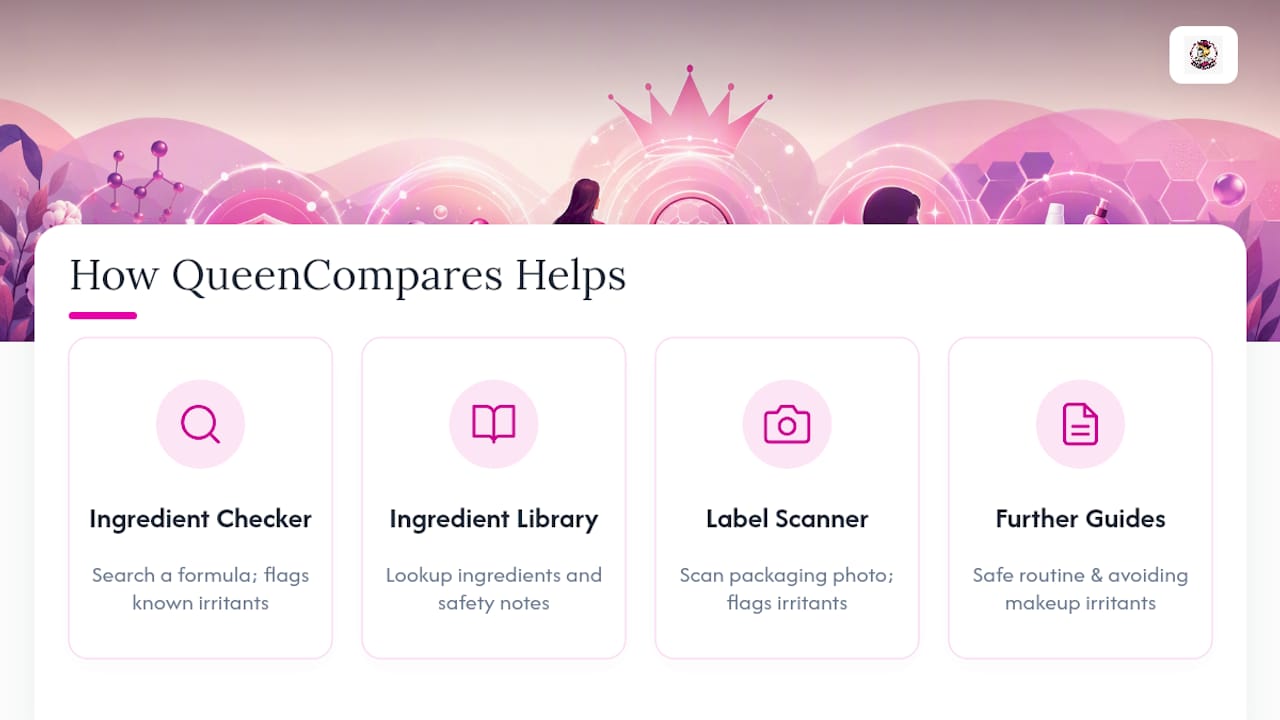
You shouldn’t have to decode ingredient chemistry alone. QueenCompares built its Ingredient Checker and Ingredient Library specifically so you can search a product’s formula and flag known irritants before checkout, and the Label Scanner does the same job straight from a photo of the packaging. This article draws on contributing editor Magdalena Kapuscinska’s work covering ingredient safety and labeling claims. For deeper reading, our guides on building a safe skincare routine and avoiding common makeup irritants pair well with the checklist above.
When Should You Actually Trust the Hypoallergenic Label?
Trust it as a soft signal, never a guarantee. Brands that pair “hypoallergenic” with a published ingredient list and specific companion claims deserve more confidence than ones that offer the word alone with nothing to back it. When a label feels vague or a brand won’t disclose its full formula, that’s your cue to skip the assumption and run the ingredients yourself.
— Magdalena Kapuscinska
Check Your Products Before They Check You
Reading ten-syllable ingredient names off a bottle isn’t how anyone wants to spend a Tuesday night, but it’s still the most reliable filter you have against a label that no regulator verifies. QueenCompares built its Ingredient Library so you can search a formula, flag known irritants, and compare products side by side in less time than it takes to read one skincare forum thread.
Label scanner tools can analyze product labels via your phone camera to assist when deciding between products in a store aisle. Neither tool replaces a dermatologist or allergist. If you have a diagnosed allergy, clinical testing still matters more than any app. But for the everyday work of narrowing down what’s actually in a product before you buy it, that’s exactly what QueenCompares is built for. Search a product in the Ingredient Library the next time you see “hypoallergenic” on a label and want to know what’s really inside.
Sources
This article is general information, not a substitute for advice from a qualified doctor. Consult a qualified healthcare professional about your own circumstances before acting on anything here.
FAQ
What Is Hypoallergenic for Skin?
For skin products, hypoallergenic means the formula was designed to reduce the chance of triggering an allergic reaction compared to standard versions, though the FDA does not verify this claim before it appears on packaging.
Does Hypoallergenic Mean Allergy-Free?
No. It means “less likely” to cause a reaction, not impossible. A 2017 study found many hypoallergenic moisturizers still contained known allergenic ingredients.
What Is Hypoallergenic Jewelry?
Hypoallergenic jewelry is marketed as less likely to trigger metal allergies, particularly nickel sensitivity, but the term isn’t standardized. Check the stated metal composition or look for explicit nickel-free certification rather than trusting the word alone.
What Does Hypoallergenic Mean in Cats?
A hypoallergenic cat breed is advertised as producing fewer allergy-triggering proteins in its dander and saliva, but no breed eliminates allergens completely. People with cat allergies can still react to breeds marketed this way.