Cosmetic-grade petrolatum is safe for topical use on most skin types. The FDA permits it as an active ingredient in over-the-counter skin protectants, the Cosmetic Ingredient Review confirms it meets strict purity standards, and the National Cancer Institute distinguishes highly refined white petrolatum from the unrefined industrial mineral oils linked to cancer risk. Three things to keep in mind before you reach for the jar:
- Check the label for "white petrolatum" or "pharmaceutical grade" — these terms signal the refining level that makes it safe.
- Skip aerosolized or powder forms — inhaling petrolatum particles carries respiratory risks that topical application does not.
- Stop use and see a clinician if you notice redness, swelling, or worsening skin — rare allergic reactions do occur.
Key Takeaways
Cosmetic-grade petrolatum is safe for topical use when it meets pharmaceutical or USP purity standards, and the refining level on the label is the single most important factor to check.
| Point | Details |
|---|---|
| Cosmetic-grade is safe | White petrolatum USP is FDA-approved, CIR-assessed, and not linked to cancer in topical studies. |
| Refining is everything | PAH contamination risk applies to unrefined industrial oils, not pharmaceutical-grade petrolatum. |
| Avoid aerosolized forms | Inhaling petrolatum particles carries respiratory risks; stick to ointments and balms. |
| Acne-prone skin: use with care | Heavy facial application may trap sebum; spot use on lips or dry patches is generally fine. |
| QueenCompares tools help | The Ingredient Checker and Label Scanner verify petrolatum grade and flag safety concerns on any product. |
Table of Contents
- What exactly is petrolatum?
- Why do skincare brands add petrolatum to their products?
- What does the safety evidence actually show?
- How does the U.S. regulate petrolatum?
- Who should be cautious about petrolatum?
- How to choose a safe petrolatum product
- What are the best alternatives to petrolatum?
- What dermatologists actually say about petrolatum
- Our perspective on the petrolatum debate
- Check any product's petrolatum claims in seconds
- Sources
- FAQ
What exactly is petrolatum?
Petrolatum is a semi-solid mixture of hydrocarbons derived from petroleum, purified through a multi-step refining process that removes polycyclic aromatic hydrocarbons (PAHs) and other impurities. You'll see it on ingredient labels under several names: petrolatum, petroleum jelly, white petrolatum, petrolatum USP, or simply white soft paraffin in some international contexts. Vaseline is the most recognized consumer brand built around it.
The safety of petrolatum in skincare depends almost entirely on how thoroughly it has been refined. Cosmetic and pharmaceutical grades undergo distillation and purification that strip out PAHs, making them a fundamentally different material from crude or industrial-grade petroleum products. That refining distinction is what every safety question about this ingredient ultimately comes back to.
Why do skincare brands add petrolatum to their products?
Petrolatum is one of the most effective occlusives known to cosmetic science. It works by forming a physical barrier on the skin's surface that dramatically slows transepidermal water loss (TEWL), which is the passive evaporation of moisture through the skin. Applied correctly, petrolatum can reduce TEWL by up to 99%, which explains why dermatologists reach for it in clinical settings.
Common uses include:
- Barrier repair for dry, cracked, or compromised skin
- Wound and minor burn care — it keeps the wound bed moist and reduces scarring risk
- Lip and hand moisturizers where intense occlusion is needed
- Eczema management as a first-line emollient
- Vehicle for medicated ointments — it carries active ingredients and keeps them in contact with skin
One practical note: petrolatum adds no moisture on its own. Apply it as the final step over a water-based moisturizer or serum so it seals in hydration rather than sitting on dry skin. This layering approach is exactly what dermatologists recommend for eczema-prone and dry skin types.
What does the safety evidence actually show?
The research on petrolatum safety is unusually consistent for a cosmetic ingredient. The key distinction runs through every credible study: refined cosmetic-grade petrolatum behaves very differently from unrefined industrial mineral oils.
What major authorities have concluded
The JAAD's comprehensive review of petroleum jelly concludes it is a well-studied, effective topical occlusive with a strong safety record, and that common concerns about comedogenicity and allergenicity are not supported by the evidence. A 1996 toxicological review of white mineral oils found no valid scientific evidence of hazard from topical exposure across multiple species, with negligible skin penetration observed. Regulatory re-evaluations in the UK and EU prompted additional safety studies of white mineral oils used in food preparation, but the overall conclusion for topical cosmetic use remained that there is no evidence of hazard when oils are refined to required standards.
| Evidence type | Key finding |
|---|---|
| Animal topical studies | No tumor formation, systemic toxicity, or liver granulomas from refined white petrolatum |
| Human epidemiology | Cancer risk associated with unrefined industrial mineral oils, not cosmetic-grade petrolatum |
| Regulatory reviews (FDA, CIR, EU) | Cosmetic-grade petrolatum permitted when manufactured to purity specifications |
| Dermatology peer review (JAAD) | Effective occlusive; allergenicity and comedogenicity concerns unsupported by evidence |
Key finding: The National Cancer Institute notes that topical exposures to highly refined white petrolatum have not produced tumor formation or systemic toxicity in animal studies. Carcinogenic risks are linked to unrefined industrial mineral oils — a categorically different material.
The PAH contamination question
PAHs are the compounds that make unrefined petroleum products potentially hazardous. In cosmetic and pharmaceutical-grade petrolatum, the refining process removes them to levels below detection thresholds. This is why the grade on the label matters so much: a product listing "white petrolatum USP" has cleared a documented purity standard; a vague "petroleum-derived" descriptor on an industrial product has not.
How does the U.S. regulate petrolatum?
The FDA's position on petrolatum is clear and long-standing. Under 21 CFR 347.10, petrolatum is an approved active ingredient in OTC skin protectant drug products at concentrations of 30–100%. It also holds approvals for ophthalmic uses and certain food-contact applications, all contingent on meeting purity specifications. The U.S. Pharmacopeia (USP) monograph sets the pharmaceutical-grade standard that most reputable manufacturers follow.
The Cosmetic Ingredient Review (CIR) has assessed petrolatum and, consistent with FDA's position, confirms it is safe for cosmetic use when produced to pharmaceutical or cosmetic grade specifications. Modern Good Manufacturing Practices (GMPs) in U.S. and Canadian facilities largely prevent PAH contamination from reaching finished products.
A quick note on Europe: The EU does not ban petrolatum outright, but it does require documented refining history for any petrolatum used in cosmetics. Products that cannot demonstrate adequate refining are not permitted on the EU market. This is a stricter documentation requirement, not a blanket prohibition — a distinction that often gets lost in "petrolatum is banned in Europe" headlines.
Who should be cautious about petrolatum?
For most people, petrolatum is a non-issue. But a few groups and product forms deserve extra attention.
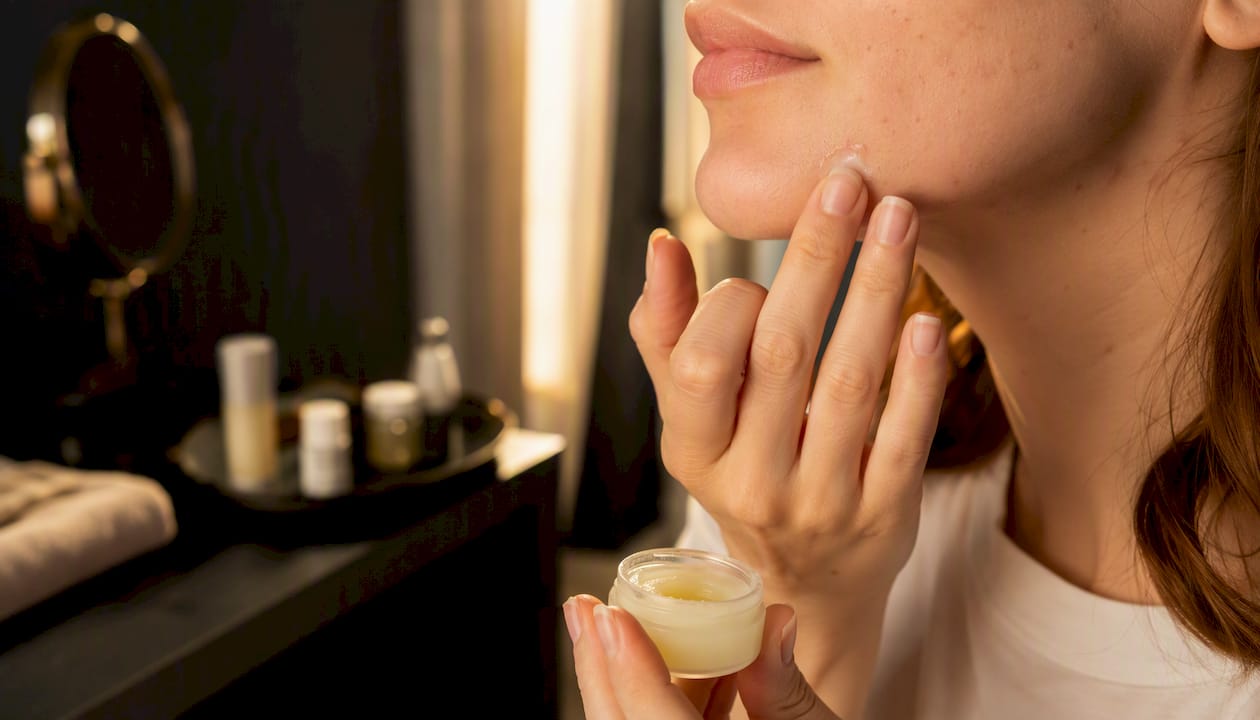
Acne-prone skin: Petrolatum is highly occlusive. On acne-prone facial skin, that occlusion can trap sebum and potentially worsen breakouts. The WebMD overview notes that acne-prone users may want to avoid occlusive products on the face. Spot use on dry patches or lips is generally fine; a full-face application is where caution makes sense.
Infants: Petrolatum is widely used in baby products and diaper creams, and pediatric guidance generally considers it safe for infant skin. Still, follow your pediatrician's specific recommendations, particularly for premature infants or those with compromised skin barriers.
Rare allergic reactions: Petrolatum is considered non-allergenic for the vast majority of users. Reactions do occur rarely and typically present as redness, itching, or swelling. Stop use immediately and consult a clinician if symptoms are severe or worsen.
Pro Tip: Never use petrolatum in aerosolized or powder form. Inhaling fine petrolatum particles carries respiratory risks that have no equivalent in standard topical application. Stick to ointments, creams, and balms.
How to choose a safe petrolatum product
Label reading is your first line of defense. Here's what to look for and what to avoid:
- Look for "white petrolatum," "petrolatum USP," or "pharmaceutical grade" — these signal documented refining to recognized purity standards.
- OTC drug labeling is a green flag — products regulated as OTC drugs (like wound ointments) must meet FDA manufacturing standards.
- Avoid vague descriptors like "petroleum-derived" or "mineral-based" with no grade specification, especially on products from unfamiliar manufacturers.
- Skip aerosolized petrolatum products entirely — the inhalation risk is real and unnecessary when ointment forms work just as well.
- Patch test before full use: apply a small amount to the inside of your wrist or behind your ear, wait 24–48 hours, and check for any reaction before applying to larger areas.
For routine use, apply petrolatum as the last step in your skincare routine, ideally at night. Layer it over a hydrating serum or moisturizer to lock in that moisture rather than applying it to bare, dry skin. Our guide on building a safe skincare routine walks through exactly how to sequence occlusives with other actives.
What are the best alternatives to petrolatum?
If you prefer to avoid petroleum-derived ingredients entirely, several alternatives offer meaningful occlusive or barrier-repair benefits. None match petrolatum's TEWL-reduction performance exactly, but each has its place.
Lanolin is an animal-derived wax with strong occlusive properties and good skin compatibility. It's a solid choice for very dry or cracked skin, though it's not vegan and can cause reactions in people with wool allergies.
Dimethicone and other silicones are synthetic, non-comedogenic, and form a breathable barrier. They're a popular choice for acne-prone skin that still needs some occlusion, and they're widely used in mineral oil in skincare formulations as a lighter alternative.
Plant-based oils (shea butter, jojoba, squalane) offer partial occlusion alongside skin-conditioning fatty acids. They're a natural fit for clean-beauty routines, though their TEWL reduction is significantly lower than petrolatum's. Patch testing matters here too, since plant oils carry their own allergen profiles.
Ceramide-containing ointments combine occlusion with active barrier repair. They're particularly well-suited for eczema-prone skin because ceramides address the underlying lipid deficiency rather than just sealing the surface. Our deep dive on ceramides for skin covers how they work alongside occlusives.
When severe barrier damage is the goal — cracked heels, post-procedure skin, acute eczema flares — petrolatum remains the most clinically effective option. For everyday moisturizing or clean-beauty preferences, the alternatives above are genuinely good choices.
What dermatologists actually say about petrolatum
The dermatology community's consensus on petrolatum is remarkably unified: cosmetic-grade petrolatum is inert, well-studied, and among the most effective topical occlusives available. The JAAD review describes it as a staple of wound care and barrier repair, and dermatologists consistently recommend it as a first-line emollient for eczema and dry skin conditions.
The "clean beauty" movement has complicated public perception by framing petrolatum's petroleum origin as inherently dangerous. Dermatologists push back on this directly: origin is not the same as purity. A highly refined pharmaceutical-grade ingredient and a crude industrial byproduct share a source but not a safety profile.
Myth vs. fact:
- Myth: Petrolatum causes cancer. Fact: The NCI links carcinogenic risk to unrefined industrial mineral oils. Highly refined white petrolatum used in cosmetics has not been associated with cancer in topical studies.
- Myth: Petrolatum clogs pores on everyone. Fact: The JAAD review finds comedogenicity concerns are not supported by the evidence. Acne-prone individuals may want to avoid heavy facial application, but petrolatum is not universally comedogenic.
- Myth: Petrolatum absorbs into the bloodstream. Fact: Topical exposure shows negligible skin penetration in toxicology studies. It works on the surface, not below it.
- Myth: The EU ban proves it's dangerous. Fact: The EU requires documented refining history — it does not ban petrolatum. Compliant, refined petrolatum is permitted across the EU.
Pro Tip: Dermatologists often recommend applying petrolatum to slightly damp skin immediately after a shower to maximize its moisture-sealing effect. This is especially useful for eczema-prone skin where TEWL is already elevated.
For a broader look at how to evaluate skincare ingredients with this level of scrutiny, our skincare ingredients guide covers the frameworks dermatologists actually use.
Our perspective on the petrolatum debate
The petrolatum conversation is a perfect example of how fear of an ingredient's origin can outrun the actual evidence. Petroleum sounds alarming in a skincare context, and the clean-beauty industry has leaned into that association. But the science here is not ambiguous: cosmetic-grade white petrolatum has one of the strongest safety records of any topical ingredient, backed by decades of regulatory review, peer-reviewed toxicology, and consistent dermatologist endorsement.
What I find worth flagging is the asymmetry in how this debate plays out. Consumers are often steered toward "natural" alternatives without being told that plant oils carry their own allergen risks, that lanolin causes reactions in wool-sensitive individuals, or that some silicones have their own regulatory scrutiny in certain markets. The framing of "petroleum bad, plant good" is a marketing story, not a toxicology one.
The genuinely useful question is not "is this from petroleum?" but "has this been refined to a documented standard?" That question applies to petrolatum, mineral oil in skincare, and frankly to every ingredient on a label. QueenCompares's Ingredient Checker is built around exactly that kind of evidence-first evaluation.
Check any product's petrolatum claims in seconds
Knowing petrolatum is safe in theory is one thing. Knowing whether the specific product in your hand actually uses pharmaceutical-grade petrolatum is another question entirely. That's where QueenCompares makes a real difference.

The Ingredient Checker and Label Scanner let you scan or paste a product's ingredient list and get an immediate safety evaluation, including flags for grade ambiguity, known allergens, and ingredient interactions. The Ingredient Library gives you the full evidence profile for petrolatum and hundreds of other ingredients, so you're not relying on marketing copy to make a decision. Scan a product before you buy it, compare two formulas side by side, and shop with the kind of confidence that comes from actual data. This is not medical advice — for personal medical concerns, please consult a licensed clinician or dermatologist.
Sources
The following primary sources were used in this article. Each is worth bookmarking if you want to verify claims or read the original guidance:
- National Cancer Institute — Mineral oils
- CosmeticsInfo — Petrolatum
- Journal of the American Academy of Dermatology (JAAD) — Petroleum jelly: A comprehensive review of its history, uses, and safety
This article is general information, not a substitute for advice from a qualified doctor. Consult a qualified healthcare professional about your own circumstances before acting on anything here.
FAQ
Is petrolatum the same as Vaseline?
Yes.
Is petrolatum banned in Europe?
No. The EU requires manufacturers to document the refining history of petrolatum used in cosmetics; products that meet that standard are fully permitted. The requirement is about proof of purity, not a prohibition.
What are the side effects of petrolatum?
Petrolatum is non-allergenic for most people, but rare reactions including redness, itching, or swelling can occur. Stop use and consult a clinician if symptoms are severe or do not resolve.
Why do some people avoid petroleum jelly?
Most avoidance is driven by concern about petroleum's industrial origin rather than evidence of harm from cosmetic-grade products. Some acne-prone users also avoid it because heavy occlusion on the face may worsen breakouts, though this is not a universal effect.
How do I know if a petrolatum product is safe to use?
Look for "white petrolatum," "petrolatum USP," or OTC drug labeling on the package. You can also run the ingredient list through QueenCompares's Ingredient Checker for a fast, evidence-based safety evaluation.