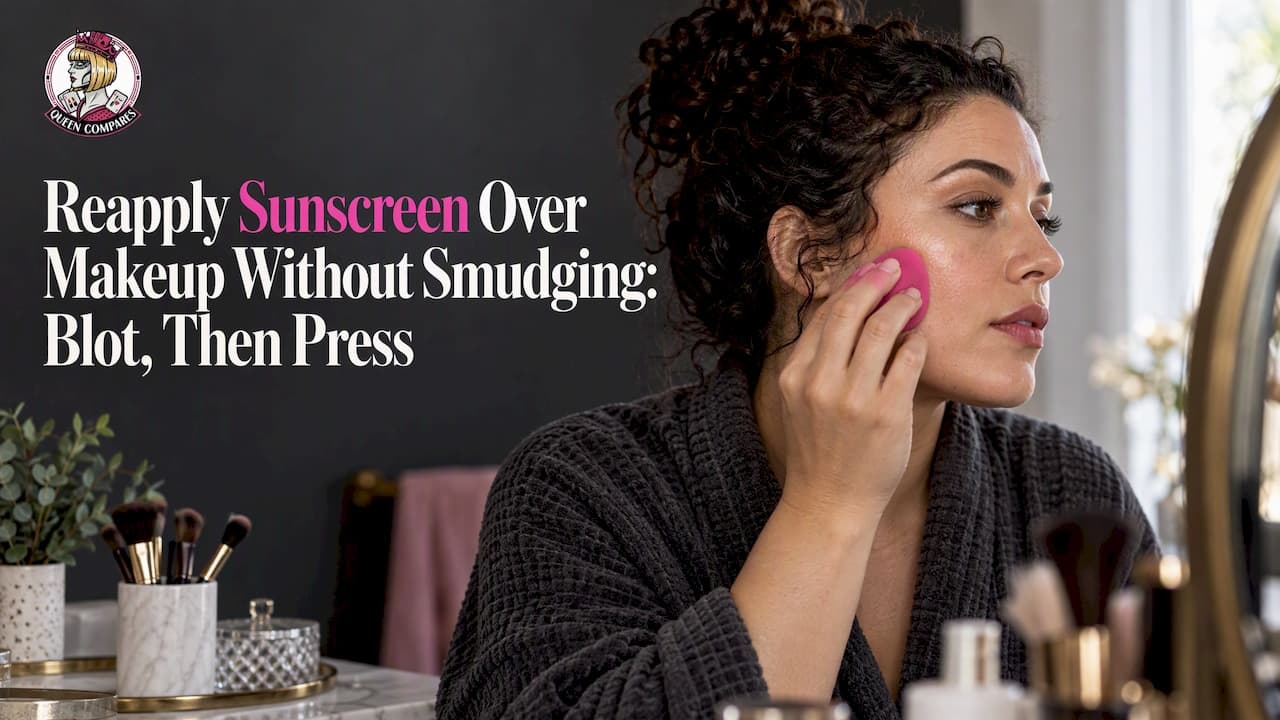
Reapplying sunscreen over makeup works best with SPF powder, an SPF mist, or a cushion or stick pressed on with a damp sponge, applied every two hours outdoors and right after sweating or swimming, according to the FDA. Skip the rubbing. If you need a full dose of protection, a quick spot-cleanse and thin, tapped-on layers keep both your coverage and your sunscreen's film intact.
Key Takeaways
Using the correct SPF reapplication method, such as pressing powders or mists, prevents makeup disruption and maintains effective sun protection throughout the day.
| Point | Details |
|---|---|
| Choose the right method | Match your SPF touch-up product to your activity, skin type, and makeup finish for best results. |
| Apply without rubbing | Press, pat, or use short bursts when reapplying to avoid smudging or damaging makeup. |
| Fix pilling quickly | Gently roll pills away with a fingertip or damp sponge rather than scrubbing; switch formulas if pilling persists. |
| Use targeted tools and formulas | Select lightweight, makeup-friendly SPF products and use ingredients checkers to avoid pilling-prone ingredients. |
| Optimize initial sunscreen application | Apply a thin, even layer of sunscreen, let it fully absorb, and layer makeup carefully to prevent pilling. |
Table of Contents
- Quick shortlist: pick one reapplication method for your routine
- Step-by-step: how to reapply each format without smudging makeup
- Troubleshooting pilling, balling, and product clash fixes
- Choosing formats by skin type and makeup finish
- Using the Ingredient Checker to find low-pilling, makeup-friendly SPF
- How much sunscreen actually counts as a real reapplication
- Layer sunscreen under makeup the right way from the start
- Why makeup with built-in SPF makes reapplication easier
- Matching your reapplication method to your makeup style
- Watch for these ingredient interactions between sunscreen and makeup
- Using setting spray or powder to lock in your touch-up
- A realistic midday routine for busy days
- Find makeup-friendly SPF products faster with our tools
- FAQ
- Sources
Quick shortlist: pick one reapplication method for your routine
Not every touch-up situation calls for the same product. Matching the method to the moment saves time and keeps your makeup looking like you did it on purpose.
- SPF powder works best for quick oil-blotting touch-ups, especially under matte or semi-matte makeup.
- SPF mist suits light re-spritzing when you have a minute to let it settle before touching your face again.
- SPF stick or cushion, pressed in with a damp sponge, gives you the most reliable added film coverage, closer to a true reapplication.
- Blotting paper plus a light powder or mist is the fallback combo when a full reapply isn't realistic, like mid-meeting or mid-commute.
Dermatologists and the American Academy of Dermatology both frame reapplication as non-negotiable, but the format you choose should fit your day. A desk job with occasional window light calls for a different approach than an afternoon at a kid's soccer game. Think of these four options as tools in a kit rather than a single rule, and build the habit around whichever one you'll actually use.
Step-by-step: how to reapply each format without smudging makeup
Technique matters more than the product itself. Rubbing is the single biggest cause of disrupted makeup, so every method below leans on pressing, patting, or short bursts instead.
- Powder: Blot oil first with a tissue or blotting paper, then use a clean powder puff or dense brush to press and roll the product into skin, focusing on the T-zone and any shiny spots.
- Mist: Hold the bottle about 6 to 8 inches from your face, spray in two or three short bursts with your eyes closed, let it settle for 20 to 30 seconds, then pat gently with clean fingers instead of rubbing.
- Stick or cushion: Dispense a small amount onto the back of your hand or a clean palette, then use a damp beauty sponge to press thin layers into skin. A PLOS One study found that adding a thin second coat raised film coverage from a median of 0.83 to 1.37 mg/cm², and cut missed spots from 20% to 9%, which is exactly what this tapping motion achieves without disturbing your base.
- Full reapply: Blot or gently cleanse with a micellar wipe, then apply sunscreen across the whole face following the label's instructions before rebuilding any makeup you removed.
Pro Tip: Keep your sponge barely damp, not soaked. Too much water dilutes the sunscreen and can thin out your foundation underneath it.
Troubleshooting pilling, balling, and product clash fixes
Pilling happens when film-forming ingredients in sunscreen or makeup catch on each other and roll up into little balls, usually from friction. A 2024 study in Skin Research and Technology found that most pilling events occurred after sunscreen application, and that circular or linear rubbing produced the highest number of pilling events of any application method. Interestingly, foundation sometimes reduced sunscreen-induced pilling rather than making it worse, which suggests the order and motion of application matter as much as the products themselves.
If you spot pills forming mid-day, these fixes work fast:
- Gently roll the pills off with a clean fingertip or a soft cloth rather than scrubbing.
- Press (don't rub) a damp sponge over the area to smooth the surface back out.
- Switch your touch-up product to a cream, stick, or cushion format if powder keeps clumping on dry patches.
- If pilling happens every single day, your sunscreen and foundation formulas likely don't play well together and it's worth testing a different pairing.
One study found that most pilling events were triggered by sunscreen application, and rubbing motions caused the most pilling of any technique tested, according to Wiley's 2024 research. That single finding explains why so many reapplication guides now push pressing over rubbing as the default rule.
Choosing formats by skin type and makeup finish
Your skin's texture and your foundation's finish both affect which reapplication method glides on cleanest.
- Oily skin: Blot first, then reach for an SPF powder or a water-resistant mist that won't add extra slip.
- Dry skin: A cushion fluid or hydrating mist pressed in with a damp sponge adds moisture back instead of sitting on flaky patches.
- Mature skin: Minimize rubbing entirely. Light tapping with a hydrating cushion formula protects both your skin barrier and your foundation's finish.
- Matte foundation: Pairs best with SPF powders or lightweight sticks that won't disrupt the flat finish.
- Dewy foundation: Tolerates cushion fluids and mists better since both finishes already carry some sheen.
Pro Tip: If you're not sure which finish you're wearing, check the label. Our guide to finish types breaks down matte, dewy, and satin so you can match your touch-up product with less guesswork.
Using the Ingredient Checker to find low-pilling, makeup-friendly SPF
Picking a touch-up sunscreen gets a lot easier when you can see what's actually in the formula before you buy it. We built the Ingredient Checker and Label Scanner so you can screen for lightweight textures and skip the heavy film-forming ingredients that tend to cause pilling under makeup. There are curated lists for SPF powders, mists, and tinted cushions organized by skin type and finish, which can save you the trial-and-error most people go through before landing on a touch-up routine that actually works.
We also publish editorial breakdowns on layering sunscreen correctly in the first place, since a good base makes every later touch-up easier.
How much sunscreen actually counts as a real reapplication
A dab here and a quick spritz there can feel like enough, but dermatology guidance is specific about quantity. The AAD recommends roughly one teaspoon for the full face, which is more than most people instinctively use, especially with a touch-up product.
For powders and mists, this is where the compromise comes in: dermatologists caution that these formats are convenient but easy to under-apply, so they often don't reach full labeled SPF on their own. Treat them as supplementary touch-ups that extend protection between full applications, not as replacements for the original layer of sunscreen you put on that morning. A stick or cushion pressed on with a sponge gets you closer to a true reapplication because you can see and control the amount going onto each section of your face. If you're heading outside for an extended period, lean toward the stick or cushion method over powder or mist alone.
Layer sunscreen under makeup the right way from the start
A smooth reapplication later in the day depends on how you applied sunscreen that morning. Give your sunscreen two to three minutes to absorb before starting makeup, since applying foundation over sunscreen that's still sitting on the surface is one of the most common causes of pilling later on.
Apply sunscreen in thin layers rather than one thick coat, which lines up with the layering approach the PLOS One study found improves film coverage without leaving a heavy residue for makeup to catch on. Let each layer set before moving to the next step, whether that's primer, foundation, or a tinted moisturizer. If you consistently struggle with pilling by midday, the problem often traces back to this first application rather than anything you do later. Our guide on wearing sunscreen under makeup walks through the full sequence if you want to rebuild your morning routine from the ground up.
Why makeup with built-in SPF makes reapplication easier
Choosing a tinted moisturizer, foundation, BB cream, or CC cream with built-in SPF doesn't replace a dedicated sunscreen, but it adds a layer of redundancy that makes your midday touch-up far less critical if you miss it by twenty minutes. A tinted moisturizer with SPF 30 worn under a powder touch-up gives you two points of protection instead of one, which matters on days when reapplying a full sunscreen layer just isn't practical.
When shopping for a base product, look specifically for formulas that state their SPF and water-resistance rating on the label, the same way you'd check a standalone sunscreen. Our comparison of tinted moisturizer and foundation covers wear time and ingredient overlap, which is useful if you're deciding between the two for a long day. Pairing an SPF-infused base with one of the touch-up methods above, rather than relying on either alone, gives you the most consistent coverage across a full day outdoors.
Matching your reapplication method to your makeup style
A heavy, full-coverage look and a natural no-makeup look call for different reapplication strategies, even though the underlying rule, which is pressing instead of rubbing, stays the same.
For full-coverage makeup, a cushion or stick pressed in with a damp sponge blends more naturally into existing foundation layers than a powder would, since powder on top of heavy coverage can look cakey by the afternoon. Focus the sponge on high-movement areas like the forehead and nose first, then work outward.
For a natural, low-coverage look, an SPF mist is often the easiest option since it adds minimal product and dries down quickly. A light dusting of SPF powder works too, particularly if you're already wearing a sheer base that can handle a bit more texture.
Somewhere in between, like a medium-coverage everyday look, a quick blot followed by a light powder touch-up is usually the fastest option that still protects your finish. The key across all three styles is matching the weight of your touch-up product to the weight of your original makeup, so you're not adding a heavy cushion over a barely-there tinted moisturizer or a thin mist over a full-glam base.

Watch for these ingredient interactions between sunscreen and makeup
Certain ingredient combinations are more likely to cause pilling or an uneven finish, and knowing them ahead of time helps you avoid buying products that will clash. Silicone-heavy primers and foundations can interact poorly with water-based or gel sunscreens, since silicones and water-based formulas don't always bind well together and can roll up on contact.
Chemical sunscreen filters mixed with certain film-forming polymers in long-wear foundations are another common pilling trigger, which lines up with the Wiley 2024 findings that sunscreen application was the leading cause of pilling across the products tested. If you've noticed pilling specifically where sunscreen meets a particular foundation, try switching just one of the two products rather than overhauling your entire routine.
For more detail on how to compare formulas before buying, our breakdown of SPF claims and formula types explains what to look for on a label. For step-by-step troubleshooting from a skincare brand's perspective, Cosmedica Skincare's guide to fixing makeup pilling offers dermatologist-framed steps that pair well with the ingredient-matching approach here.
Using setting spray or powder to lock in your touch-up
Once you've pressed on a fresh layer of sunscreen, a light setting spray or finishing powder can help the whole thing sit better without undoing the protection you just added. Apply setting spray from the same distance you'd use for an SPF mist, roughly 6 to 8 inches away, and let it air dry rather than patting it in, since patting right after reapplying sunscreen risks smudging the layer underneath.

If you prefer powder to set your touch-up, use a light hand and a fluffy brush rather than a dense one, since a heavy powder layer on top of a fresh sunscreen application is one of the more common causes of pilling later in the afternoon. Wait a few seconds for the sunscreen to settle before dusting powder over it. Neither setting spray nor powder reduces your sunscreen's effectiveness when used this way. They're simply finishing steps that help the layers underneath look smoother and last longer between touch-ups.
A realistic midday routine for busy days
Short touch-ups beat skipping sunscreen entirely. I pack a tiny kit (blotting papers, an SPF mist, a pressed SPF powder, and a small damp sponge) and plan reapplication around the moments I know I'll be outside, like a lunch walk or an afternoon errand.
— Magdalena Kapuscinska
Find makeup-friendly SPF products faster with our tools
We built our Ingredient Checker so you can filter out the film-forming ingredients behind most pilling complaints before you ever add a product to cart.

- Browse our Beauty hub for curated picks across SPF powders, mists, and cushions sorted by finish and skin type.
- Use Products by Ingredient to compare formulas side-by-side and spot which ones share your current foundation's ingredients.
Start with the Ingredient Checker next time you're shopping for a touch-up sunscreen. It's the fastest way to land on a formula your skin and your makeup will actually agree with.
FAQ
How do I apply SPF on my face correctly?
Apply about one teaspoon of sunscreen to cover the full face, following AAD guidance, and let it absorb for two to three minutes before adding makeup. Spread it in an even layer rather than a few thick dots, since even coverage reduces missed spots and helps your makeup sit more smoothly on top.
Can sunscreen help with hyperpigmentation?
Sunscreen doesn't treat existing hyperpigmentation, but consistent daily use helps prevent dark spots from getting darker or new ones from forming, since UV exposure is a major trigger for pigment changes. Pairing daily SPF with a dedicated brightening ingredient, checked for compatibility through a tool like our Ingredient Checker, is a more direct route to fading existing spots.
Do I need to wash my face before reapplying sunscreen?
A full cleanse isn't necessary for most touch-ups. Blotting away oil and sweat, or using a gentle wipe for a deeper refresh, is usually enough before pressing on more sunscreen with a sponge, stick, or powder.
What are the best sunscreen formats for reapplication over makeup?
SPF powders, mists, and cushion or stick formulas pressed on with a damp sponge are the most makeup-friendly options for reapplying over a full face of makeup. Powders and mists work well for light touch-ups, while a pressed cushion or stick gets closer to a full reapplication when you need more complete coverage.
How often should I reapply sunscreen during the day?
Reapply at least every two hours outdoors, and immediately after swimming or heavy sweating, according to FDA guidance. Water-resistance labels only claim 40 or 80 minutes of protection in water, so reapplication is still required on the two-hour schedule even with a water-resistant formula.
Sources
- Sunscreen: How to Help Protect Your Skin from the Sun | FDA
- PLOS One sunscreen application study (2018)
- Understanding the causes of skincare product pilling - Skin Research and Technology (Wiley, 2024)
- How to apply sunscreen | American Academy of Dermatology
Recommended
- Yes, You Should Wear Sunscreen Under Makeup. Here's How
- Makeup Layering Technique: A Beginner's Complete Guide
- Mineral vs Chemical Sunscreen: FDA, Research, and a 15–20 Minute Gap
- Makeup Flashback Explained: Causes, Prevention, and Fixes
General Entertainment & Information Purposes Only At QueenCompares.com we share content for general entertainment and information. It's not medical, dermatological, nutritional, or fitness advice and shouldn't replace guidance from a licensed professional. If you're making health-related decisions, please check with a qualified expert — and know that using this site and its information is at your own discretion.