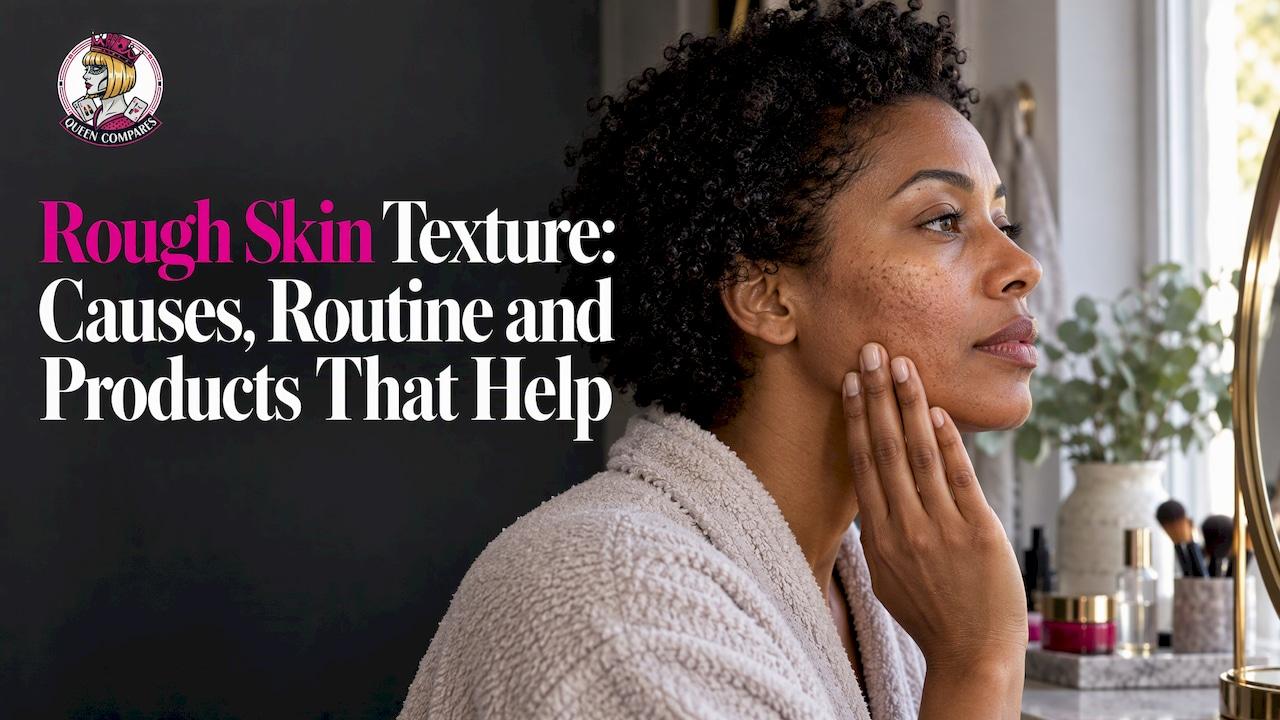
Rough skin texture usually comes from dead skin cells building up faster than your skin sheds them, plus dryness, sun damage and a stressed skin barrier. The fix is rarely a stronger product. It is a gentle routine: mild cleansing, a fragrance-free moisturizer, daily sunscreen and careful exfoliation once or twice a week. Below you will find the likely causes, a step-by-step routine, the ingredients worth looking for, how to make makeup sit better over bumpy skin, and the signs that mean it is time to see a professional.
Key Takeaways
-
Uneven texture is commonly linked to dead skin cell buildup, dryness, sun damage and aging, so the routine needs to address all four.
-
Start gentle: mild cleanser, fragrance-free moisturizer and broad-spectrum SPF 30 or higher, then add exfoliation about once or twice a week.
-
Look for ingredients with a track record: AHAs such as lactic or glycolic acid for smoothing, and petrolatum, ceramides and urea for dry, rough skin.
-
Scrubbing harder backfires, especially on sensitive, acne-prone or darker skin tones, where it can leave dark spots.
-
Texture that appears suddenly, itches, bleeds, hurts or does not go away deserves a dermatologist’s eyes.
Table of Contents
What Causes Rough, Bumpy Skin on the Face
Most rough texture is a surface problem. Dead cells sit on top of the skin, light bounces off them unevenly, and the skin feels sandy or bumpy under your fingers. Dermatology-reviewed guidance lists dead skin cell buildup, dryness, sun damage and aging as the common drivers.
Here is how each one shows up:
-
Buildup: a dull, slightly flaky or gritty feel, often worse around the nose, chin and forehead.
-
Dryness: tightness, fine flaking and a papery feel, especially in winter or after long hot showers. Dry skin can also appear in summer, so do not assume it is only a cold-weather issue.
-
Sun damage: a leathery, uneven feel that builds over years. UV exposure also breaks down collagen, which is one reason daily sunscreen belongs in every texture routine.
-
Aging: slower cell turnover means scaly or flaky patches become more common with time.
-
A disrupted barrier: if your skin suddenly feels tight, bumpy or rough after trying new products, over-exfoliating or a weather change, the barrier is usually the first suspect.
A few causes are medical rather than cosmetic. The NHS notes that ichthyosis can cause very dry, scaly, thick, rough skin, including on the face, and advises seeing a GP if you have symptoms. Contact dermatitis, a reaction to something your skin touched, can also leave skin rough and irritated. We cover those red flags near the end.
How to Get Rid of Rough Skin on Your Face: The Routine
The American Academy of Dermatology (AAD) stresses that a strong foundation of gentle cleansing and moisturizing matters most, and that trendy, overly complicated routines often cause the damage people are trying to fix. That is good news: you need very few steps.
Step 1: Cleanse gently
The AAD advises washing your face when you wake up, before bed and after sweating, using a mild cleanser, warm water and gentle fingertips, without scrubbing. If your cleanser leaves your face squeaky or tight, it is too strong for textured skin.
Step 2: Moisturize, and do it often
For dry, rough skin the AAD recommends fragrance-free moisturizer applied several times a day. On the face, that realistically means morning, night and a quick top-up after washing. Apply it while skin is still slightly damp so it has something to hold on to.
Step 3: Protect with sunscreen every morning
The AAD recommends broad-spectrum, water-resistant SPF 30 or higher. If a chemical sunscreen stings, the AAD suggests a mineral formula with zinc oxide or titanium dioxide for easily irritated skin. Sunscreen stops the slow, cumulative damage that makes texture worse.
Step 4: Exfoliate, but not every day
Most people do well with exfoliating about once or twice a week. Our guide to exfoliation below explains which type to pick.
Step 5: Adjust your shower habits
The AAD suggests keeping baths and showers to five to ten minutes in warm rather than hot water and patting skin dry instead of rubbing. Hot water strips oils, and rough patches on the jaw and neck often improve once this changes.
If you want the order of steps laid out for a full routine, our skincare routine order guide walks through it, and our beginner routine guide keeps things simple. You can also assemble your own plan in the Routine Builder.
Exfoliation: Chemical vs. Mechanical
Exfoliation is the step that most directly targets rough texture, and the step most often overdone.
| Type | How it works | Best for | Watch out for |
|---|---|---|---|
| Chemical (AHAs such as lactic or glycolic acid) | Dissolves the bonds holding dead cells together | Dull, rough, uneven skin | Stinging, redness if used too often |
| Mechanical (scrubs, brushes, cloths) | Physically buffs cells away | Occasional use on resilient skin | Can be harsh and cause tearing; may irritate dry, sensitive or acne-prone skin |
The AAD says to begin with gentle exfoliation suited to your skin. It notes that mechanical methods can irritate dry, sensitive or acne-prone skin. Facial scrubs can be harsh and cause tearing, while chemical exfoliation uses AHAs to dissolve dead skin cells. For many people with rough texture, a mild AHA is the more comfortable option.
A simple way to start
-
Pick one exfoliating product, not three.
-
Use it once a week for the first two to three weeks.
-
If your skin stays calm, move to twice a week at most.
-
Always follow with moisturizer, and wear sunscreen the next morning.
-
If you notice stinging, peeling or redness, stop and let the barrier recover before trying again.
Darker skin tones and sensitive skin
The AAD warns that people with darker skin tones, or who develop dark spots after skin injuries, should avoid strong chemical or mechanical exfoliation, which can increase pigmentation. For rosacea-prone or easily irritated skin, the AAD recommends avoiding rubbing, scrubbing, facial sponges and exfoliation altogether, and relying on moisturizer to reduce dryness, peeling and roughness.
Tweens and teens should generally skip retinol, vitamin C and exfoliating acids unless a dermatologist recommends them. Our teen skincare routine shows a three-step alternative.

Ingredients and Products That Help Rough Texture
When you read a label for rough skin, you are looking for two jobs: smoothing the surface and holding water in.
Smoothers
-
AHAs (glycolic and lactic acid): Harvard Health notes that AHAs can smooth rough or dull skin. Lactic acid is often described as one of the gentler options, a good place to begin.
-
Salicylic acid: the NHS mentions peeling creams such as salicylic acid among treatments for ichthyosis, a medical condition. If you have a diagnosed condition, ask your doctor which product suits you.
-
Retinoids: a longer-term option for texture, but they need a slow start. Our retinol beginner plan takes eight to twelve weeks, and the pros and cons of retinol guide includes skin of color tips.
Hydrators and barrier supporters
-
Petrolatum, ceramides and urea: dermatologists rated these as effective ingredients for dry skin.
-
Hyaluronic acid: may boost skin hydration, which helps rough skin look and feel plumper.
-
Antioxidants: for mature skin, products with antioxidants or alpha hydroxy acid may help prevent scaly, flaky skin.
What to put in your cart
A practical shopping list for rough, textured skin:
-
A mild, fragrance-free cleanser.
-
A fragrance-free moisturizer with ceramides, urea or petrolatum for dry patches.
-
A lactic or glycolic acid exfoliant, one product only.
-
A broad-spectrum SPF 30 or higher you actually enjoy wearing, mineral if your skin is reactive.
-
A hydrating serum with hyaluronic acid if your skin feels tight under moisturizer.
Our ingredient guide to products lets you browse by ingredient, so you can find products built around the ones above. If you prefer a curated, lower-tox starting point, the Clean Beauty Catalogue collects clean beauty picks in one place.
Makeup Over Rough Texture: Tinted Moisturizers, BB Creams and CC Creams
You do not have to wait for skin to smooth out before wearing makeup. The trick is choosing formulas that do not cling to dry patches or pile into texture.
-
Tinted moisturizer: the easiest choice for textured skin. It is light, so it follows the contours of your skin instead of sitting on top. Pick one with SPF if you want to save a step, but still apply enough sunscreen on its own if you rely on it for protection.
-
BB cream: a step up in coverage, with a skincare-style feel. Good for evening out tone while still letting skin look like skin. K-beauty BB creams are a popular place to start.
-
CC cream: aimed at color correction, such as redness or dullness. Helpful when rough patches are also pink or irritated.
-
Foundation: choose a hydrating, skin-like finish and avoid heavy matte formulas that can emphasize dry flakes. Press it in with fingertips or a damp sponge instead of dragging it across the skin.
Prep matters more than product. Moisturize, give it a few minutes to settle, then apply thin layers. If you add powder, use a very light touch only where you need it. Remove makeup every night with a gentle cleanser, since leftover product can feed the dullness you are trying to clear.
Use the Product comparison page to put two tinted moisturizers or BB creams side by side and check their ingredients before you buy.
Mature Skin and Professional Options
As skin ages, cell turnover slows and texture changes become more noticeable. Gentle AHAs and antioxidants are a good home base. Some people also explore in-office options, such as laser skin rejuvenation, which is offered for wrinkles, firmness and radiance. A licensed professional can tell you what suits your skin type and goals.

When Rough Skin Needs a Professional
Most texture is harmless, but some changes should be checked. Put the caution where it applies:
-
Thick, scaly, very dry skin since childhood or spreading: the NHS advises seeing a GP if you have symptoms of ichthyosis.
-
Rough, itchy, red skin that keeps returning: the NHS says persistent, recurrent or severe symptoms of contact dermatitis should be assessed by a GP. Avoiding the trigger and using emollients may help, and a dermatologist referral may be needed when the cause is unclear or treatment fails.
-
A rough spot that bleeds, hurts, itches, does not heal or looks unlike your other spots: MD Anderson advises seeing a dermatologist, who may examine it with a dermatoscope and biopsy it if needed.
-
Texture that changed suddenly: if it feels tight, bumpy or rough overnight, strip your routine back to cleanser, moisturizer and sunscreen for a couple of weeks. If it does not settle, book an appointment.
Our Perspective
We built Queen Compares because texture problems are rarely about one magic product. They are about the match between your skin and a formula, and that match lives in the ingredient list.
When someone tells us their skin feels rough, the first thing we want to know is what is already in the routine. Often it is a scrub, a fragranced moisturizer and three actives layered together. Checking those labels line by line, with our Ingredient Checker and Label Scanner, shows you what might be adding irritation before you spend money on another product.
We also believe in comparing side by side. Two tinted moisturizers can look alike on the shelf and differ widely in what they contain. Putting them next to each other, reading community reviews and checking safety ratings, helps you choose with confidence rather than hope.
Our advice is simple: keep it gentle, keep it consistent, and let the ingredients do the work.
Magdalena
Check Your Routine with Queen Compares
If you are not sure whether your current products are helping or hurting your texture, we can help you find out. Our ingredient analysis flags safety and allergen concerns, the AI Label Scanner reads a product label for you, and the Clean Beauty Catalogue gathers clean and low-tox picks to explore. With Premium Access, at €7 per month, you get more from our AI tools, curated Clean Beauty Page, Skincare Routine Builder and Skincare Tracker and personalized recommendations.

Start with one product you already own, scan its label and see how its ingredients line up with the guidance above. For the bigger picture, our safe skincare routine guide and routine simplification checklist will help you trim anything unnecessary.
FAQ
How long does it take to improve rough skin texture?
It depends on the cause. Dryness often feels better within days of regular moisturizing, while buildup and sun-related texture take longer and need consistent gentle exfoliation. Give any new routine several weeks before judging it, and change one product at a time so you know what is working.
Can I exfoliate every day to smooth my skin faster?
No. Exfoliating about once or twice a week is the usual guidance, and more can irritate your barrier and make roughness worse. If your skin is dry, sensitive, acne-prone or darker toned, start gentler still and follow the AAD’s advice on safe exfoliation.
What is the best moisturizer ingredient for rough, dry skin?
Dermatologists rate petrolatum, ceramides and urea as effective for dry skin. Choose a fragrance-free formula and apply it several times a day, especially after washing. Hyaluronic acid can add hydration underneath.
Can makeup make rough texture look worse?
Heavy, matte formulas and thick powder can emphasize dry patches. Hydrating tinted moisturizers, BB creams and CC creams applied in thin layers over moisturized skin usually look more natural. Remove makeup every night with a gentle cleanser.
When should I worry about rough patches?
See a doctor or dermatologist if a patch is thick and scaly, keeps returning, itches, bleeds, hurts, does not heal or looks different from your other spots. Sudden texture changes that do not settle after you simplify your routine should also be checked.
Sources
-
13 Dermatologist-Approved Tips to Improve Skin Texture, Verywell Health
-
A dermatologist’s guide to skincare from growing up to growing older, AAD
-
Drugstore skincare: science-backed anti-aging ingredients, Harvard Health
-
Top Skin-Care Ingredients Recommended by Dermatologists, Northwestern Medicine
-
When to see a dermatologist about a skin change, MD Anderson
Recommended
General Entertainment & Information Purposes Only At QueenCompares.com we share content for general entertainment and information. It’s not medical, dermatological, nutritional, or fitness advice and shouldn’t replace guidance from a licensed professional. If you’re making health-related decisions, please check with a qualified expert — and know that using this site and its information is at your own discretion.